Primary Production
Light passes through the glass into every biome and is captured by plants, algae, and biofilm, which convert it into the organic matter that feeds every other living thing in miniBIOTA.
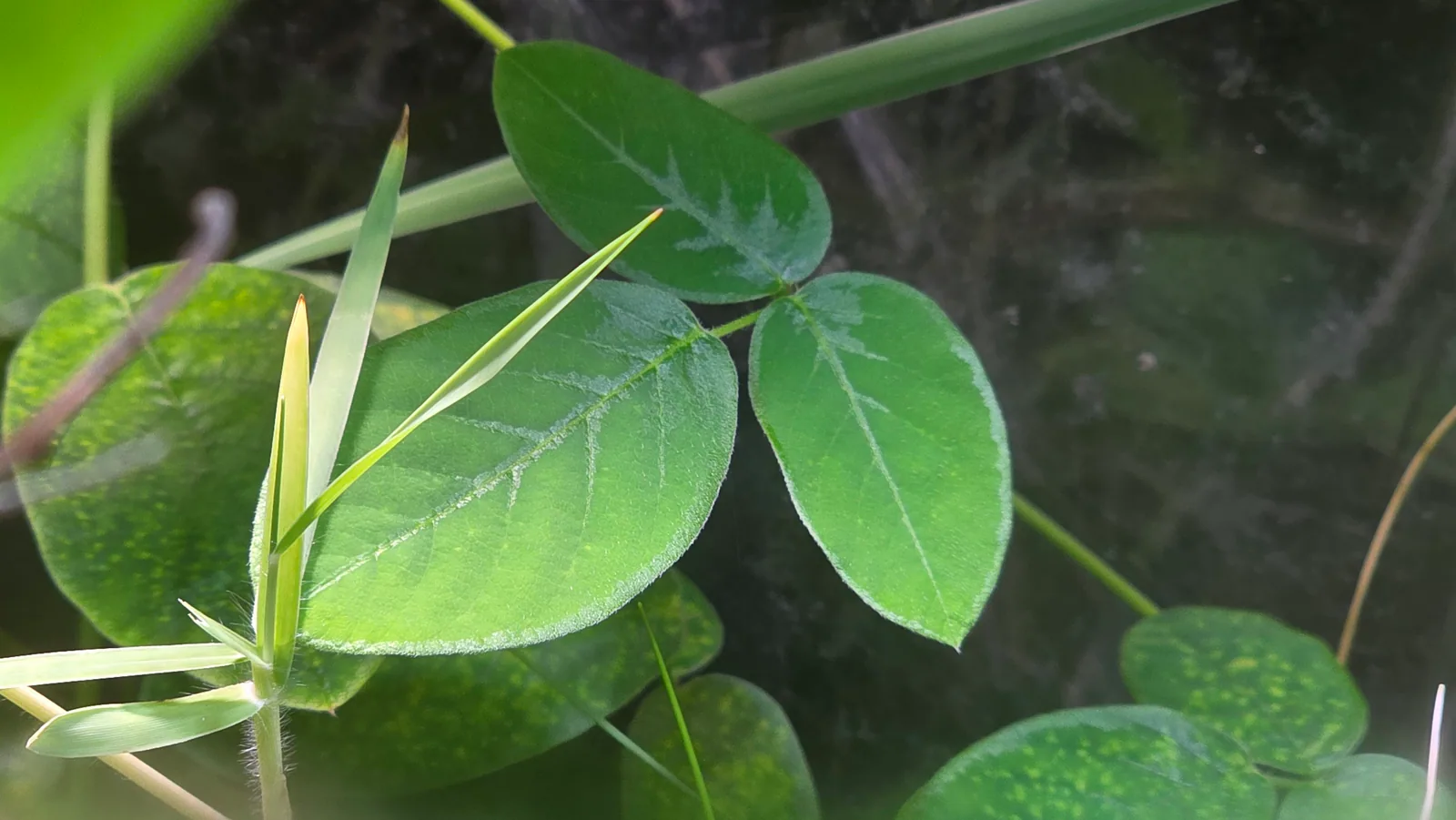

Light passes through the glass into every biome and is captured by plants, algae, and biofilm, which convert it into the organic matter that feeds every other living thing in miniBIOTA.
Primary production is the process by which plants and algae capture light and convert it into organic matter, and it is the only source of new energy in miniBIOTA. Every consumer, decomposer, and scavenger in the system depends on what producers built from light, water, and dissolved carbon. The Lighting System is the sole energy gateway into the biosphere: all six biomes receive light through the glass panels from fixtures outside, and all organic matter in the system traces back to that light being captured by a leaf, an algal cell, or a biofilm mat.
Primary production is the synthesis of organic compounds from inorganic carbon using external energy. In miniBIOTA, as in virtually all surface ecosystems, this energy is sunlight. Plants, algae, and photosynthetic microbes absorb photosynthetically active radiation (PAR, wavelengths from 400 to 700 nanometers) and use it to drive photosynthesis: combining carbon dioxide and water to produce glucose and oxygen. That glucose becomes the structural material of the producer's body, its energy reserve, and eventually the food that enters the food web when a grazer eats the plant or a decomposer processes its remains.
The ecologically meaningful measure of primary production is net primary production (NPP): the organic matter produced by photosynthesis minus what the plant itself burns through respiration. NPP represents the actual accumulation of new organic material that becomes available to consumers. Gross primary production (GPP, the total carbon fixed before autotrophic respiration) is higher but not directly available to the food web.
PAR intensity and photoperiod (the daily duration of the light period) are the two primary light variables controlling photosynthetic rate and plant growth. Both vary across biomes depending on fixture placement, water depth, water clarity, and canopy cover.
Florida's aquatic and wetland systems are among the most productive primary production environments in North America. Seagrass meadows in Florida's coastal waters support some of the highest per-unit-area production rates of any marine habitat, sustaining sea turtles, manatees, and invertebrate communities at high densities. Florida's freshwater lakes and springs support dense submerged macrophyte communities where clear, nutrient-moderate water and year-round warmth allow continuous growth. Phytoplankton production drives turbid, nutrient-enriched systems when macrophytes are displaced or shaded out.
A critical threshold in Florida freshwater ecology is the shift between macrophyte-dominated clear-water states and phytoplankton-dominated turbid states. In clear water, submerged plants root at depth, absorb nutrients from the substrate, and stabilize sediment, maintaining conditions that favor continued plant dominance. In turbid water, phytoplankton and suspended algae intercept light before it reaches the substrate, suppressing rooted plants and locking the system into an algae-dominated state. Small changes in nutrient loading, grazing pressure, or water clarity can flip a system between these two states.
In terrestrial Florida, primary production from flatwoods, savannas, and coastal strand habitats is sustained by subtropical warmth, summer rainfall, and a growing season that extends through most of the year.
Primary production in a sealed enclosure operates under constraints that open systems do not face.
Carbon dioxide is internally recycled. Photosynthesis consumes CO2; respiration by consumers, plants, and decomposers returns it. In a sealed system, the CO2 pool is finite. If photosynthesis in a heavily planted, low-consumer system outpaces respiration, CO2 concentrations can drop to limiting levels and production slows. The system self-regulates over time, but the balance is more fragile than in an open system drawing on atmospheric CO2 reserves.
Oxygen accumulates or is consumed internally. Photosynthesis releases O2 into the water column and enclosure air. In the aquatic biomes, dissolved oxygen (DO) rises during daylight hours when photosynthesis is active and drops at night when all organisms are respiring but no photosynthesis is occurring. In heavily planted tanks, this diel DO swing can be large enough to stress organisms adapted to stable conditions.
The photoperiod does not change with season unless programmed. In Florida, natural day length shifts from roughly 10 hours in December to roughly 14 hours in June, producing a seasonal production cycle that many organisms use as a cue for reproduction, activity, and metabolic rate. Without a programmed seasonal photoperiod, miniBIOTA producers receive the same light duration year-round, decoupling them from natural seasonal rhythms.
Glass panels filter light before it reaches producers. The glass walls and top surfaces of the biome tanks attenuate ultraviolet wavelengths and absorb some visible light before it enters the enclosure. The PAR available to producers inside is lower than what the fixtures emit outside the glass, and the spectral composition is altered. This filtering effect has not been measured.
Surface producers can shade benthic producers. In the Freshwater Lake, duckweed floating at the surface intercepts PAR before it reaches tapegrass and sagittaria rooted at the bottom. In a small, shallow enclosure, even partial surface coverage can meaningfully reduce PAR delivery to the substrate. This competition is sharper than in a large natural lake where wind and wave action prevent stable surface plant coverage.
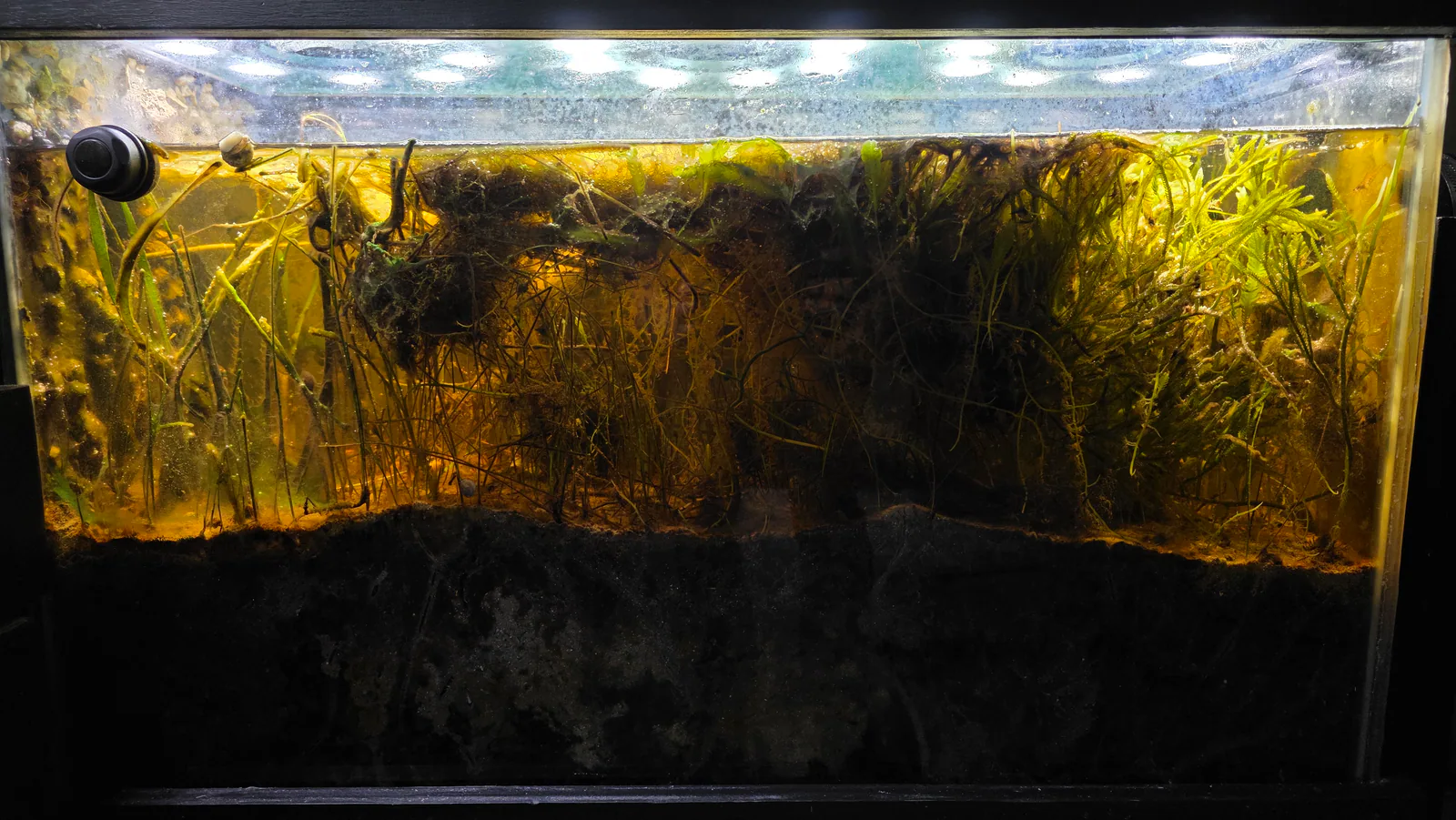
Seagrass Meadow supports the most PAR-demanding producers in miniBIOTA. Shoal grass, turtle grass, and manatee grass are all rooted at the substrate and require sustained PAR delivery through the water column to maintain growth. They compete with Graceful Redweed, Fern Alga, Giant Feather Alga, and cyanobacteria-like surface growth that can exploit light more opportunistically. PAR delivery to the seagrass substrate is the central variable in the producer competition that defines this biome's current state.
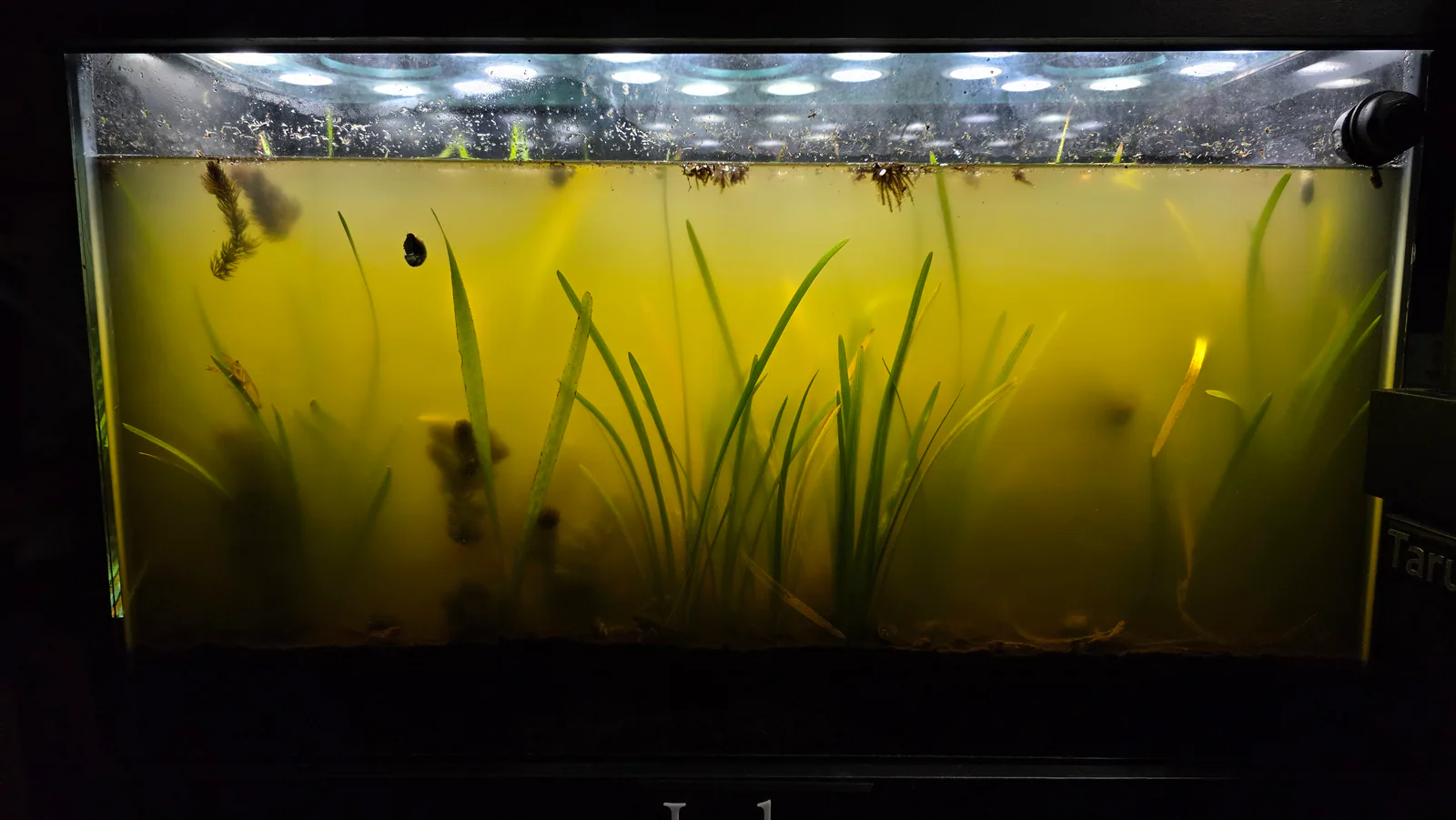
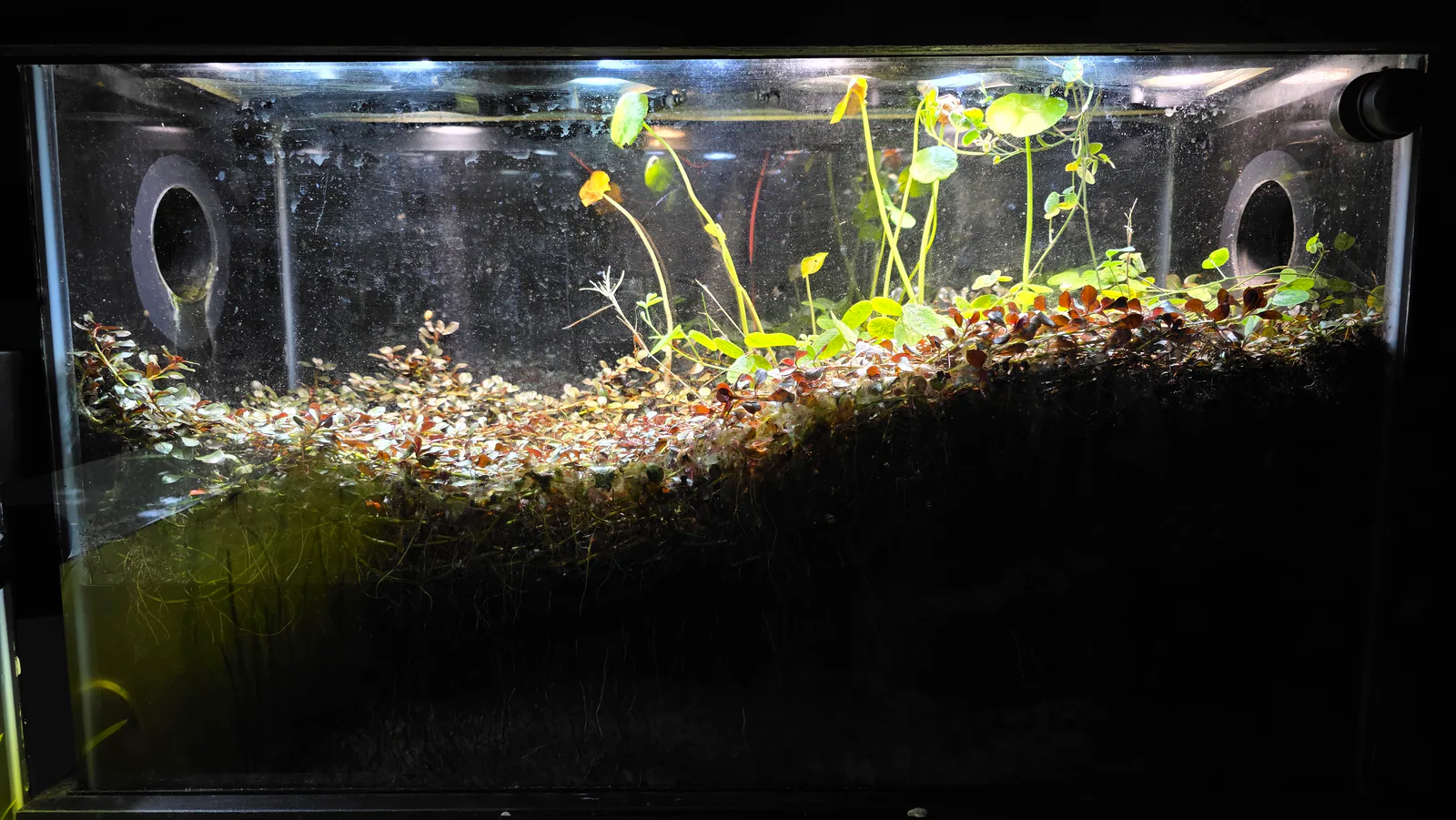
Freshwater Lake has layered primary production: duckweed captures PAR at the surface, suspended phytoplankton and algae fill the water column, and tapegrass, sagittaria, and Amazon sword anchor the submerged canopy at depth. Biofilm covers plant surfaces, glass, and substrate. Water clarity directly controls how far PAR penetrates, making the post-Flagfish clarity improvement an effective increase in light delivery to the lakebed.
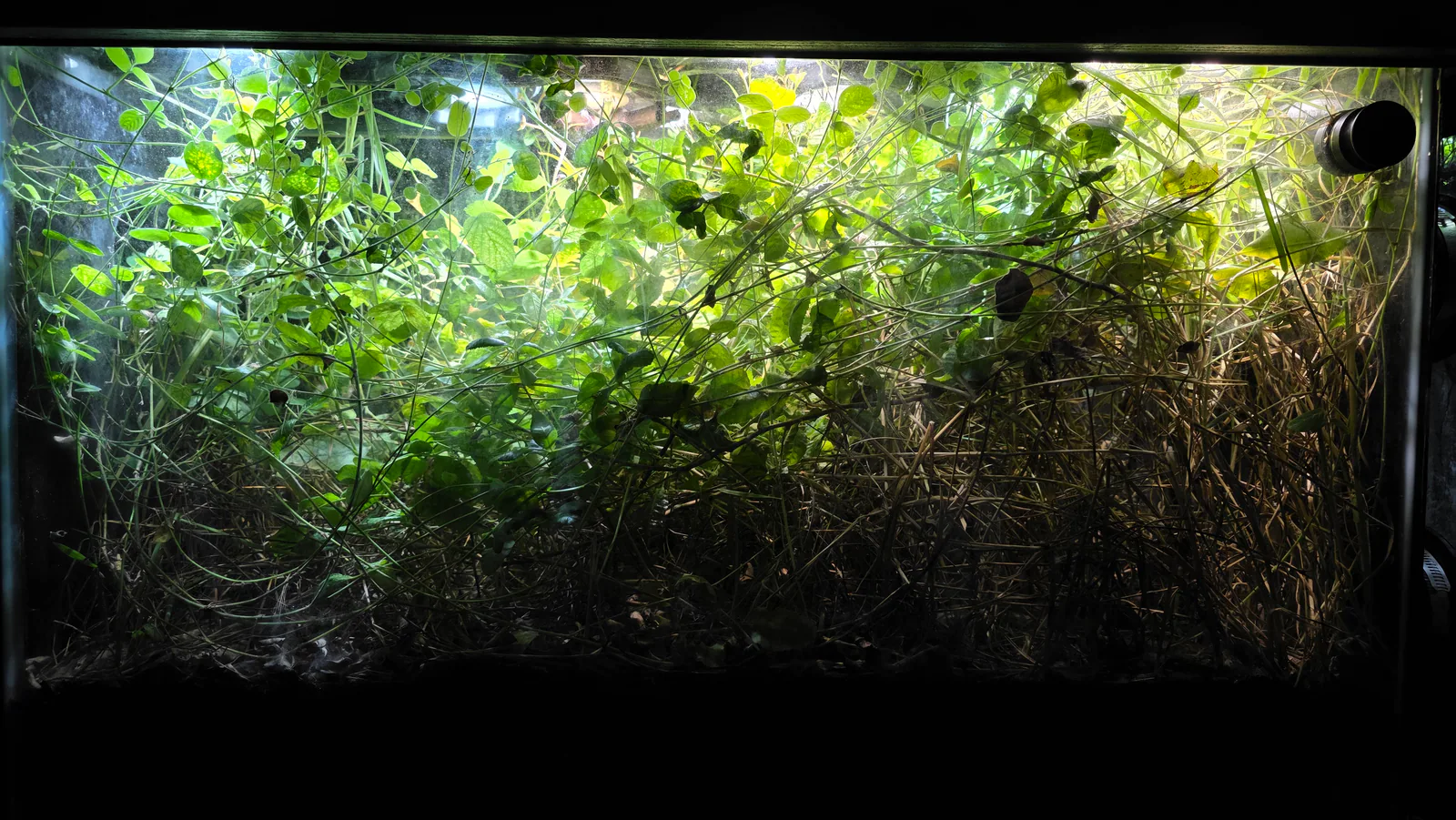
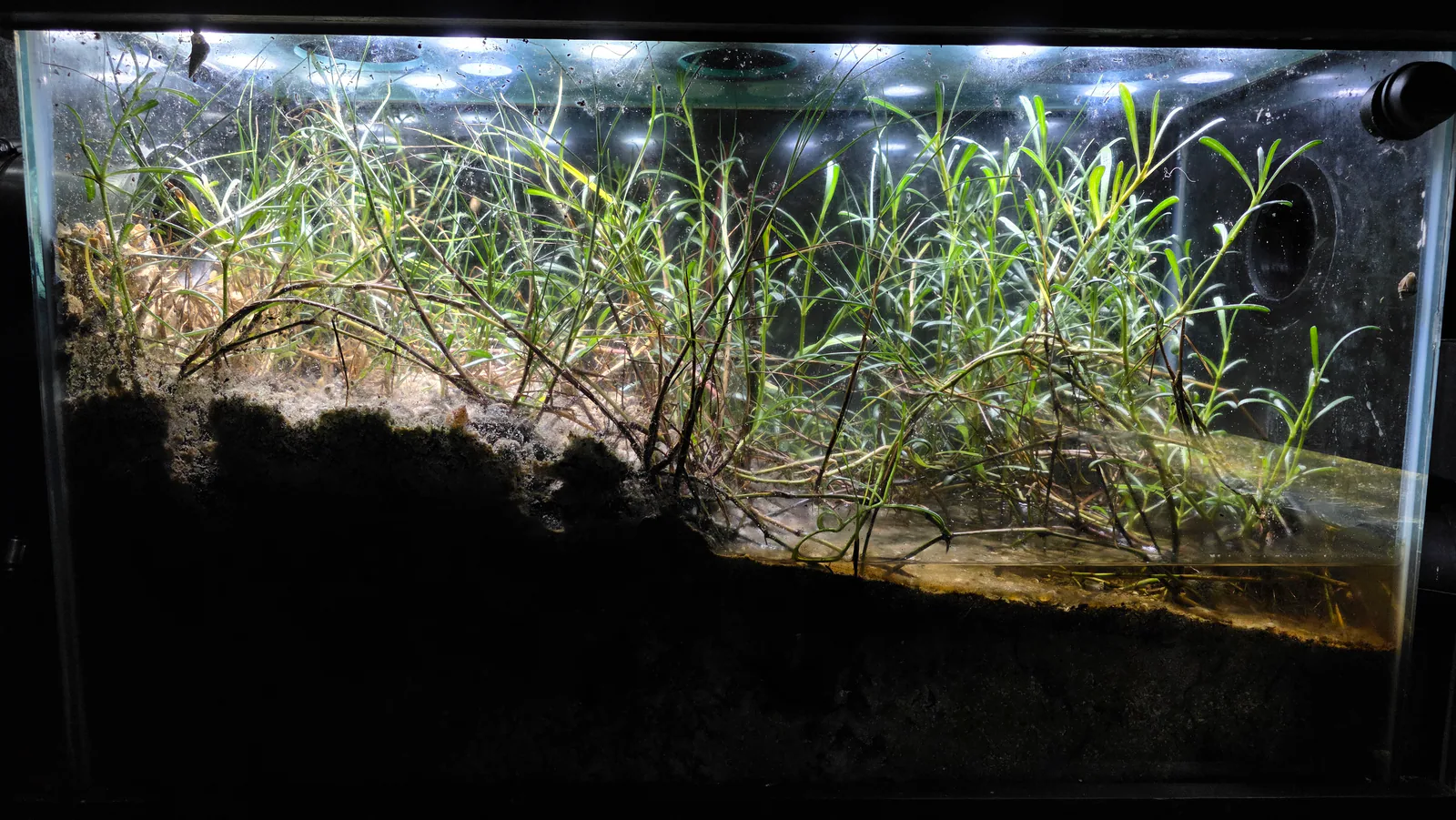
Prairie is the intended terrestrial primary-production and herbivore-support habitat on the freshwater side. Complementary plant growth is intended to support consumers and the detrital food web, while sustained production and persistence remain unresolved. The biome dossier preserves dated vegetation and consumer records; this update does not supply a current species census.
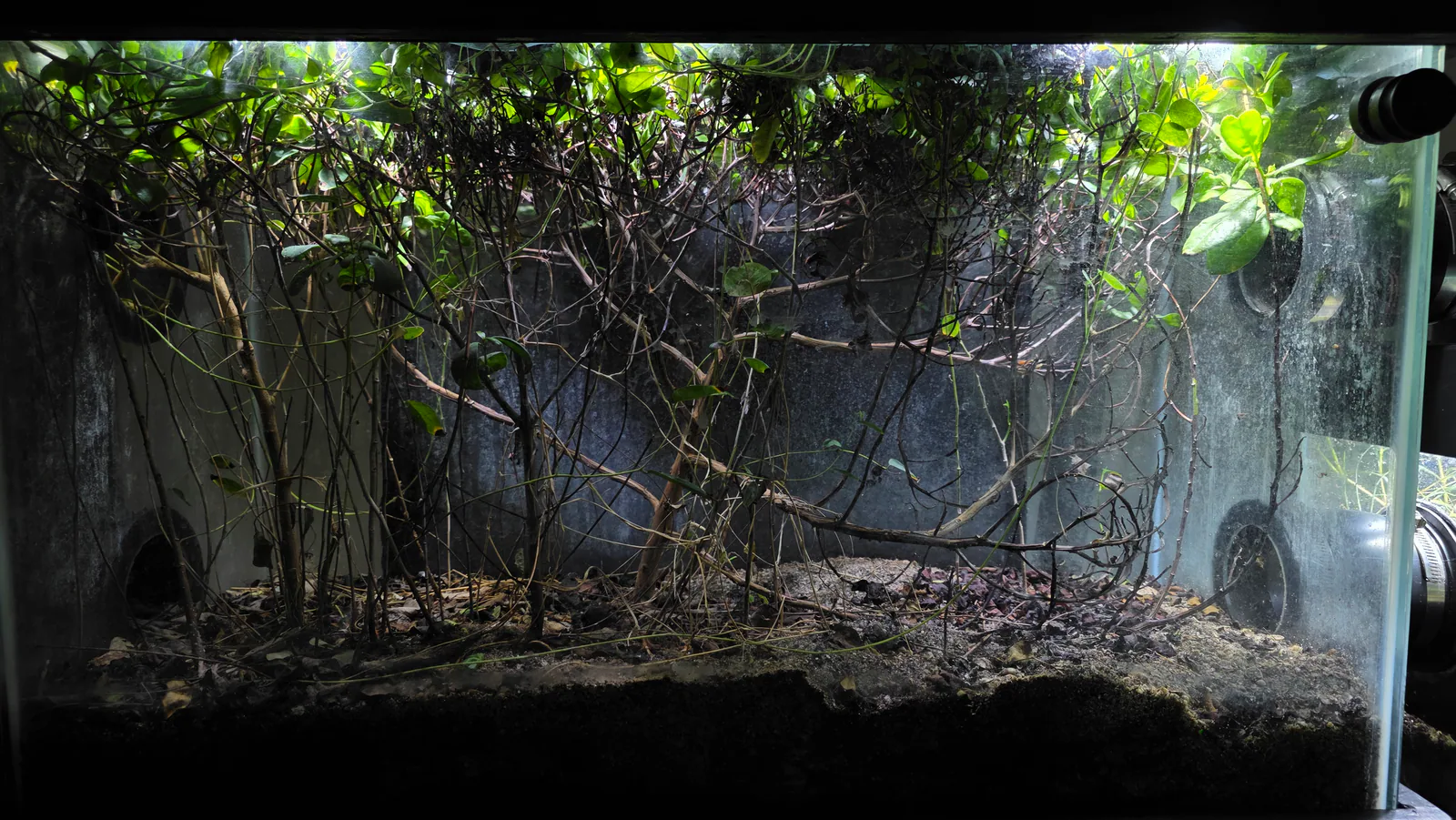
Mangrove Forest has a dense canopy that intercepts most PAR, creating low-light understory conditions. Biofilm and shade-tolerant microbes occupy the shaded floor. The mangrove canopy itself is a significant primary producer, but its output goes primarily into the litter-detritus pathway rather than direct herbivory.
Lakeshore and Marine Shore support biofilm production and surface algae on moist substrate and glass surfaces. These edge-biome producers are smaller in total biomass but important as direct food sources for snails, amphipods, periwinkles, and Eastern Melampus.
Tapegrass, sagittaria, and Amazon sword anchor submerged production in the Freshwater Lake. Duckweed occupies the lake surface in varying coverage. Seashore Paspalum and associated grasses dominate terrestrial production in the Prairie and Lakeshore. Shoal grass, turtle grass, and manatee grass drive seagrass production in the Seagrass Meadow, where Graceful Redweed, Fern Alga, and Giant Feather Alga represent the macroalgal production layer. Biofilm is present and productive across all biome surfaces and is one of the most widely consumed food sources in the system.
Lighting System is the sole energy input to miniBIOTA and the direct driver of primary production. PAR intensity, photoperiod, and spectrum delivered by the fixtures outside the glass determine what is available to producers inside. The current fixture type, photoperiod schedule, PAR levels, and spectrum are all undocumented. Current lighting is sufficient for visible growth and ecosystem function across all biomes, but specific production rates, light limitation status, and the role of light in producer competition outcomes cannot be determined without measurements.
No other hardware system directly drives primary production, though the Rain System and Climate System influence soil moisture and humidity that affect terrestrial plant health.
Seagrass-macroalgae competition (ongoing): In the Seagrass Meadow, three seagrass species compete with Graceful Redweed, Fern Alga, Giant Feather Alga, and cyanobacteria-like surface growth for PAR at the substrate. Macroalgae can often exploit light more opportunistically than seagrasses, particularly at the substrate surface where seagrasses must root and establish. Without PAR measurements at the Seagrass Meadow substrate level, the role of lighting versus grazing pressure versus substrate disturbance in the producer competition outcome cannot be separated. That grazing pressure has fallen sharply over 2026: the Eelgrass Isopod and hard-surface snails are extirpated or near-zero, the Mud Crab is being deliberately removed, and the Variegated Sea Urchin was extirpated September 1, 2026, leaving introduced Chestnut Turban and Astraea Snails as the current, unevaluated hard-surface grazing intervention. Common Atlantic Marginella, previously listed here among the grazers, was a predator and sediment bioturbator rather than an algal grazer; corrected July 29, 2026.
As of July 29, 2026 the competition has visibly resolved in favour of macroalgae: the two Caulerpa species, growing intermeshed as a single mass, occupy roughly half the water column from substrate to surface, regrowing Graceful Redweed holds the surface layer, and the three seagrasses are visibly reduced to roughly a quarter of the open water. The grazing side of the equation has weakened over the same period, with the Eelgrass Isopod extirpated and hard-surface grazers reduced to near-zero, which is consistent with grazing release as a driver but does not rule out a light or nutrient cause in the absence of measurement.
Visible photosynthetic output proxy: The Seagrass Meadow has no dissolved oxygen instrumentation, but photosynthetic gas production is directly visible in it. Oxygen bubbles accumulate within and beneath both the Graceful Redweed mat and the Caulerpa mass through the photoperiod, in sufficient volume to lift the redweed mat from mid-column to the surface each day after the lights come on. This is the only direct daytime indicator of primary production available in the biome, and it couples a producer's physical position in the light layer to the lighting photoperiod.
Duckweed and tapegrass competition in the Freshwater Lake (unresolved): Duckweed floating at the surface and tapegrass, sagittaria, and Amazon sword rooted below compete for the same PAR in the Freshwater Lake. The water clarity improvement following Flagfish removal means more PAR reaches the lakebed than before. Whether tapegrass is benefiting from this improved PAR penetration, or whether duckweed surface coverage is intercepting that light before it reaches the substrate, is unresolved.
PAR documentation gap (consequential): No PAR measurements exist for any biome in miniBIOTA. The Lighting System dossier identifies this as the most consequential hardware documentation gap across all six systems. Without PAR data, Research cannot make specific claims about photosynthetic rates, growth potential, light limitation, or the role of light in any producer competition outcome. This gap constrains the specificity of primary production claims across every biome.
CO2 cycling in the sealed system (unmeasured): Photosynthesis and respiration compete for the same finite CO2 pool. Whether the current ratio of producers to consumers maintains adequate CO2 availability for continuous photosynthesis, or whether daytime production in heavily planted biomes periodically depletes CO2 to limiting concentrations, is unknown and has not been measured.
Species named in this cycle summary and matched to active public species pages.
Habitats where this cycle operates inside the miniBIOTA biosphere.
Other ecological cycles connected to this one.