Caulerpa ashmeadii

Giant Feather Alga

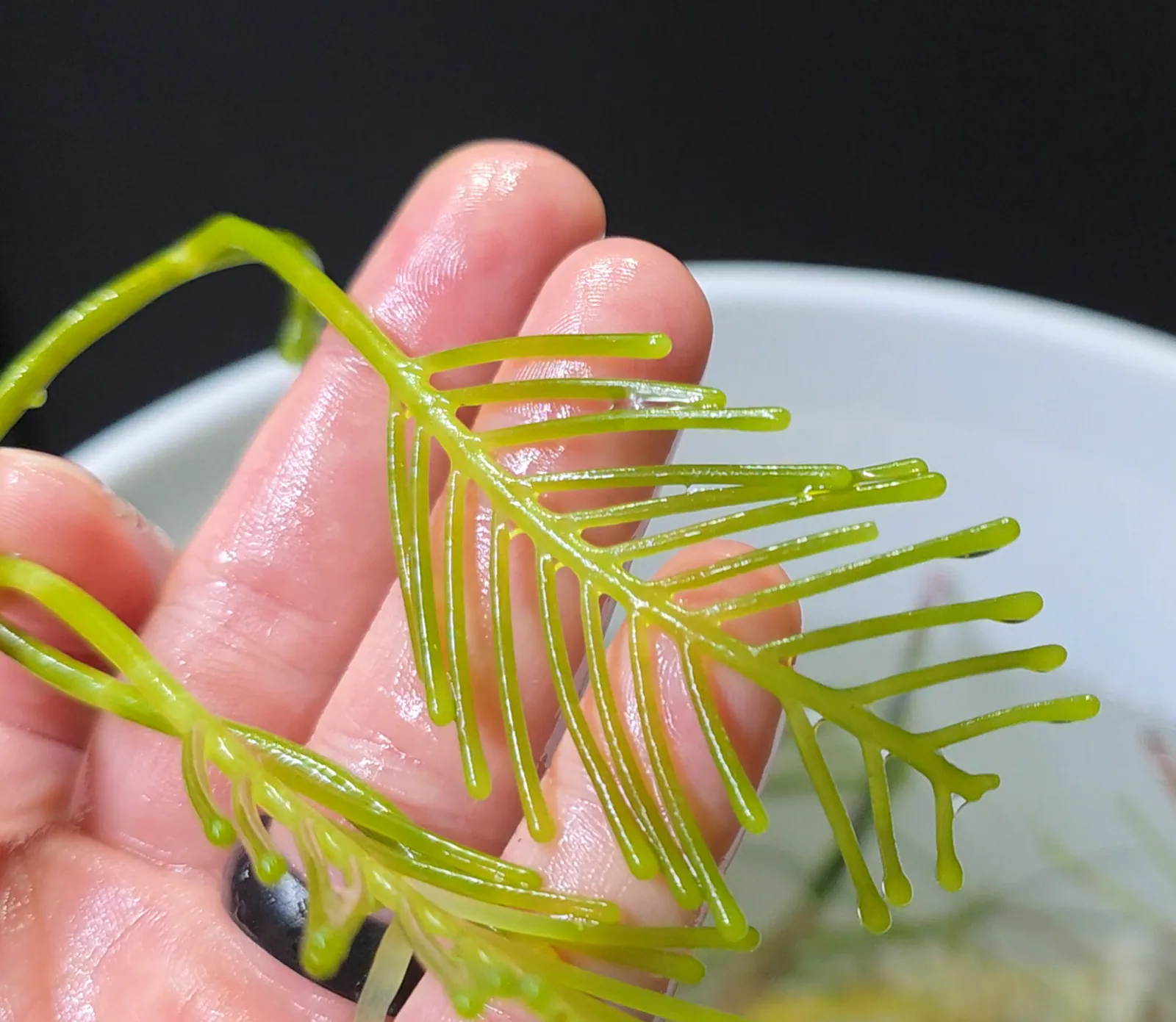
Anchored to the Seagrass Meadow floor by horizontal runners, this macroalga extends pinnate fronds that branch into fern-like tiers, building three-dimensional substrate structure while producing toxins that deter most grazers.

Overview

Giant Feather Alga (Caulerpa ashmeadii) is a native Florida macroalga introduced to miniBIOTA's Seagrass Meadow on March 27, 2026 as part of a beach collection that also brought in turtle grass, manatee grass, fern alga, and a small mud crab. It is named for its pinnately branched fronds, which bear successive tiers of lateral branchlets giving the fronds a fern-like appearance. Species identity is Confirmed from the introduction record. Establishment and persistence since introduction are unresolved as of June 2026.

Identity

  • Common name: Giant Feather Alga
  • Alternate names: megafern feather alga, giant feather algae, megafern caulerpa, fern caulerpa, feather alga, caulerpa, lacy feather alga
  • Scientific name: Caulerpa ashmeadii
  • Identification confidence: Confirmed; named as Caulerpa ashmeadii in the March 27, 2026 beach collection record
  • Uncertainty label: Confirmed

Taxonomy

  • Kingdom: Plantae (or Viridiplantae; algal classification varies by system)
  • Phylum: Chlorophyta
  • Class: Ulvophyceae
  • Order: Bryopsidales
  • Family: Caulerpaceae
  • Genus: Caulerpa
  • Species: ashmeadii

Natural History

Range and Florida Relevance

Caulerpa ashmeadii is a native macroalga of the tropical western Atlantic, Caribbean, and Gulf of Mexico. In Florida, it is part of the native Caulerpa community found in shallow nearshore waters, seagrass beds, and hard-bottom habitats. It grows in calm to moderately energetic coastal environments in water typically less than ten meters deep, and is found throughout Florida's Atlantic and Gulf coastal areas. As a native species, C. ashmeadii has long been part of the ecological communities of Florida's nearshore marine habitats.

Frond Structure and Appearance

Caulerpa ashmeadii is named for its distinctively fern-like frond architecture. The erect fronds are pinnately branched, lateral branchlets emerge from the main frond axis, and those branchlets bear further smaller branchlets, creating a compound tier structure that resembles the frond of a large fern. This multi-level branching pattern gives the fronds greater three-dimensional complexity and surface area per frond compared to simpler Caulerpa species. The color is bright to medium green. The fronds are anchored to the substrate by horizontal stolons (runners) from which both erect fronds and anchoring rhizoids emerge.

Coenocytic Structure

Like all Caulerpa species, C. ashmeadii is coenocytic, the entire plant consists of a single, highly branched multinucleate cell with no cross-walls between compartments. This unusual architecture means a fragment of any size can regenerate into a new individual, making Caulerpa species highly resistant to mechanical disturbance and capable of spreading rapidly by fragmentation. Pruning or disturbing the alga can inadvertently spread fragments that settle and regrow elsewhere.

Toxins

Caulerpa ashmeadii produces caulerpenyne and related secondary metabolites that deter most potential grazers. These compounds make Caulerpa species unpalatable to the majority of marine herbivores; only specialized grazers adapted to tolerate the toxins consume Caulerpa directly. In a closed system, this means Caulerpa can accumulate with limited top-down control from grazers, unless specialist grazers are present. No grazers confirmed to consume Caulerpa are documented in miniBIOTA.

Habitat

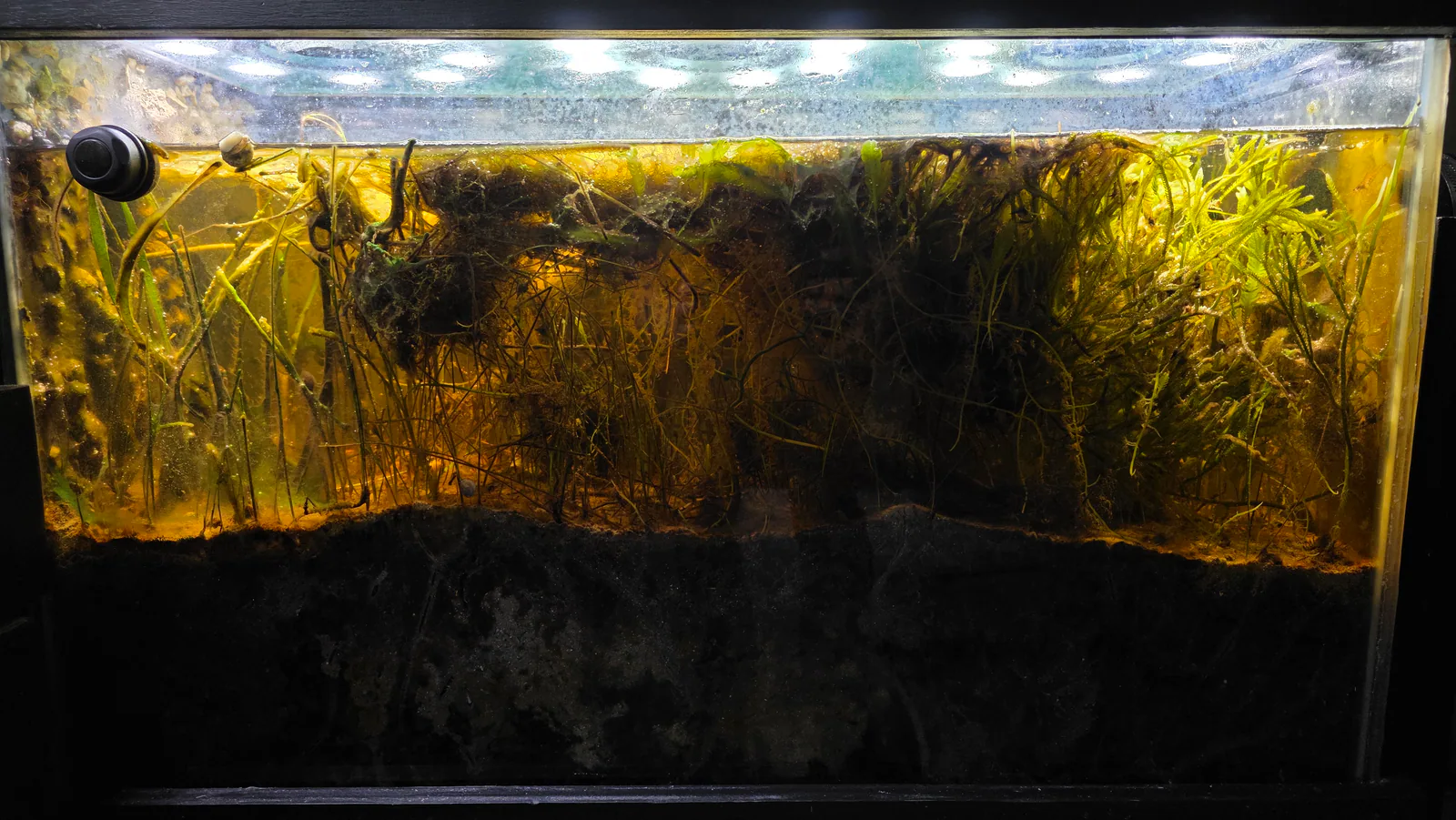
Caulerpa ashmeadii grows on sand, mud, rock, shell, and other hard or mixed substrate in shallow coastal marine habitats. It is associated with calm and semi-protected bays, seagrass bed margins, and hard-bottom areas where it can anchor its stolon system. In miniBIOTA, the species was introduced to the Seagrass Meadow and would need to establish stolon contact with available substrate to persist.

Reproduction and Spread

Caulerpa species reproduce primarily through vegetative fragmentation and stolon extension. Fragments produced by mechanical disturbance can re-anchor and regenerate into new plants. Sexual reproduction (releasing gametes into the water) is possible but rare and typically occurs in response to stress. In a closed aquarium system, vegetative stolon spread and fragmentation are the primary mechanisms of persistence and spread. No reproductive activity has been observed in miniBIOTA.

Tolerance Ranges

Caulerpa ashmeadii is adapted to the warm subtropical and tropical coastal conditions of its Florida and Caribbean range. It prefers water temperatures in the range of approximately 20 to 32 degrees Celsius, clear to moderately turbid water with adequate light penetration to the substrate, and marine to slightly brackish salinity. It tolerates calm to moderate water movement. No miniBIOTA-specific tolerance measurements have been taken.

Ecological Role

Giant Feather Alga functions as a photosynthetic producer in the Seagrass Meadow, converting light and dissolved nutrients into algal biomass that builds three-dimensional substrate structure. Its fern-like fronds create complex local habitat that could provide attachment surfaces and microhabitat for small invertebrates if the alga establishes.

The caulerpenyne toxins it produces deter most grazers, which limits the transfer of algal biomass up the food web under normal conditions. In the absence of specialist grazers, Caulerpa can accumulate in a closed system and potentially outcompete other primary producers for light and substrate, as noted for the closely related Caulerpa taxifolia (Fern Alga) already in the Seagrass Meadow. Whether C. ashmeadii and C. taxifolia compete directly for substrate and light in miniBIOTA is unresolved; both were introduced on the same day and occupy the same biome.

No predation, grazing, or symbiotic relationships involving this species have been documented in miniBIOTA.

miniBIOTA Evidence

Introduction

Giant Feather Alga was introduced to miniBIOTA on March 27, 2026 as part of a beach collection from a Florida coastal site. The collection also included turtle grass (Thalassia testudinum), manatee grass (Syringodium filiforme), fern alga (Caulerpa taxifolia), a small mud crab, and a possible unidentified amphipod. All material was introduced to the Seagrass Meadow on the same day and was documented in video. Species identity was given by name in the collection record.

Observation Timeline

  • March 27, 2026: Introduced to the Seagrass Meadow as part of a Florida beach collection. Named in the collection record as megafern feather alga (Caulerpa ashmeadii). Video documented of each addition introduced individually. Giant Feather Alga logged as context species; Turtle Grass was the primary routing species.
  • June 10, 2026: Last observed date on record. No dedicated observation file for this date; date reflects a live record check.

What Is Confirmed

  • Caulerpa ashmeadii introduced to the Seagrass Meadow on March 27, 2026 via beach collection.
  • Introduction was part of a planned producer-diversity expansion alongside other macroalgae and seagrasses.
  • Species still listed as active in the species record as of June 10, 2026.

What Is Inferred

  • As a Caulerpa species, C. ashmeadii produces toxins that deter most grazers in the system; direct grazing is unlikely without specialist herbivores.
  • Wild-collected beach material may have introduced associated epiphytes, invertebrates, or microorganisms alongside the alga.
  • The proximity of C. ashmeadii and C. taxifolia in the same biome following the same introduction event may lead to interspecific competition.

What Remains Unknown

  • Whether the introduced material has established stolon contact with the Seagrass Meadow substrate.
  • Whether the alga is growing, persisting, or declining as of mid-2026.
  • Whether it is competing with Fern Alga or other producers for substrate, light, or nutrients.
  • Whether any grazers in the system are consuming it.