
miniBIOTA · The Living Biosphere
The miniBIOTA Biosphere
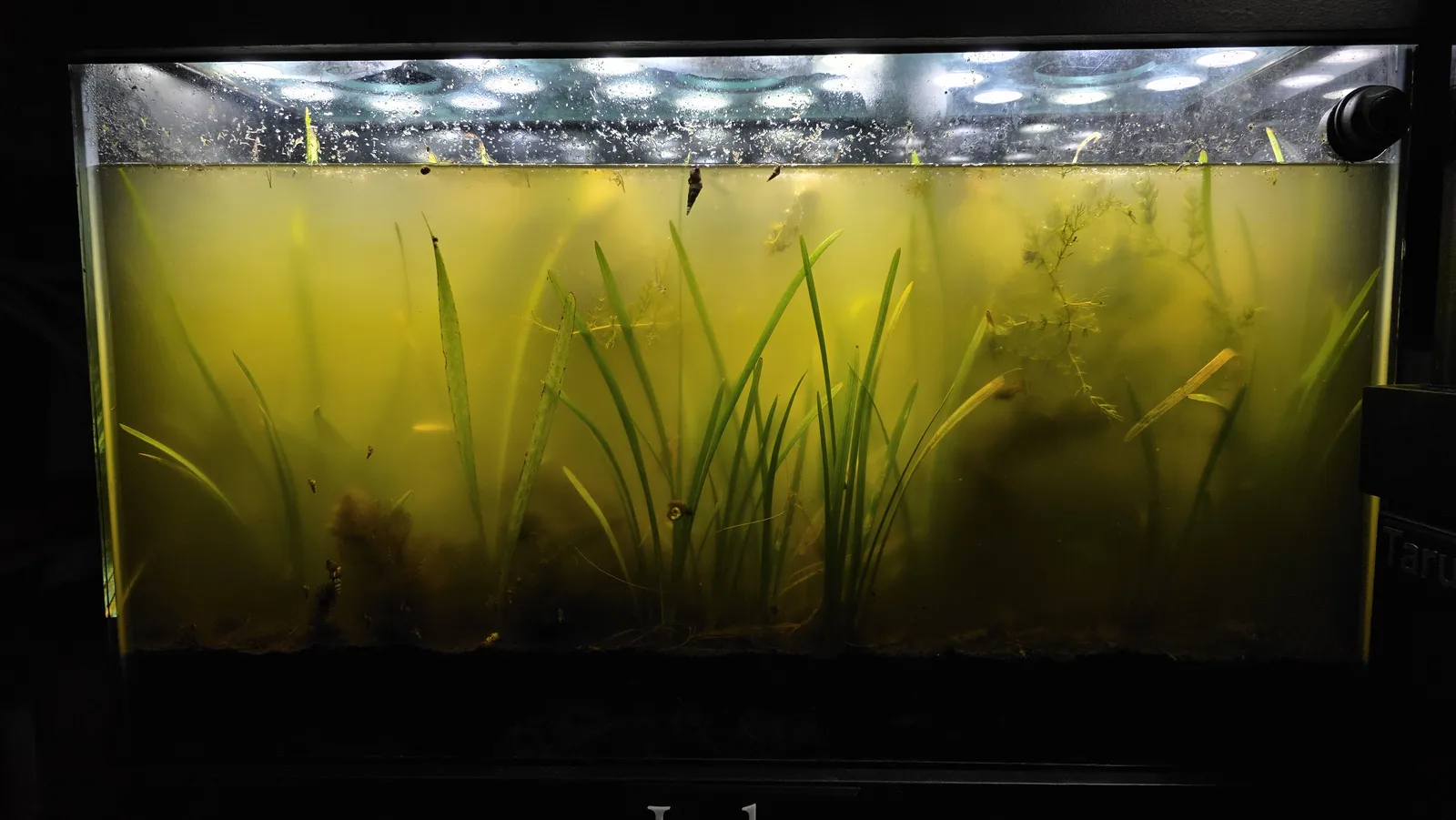
miniBIOTA is an interconnected living biosphere built to investigate ecological processes and relationships at observable scale. Its biomes are functional habitat analogues: their names describe recognizable environmental conditions and vegetation, without implying exact reconstruction of a particular natural community. Habitat design and species selection consider ecological roles, compatibility, and observed outcomes.
The System
Six habitats, three realms, one enclosure
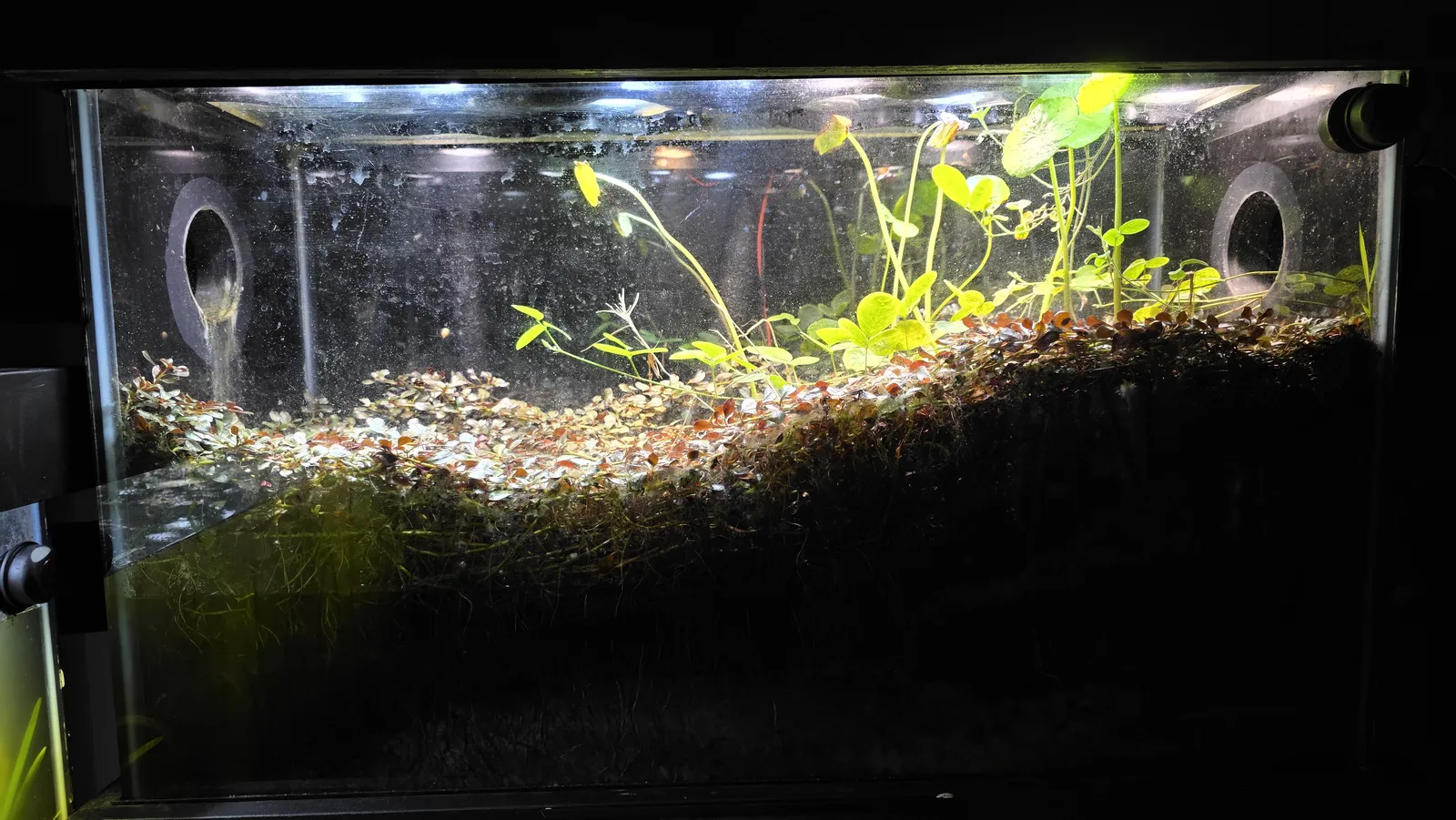
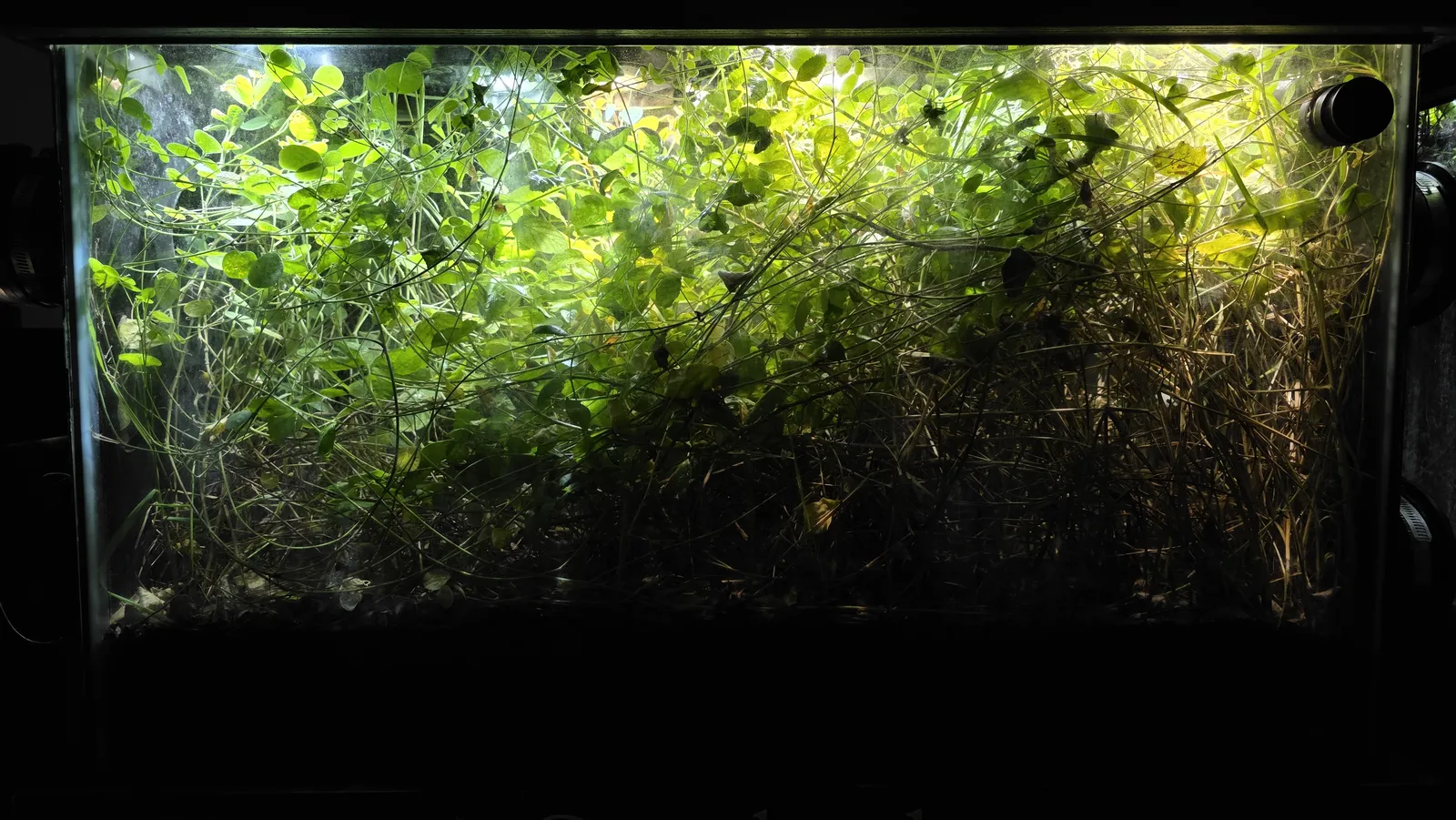
miniBIOTA is a single row of six habitats, ordered from fresh water through dry land to the sea. Fully sealed since late January 2026, the six make up one interconnected biosphere: a single enclosed atmosphere over all of them, and habitat that runs unbroken from each biome into the next above the ground, under one coordinated daily light cycle. Below the surface, the freshwater and marine sides keep their own separate water networks.
Shared across all six One enclosed atmosphere · continuous surface and emergent habitat
-
-
-
-
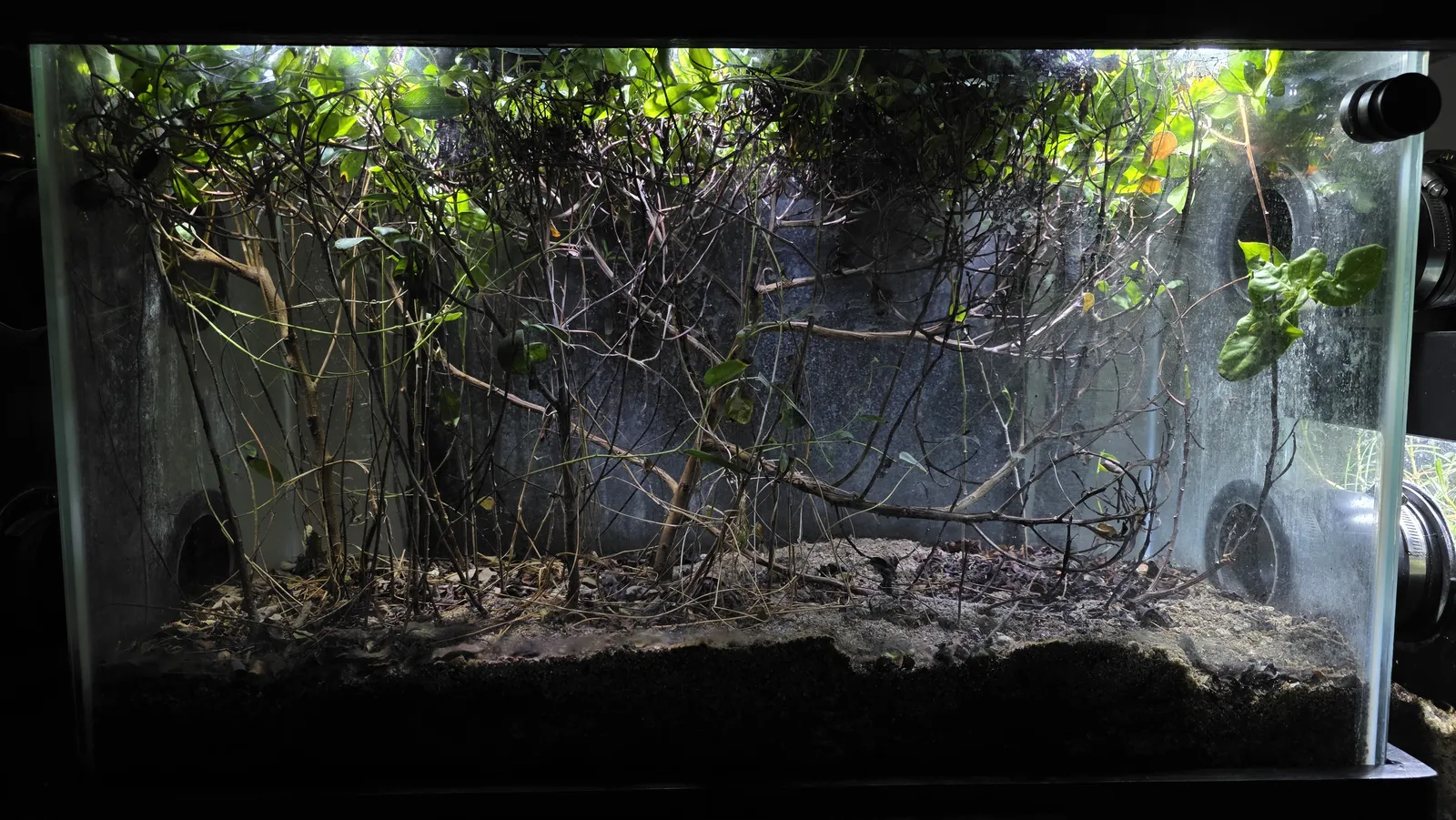 04 Terrestrial
Mangrove Forest
Salt-influenced root forest; mangrove leaf litter feeds the system.
visit → -
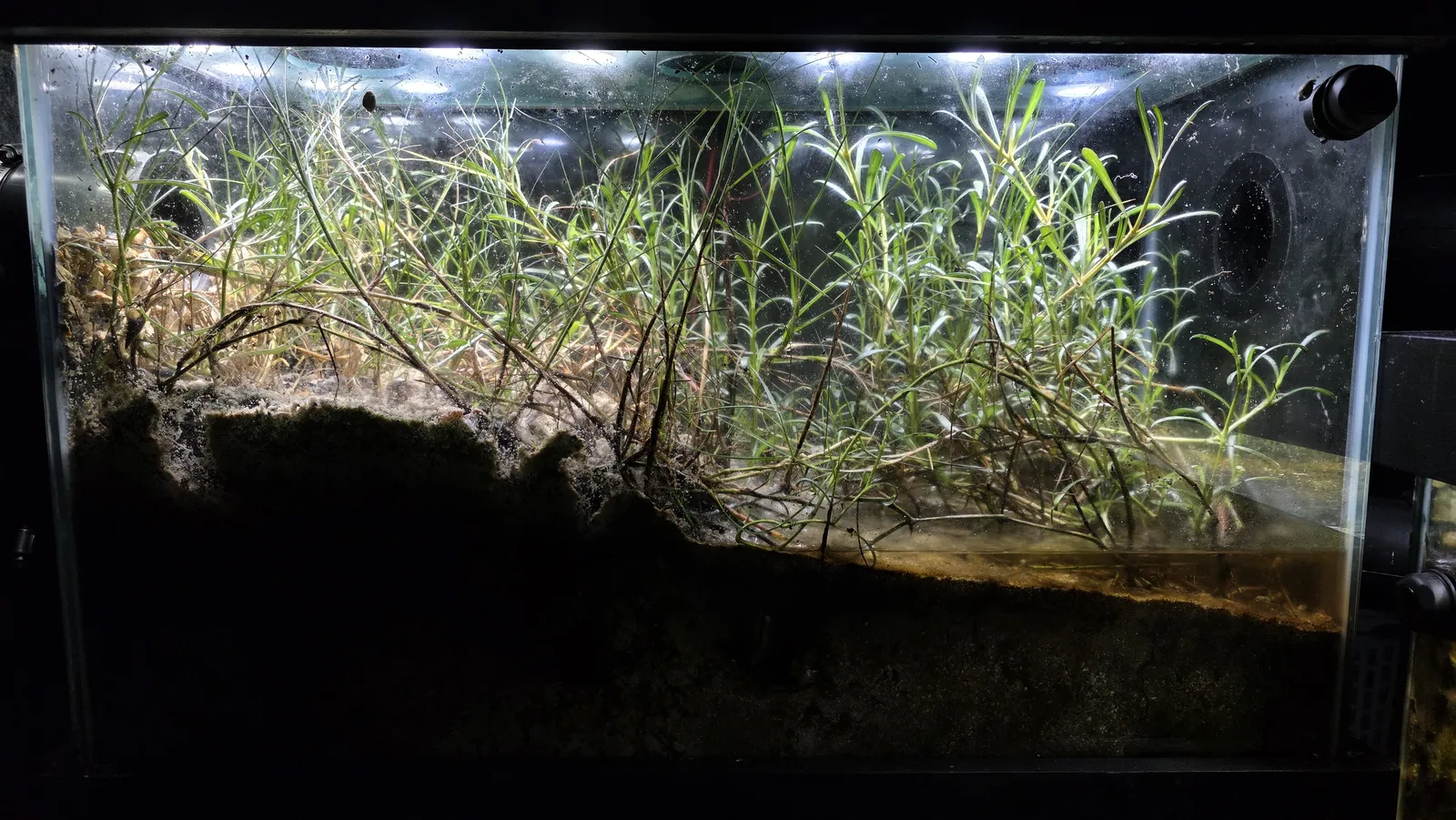 05 Terrestrial + Saltwater Interface
Marine Shore
Tidal shoreline; crabs move between water and land.
visit → -
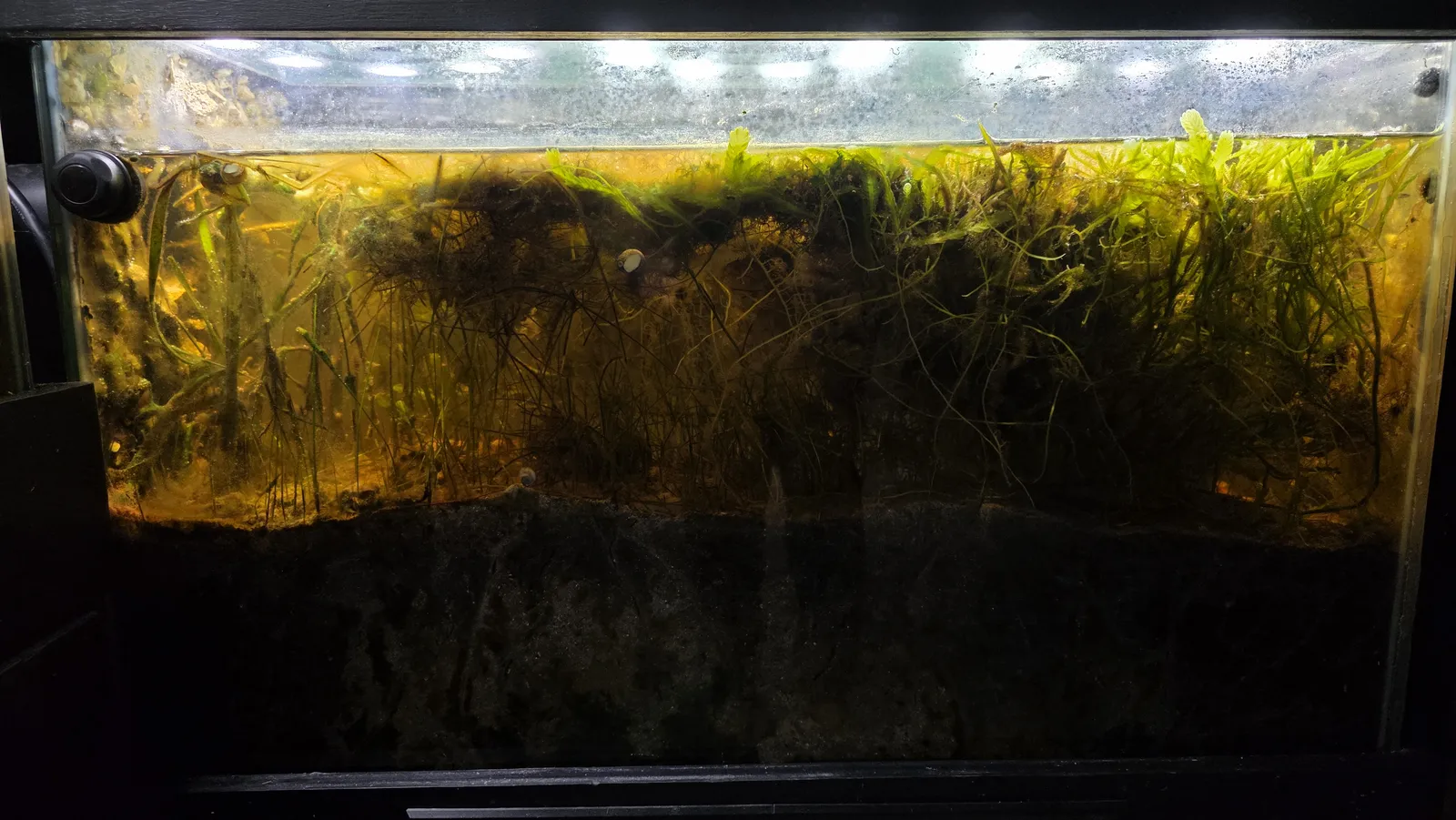
Freshwater network
Freshwater Lake · Lakeshore · Prairie. These three share one connected water
level below the surface. After rain, water normally returns down the gradient toward the Freshwater Lake.
Marine network
Mangrove Forest · Marine Shore · Seagrass Meadow. These three share one connected water
level below the surface. After rain, water normally returns down the gradient toward the Seagrass Meadow.
At the center
The Prairie and Mangrove Forest stay connected above ground and through the shared air. Their
water networks stop short of one another below — the one place the system’s water is kept
hydraulically separate.
Where habitats meet, some organisms and organic material move locally across land, shoreline, vegetation, or emergent structure. The shared atmosphere and the above-ground corridor hold the whole system together; only the water below the surface is kept as two separate networks.
Each habitat belongs to one of three realms — freshwater, terrestrial, and saltwater.
Shared across all six — One enclosed atmosphere · continuous surface and emergent habitat
Freshwater network
Freshwater Lake · Lakeshore · Prairie share one connected water level below the
surface. After rain, water normally returns down the gradient toward the Freshwater Lake.
At the center
The Prairie and Mangrove Forest stay connected above ground and through the shared air. Below
the surface, their water networks stop short of one another.
04
Terrestrial
Mangrove Forest
Salt-influenced root forest; mangrove leaf litter feeds the system.
visit →
05
Terrestrial + Saltwater Interface
Marine Shore
Tidal shoreline; crabs move between water and land.
visit →
Marine network
Mangrove Forest · Marine Shore · Seagrass Meadow share one connected water level below
the surface. After rain, water normally returns down the gradient toward the Seagrass Meadow.
Where habitats meet, some organisms and organic material move locally across land, shoreline, vegetation, or emergent structure. The shared atmosphere and the above-ground corridor hold the whole system together; only the water below the surface is kept as two separate networks.
Each habitat belongs to one of three realms — freshwater, terrestrial, and saltwater.
Connection Architecture
How the System Connects
Rather than isolated tanks, miniBIOTA functions as one interconnected living transect. A shared atmosphere and continuous above-ground habitat hold the six together, while the freshwater and marine sides keep their own connected water networks below the surface.
One Enclosed Atmosphere
All six biomes share one sealed air volume, and a synchronized overhead light cycle runs across the whole enclosure. Evaporation from the water surfaces maintains system-wide humidity, while the lighting program drives photosynthesis simultaneously across freshwater plants, terrestrial foliage, mangroves, and marine seagrasses.
Continuous Surface Habitat
Above the ground, habitat runs unbroken from each biome into the next through shoreline, soil surface, and emergent structure. Where the Prairie meets the Mangrove Forest at the center, that passage is open and normally dry, so the two sides stay physically connected even though their water networks do not join below.
Biological Corridors & Movement
Where physical boundaries permit, species can move across the shared surface and emergent habitat. Prairie’s intended design emphasizes complementary plant growth, plant–consumer relationships, soil life, and decomposition.
Two Water Networks, Divided at the Center
The freshwater side — Freshwater Lake, Lakeshore, and Prairie — shares one connected water level below the surface. The marine side — Mangrove Forest, Marine Shore, and Seagrass Meadow — shares another, and runs its own wave and tidal motion. There is deliberately no subsurface connection between the Prairie and the Mangrove Forest, so fresh and marine water stay in separate networks. After rain, water returns down each side’s elevation gradient as a net direction — through surface runoff, soil infiltration, and the passive, level-equalizing connections below — not as one-way plumbing.
Telemetry
Current Habitat Climate
A quiet atmospheric snapshot from the enclosure's distributed sensor nodes.
| Habitat | Realm | Atmospheric Condition |
|---|---|---|
| 01 Freshwater Lake | Freshwater | Not currently monitored |
| 02 Lakeshore | Freshwater | 25.9°C (78.6°F) · 41.4% RH |
| 03 Prairie | Terrestrial | 26.0°C (78.8°F) · 42.5% RH |
| 04 Mangrove Forest | Terrestrial | Atmospheric node unavailable |
| 05 Marine Shore | Saltwater | 26.0°C (78.8°F) · 43.3% RH |
| 06 Seagrass Meadow | Saltwater | Not currently monitored |
Environmental Infrastructure
Hand-Engineered Environmental Support
The living system is housed within custom physical cabinetry supported by six specialized engineering subsystems: climate regulation, condensate rain, overhead lighting, wave and tide mechanics, distributed electrical control, and physical enclosure architecture. Hardware exists purely to supply natural environmental forces — sunlight, tides, rain, seasons — allowing organisms to self-organize.
The Field Record
Living Evidence from the Field Record
Observations, species introductions, trophic interactions, and management developments documented as the living system evolves.