Climate System
The Climate System's primary ecological output is condensation: water vapor converted to liquid water that the Rain System then delivers as rainfall.
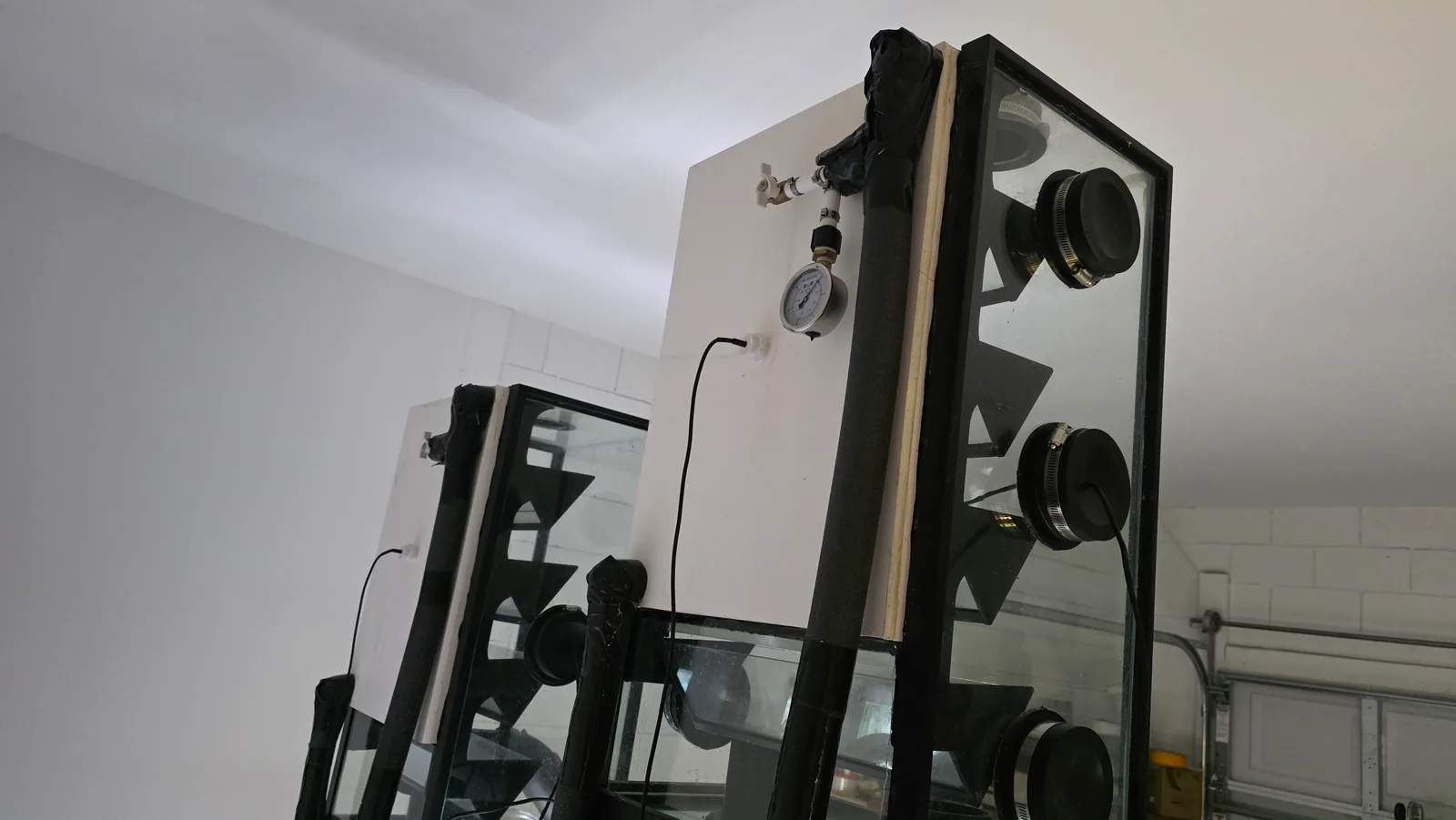
The Climate System's primary ecological output is condensation: water vapor converted to liquid water that the Rain System then delivers as rainfall.
The Climate System's primary ecological output is condensation: water vapor converted to liquid water that the Rain System then delivers as rainfall.
The Climate System's primary ecological output is condensation: water vapor converted to liquid water that the Rain System then delivers as rainfall. Without the Climate System, the rain cycle stops. The consequences cascade through every terrestrial and edge biome: the Lowland Meadow's plant community loses its only freshwater input; the Mangrove Forest's moist microclimate fails; cockroach, isopod, Amber Snail, and other moisture-dependent organisms face desiccation pressure. The Climate System is the physical foundation of the terrestrial food web. Secondarily, condensation-driven humidity across the interior glass surface creates localized moist zones that extend the activity windows of moisture-dependent organisms (Amber Snails on Lakeshore glass, periwinkles and Eastern Melampus on Marine Shore glass, isopods on moist substrate surfaces) beyond what passive atmospheric humidity alone would support.
Chiller downtime and rain cycle: The chiller is currently under repair via a confirmed bypass-pump plan (July 13, 2026), not yet built. Without active cooling, condensation is reduced or absent. The first ecological consequence is in the terrestrial realm: reduced rainfall to the Lowland Meadow and Mangrove Forest. The ecological chain from chiller downtime to plant health to herbivore and detritivore response is the most direct hardware-to-ecology dependency in the system, and its current restoration timeline is not confirmed in this record.
Sensor reliability: Biomes 2-5 have documented SHT31-D sensor health issues (water damage, wiring problems). DS18B20 coolant readings also depend on reliable I2C and GPIO4 connections. Until the June 2026 sensor repair pass is complete, climate telemetry from Biomes 2-5 should be treated as potentially unreliable.
Cooling asymmetry (narrowing for Freshwater Lake, July 10, 2026): All four atmosphere tanks receive one exchanger each (Biomes 2-5). Freshwater Lake and Seagrass Meadow have had no atmosphere tanks and no direct Climate System coverage. This is beginning to change for the Freshwater Lake specifically: the rear glass background was fully removed July 10, 2026 to prepare the mounting surface for a planned fifth heat exchanger, directly connected to the existing Daphnia/Moina temperature-limitation hypothesis in that biome. The exchanger itself is not yet fabricated or installed. The September 8, 2026 plan includes one of the six new biome exchangers for Seagrass Meadow, while its new atmosphere remains a later possibility.
Fall 2026 development direction (September 8, 2026 plan): The seasonal plan includes reliable six-biome sensing and controls; four existing atmospheres with working rain/cloud infrastructure; a permanent chiller backbone; six new biome exchangers plus four repaired/replumbed atmosphere exchangers; independent pump feedback control across the baseline ten thermal branches; six-biome history and historical visualization; and commissioning/baseline data sufficient to begin system-dynamics study. The preferred sequence is sensing, atmosphere/rain rebuild with safe habitat access, backbone, six exchangers, pump/control upgrades, staged commissioning, then baseline/data study. The two new aquatic atmospheres and possible twelve branches remain later possibilities only after the core works. Precise real-location weather replication and mature seasonal simulation remain post-Fall directions.
This chronicle is connected here as related context. Open the primary chronicle for the full story.
This chronicle is connected here as related context. Open the primary chronicle for the full story.
This chronicle is connected here as related context. Open the primary chronicle for the full story.