Control System

Environmental monitoring is foundational to scientific management of any enclosed ecosystem.
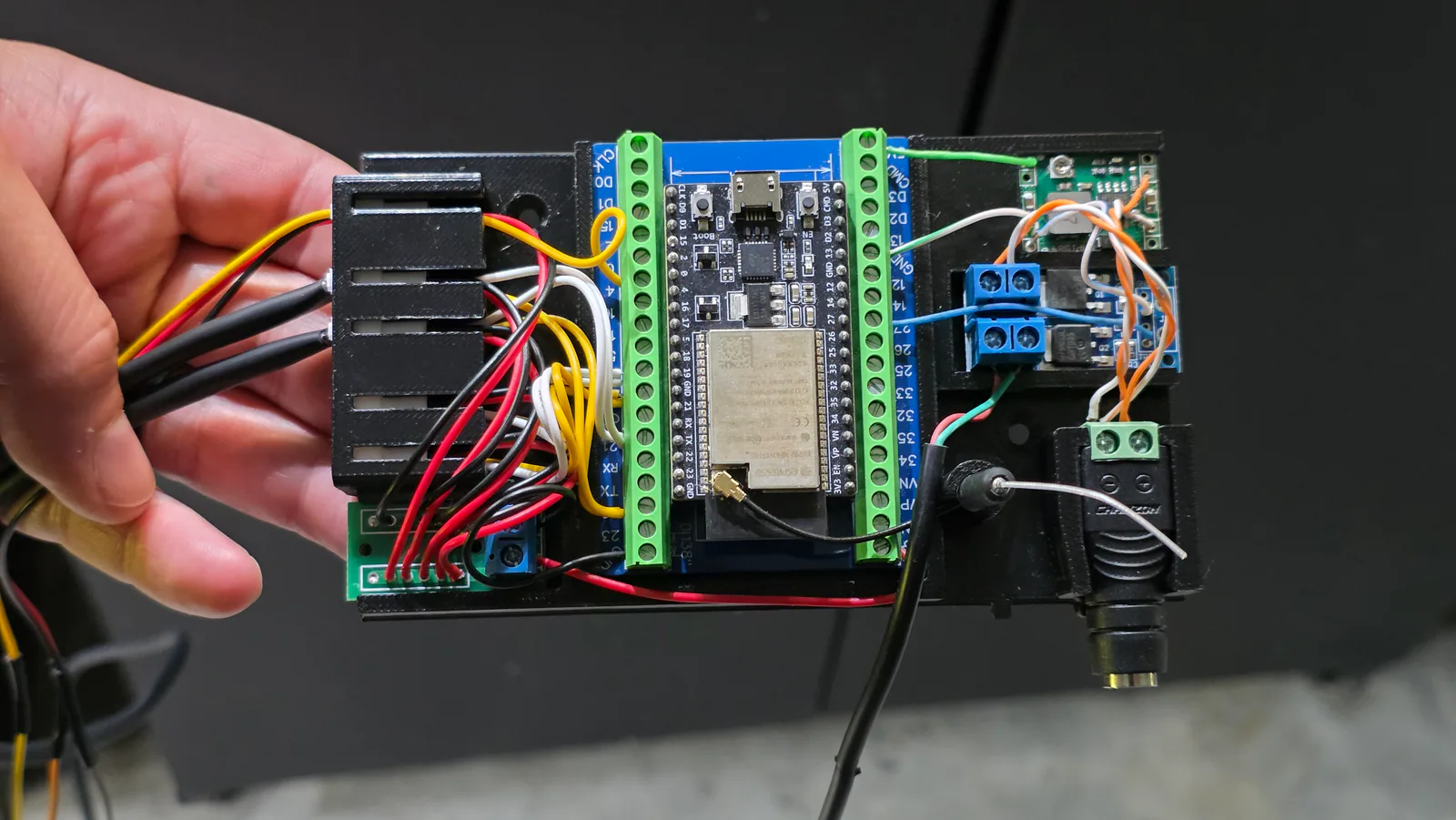
Control System

Overview

Environmental monitoring is foundational to scientific management of any enclosed ecosystem.

What This System Is

Ecological Context

Environmental monitoring is foundational to scientific management of any enclosed ecosystem. Without confirmed temperature, humidity, dissolved oxygen, pH, salinity, and light data, ecological claims about organism response to conditions are hypotheses rather than verified facts. The Control System is the pathway by which hardware state can become ecological evidence: a temperature reading, verified against a known working sensor, taken at a known time, is the kind of datum that converts an ecological inference into a confirmed claim. The distributed architecture of the Control System is designed for resilience at the biome level. Each ESP32 node owns its local loop: it reads its sensors, publishes telemetry to the MQTT broker, subscribes to setpoint updates where implemented, and regulates the local climate pump from the last known setpoint. If the broker, the Wyse server, or the Opal network is temporarily unavailable, each biome node continues its local regulation without interruption. The climate function does not depend on the network being up. The MQTT model separates concerns cleanly: the ESP32 owns local sensor reading, local display, and local pump control; higher-level software on the network owns setpoint publishing and telemetry logging. This means telemetry can be monitored from MQTT without interfering with hardware control, and hardware behavior does not require the software layer to be running.

What Is Confirmed

  • Six ESP32 nodes (one per biome) running PlatformIO/Arduino firmware.
  • Biomes 2-5: full sensor node architecture (dual-bus SHT31-D, DS18B20 coolant probe, dual OLED, MOSFET climate pump control).
  • Biome 1: WiFi/OTA/MQTT firmware; no sensors installed yet.
  • Biome 6: Wave and Tide controller only; not a telemetry sensor node.
  • Mosquitto broker running on Dell Wyse 3040.
  • Each biome node regulates climate pump locally from last known setpoint even when MQTT/network is unavailable.
  • Six black PETG 12V junction boxes fabricated and installed to biome cabinets with power rail cable routed through all six. WAGO lever-nut splice connections at all six boxes completed (incrementally, June 16-23, 2026) and verified clean via multimeter under load as of July 21, 2026, with no voltage drop at any junction point, confirming solid electrical contact and full power delivery the length of the rail.
  • 3D-printed electronics enclosure design finalized as of June 30, 2026; final prototype before fabrication. Enclosures not yet fabricated or installed.
  • As of July 2026, only one electronics enclosure had been mounted to a biome (July 9, 2026), and it was removed within days after direct-wired sensor harnesses proved difficult to service once installed. This motivated the JST-PH connector redesign.
  • First working prototype of the temperature and humidity sensor housing completed and successfully tested as of July 10, 2026, advancing the planned Biomes 2-5 sensor replacement/protection scheme from design to a tested build. Not yet mounted or installed in any biome.
  • Temperature and humidity sensor housing encapsulation material finalized as 100% silicone as of July 16, 2026, superseding the earlier planned waterproof two-part potting epoxy.
  • Five of six biome ESP32 controllers (all except Seagrass Meadow) are assembled and connected inside their electronics enclosures as of July 16, 2026; Seagrass Meadow's controller remains in active use running the Wave and Tide system and will be connected last, at the final stage of the control-system installation.
  • Sensor and display signal connector standard confirmed as JST-PH 2.0mm as of July 16, 2026, replacing direct terminal-block wiring of sensor harnesses. The 12V power entry to each electronics box uses a CHANZON 5.5mm x 2.1mm DC barrel jack, replacing an originally planned GX16 2-pin aviation connector.
  • Connector count per electronics box finalized at five (four 4-pin, one 3-pin) as of July 22, 2026.
  • JST-PH connector mount design finalized: a horizontal-clip mount failed under insertion force (July 27, 2026); a vertical mount with an integrated flexible retaining tab was prototyped successfully (July 29, 2026) and validated in a full electronics-enclosure print (July 30, 2026).
  • A full assembled control node (sensor-plus-OLED harness, all five JST connections, pump-control MOSFET) tested successfully end-to-end as a complete plug-in assembly, August 5, 2026, using an exposed, unsealed sensor.

Active Tensions

Sensor reliability before ecological claims: The documented SHT31-D health issues in Biomes 2-5 mean the telemetry layer is partially unreliable until the sensor replacement and rewire pass is complete. Temperature or humidity readings should not be treated as confirmed ecological evidence without knowing which sensors are currently functioning. This is the most immediate data quality problem in the Control System.

Biome 1 and 6 sensor gaps: Freshwater Lake (the primary active ecological arc with the post-Flagfish food-web reset) has no sensors installed. All environmental claims about the Freshwater Lake's temperature, humidity, and water conditions are inferred or pending. Seagrass Meadow (the site of the producer succession arc and the detritus pulse risk) similarly lacks sensor telemetry for the water column. The two most ecologically active biomes as of June 2026 are the two with the least telemetry coverage.

Deployed sensor model: Current deployed hardware is SHT31-D.