Gracilaria tikvahiae

Graceful redweed

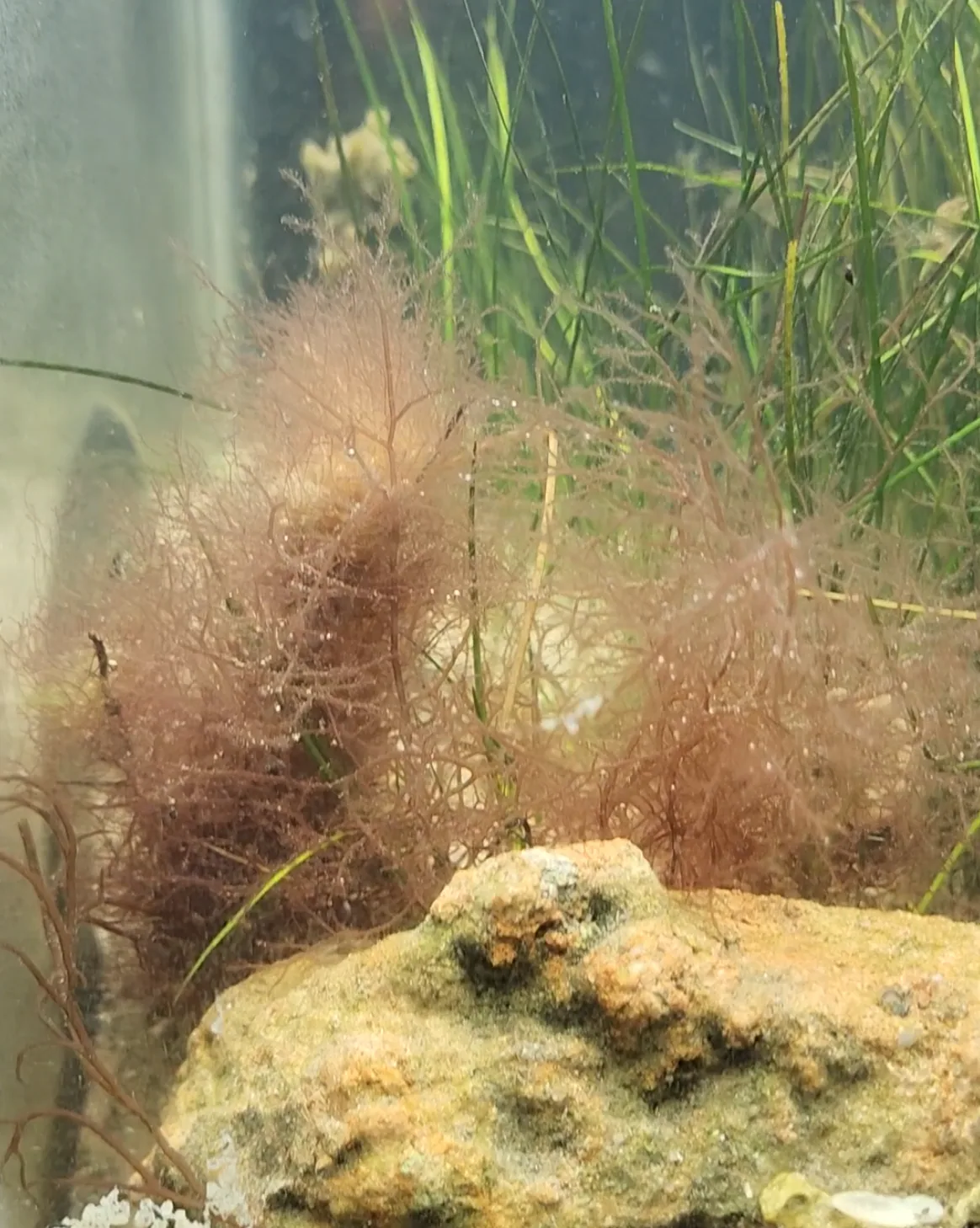
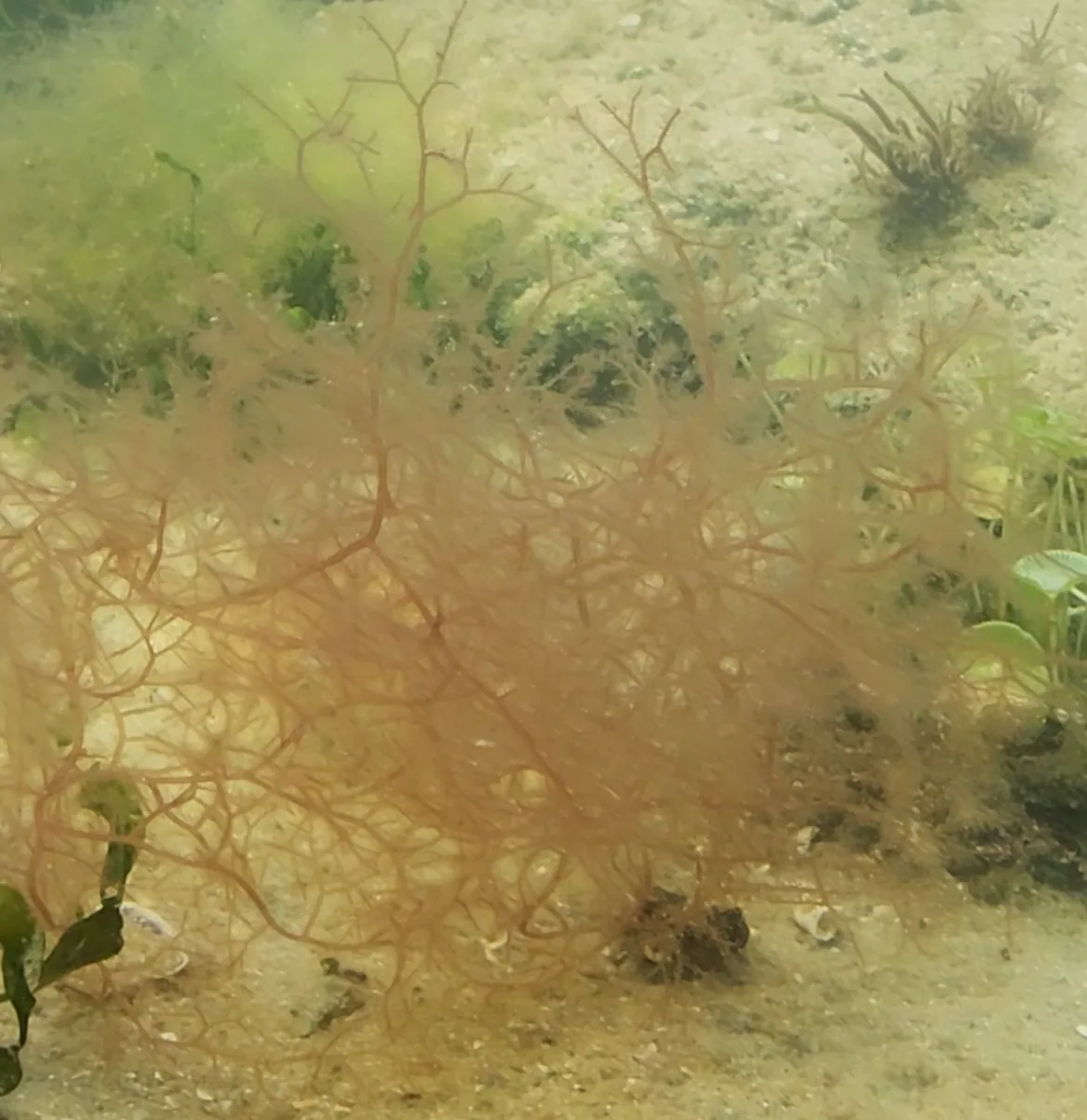
A branching red macroalga that spread through the Seagrass Meadow light layer and became the main food target for the resident Variegated Sea Urchin, which was observed grazing on it actively through May 2026.

Visual Data Unavailable

Overview

Graceful Redweed (Gracilaria tikvahiae) is a branching red macroalga established in the miniBIOTA Seagrass Meadow. It arrived on November 11, 2024 as a hitchhiker or sourced introduction and expanded rapidly into the upper light layer of the biome, competing with Shoal Grass for light and nutrients. By late April 2026, the surviving Variegated Sea Urchin was confirmed actively feeding on it. By May 3, 2026, the original dense lower benthic cluster at the back corner of the Seagrass Meadow had effectively disappeared, while a mat of redweed along the upper portion of that same wall remained. Whether the upper mat persists, was further grazed, or was affected by subsequent events has not been confirmed. Population status is Uncertain.

Identity

  • Common name: Graceful Redweed
  • Alternate names: gracilaria, red algae, ogo, limu, red seaweed, gracilariopsis, sea moss (informal)
  • Scientific name: Gracilaria tikvahiae
  • Identification confidence: Confirmed
  • Uncertainty label: Present, extent unresolved

Taxonomy

  • Kingdom: Plantae (Archaeplastida)
  • Phylum: Rhodophyta
  • Class: Florideophyceae
  • Order: Gracilariales
  • Family: Gracilariaceae
  • Genus: Gracilaria
  • Species: tikvahiae

Natural History

Range and Florida Relevance

Gracilaria tikvahiae is distributed from the western Atlantic coast of North America through the Caribbean and into South America. It is common in Florida's shallow coastal and estuarine environments, including seagrass beds, oyster reefs, and sheltered bays. It is one of the most studied macroalgae in North American coastal systems, widely used in aquaculture as a food source for urchins, abalone, and other grazers. Its presence in miniBIOTA is consistent with natural Florida coastal dispersal and its tendency to arrive as a fragment on shells, live rock, or other introductions.

Habitat and Form

Gracilaria tikvahiae grows as a branching, cylindrical-stemmed thallus that can be anchored to hard substrate or shell fragments via a small holdfast, or free-floating as a buoyant mat. It typically colonizes shallow, high-light zones first and can extend into deeper benthic positions when light allows. In miniBIOTA, it was observed in both a lower benthic cluster (at the back corner of the Seagrass Meadow substrate) and as an upper mat near the water surface on the same side of the biome.

Photosynthesis and Pigmentation

Gracilaria tikvahiae uses red phycoerythrin pigments to absorb light wavelengths that penetrate deeper water, allowing it to photosynthesize in conditions where green algae are less competitive. It directly absorbs dissolved nitrates, phosphates, and ammonium from the water column, making it a fast-growing opportunist in nutrient-enriched systems. Growth rates can reach biomass doubling within five to seven days under optimal light, flow, and nutrient conditions.

Reproduction

Gracilaria tikvahiae has a complex triphasic life history alternating between free-living gametophytes, microscopic carposporophytes, and free-living tetrasporophytes. In captive systems, reproduction is primarily vegetative: water movement fragments branches, and detached pieces anchor to shell fragments or substrate and regenerate into independent plants. In miniBIOTA, vegetative fragmentation is the documented mode of reproduction, and the population is classified as Confirmed Breeding.

Tolerance Ranges

Gracilaria tikvahiae is eurythermal and euryhaline, tolerant of subtropical to warm-temperate temperatures (approximately 12 to 31 degrees Celsius) and a range of salinities. It is highly tolerant of varying nutrient loads and can persist across typical marine pH (7.8 to 8.4). It is sensitive to prolonged darkness or severe shading, which causes tissue bleaching, fragmentation, and rapid cellular decay. It requires moderate to high light and constant water movement to sustain rapid growth.

Ecological Role

Graceful Redweed is a fast-growing photosynthetic producer in the Seagrass Meadow that competes directly with Shoal Grass for light and dissolved nutrients in the upper water column. When well-established, it absorbs excess nitrate and phosphate from the water, potentially reducing the nutrients available to support further algal blooms. Its dense branching structure also provides shelter for amphipods, copepods, and marine scuds that use it to escape visual predators.

The competing risk in miniBIOTA is that Graceful Redweed can shade Shoal Grass and other producers if its growth goes unchecked, shifting the biome away from seagrass-dominated structure toward macroalgal dominance. The Variegated Sea Urchin was introduced partly to address this dynamic, and direct grazing was confirmed in late April and early May 2026. Whether the grazing was sufficient to substantially reduce or control the redweed, or whether the lower cluster's disappearance was due primarily to shading, decomposition, or a combination of factors, has not been resolved.

miniBIOTA Evidence

Introduction Context

Graceful Redweed arrived in the Seagrass Meadow on November 11, 2024, either as a hitchhiker on another introduction or as a sourced specimen from a shallow warm-temperate Florida estuary. No specific collection site or vendor has been recorded. The species established without deliberate management intent and expanded into the macroalgal pressure context that developed in the Seagrass Meadow through 2025 and 2026.

Observation Timeline

  • November 11, 2024: Database date of first introduction. No dedicated observation file located for the founding event.
  • April 29, 2026: One of two Variegated Sea Urchins introduced to the Seagrass Meadow was confirmed to have survived. Early observations already confirmed it was feeding on Graceful Redweed. No media.
  • May 2, 2026: The Variegated Sea Urchin was observed remaining on Graceful Redweed throughout the day and actively feeding. The observer noted Graceful Redweed "has been expanding extensively" and that sustained urchin feeding "may help reduce its abundance." Video evidence.
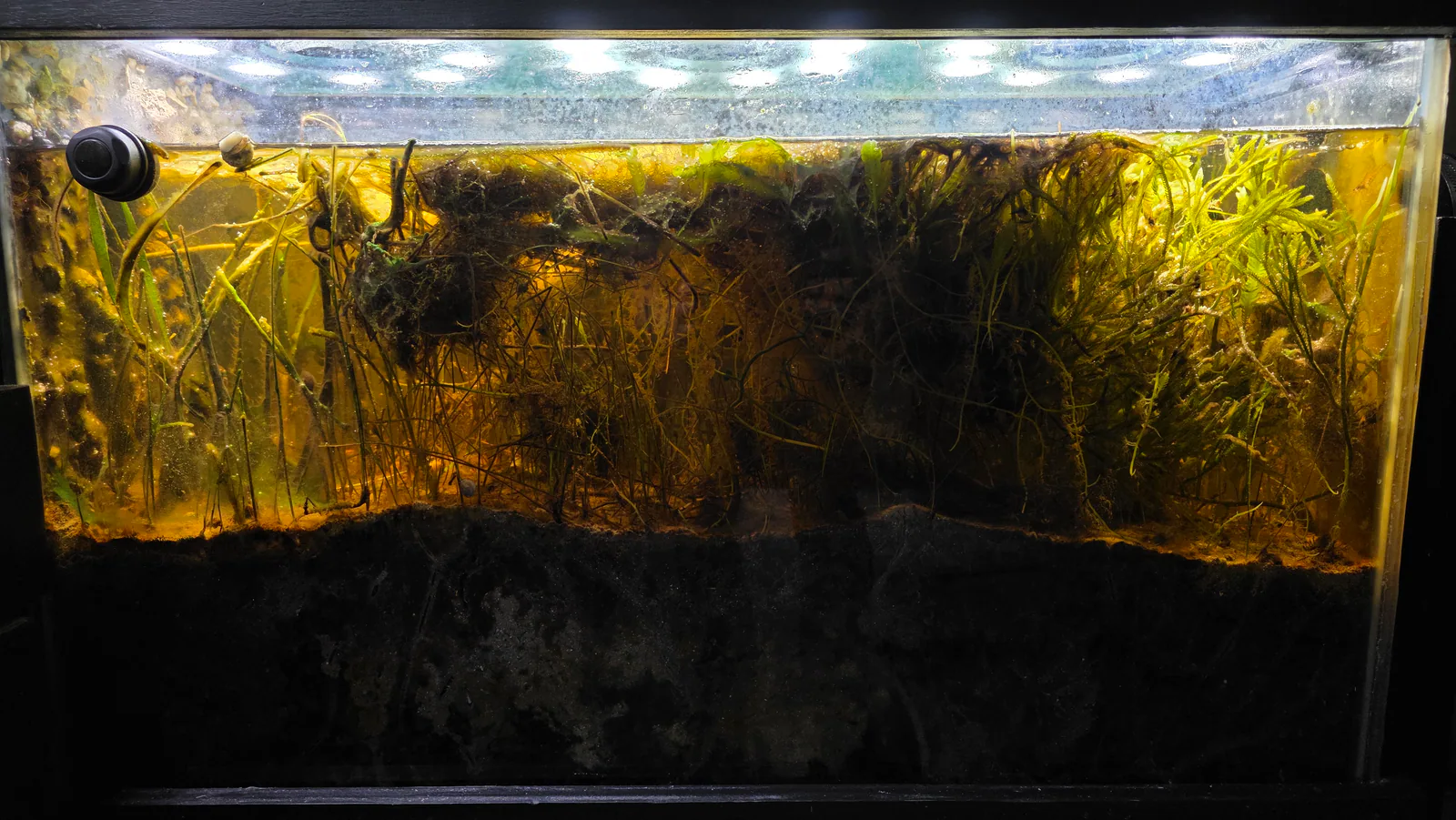
  • May 3, 2026: The original dense Graceful Redweed cluster at the back corner of the Seagrass Meadow had effectively disappeared. The lower portion that once formed a substantial mass near the substrate was no longer present; remaining algae was concentrated as a mat along the upper portion of that side of the tank. The observer attributed this change to reduced light availability reaching the lower cluster, with the material having decomposed and been consumed. Video evidence.
  • June 14, 2026: Remaining Graceful Red Weed observed being actively consumed and fragmented by crabs and hermit crabs following the June 12, 2026 large marine introduction (18 hermit crabs, 75 shrimp). As biomass is removed, more light is reaching the substrate below. Shoal Grass observed beginning to reestablish in areas previously dominated by Graceful Red Weed and cyanobacteria. No video.

What Is Confirmed

  • Graceful Redweed was present in the Seagrass Meadow from at least November 2024 and expanded extensively through 2025 and early 2026.
  • The Variegated Sea Urchin was directly observed feeding on Graceful Redweed on April 29 and May 2, 2026, with video evidence from May 2.
  • By May 3, 2026, the original lower benthic cluster at the back corner had disappeared; an upper mat along the same wall persisted.
  • The observer identified reduced light availability as the likely cause of the lower cluster's disappearance.
  • On June 14, 2026, remaining Graceful Red Weed actively consumed and fragmented by crabs and hermit crabs; increased light reaching substrate as biomass is removed.

What Is Inferred

  • Urchin grazing may have contributed to or accelerated the lower cluster's decline, but the observer attributed it primarily to light reduction; no single cause was confirmed.
  • The upper mat persisting in the high-light zone near the surface is consistent with the species' tolerance of bright near-surface conditions.
  • The redweed material that disappeared likely decomposed and entered the detritus pathway rather than being entirely consumed.

What Remains Unknown

  • Whether the upper mat is still present after May 3, 2026.
  • Whether the Variegated Sea Urchin has continued grazing on remaining redweed.
  • Whether Shoal Grass has expanded into the space vacated by the lower cluster.
  • The total current extent and biomass of Graceful Redweed in the Seagrass Meadow.
  • What specific combination of shading, grazing, and decomposition caused the lower cluster to disappear.