Caulerpa taxifolia

Fern Alga

With bright feathery fronds anchored to the Seagrass Meadow floor by spreading horizontal runners, this macroalga contributes to primary production and adds structural complexity to the substrate while deterring most grazers through toxins in its tissues.

Overview

Fern Alga (Caulerpa taxifolia) is a bright green feathery macroalga introduced to miniBIOTA's Seagrass Meadow on March 27, 2026 as part of a beach collection that also brought in turtle grass, manatee grass, and giant feather alga. It was added deliberately as a producer diversity species and acknowledged at introduction as a watch species with unresolved outcome. As of June 30, 2026, the species has entered a period of dramatically accelerated growth, attached to the dying remnants of Graceful Redweed with holdfast structures developing downward toward the substrate. Species identity is Confirmed from the introduction record, which explicitly names Caulerpa taxifolia by scientific name.

Identity

  • Common name: Fern Alga
  • Alternate names: green feather alga, fern algae, caulerpa taxifolia, killer algae, feather alga, green feather weed, invasive feather alga
  • Scientific name: Caulerpa taxifolia
  • Identification confidence: Species confirmed by name in introduction record
  • Uncertainty label: Confirmed

Taxonomy

  • Kingdom: Plantae (or Protista, depending on classification system; placed in Chlorophyta / green algae)
  • Phylum: Chlorophyta
  • Class: Ulvophyceae
  • Order: Bryopsidales
  • Family: Caulerpaceae
  • Genus: Caulerpa
  • Species: taxifolia

Taxonomy note: Caulerpa taxifolia is a siphonaceous macroalga: the entire thallus is a single coenocytic cell containing many nuclei, with no division into separate cells. This unusual structure makes it highly resilient to fragmentation, as even small pieces can regenerate.

Natural History

Range and Florida Relevance

Caulerpa taxifolia is native to tropical and subtropical marine habitats worldwide, including Florida, the Caribbean, the Pacific, and the Indian Ocean. In Florida, it is a natural component of shallow coastal marine environments, found in seagrass beds, sandy and muddy bottoms, and reef-adjacent substrate. The Florida wild strain is a native, normal element of the coastal marine ecosystem. The miniBIOTA individual was collected directly from a Florida beach and introduced as wild-collected native plant material.

The species became internationally known through the "killer algae" incident: a highly cold-tolerant strain, likely from aquarium breeding, was accidentally released from the Oceanographic Museum in Monaco in 1984 and spread to cover thousands of hectares of Mediterranean seafloor before eradication efforts largely contained it. That Mediterranean strain has different invasive potential than the Florida native strain and represents a distinct concern in non-native contexts.

Structure and Habitat

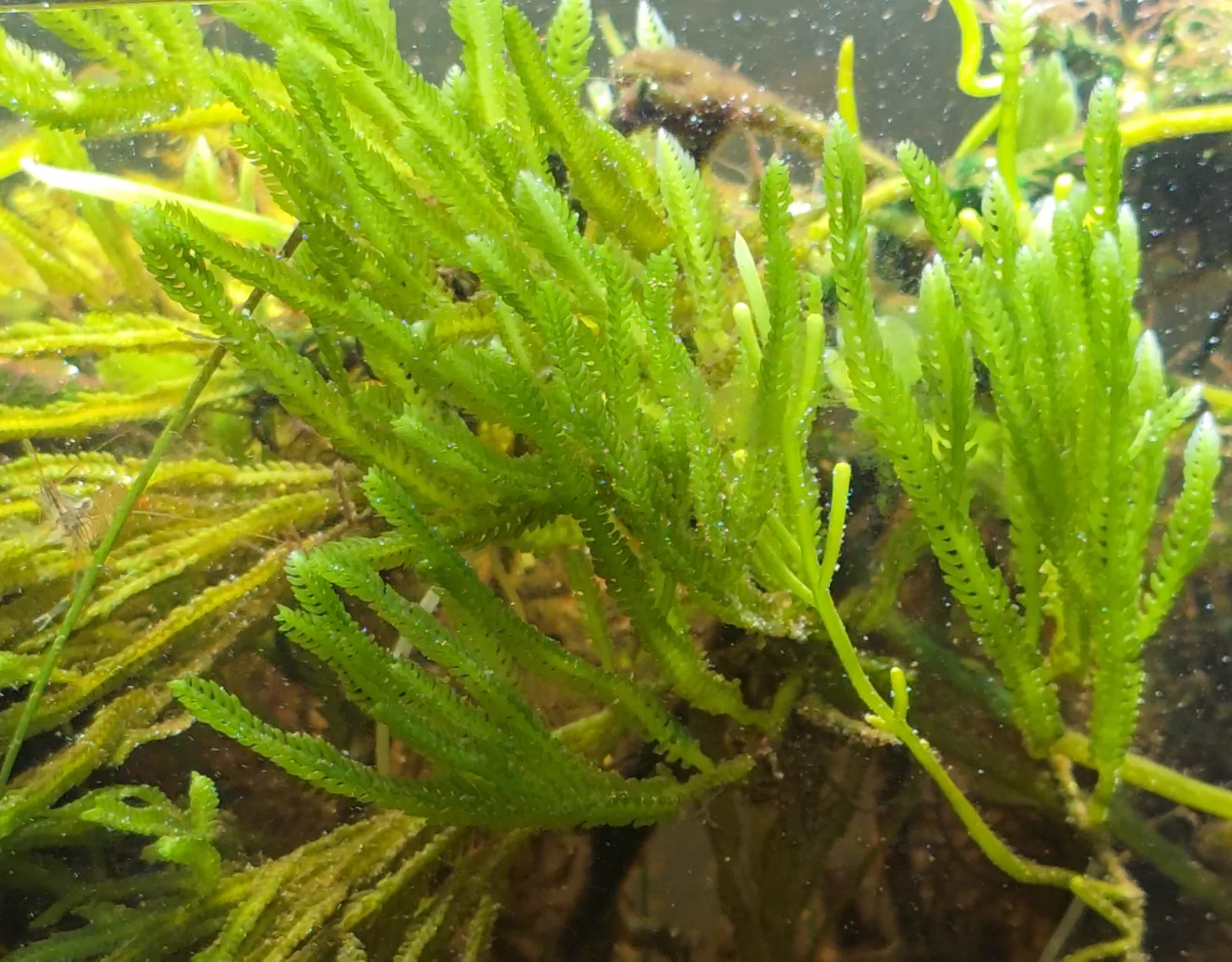
Caulerpa taxifolia has a distinctive feathery appearance. A horizontal stolon creeps along the substrate surface, anchored by rhizoids that penetrate the sediment or grip hard surfaces. Vertical fronds grow upward from the stolon, with lateral branchlets arranged in an alternating pinnate (feather-like) pattern. The fronds are bright green and can reach several centimeters in height.

The species grows on sandy, muddy, and mixed substrates and can colonize seagrass beds, rubble, and bare substrate. It is found from the intertidal zone to depths of 60 meters or more in clear-water tropical environments. In miniBIOTA, it inhabits the Seagrass Meadow substrate alongside manatee grass, turtle grass, and other introduced producers.

Photosynthesis and Nutrition

Like all Caulerpa species, C. taxifolia is a photosynthetic producer. It requires light, carbon dioxide, and dissolved inorganic nutrients (particularly nitrogen and phosphorus) to grow. It competes with other producers for light at the substrate surface and for dissolved nutrients in the water column. In nutrient-rich environments or conditions with low grazing pressure, growth can be rapid.

Chemical Defenses

Caulerpa taxifolia produces caulerpenyne, a sesquiterpene compound that is toxic to most marine herbivores. This chemical defense substantially reduces grazing pressure and is one reason the species can spread aggressively in environments where natural grazers are absent or ineffective. Very few organisms graze C. taxifolia effectively; some specialist sea slugs (Oxynoe and Lobiger species) and a few fish can consume it, but most common marine grazers avoid it. In miniBIOTA, where generalist grazers such as hermit crabs and amphipods are the primary consumers, grazing control of this species is likely limited.

Reproduction

Caulerpa taxifolia reproduces primarily through vegetative growth: the stolon extends horizontally and produces new fronds along its length. Fragmentation is also an effective dispersal mechanism; broken-off fragments can reattach and regenerate a new thallus. Sexual reproduction (gamete release) occurs but is rare and results in death of the thallus; it is not relevant in the miniBIOTA context. In a closed system, the primary growth pathway is vegetative expansion from the introduced fragment or thallus.

Tolerance Ranges

The wild Florida strain of C. taxifolia grows best in warm subtropical to tropical water temperatures consistent with Florida coastal conditions. It tolerates moderate salinity variation but prefers full marine salinities. The species can persist in reduced-light conditions but grows more slowly. No miniBIOTA-specific measurements have been taken.

Ecological Role

Fern Alga is a primary producer in the Seagrass Meadow, contributing to photosynthesis and organic matter production. Its structural fronds can provide shelter and attachment substrate for small invertebrates and epiphytic organisms.

However, because most common grazers cannot or will not eat it due to caulerpenyne, its primary role in a closed system is as an ungrazed producer that competes with other macroalgae and seagrass for light and nutrients. If it spreads unchecked, it can crowd out other producers, reduce seagrass coverage, and alter the structural character of the substrate. This is the risk that led to its "watch species" designation at introduction.

In natural Florida coastal habitats, C. taxifolia is controlled by specialist grazers, competitor plants, and physical disturbance. In miniBIOTA's closed saltwater system, these natural controls may be absent or insufficient, making its long-term trajectory genuinely uncertain.

No symbiotic relationships involving this species have been documented in miniBIOTA.

miniBIOTA Evidence

Introduction

Fern Alga was introduced to miniBIOTA on March 27, 2026 as part of a beach collection that included turtle grass (Thalassia testudinum), manatee grass (Syringodium filiforme), giant feather alga (Caulerpa ashmeadii), a small mud crab, and a possible unidentified amphipod species. Fern Alga was explicitly named by scientific name in the collection record. Introduction was intentional; the species was added as a producer diversity species with risk/watch status acknowledged at the time of introduction.

Observation Timeline

  • March 27, 2026: Introduced to the Seagrass Meadow as part of a beach collection. Named in the collection record as Caulerpa taxifolia. Video documented of each new addition being examined individually and introduced. Fern Alga logged as context species; Turtle Grass was the primary routing species for this observation.
  • June 10, 2026: Last observed date on record. No dedicated observation file for this date; date reflects a live record check.
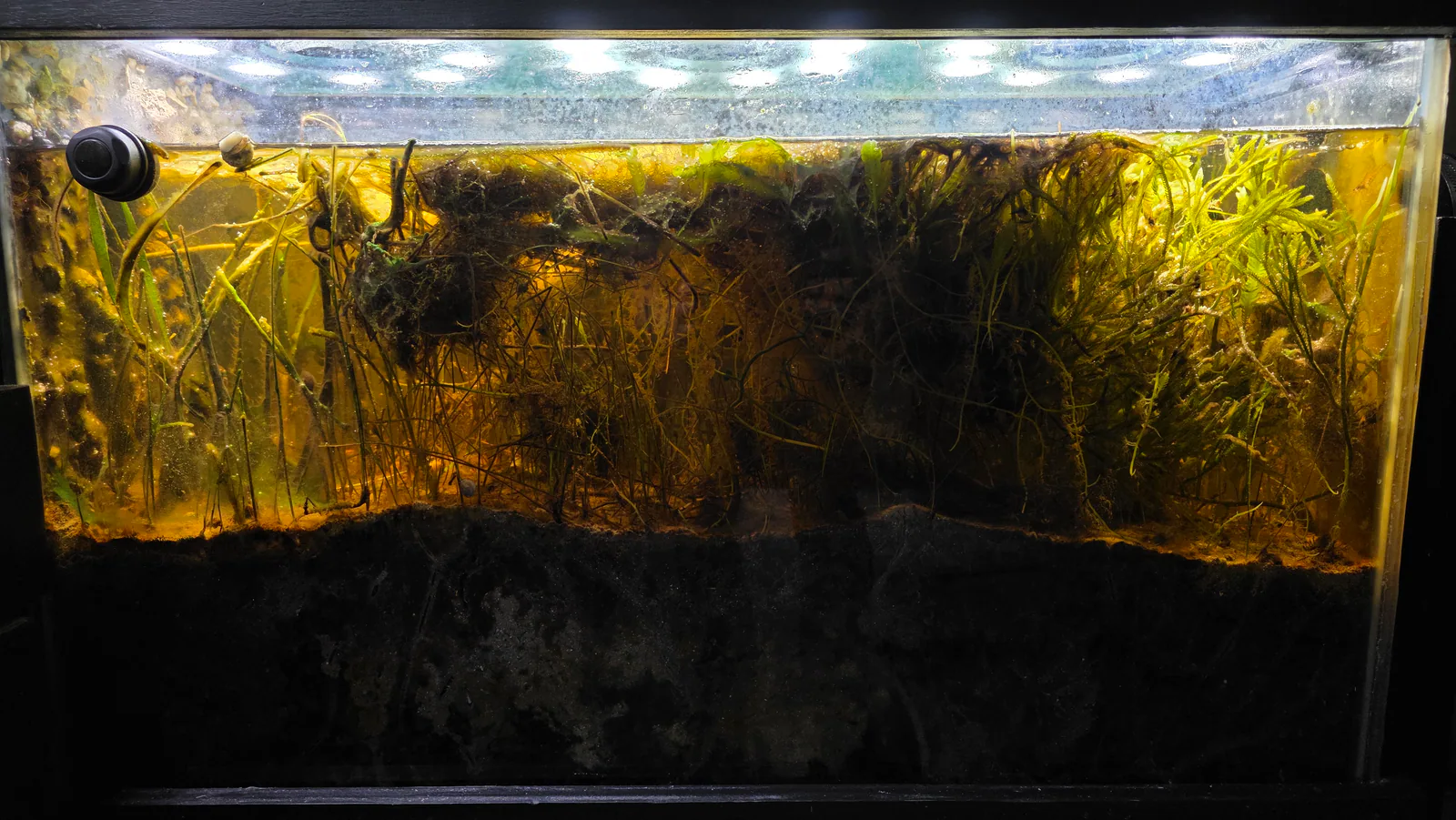
  • June 30, 2026: First major growth event documented since the March 27, 2026 introduction. The alga has entered a period of dramatically accelerated growth and is now visibly expanded compared to its introduction state. It is not anchored to the substrate; it is suspended in the water column, attached to the dying remnants of the Graceful Redweed, which has largely died away. The Graceful Redweed remnants are functioning as a temporary framework keeping the alga suspended. Root-like holdfast structures are developing, extending downward toward the substrate, suggesting an anchoring attempt. Possible growth drivers: improved water circulation from the wave system update, or compounding growth from a larger thallus; neither confirmed. Video documented. Observation record, June 30, 2026.

What Is Confirmed

  • Caulerpa taxifolia introduced to the Seagrass Meadow on March 27, 2026 via wild beach collection.
  • Introduction was intentional and acknowledged as a risk/watch species at the time.
  • Species still on record as active as of June 10, 2026.

What Is Inferred

  • The absence of dedicated observation files between March and June 2026 suggests the species has not caused a dramatic visible change requiring documentation; however, absence of documentation does not confirm either dieback or successful establishment.
  • Chemical defenses in the thallus likely reduce grazing pressure from miniBIOTA's generalist saltwater grazers.

What Remains Unknown

  • Whether the holdfast structures developing as of June 30, 2026 will achieve successful substrate attachment.
  • Whether the rapid growth phase will lead to competitive overgrowth of seagrasses and other producers.
  • Whether any grazer in the system is consuming it.
  • Whether it is competing measurably with manatee grass, turtle grass, or other introduced producers.
  • Whether active removal or management will be needed to prevent competitive dominance.