Halodule wrightii

Shoal grass

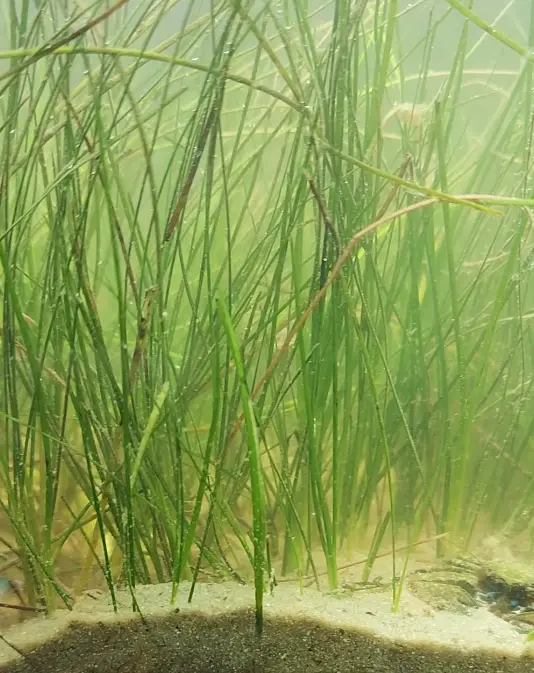
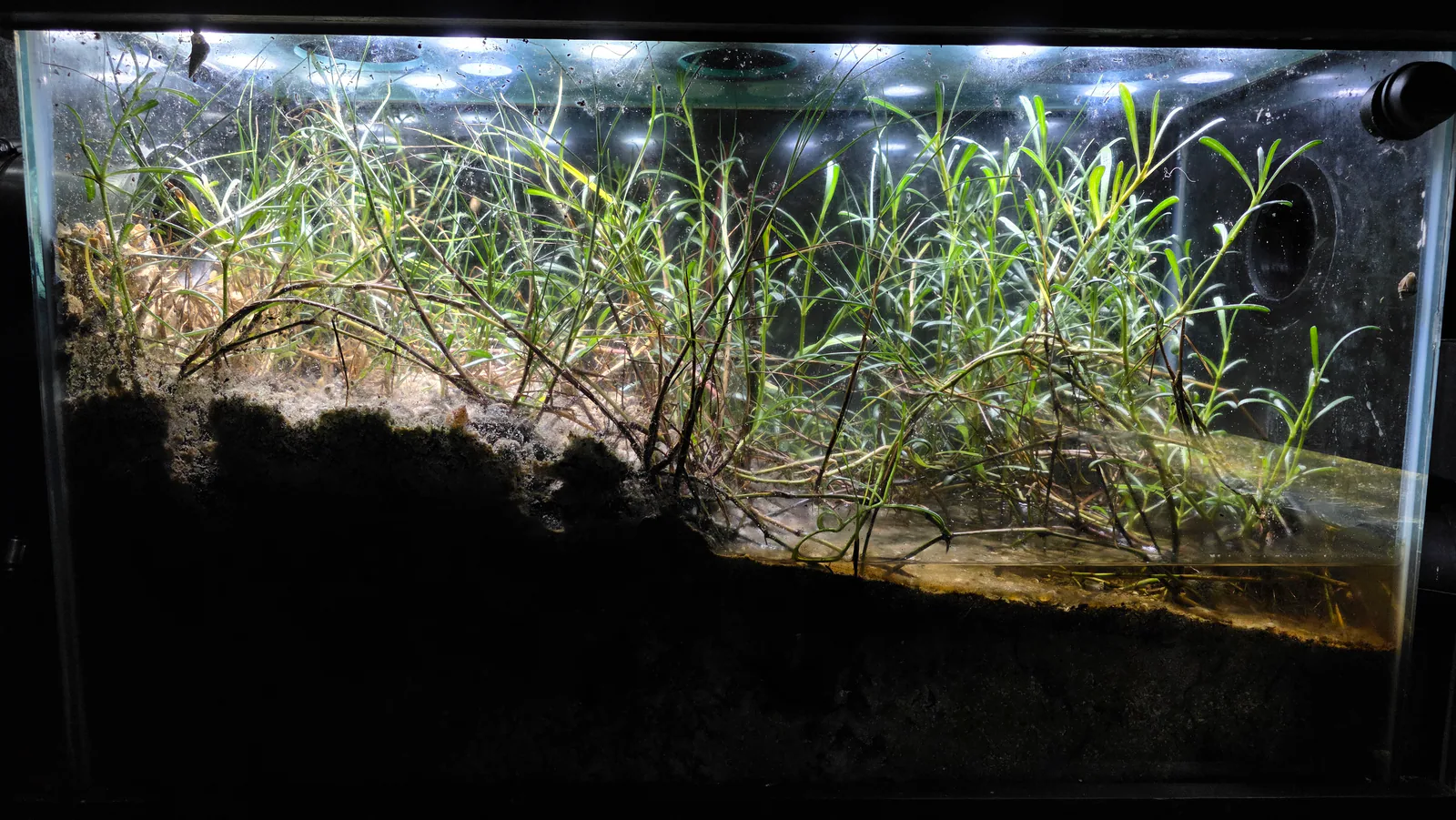
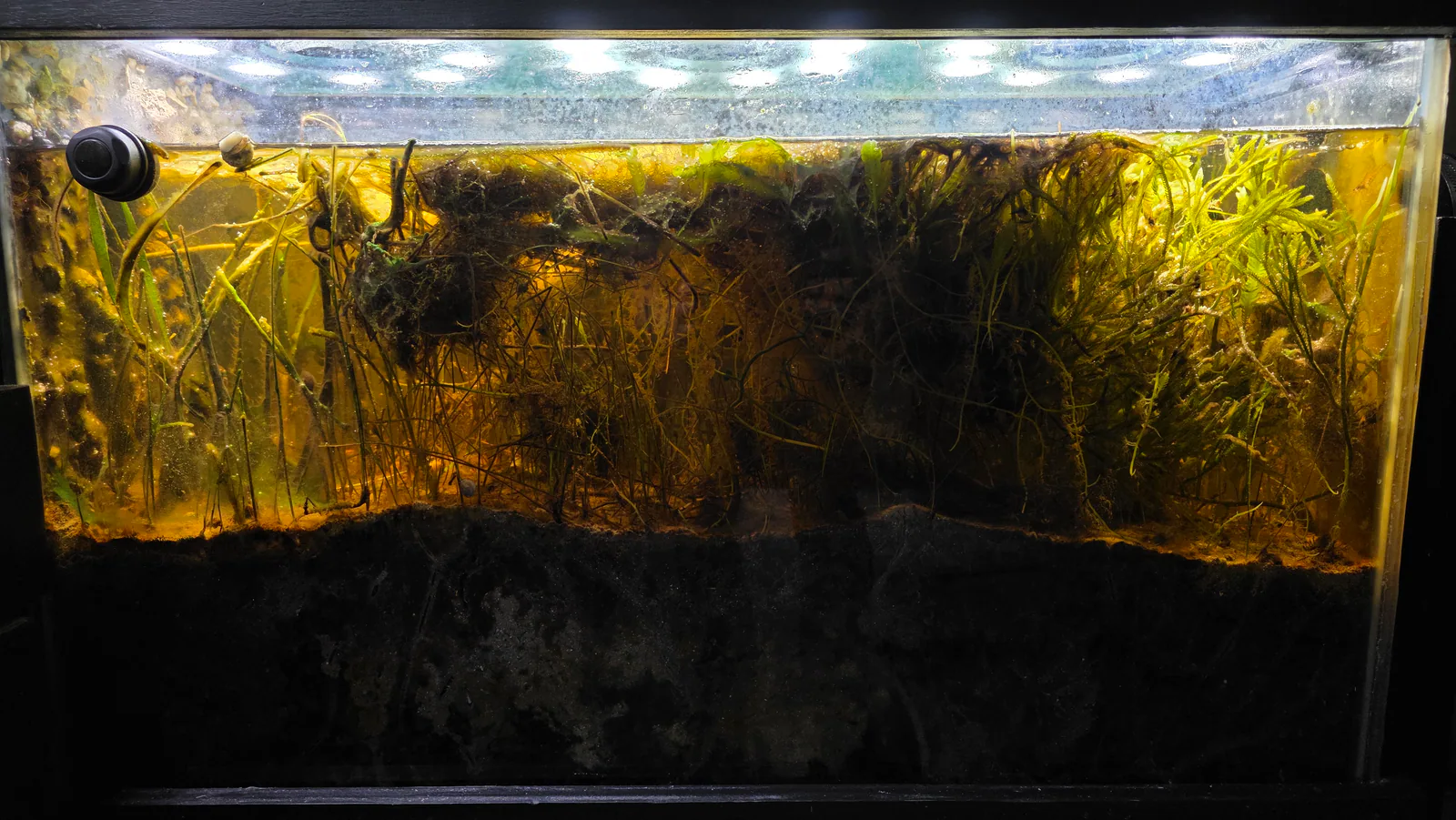
The thin-bladed seagrass that anchors the Seagrass Meadow substrate, spreading outward through underground rhizomes and cycling through seasonal leaf shedding that feeds worms, amphipods, and other benthic processors in the sediment below.

Overview

Shoal Grass (Halodule wrightii) is the foundational seagrass of the miniBIOTA Seagrass Meadow. It was first introduced on December 10, 2023, went locally extinct during the February 2024 ecological collapse, and was reintroduced on June 15, 2024. The population has recovered to an estimated 30 shoots, classified as Established and Approaching Capacity with a Moderate growth rate. Reproduction proceeds through vegetative rhizome spread. The primary unresolved ecological pressure is light competition from macroalgae, Graceful Redweed, and cyanobacteria-like surface growth, all of which share the Seagrass Meadow canopy. Current coverage and light access have not been freshly measured.

Identity

  • Common name: Shoal Grass
  • Alternate names: shoalgrass, narrowleaf seagrass, needle seagrass, seagrass, halodule, thin seagrass
  • Scientific name: Halodule wrightii
  • Identification confidence: Confirmed
  • Uncertainty label: Established, light access unresolved

Taxonomy

  • Kingdom: Plantae
  • Phylum: Tracheophyta
  • Class: Liliopsida
  • Order: Alismatales
  • Family: Cymodoceaceae
  • Genus: Halodule
  • Species: wrightii

Natural History

Range and Florida Relevance

Halodule wrightii is distributed across tropical and subtropical shallow coastal waters of the Atlantic and Gulf of Mexico, from North Carolina south through the Caribbean and into South America. It is one of Florida's seven recognized seagrass species and is especially common in shallow estuarine bays, tidal flats, and nearshore areas with sandy or silty substrate. Florida DEP lists it as an early colonizer that can establish where conditions are too shallow or turbid for other seagrass species. Its presence in miniBIOTA reflects its ecological role as a pioneer that establishes the seagrass bed structure other organisms depend on.

Habitat

Halodule wrightii grows in sandy to silty shallow-water sediment, anchoring through an extensive horizontal rhizome network that extends through the upper substrate layer and sends up blade shoots at each node. Blades are thin and narrow, reaching a few centimeters to around ten centimeters in length depending on light and nutrient conditions. In miniBIOTA, Shoal Grass occupies the sandy substrate of the Seagrass Meadow and is also listed as present in the Marine Shore. It requires high light to sustain photosynthesis and blade growth.

Seasonal Cycle

Halodule wrightii shows seasonal growth patterns typical of subtropical seagrasses: blade growth and photosynthetic production peak in summer, while winter brings reduced growth and leaf shedding. Shed blades accumulate in the substrate as detritus, where they are processed by deposit feeders, amphipods, and other benthic organisms. In miniBIOTA, this seasonal detritus pulse from shed Shoal Grass leaves has been recognized as a meaningful nutrient input to the benthic community. Whether the winter shedding cycle represents normal seasonal turnover, stress-related dieback, or a combination has not been determined.

Reproduction

Halodule wrightii spreads primarily by vegetative growth: horizontal rhizomes extend through the substrate and produce new shoot nodes, allowing the plant to expand its footprint without sexual reproduction. Flowering and seed production are possible but uncommon in captive systems. In miniBIOTA, reproductive spread is classified as Confirmed Breeding, attributed to vegetative rhizome growth that has allowed the population to recover from the June 2024 reintroduction to an estimated 30 shoots.

Tolerance Ranges

Halodule wrightii is tolerant of a broad range of salinities (approximately 10 to 40 ppt) and is found across estuarine to full marine conditions. It is less tolerant of sustained low light than some other seagrasses, making it vulnerable to shading from macroalgae overgrowth. In miniBIOTA, the seagrass has grown under normal system lighting conditions, but PAR, salinity, dissolved oxygen, temperature, and pH have not been formally measured.

Ecological Role

Shoal Grass is the foundational primary producer of the Seagrass Meadow, responsible for photosynthesis-based oxygen production, organic carbon input into the food web, and sediment stabilization through the underground rhizome network. Its blade structure provides physical habitat for small invertebrates, amphipods, and grazing snails among the blades. Its seasonal leaf shedding contributes a recurring detritus pulse to the benthic layer, feeding spaghetti worms, ragworms, marine scuds, and other deposit feeders.

The primary ecological uncertainty in miniBIOTA is whether Shoal Grass can maintain its structural role as the dominant producer against sustained pressure from macroalgae, Graceful Redweed, and cyanobacteria-like surface growth, all of which compete for the same light layer. Sea urchins were introduced to the Seagrass Meadow in April 2026 as macroalgae grazers and detritus processors; whether their presence has reduced the competitive pressure on Shoal Grass has not been measured.

miniBIOTA Evidence

Introduction Context

Shoal Grass was first introduced to miniBIOTA on December 10, 2023, establishing the Seagrass Meadow as a seagrass-based saltwater biome. The February 2024 ecological collapse caused the species to go locally extinct. It was reintroduced on June 15, 2024, and has since recovered to an estimated 30 shoots. No specific collection site or vendor has been documented for either the original introduction or the reintroduction.

Observation Timeline

  • December 10, 2023: First introduction as the founding seagrass of the Seagrass Meadow. No dedicated observation file located for this event.
  • February 2024: Ecological collapse; Shoal Grass went locally extinct. No specific observation file located for this event.
  • June 15, 2024: Reintroduction following the February 2024 collapse, per the DB identity origin notes. No dedicated observation file located for this event.
  • April 26, 2026: Variegated Sea Urchins collected for drip acclimation, specifically to address macroalgae dominance in the Seagrass Meadow. The observer noted the sea urchins may also feed on detritus from dead Shoal Grass leaves. The urchins had not yet entered the system at this point. Video evidence (obs-2026-04-26-0231; primary routing: Variegated Sea Urchin).

What Is Confirmed

  • Shoal Grass was first introduced December 10, 2023 and reintroduced June 15, 2024 after local extinction.
  • The population has recovered to an estimated 30 shoots, Established and Approaching Capacity.
  • Reproduction via rhizome spread is confirmed from the population recovery.
  • Macroalgae, Graceful Redweed, and cyanobacteria-like growth are active light competitors in the same biome.
  • Sea urchins were introduced in 2026 to graze macroalgae and process Shoal Grass detritus.
  • Seasonal blade shedding in winter creates a detritus pulse documented in the Seagrass Meadow story.

What Is Inferred

  • The current light access and coverage of Shoal Grass are not freshly measured; persistence is inferred from the Established status and population estimate.
  • Winter detritus from shed Shoal Grass leaves likely feeds the benthic processor community (spaghetti worms, ragworms, marine scuds).
  • Macroalgae and Graceful Redweed competition may be limiting Shoal Grass light access and expansion, but no specific effect has been measured.

What Remains Unknown

  • Current blade coverage area and light access.
  • Whether the sea urchin introduction has reduced macroalgae pressure on Shoal Grass.
  • Whether winter dieback is a normal seasonal pattern or indicates stress.
  • Whether the population is expanding, contracting, or holding steady since the 2024 reintroduction.
  • Specific collection site for the original introduction and reintroduction material.