Calcinus tibicen

Orangeclaw Hermit Crab

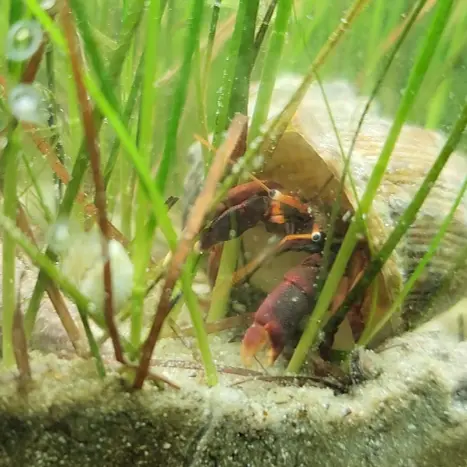
Recognizable by its bold orange claw, this small hermit crab grazes algae and scavenges organic matter across the Seagrass Meadow and Marine Shore, carrying a gastropod shell it can swap for a larger one as it grows.

Overview

The Orangeclaw Hermit Crab (Calcinus tibicen) is a small marine crustacean introduced to miniBIOTA on July 14, 2024, moving through the Seagrass Meadow and Marine Shore while grazing algae and scavenging organic material from substrate surfaces. A single individual is on record, and population status is Vulnerable. Three observations from April 2025 document active algae foraging in a high-current Seagrass Meadow location, the successful uptake of an offered shell, and a shell-conflict with a smaller hermit crab in which the Orangeclaw's main pincher was damaged. The species is identified to species level with confidence. No breeding has been observed and sex remains undetermined.

Identity

  • Common name: Orangeclaw Hermit Crab
  • Alternate names: orange claw hermit, hermit crab, calcinus hermit, orangeclaw hermit
  • Scientific name: Calcinus tibicen
  • Identification confidence: Species confirmed; identified from repeated records including shell use, algae grazing, and orange cheliped coloring
  • Uncertainty label: Confirmed

Taxonomy

  • Kingdom: Animalia
  • Phylum: Arthropoda
  • Class: Malacostraca
  • Order: Decapoda
  • Family: Diogenidae
  • Genus: Calcinus
  • Species: tibicen

Natural History

Range and Florida Relevance

Calcinus tibicen is native to shallow coastal marine habitats throughout the western Atlantic and Caribbean, ranging from Florida and the Gulf of Mexico through the Caribbean islands and south along the Atlantic coast of South America to Brazil. In Florida, this species occurs in shallow marine and intertidal zones along both coasts, particularly in seagrass beds, rocky shoreline edges, and sandy marine substrates. It is a common hermit crab in Florida's near-shore saltwater environments.

Habitat

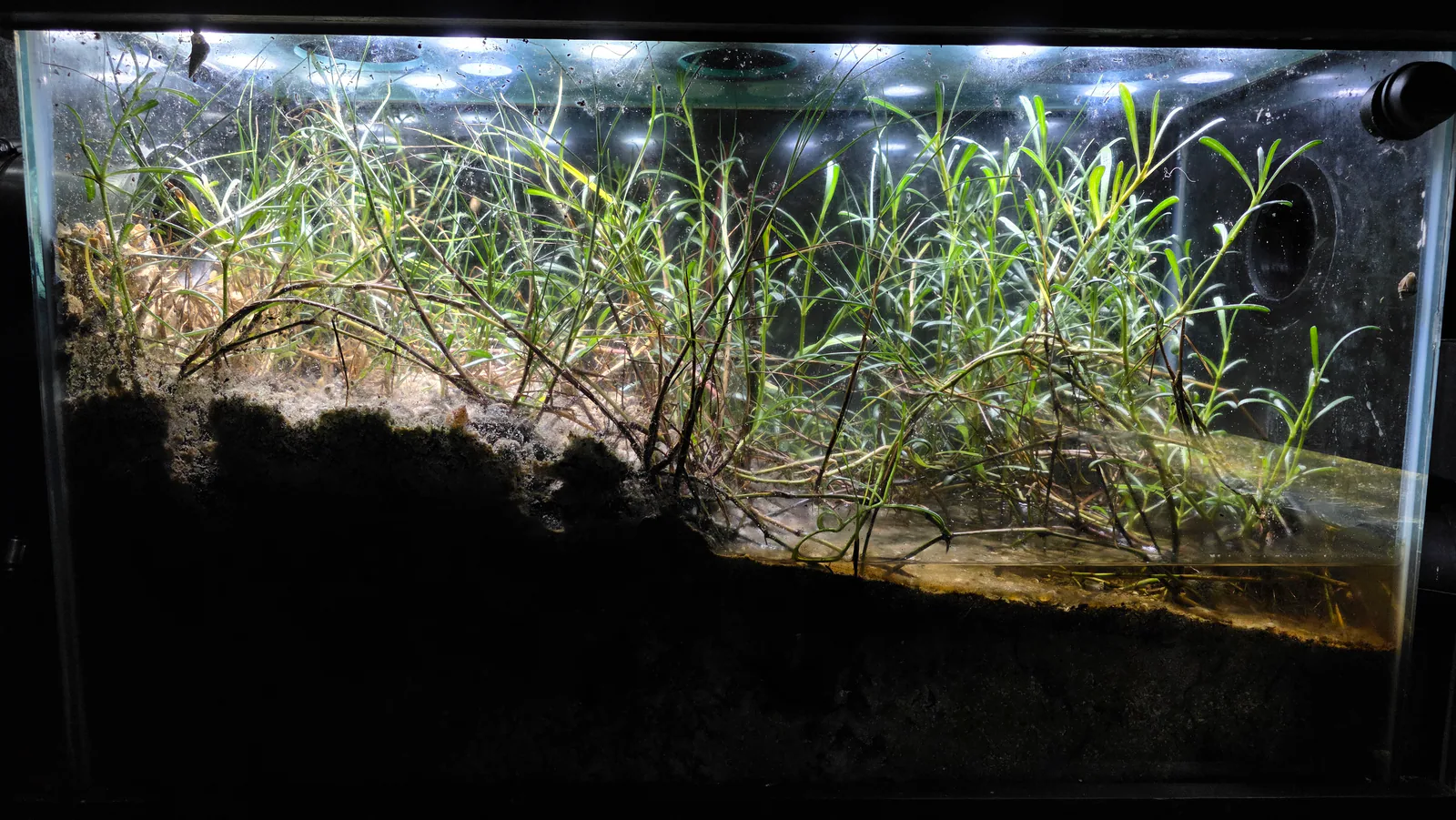
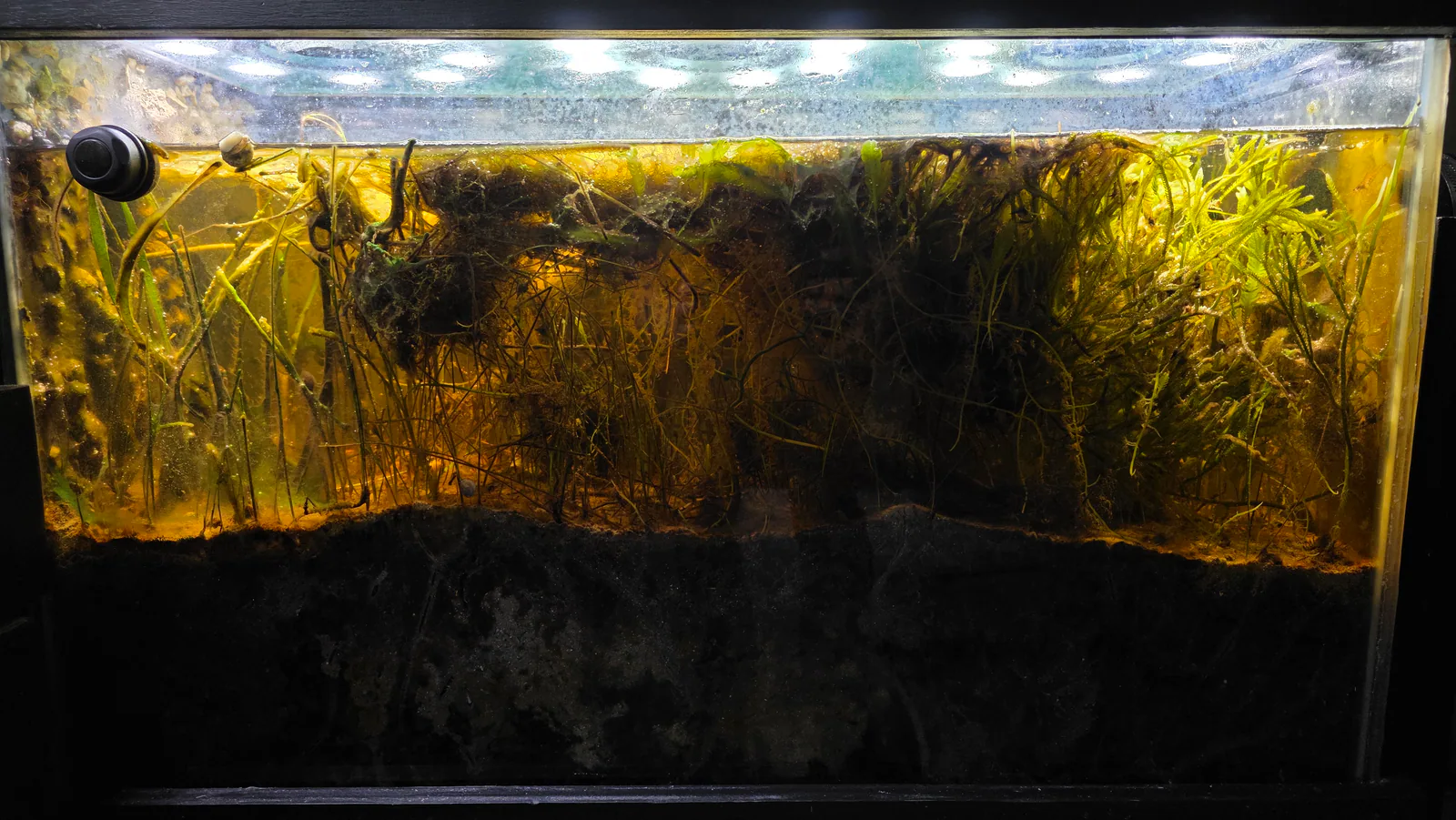
Orangeclaw Hermit Crabs live in shallow subtidal and intertidal marine zones. They are found on sandy and rocky substrates, in seagrass beds, on reef edges, and along rocky shorelines, always remaining in or very close to saltwater. They do not tolerate extended aerial exposure or freshwater conditions. In miniBIOTA, this crab ranges across the Seagrass Meadow and Marine Shore, which together represent the shallow saltwater zone. One individual was documented spending approximately a week in a high-current area of the Seagrass Meadow with heavy algae growth.

Diet

Calcinus tibicen is an omnivorous scavenger and grazer. It feeds on algae scraped from hard surfaces, detritus, carrion, organic particles in sediment, and small invertebrates. The large orange major cheliped (the "orangeclaw") is used for defense and for acquiring shells rather than for prey capture. Feeding in miniBIOTA has been documented through direct observation of algae grazing and through the pattern of movement between high-algae areas.

Shell Use

Like all hermit crabs, Calcinus tibicen carries an empty gastropod shell as portable shelter. As the animal grows it must periodically acquire a larger shell, a process that can involve agonistic interactions with other hermit crabs. The Orangeclaw Hermit Crab will inspect, try on, and sometimes evict other crabs from desirable shells. In miniBIOTA, an offered shell was accepted on April 8, 2025, the first time the individual used a shell provided by Josue. The following day, the crab evicted a smaller hermit crab from a newly acquired shell, damaging its own main pincher in the encounter. The smaller crab retrieved its shell after the Orangeclaw moved on.

Reproduction

Hermit crabs reproduce by releasing larvae into the water column. Females brood fertilized eggs attached to their abdomen until hatching; larvae pass through zoea and megalopa stages before settling and acquiring their first shell. Sex determination in Calcinus tibicen requires examination of the pleopods, which are partially concealed within the shell. Sex in the miniBIOTA individual is undetermined. No breeding has been observed. With only one individual on record, reproduction in miniBIOTA is not possible under current conditions.

Tolerance Ranges

Calcinus tibicen requires full marine salinities and the subtropical to tropical temperature range typical of Florida and Caribbean coastal habitats. It does not tolerate freshwater or extended air exposure. No miniBIOTA-specific tolerance measurements have been taken.

Ecological Role

The Orangeclaw Hermit Crab functions as part of the saltwater clean-up crew. By grazing algae from substrate surfaces and scavenging organic matter and detritus, it processes material that would otherwise accumulate and returns nutrients to the water column and food web. Shell-swapping behavior creates secondary ecological effects: vacated shells become available to other hermit crabs, making the Orangeclaw an indirect contributor to shell resource dynamics within the crab community.

In miniBIOTA, the single documented individual moves between the Seagrass Meadow and Marine Shore, contributing to algae management and detritus recycling in both zones. No predators have been confirmed in miniBIOTA. In natural settings, predators include predatory fish, octopus, and larger crabs. No symbiotic relationships have been documented.

miniBIOTA Evidence

Introduction

One Orangeclaw Hermit Crab was introduced to miniBIOTA on July 14, 2024 under Intentional Seeding. No observation file exists for the introduction date.

Observation Timeline

  • July 14, 2024 — Introduction to miniBIOTA. No observation file on record.
  • April 3, 2025 — Observed spending approximately one week in a high-current area of the Seagrass Meadow, heavily foraging on algae with minimal competition (obs-2025-04-03-0095).
  • April 8, 2025 — Changed into a new shell that had been laid out for it; first time it accepted an offered shell (obs-2025-04-08-0085).
  • April 9, 2025 — Shell conflict: evicted a smaller hermit crab from a newly acquired shell, damaging its own main pincher in the process. The smaller crab waited and returned to its original shell once the Orangeclaw moved on (obs-2025-04-09-0081).
  • June 10, 2026 — Last observed date on record. No dedicated observation file for this date; date reflects a live record check.

What Is Confirmed

  • One individual introduced July 14, 2024.
  • Active algae foraging in a high-current Seagrass Meadow location in April 2025.
  • Shell acceptance: took an offered shell on April 8, 2025.
  • Shell conflict with a smaller hermit crab on April 9, 2025; Orangeclaw's main pincher damaged in the encounter.
  • Movement between Seagrass Meadow and Marine Shore documented across observations.
  • Individual still on record as of June 10, 2026.

What Is Inferred

  • The preference for high-current, algae-dense areas in the Seagrass Meadow is consistent with the species' published diet and foraging behavior.
  • The shell-conflict injury (main pincher) may have affected foraging capacity, though no follow-up on injury outcome is recorded.

What Remains Unknown

  • Whether the damaged main pincher recovered.
  • Current activity level and exact location within the system as of June 2026.
  • Whether the population will ever exceed one individual.
  • Sex of the individual.