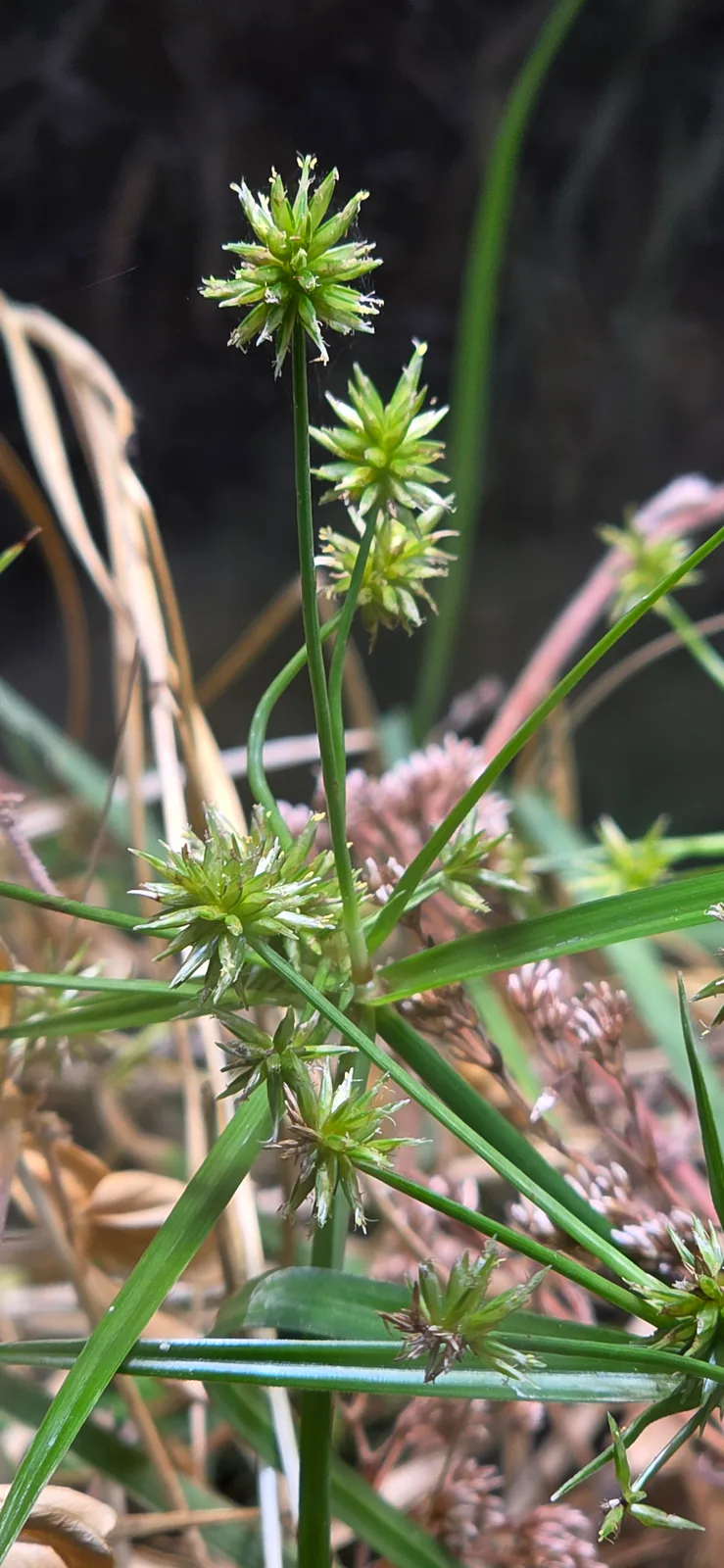
Cyperus strigosus

Straw-colored Flatsedge

Growing in dense clumps at pond and lake margins, this native sedge produces yellowish compound seed heads on triangular stems and stabilizes moist shoreline substrate; no archived observation documents its introduction or current status in miniBIOTA.

Visual Data Unavailable

Overview

Growing in dense clumps at pond and lake margins, this native sedge produces yellowish compound seed heads on triangular stems and stabilizes moist shoreline substrate; no archived observation documents its introduction or current status in miniBIOTA.

Identity

  • Common name: Straw-colored Flatsedge
  • Alternate names: Straw sedge, straw flatsedge, pale flatsedge, flatsedge, umbrella sedge
  • Scientific name: Cyperus strigosus
  • Identification confidence: Species-level; Cyperus strigosus is the well-established scientific name for this taxon
  • Uncertainty label: Observed

Taxonomy

  • Kingdom: Plantae
  • Phylum: Anthophyta
  • Class: Liliopsida
  • Order: Poales
  • Family: Cyperaceae
  • Genus: Cyperus
  • Species: Cyperus strigosus

Natural History

Cyperus strigosus is a native perennial sedge in the family Cyperaceae, widespread throughout eastern North America and common in Florida. It grows in moist to wet substrates including lake shores, pond margins, freshwater ditches, wet meadows, and disturbed moist ground. The plant forms dense clumps from a fibrous root system and spreads both by seed and by rhizome expansion. Stems are distinctively triangular in cross-section, a trait shared across the sedge family and captured in the saying "sedges have edges" as a field ID cue distinguishing them from grasses (round stems) and rushes (round stems with pith). Leaves are narrow, grass-like, and originate from the stem base.

The inflorescence is a compound umbel, a branching cluster of spikelets radiating from a central point, giving the plant its characteristic umbrella-like profile. Spikelets are linear and straw-colored to yellowish, which accounts for both the "straw-colored" common name and the "flatsedge" reference to the flattened arrangement of spikelets along each rachilla. Plants can reach 30 to 120 centimeters in height depending on moisture and nutrient conditions. In optimal conditions at the shoreline margin, dense stands develop that provide significant above-ground vertical structure in otherwise open wet substrate.

Cyperus strigosus is considered a native wetland plant of moderate to high ecological value. It stabilizes shoreline substrate through its fibrous root system and produces seed that is consumed by birds and small mammals in natural settings. Wetland sedge stands also provide cover and resting habitat for small invertebrates at the substrate margin. It is tolerant of temporary flooding and periodic drawdown, making it well-suited to the fluctuating water-edge conditions of freshwater lake and pond shorelines.

Ecological Role

Sedges of the Cyperaceae family function as rooted photosynthetic producers in their shoreline ecosystems. They fix carbon through photosynthesis and contribute plant biomass to the food web through herbivory, detrital breakdown, and seed production. Their fibrous root systems bind shoreline substrate and moderate the transition zone between open water and upland vegetation. Dense clumps provide cover for small invertebrates and nesting material for small birds and mammals in natural settings.

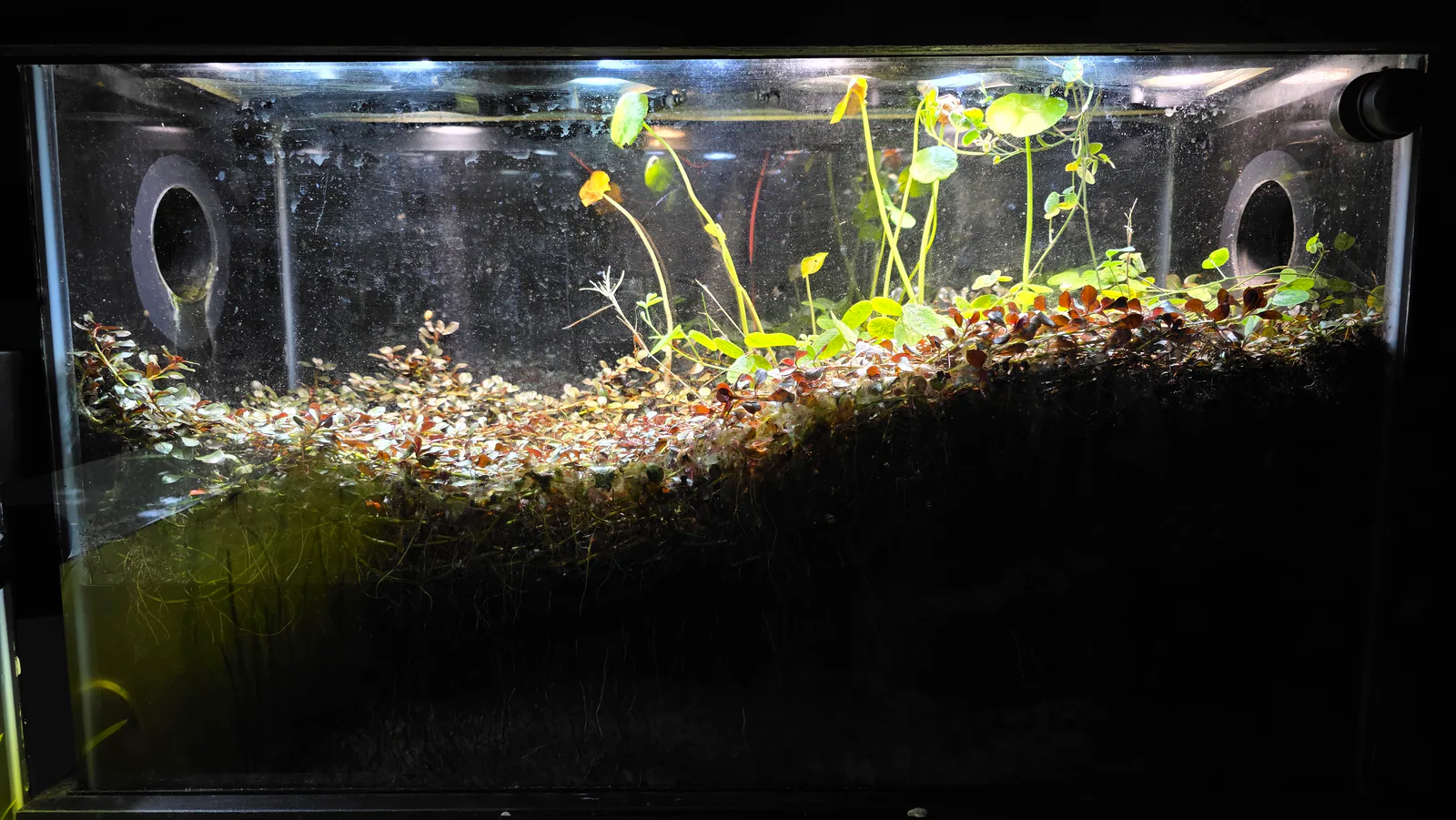
In miniBIOTA, the Lakeshore biome provides the appropriate moisture regime and substrate conditions for a sedge like Cyperus strigosus. No observation record, interaction, or direct evidence of the plant's presence has been archived. Its role in the miniBIOTA food web cannot be described from evidence; the ecological role described here is based on general Cyperus strigosus biology.

miniBIOTA Evidence

No observation files or interaction records exist for this species. No introduction date, source, or method has been recorded. The Mangrove Forest biome assignment Cyperus strigosus to the Lakeshore biome, which is ecologically appropriate for this species, but no observation confirms whether the plant was ever physically present or has been present recently.

Introduction: No record. Date, method, and source are all unknown.

Observation timeline: No archived observations.

Confirmed:

  • Species row exists in the miniBIOTA database with the name Straw-colored Flatsedge (Cyperus strigosus) and Lakeshore biome assignment

Inferred:

  • If present at the Lakeshore margin, the plant would provide ground-level shoreline stabilization and photosynthetic production

Unknown:

  • Whether the species was ever physically present in miniBIOTA
  • Introduction date, source, and method
  • Current population status and distribution in the Lakeshore biome
  • Whether any observation, interaction, or introduction event was recorded but not archived