
Coleoptera sp. (aquatic, unidentified)

Aquatic Beetle

Barely larger than a grain of sand, this tiny aquatic beetle moves with surprising speed through both the open water of the lake and the dense vegetation of the lakeshore, its hook-like front legs hinting at a predatory life that has yet to be confirmed by direct observation.
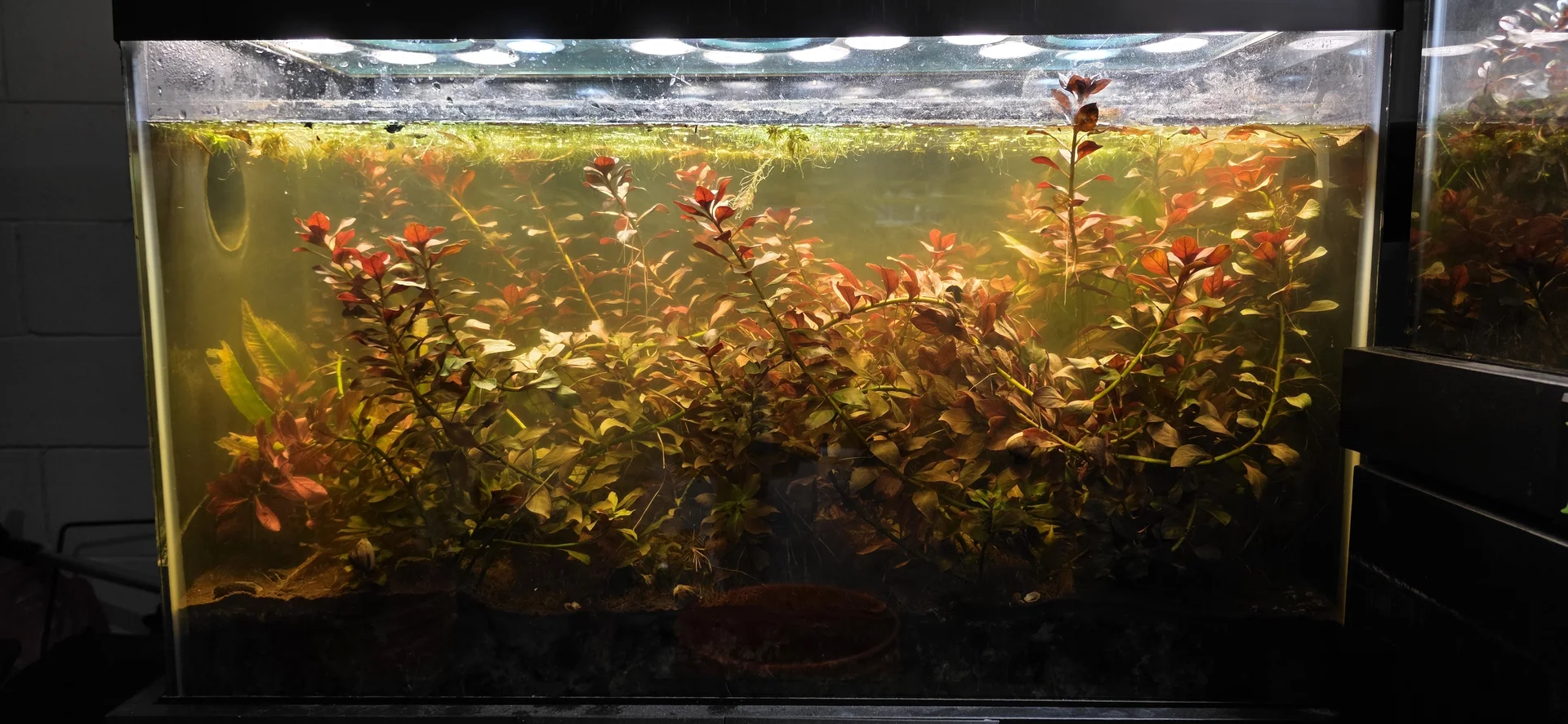
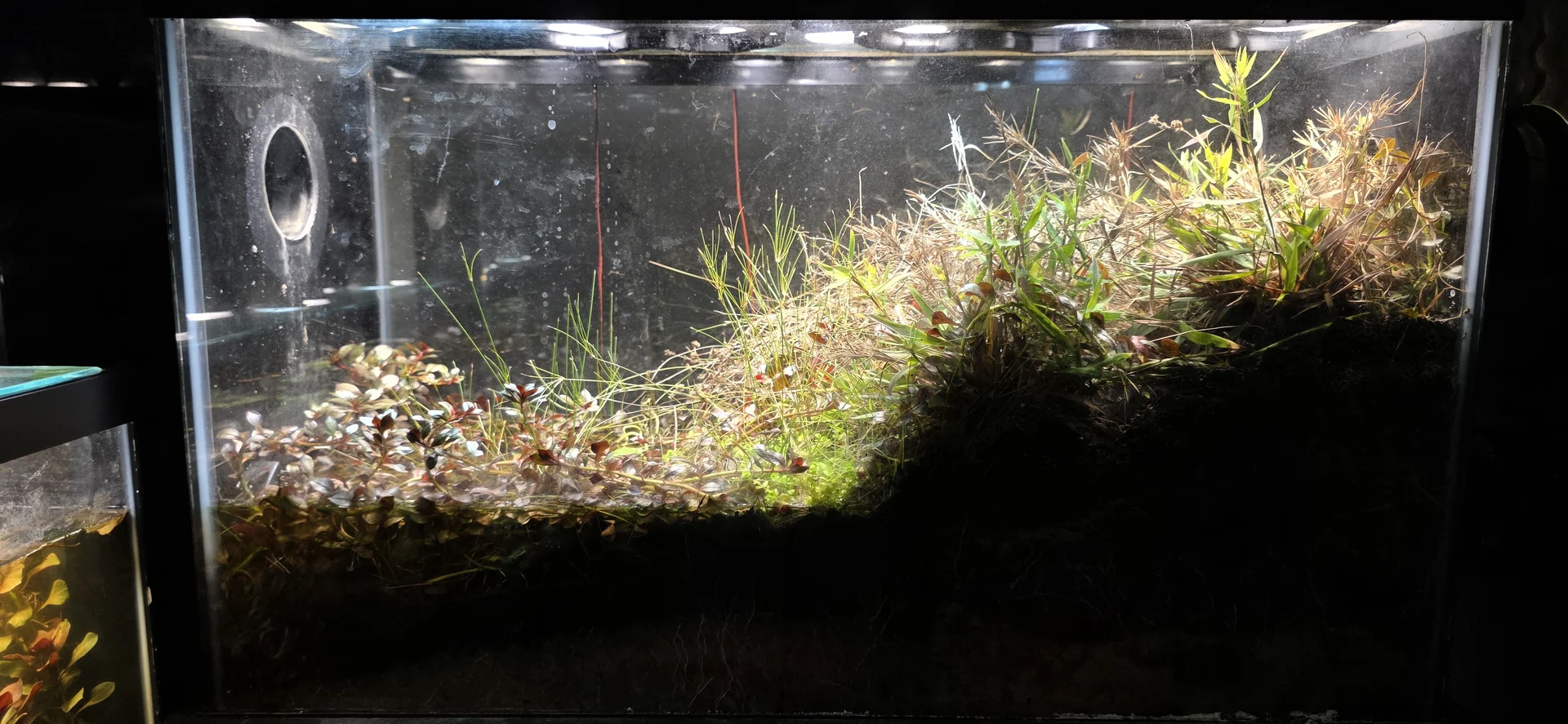
Visual Data Unavailable

Overview

A very small aquatic beetle (approximately 1 to 2 mm in length) that has persisted in the Freshwater Lake and Lakeshore biomes since the wetland collection that introduced Daphnia and other organisms to the system. First documented on video on June 30, 2026 at sufficient magnification to reveal morphological detail. Its enlarged, hook-like front legs suggest a possible predatory role, recorded as a working hypothesis. Species is unidentified; it is distinct from the terrestrial Beetle (id 125) and Black Beetle (id 127) previously recorded in miniBIOTA.

Identity

  • Common name: Aquatic Beetle
  • Alternate names: small aquatic beetle, aquatic coleoptera, water beetle
  • Scientific name: Coleoptera sp. (aquatic, unidentified)
  • Identification confidence: Order-level (Coleoptera, aquatic); family and species unidentified
  • Uncertainty label: Uncertain

Taxonomy

  • Kingdom: Animalia
  • Phylum: Arthropoda
  • Class: Insecta
  • Order: Coleoptera
  • Family: Unidentified (aquatic; possibly Hydraenidae, Hydrophilidae, Dytiscidae, or Gyrinidae)
  • Genus: Unidentified

Natural History

Aquatic beetles (Order Coleoptera) are extraordinarily diverse; several families have independently colonized freshwater habitats, adopting different life strategies from fully aquatic predators to semi-aquatic scavengers and grazers. Florida's freshwater habitats support dozens of aquatic beetle species across multiple families.

At 1 to 2 mm, this individual falls within the size range of some of the smallest aquatic beetle families. Hydraenidae (moss beetles or minute aquatic beetles) are among the smallest truly aquatic beetles in North America, typically 0.8 to 3 mm, and are commonly found at the margins of ponds, ditches, and wetlands. Predaceous diving beetles (Dytiscidae) include a few very small species, though most are larger; their distinctive adaptation is the ability to carry an air bubble under the elytra for respiration during dives. Water scavenger beetles (Hydrophilidae) include very small species and are often found in still, vegetated freshwater. Whirligig beetles (Gyrinidae) are known for their distinctive divided eyes and strongly modified front legs used for grasping prey at the water surface, though most Florida species are several millimeters larger.

The "hook-like front legs" described by the observer are a notable morphological feature. Modified, raptorial, or grasping front legs are found in predatory beetle families and in some males of diving beetle species (where tarsal suckers function in mate grasping). Without examination under magnification or microscopy, family-level identification is not possible.

Ecological Role

The ecological role of this beetle within the Freshwater Lake and Lakeshore biomes is unresolved, but the morphological hypothesis of a predatory role is worth tracking. If predatory, it would consume small invertebrates available in both biomes: microcrustaceans, small worms, other tiny aquatic invertebrates. Its sustained presence since the wetland collection suggests it has found sufficient resources to persist, though whether it is reproducing within the system is unknown.

The beetle's activity across both the dense aquatic vegetation of the Lakeshore and the open water of the Freshwater Lake indicates it is capable of moving between microhabitats and is not restricted to one zone.

miniBIOTA Evidence

Introduction context: Arrived as part of the wetland collection that introduced Daphnia, planarians, and other small freshwater invertebrates to the Freshwater Lake. Exact date of introduction not recorded; the wetland collection itself has not been archived as a specific observation file. The observer notes it has been observed occasionally since that collection but had never been captured on video until June 30, 2026.

Observation timeline:

  • June 30, 2026: First detailed video footage captured of the aquatic beetle, using sufficient magnification to reveal morphological detail. The individual was observed moving actively through both the dense aquatic vegetation of the Lakeshore biome and the open water of the Freshwater Lake. Body length estimated approximately 1 to 2 mm. Enlarged, hook-like front legs noted; predatory role hypothesized by the observer but not confirmed by direct feeding observation. Species unidentified. First formal documentation of this species in miniBIOTA. Observation record, June 30, 2026.

What Is Confirmed:

  • Aquatic beetle (approximately 1-2 mm, hook-like front legs) present in the Freshwater Lake and Lakeshore biomes as of June 30, 2026.
  • Has been present in the system since the wetland collection that introduced Daphnia and associated organisms; not a new introduction as of June 30.
  • First detailed video documentation captured June 30, 2026.

What Is Inferred:

  • The beetle has persisted in the system over an extended period since the wetland collection, suggesting it has found adequate resources.
  • Hook-like front legs suggest possible predatory feeding, consistent with families such as Dytiscidae or Gyrinidae, though this is a working hypothesis only.

What Remains Unknown:

  • Family, genus, and species.
  • Whether hook-like front legs indicate predatory behavior; no feeding has been directly observed.
  • Whether the population is reproducing within the system or represents a single long-persisting individual.
  • Ecological impact on other invertebrate species in the system.
  • Exact date of introduction with the wetland collection.