Eleutherodactylus planirostris

Greenhouse Frog

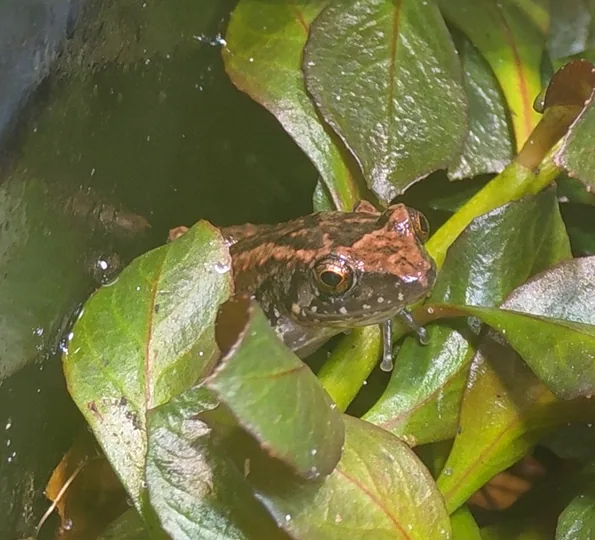
Discovered by surprise in the yard just outside miniBIOTA, this tiny frog was introduced to the Lakeshore to see whether its small size lets it thrive on the biome's ants, isopods, and springtails while staying out of reach of its resident predators.

Visual Data Unavailable

Overview

Five Greenhouse Frogs (Eleutherodactylus planirostris), two adults and three likely-newborn juveniles, were introduced to miniBIOTA's Lakeshore biome on August 3, 2026, after three individuals were unexpectedly discovered on the backyard porch and yard the day before. This is the first amphibian introduced to miniBIOTA and the first attempt at a terrestrial vertebrate since a prototype-era house gecko that lived in the system for over two years before proving unsuitable for multi-individual housing.

Identity

  • Common name: Greenhouse Frog
  • Alternate names: greenhouse frog, Eleutherodactylus planirostris
  • Scientific name: Eleutherodactylus planirostris
  • Identification confidence: Species-level, identified by Josue following the August 2, 2026 backyard discovery.
  • Uncertainty label: Observed. Species identity is solid; establishment and long-term suitability in miniBIOTA are unresolved.

Taxonomy

  • Kingdom: Animalia
  • Phylum: Chordata
  • Class: Amphibia
  • Order: Anura
  • Family: Eleutherodactylidae
  • Genus: Eleutherodactylus
  • Species: E. planirostris

Family note: Eleutherodactylus planirostris is native to Cuba and the Bahamas and has become widely established and self-colonizing across Florida and other parts of the southeastern United States and the Caribbean. It is a direct-developing frog: eggs are laid in moist terrestrial sites and hatch directly into tiny froglets, with no free-swimming tadpole stage. This distinguishes it functionally from pond-breeding frogs such as Southern Leopard Frog and true grass frogs, whose aquatic tadpole stage can move nutrients from water to land.

Natural History

Range and Florida Relevance

Greenhouse Frog is common and self-colonizing throughout Florida, including residential yards, gardens, and greenhouses, which gives the species its common name. It was discovered directly in Josue's own backyard on August 2, 2026, without prior awareness that the species was present around the house.

Habitat

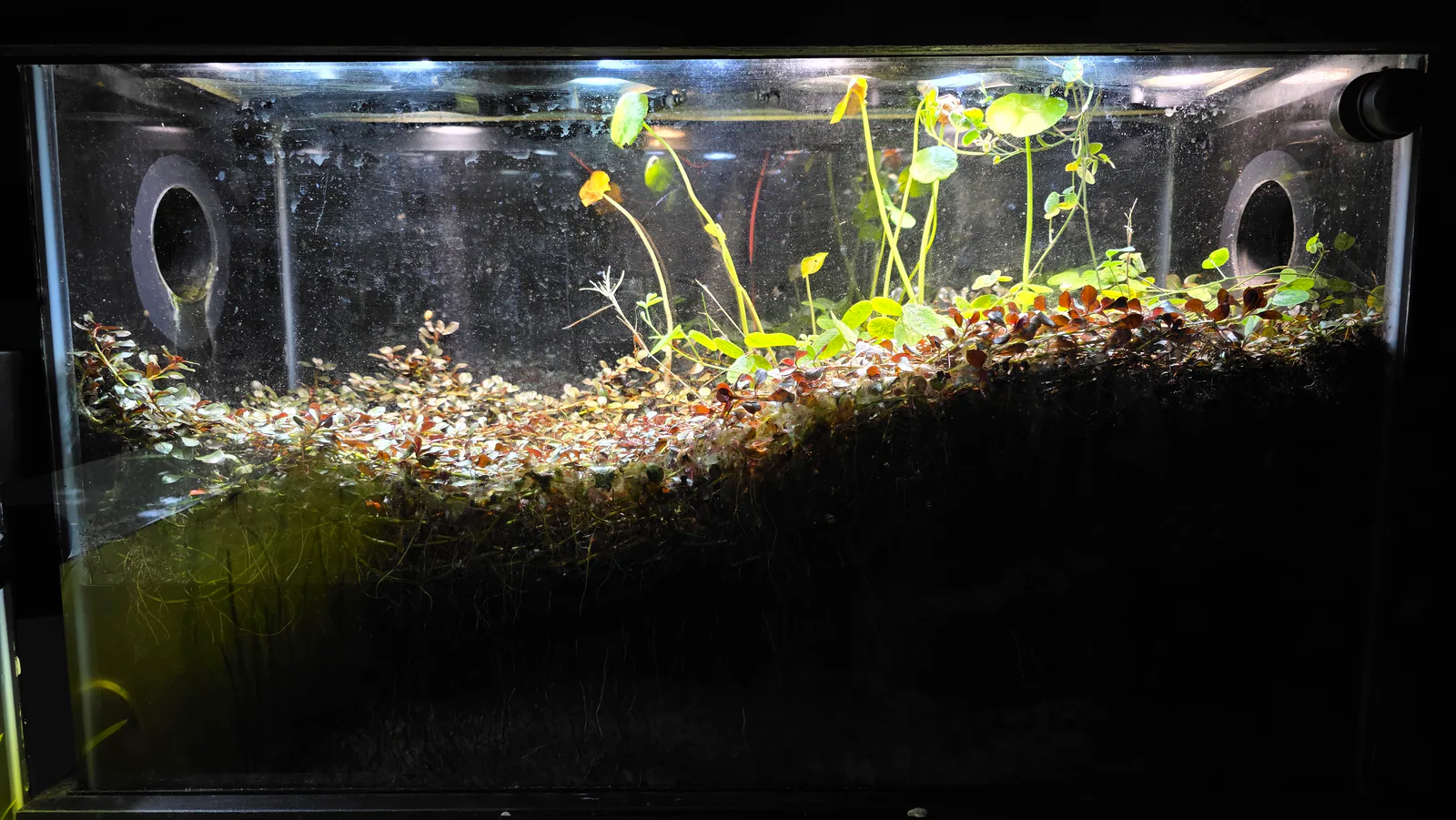
Greenhouse Frog is a small terrestrial frog associated with moist leaf litter, mulch, and vegetation at ground level. It does not require standing water for reproduction, unlike most native frogs. In miniBIOTA, it was introduced to the Lakeshore, a damp shoreline gradient biome with moist substrate and dense vegetation.

Diet

Greenhouse Frog is an insectivore, feeding on small invertebrates including ants, isopods, springtails, and small roaches. The Lakeshore's documented terrestrial invertebrate community, described by Josue as including springtails, ants, isopods, and small cockroaches in substantial numbers, is the basis for expecting a continuous food supply.

Reproduction

Eleutherodactylus planirostris lays eggs directly in moist terrestrial sites; eggs hatch into small froglets with no free-swimming tadpole stage. This direct development means the species cannot perform an aquatic-larva-to-terrestrial nutrient-transfer function of the kind Josue is specifically seeking from a true grass frog species with an aquatic tadpole stage. No reproductive activity has been observed in miniBIOTA; the introduced group includes three likely-newborn juveniles from outside the system, not offspring produced within it.

Tolerance Ranges

Not formally documented for miniBIOTA. Greenhouse Frog is broadly tolerant of Florida's humid subtropical terrestrial conditions, consistent with its wide self-colonizing range.

Ecological Role

Greenhouse Frog is intended as a small terrestrial insectivore, feeding on the Lakeshore's ant, isopod, springtail, and small-roach populations. It is also the first amphibian and the first attempted terrestrial vertebrate in miniBIOTA since a prototype-era house gecko (documented as design-context history, not a current species record) that fed on cockroaches for over two years before its single-occupancy intolerance made it unsuitable. Whether Greenhouse Frog itself becomes prey for existing terrestrial predators, or whether it can evade them, is an open watch item.

miniBIOTA Evidence

Discovery and Introduction

Three very small Greenhouse Frogs were discovered on the backyard porch and yard on August 2, 2026, unexpectedly, with two further adults located on a closer follow-up search the same day. Research into the species' biology found it lacks the aquatic tadpole stage Josue was specifically hoping to find in a "grass frog" candidate, but its very small size and the Lakeshore's abundant prey base made it worth studying regardless. Five individuals, two adults and three likely-newborn juveniles, were formally introduced to the Lakeshore on August 3, 2026.

Observation Timeline

  • August 2, 2026: Three very small Greenhouse Frogs discovered on the backyard porch and surrounding yard, outside miniBIOTA. Temporarily held in a container pending research into the species. Observation record, August 2, 2026.
  • August 2, 2026: Two further adult Greenhouse Frogs located on a closer backyard search, still exceptionally small. Direct development (no tadpole stage) confirmed via species research, ruling out the aquatic-to-terrestrial nutrient-transfer role sought from a true grass frog. Prey availability (isopods, ants, small cockroaches) and predation risk (scorpion, terrestrial crab) in miniBIOTA's terrestrial biomes assessed as context for potential suitability. Observation record, August 2, 2026.
  • August 3, 2026: Five Greenhouse Frogs (two adults, three likely-newborn juveniles) formally introduced to the Lakeshore biome. Survival, feeding, growth, movement, and predator interaction across life stages to be observed. Observation record, August 3, 2026.
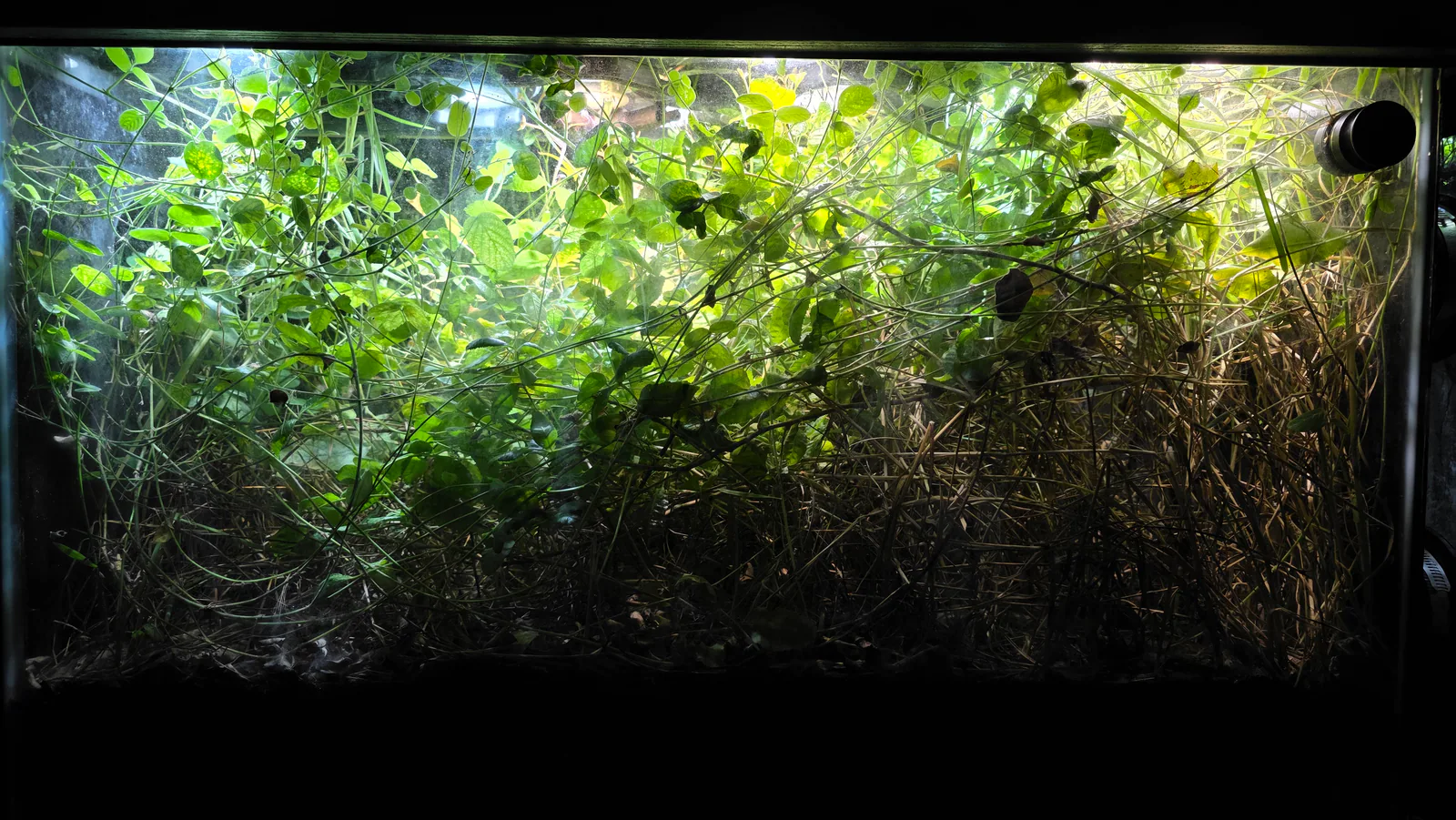
  • August 3, 2026 (night): Both adult Greenhouse Frogs located during a full-system nighttime tour, the same night as introduction: one remained in the Lakeshore, the other had moved into the Lowland Meadow, confirming the species can move between biomes shortly after release. None of the three juveniles were observed; their status is unknown. Observation record, August 3, 2026.

What Is Confirmed

  • Greenhouse Frog is present in the yard surrounding miniBIOTA, previously unknown to Josue.
  • Five individuals (two adults, three likely-newborn juveniles) introduced to the Lakeshore biome August 3, 2026.
  • The species develops directly from egg to froglet with no free-swimming tadpole stage.
  • Both adults confirmed alive the night of introduction (August 3, 2026); one moved from the Lakeshore into the Lowland Meadow, confirming the species can move between biomes.

What Is Inferred

  • Adequate prey availability in the Lakeshore (ants, isopods, springtails, small cockroaches), based on Josue's general biome assessment rather than a dedicated census of each prey species in the Lakeshore specifically.
  • Possible predator evasion by speed and mobility against the Hentz Striped Scorpion, Red House Spider, and Humic Marsh Crab, none of which has been tested or observed.
  • The adult that moved into the Lowland Meadow most likely traveled via the Lakeshore's documented function as a cross-biome movement corridor, consistent with how other species move between the two biomes.

What Remains Unknown

  • Whether either life stage (adult or juvenile) survives, feeds, or grows successfully across the Lakeshore and Lowland Meadow.
  • Whether the three juveniles survive; none was located on the first night after introduction.
  • Whether Greenhouse Frog is preyed upon by the Hentz Striped Scorpion, Red House Spider, or Humic Marsh Crab; none of the three is currently documented as ranging into the Lakeshore itself in their own species dossiers.
  • Whether observing this species usefully informs a future attempt to introduce a true aquatic-tadpole grass frog.