Rhizoecidae sp.
Root Mealybug
Tiny white, cottony insects living on roots underground in the Prairie and Lakeshore, first mistaken for fungus where they show against the glass.
- Realm
- Terrestrial
- Population
- Uncertain
- Primary biome
- Lakeshore

Rhizoecidae sp.
Tiny white, cottony insects living on roots underground in the Prairie and Lakeshore, first mistaken for fungus where they show against the glass.
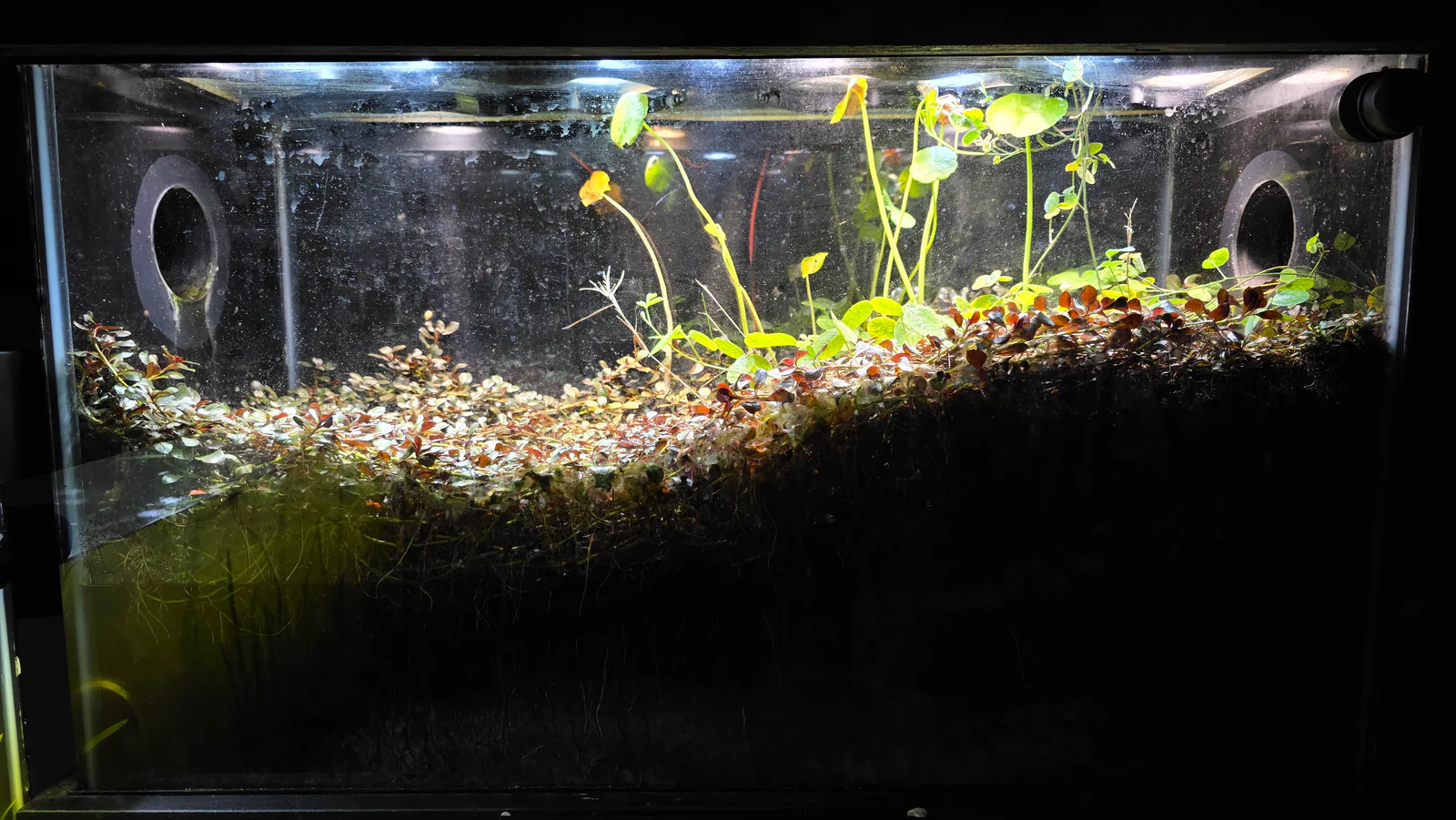
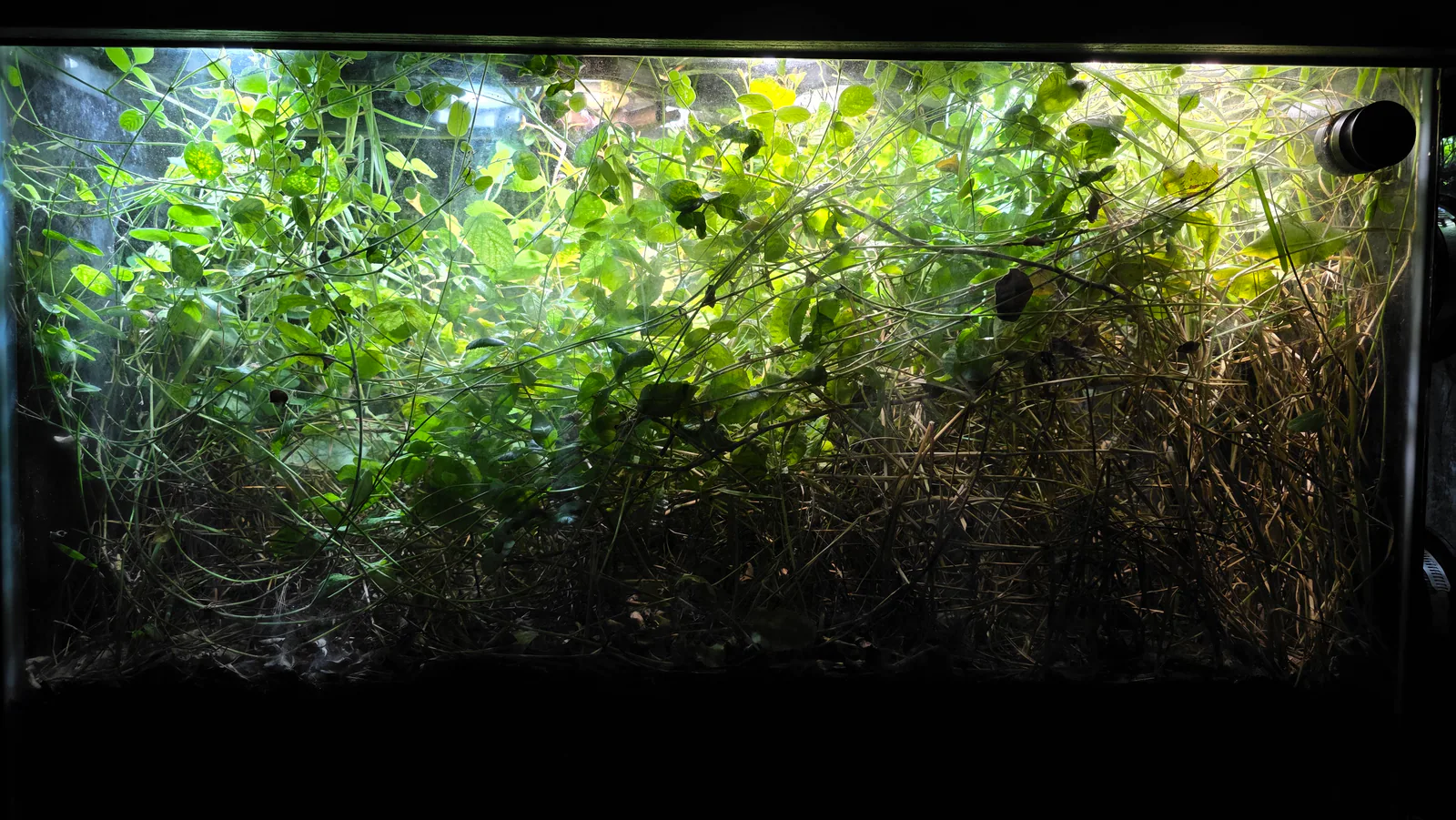
Small white, cottony patches in the soil against the glass of the Prairie and the Lakeshore, clustered among roots and stem bases. Josue first took them for fungal mycelium; after his own research and a close look with a magnifying glass in 2026 he identified them as root mealybugs, small sap-feeding insects that live underground on plant roots. The species is not identified.
Root mealybugs are small, soft-bodied scale insects that live in soil on plant roots rather than on leaves and stems. Like other mealybugs they feed on plant sap through piercing and sucking mouthparts and cover themselves and their egg masses with white wax, which gives colonies a cottony or mold-like look and is why they are often mistaken for fungus. Adult females are wingless and spend their lives on roots. They are commonly found in the root balls of potted and nursery plants. Species-level biology has not been reviewed for miniBIOTA.
If the identification is correct, root mealybugs are root sap-feeders: primary consumers that take plant fluids directly from roots. Large colonies can stress host plants, but no effect on Prairie or Lakeshore plants has been observed or measured in miniBIOTA. Their place in the soil food web, including any predators, is unknown.
Introduction context: No introduction is recorded. They most likely arrived with plants or soil, but this has not been established.
Recorded as white fuzzy spots at the Prairie soil glass on January 14 and in the Prairie and Lakeshore on January 24, 2026, and filmed again among roots on February 13, 2026. Identified by Josue as root mealybugs on October 18, 2026. No count, trend or later sighting is recorded.
Root mealybugs feed on plant sap from roots. In miniBIOTA they are seen among roots and stem bases at the soil glass, but which plants they feed on, and whether feeding affects those plants, has not been observed.
Found in the moist soil of the Prairie and the Lakeshore. Tolerance ranges are not known for an unidentified species.
No eggs, crawlers or life stages have been distinguished in miniBIOTA. Repeated patches in two biomes suggest a resident population, but reproduction inside miniBIOTA has not been confirmed.
Probable root sap-feeder (primary consumer) in the land biome soils; effect on plants unmeasured
Follow this species across the habitats where it currently appears in the miniBIOTA biosphere.