Caulerpa prolifera

Blade Alga

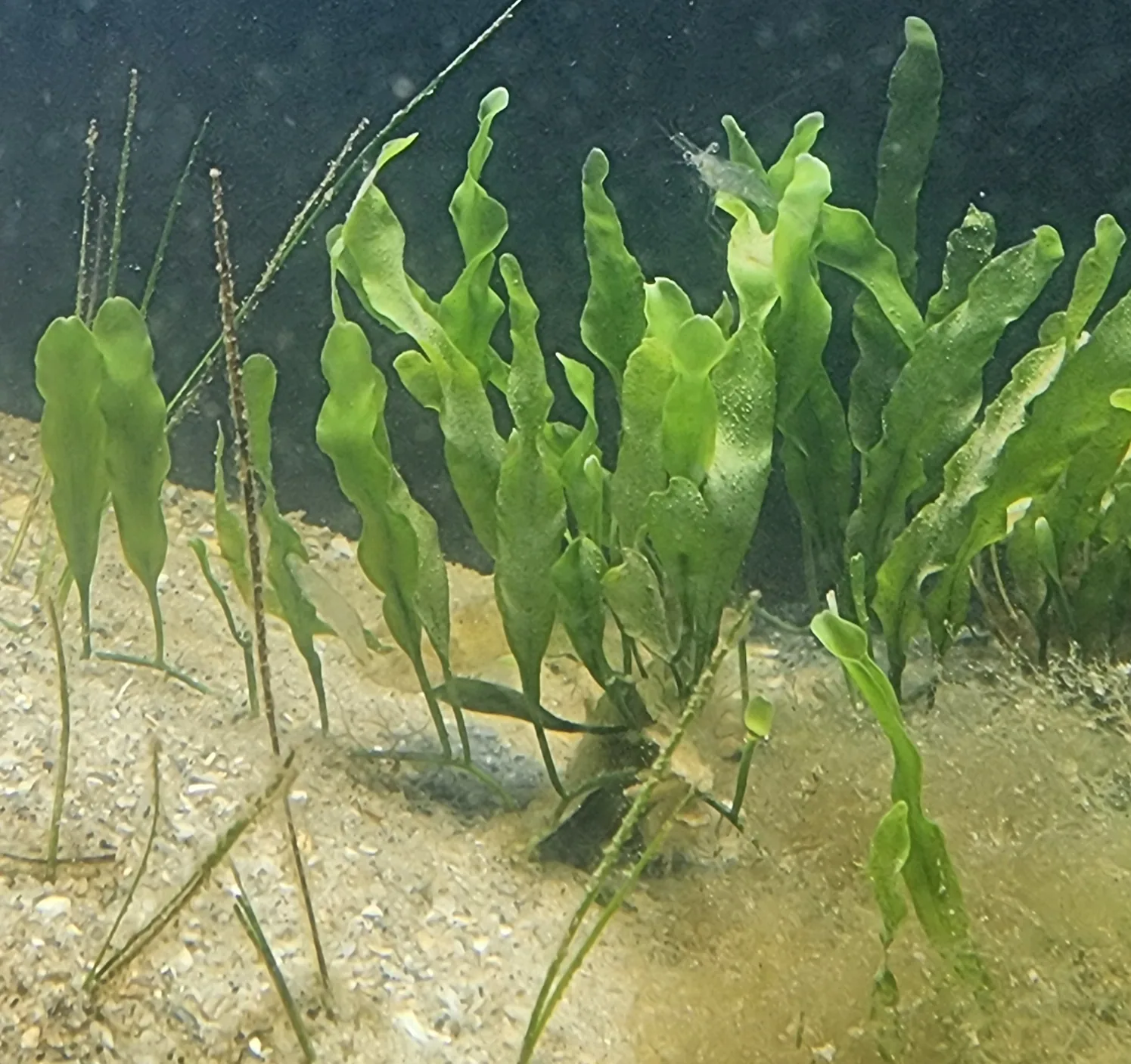
A flat-bladed siphonous green alga of Florida's coastal seagrass beds, Caulerpa prolifera produces smooth, tongue-shaped blades from a creeping rhizome and absorbs dissolved nutrients directly through its thallus, forming low mats across sandy substrate.

Overview

Blade Alga (Caulerpa prolifera) is a flat-bladed siphonous green alga native to Florida seagrass beds and sandy coastal substrate, producing smooth, tongue-shaped blades from a creeping rhizome rather than the feathery pinnate fronds of other Caulerpa species. It is distinct from Fern Alga (Caulerpa taxifolia) and Giant Feather Alga (Caulerpa ashmeadii), the two other Caulerpa species documented in miniBIOTA. No confirmed introduction record or observation is on file; the species is recorded as extirpated from miniBIOTA.

Identity

  • Common name: Blade Alga
  • Alternate names: green feather algae, blade algae, flat-blade caulerpa, blade caulerpa, caulerpa
  • Scientific name: Caulerpa prolifera
  • Identification confidence: Species-level. Caulerpa prolifera is inferred from the scientific name on record. The species is distinct from other Florida Caulerpa species by its flat, strap-like or tongue-shaped blades.
  • Uncertainty label: Uncertain. The species name is on record but no introduction date, observation, or pre-extirpation record is documented.

Taxonomy

  • Kingdom: Plantae (Viridiplantae)
  • Phylum: Chlorophyta
  • Class: Ulvophyceae
  • Order: Bryopsidales
  • Family: Caulerpaceae
  • Genus: Caulerpa
  • Species: C. prolifera

Natural History

Range and Florida Relevance

Caulerpa prolifera is native to the Mediterranean Sea, eastern Atlantic, and western Atlantic including the Caribbean and Gulf of Mexico. It is common in Florida's shallow coastal seagrass beds and sandy lagoon bottoms, where it forms dense mats alongside seagrass species. Unlike C. taxifolia (which is invasive in the Mediterranean), C. prolifera is native to Florida's coastal waters and is a standard component of the seagrass meadow plant community.

Habitat

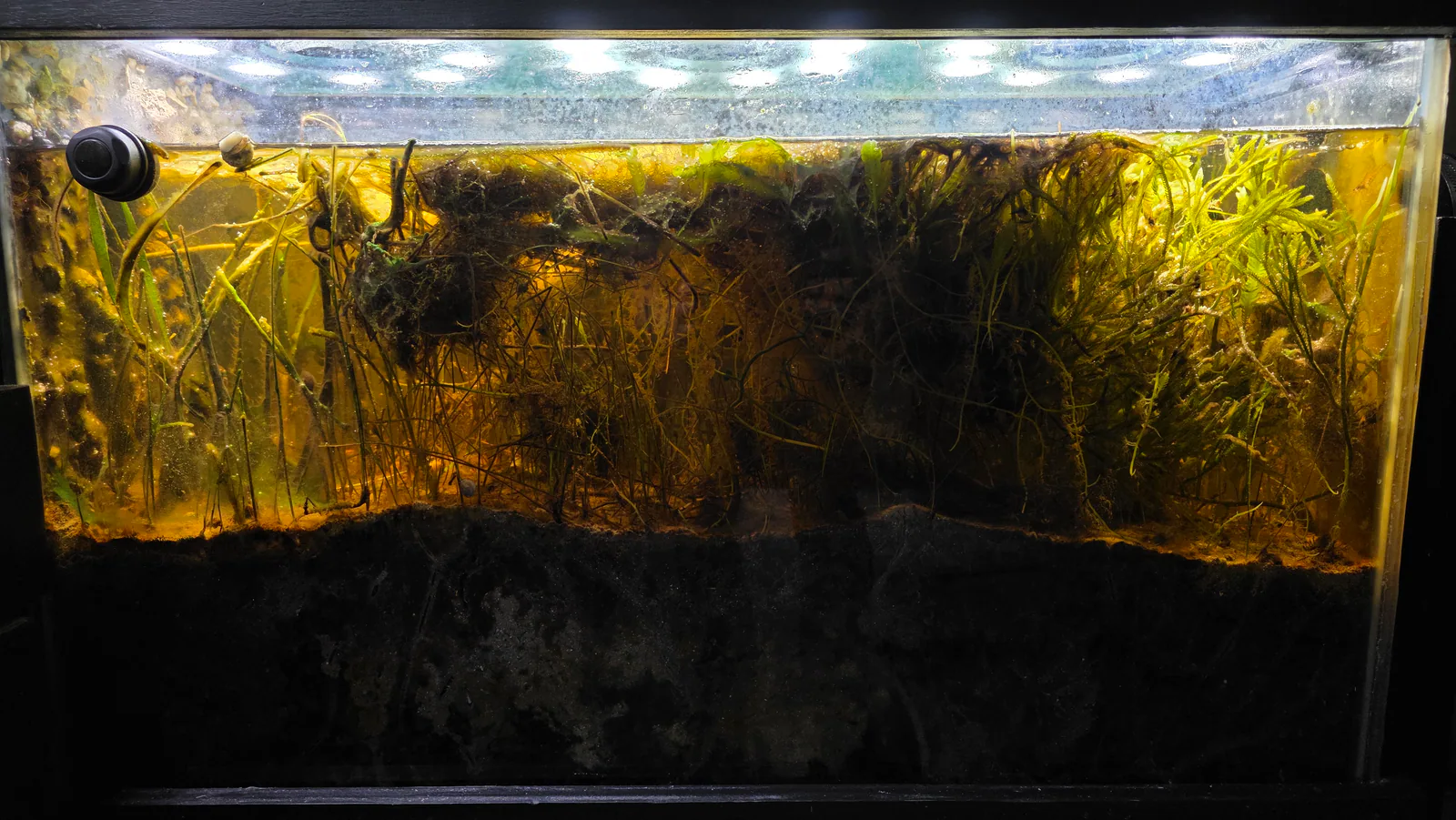
Caulerpa prolifera grows in sandy to sandy-muddy sediment in shallow subtidal and intertidal marine environments. A creeping rhizome anchors in the substrate and produces upright fronds (blades) that extend into the water column. It tolerates moderate disturbance and spreads readily by fragmentation. In miniBIOTA's Seagrass Meadow, it would occupy the sandy substrate alongside Turtle Grass, Shoal Grass, and Manatee Grass.

Growth and Structure

Unlike higher plants, Caulerpa prolifera is siphonous, the entire thallus is one giant, multinucleate cell with no cell walls internally, making it structurally unusual among algae. Blades are flat, smooth, and tongue-shaped to strap-like, bright green, typically 5-15 cm tall. The rhizome anchors into sandy sediment. Growth is primarily vegetative, with new blades and rhizomes extending outward from existing material. Fragment dispersal is a major mode of spread.

Reproduction

Caulerpa species reproduce primarily by vegetative fragmentation; rhizome pieces can establish new colonies in suitable substrate. Sexual reproduction via gamete release (sporulation event) is rare and typically lethal to the individual thallus. In miniBIOTA's closed system, vegetative spread is the expected growth mechanism.

Tolerance Ranges

Tolerates a range of marine to near-marine salinities; found in full marine (35 ppt) to moderate estuarine conditions. Requires moderate to strong lighting for sustained growth. Tolerates elevated nutrient levels; can bloom under high-nutrient conditions. Sensitive to extremes of temperature and salinity.

Ecological Role

Caulerpa prolifera is a primary producer in the Seagrass Meadow, contributing photosynthetically fixed carbon to the system. Unlike the seagrasses (Turtle Grass, Shoal Grass, Manatee Grass), which are higher plants with root-nutrient uptake and pollinator-dependent reproduction, Caulerpa is an alga that absorbs nutrients directly from the water column and substrate porewater through its thallus. This gives it a competitive advantage under nutrient-enriched conditions.

The flat blades provide surface area for epiphytic algae, biofilm, and invertebrate attachment, adding microhabitat complexity to the Seagrass Meadow. Grazers including sea urchins and herbivorous fish consume Caulerpa in natural settings; in miniBIOTA, grazers such as the Variegated Sea Urchin may potentially consume it if present.

miniBIOTA Evidence

Introduction Context

No introduction date, source, or method is on record. No linked observation or introduction event is documented. Caulerpa prolifera is distinct from Fern Alga (Caulerpa taxifolia, collected from the beach March 27, 2026) and from Giant Feather Alga (Caulerpa ashmeadii, also collected March 27, 2026).

Observation Timeline

No observation files found for this species directly. The March 27, 2026 beach collection observation documents introduction of Caulerpa taxifolia and Caulerpa ashmeadii, not Caulerpa prolifera.

What Is Confirmed

  • Blade Alga (Caulerpa prolifera) is on record in miniBIOTA as an extirpated species.

What Is Inferred

  • Distinct from Fern Alga (Caulerpa taxifolia) and Giant Feather Alga (Caulerpa ashmeadii); all three are different Caulerpa species with different morphologies.
  • If it was present, it would have occupied sandy substrate in the Seagrass Meadow alongside seagrass species.

What Remains Unknown

  • Whether Caulerpa prolifera was ever actually introduced to miniBIOTA, and if so, by what source and method.
  • The origin of this species record, given the absence of any documented introduction event.