Dichromorpha viridis

Short-winged Green Grasshopper

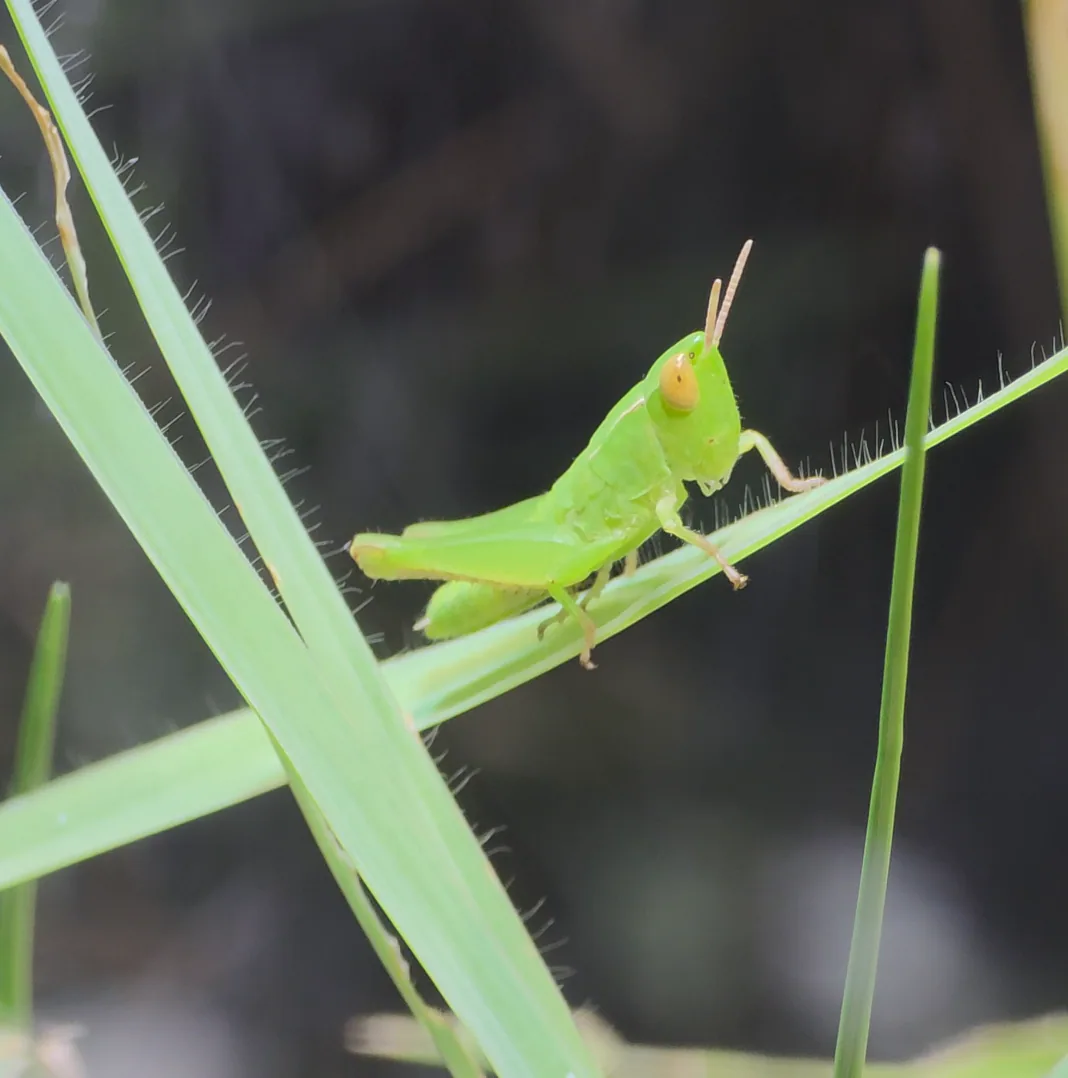
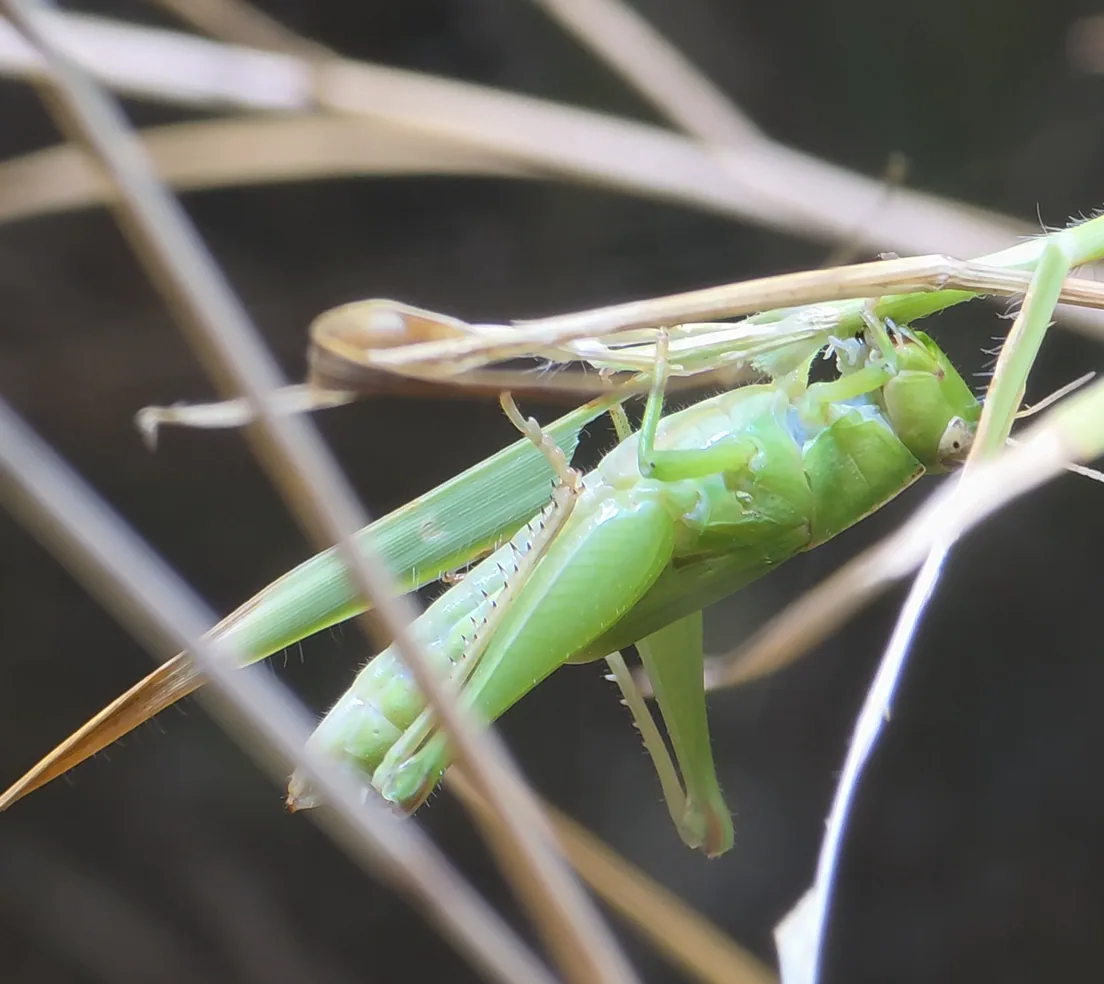
One of the more visible grasshoppers of the Lowland Meadow, Dichromorpha viridis grazes on grasses and forbs at wet meadow margins; males are short-winged and flightless, while females carry full-length wings and range more widely across the vegetation.

Visual Data Unavailable

Overview

One of the more visible grasshoppers of the Lowland Meadow, Dichromorpha viridis grazes on grasses and forbs at wet meadow margins; males are short-winged and flightless, while females carry full-length wings and range more widely across the vegetation. No dedicated observation record has been found in the miniBIOTA observation records.

Identity

  • Common name: Short-winged Green Grasshopper
  • Alternate names: short-winged grasshopper, green grasshopper, green meadow grasshopper
  • Scientific name: Dichromorpha viridis
  • Identification confidence: Species-level (Dichromorpha viridis); scientific name already on record; common name, moist meadow habitat, and wing dimorphism are species-consistent
  • Uncertainty label: Observed

Taxonomy

  • Kingdom: Animalia
  • Phylum: Arthropoda
  • Class: Insecta
  • Order: Orthoptera
  • Family: Acrididae
  • Subfamily: Gomphocerinae
  • Genus: Dichromorpha
  • Species: Dichromorpha viridis (Scudder, 1862)

Natural History

Dichromorpha viridis (short-winged green grasshopper, green meadow grasshopper) is a small to medium-sized acridid grasshopper native to eastern North America, common in Florida throughout moist and wet grassland habitats. The most distinctive biological feature is its pronounced sexual wing dimorphism: adult males are brachypterous, with wings shortened to approximately half the abdomen length and incapable of flight; adult females are macropterous, with full-length wings that allow dispersal and flight. Both sexes are bright green, providing camouflage in grass and forb vegetation, though a brown color form occurs in some populations.

D. viridis is a grasshopper of moist habitats. It is most commonly found in wet meadows, moist grassland depressions, marshy edges, and the grassy or forb-covered margins of ponds, lakes, and ditches. It is a characteristic species of Lowland Meadow and wet grassland fringe in Florida. It feeds primarily on grasses (Poaceae) and secondarily on forbs (broad-leaved herbaceous plants) at the ground level.

Because males are flightless, male populations are locally persistent within suitable grassland patches; females disperse more readily and can colonize new areas. In South Florida, the warm subtropical climate likely allows year-round activity and multiple generations per year, unlike the single annual generation typical of cooler parts of the range.

Ecological Role

In the Lowland Meadow, Short-winged Green Grasshopper functions as a plant-grazing primary consumer, feeding on grasses and forbs at the vegetation ground level. It represents the direct insect herbivore link between Lowland Meadow plant production and insect-feeding predators. Frass production contributes nitrogen to the Lowland Meadow soil. The flightlessness of males means that established local populations may persist within suitable wet meadow patches as long as vegetation cover is maintained.

miniBIOTA Evidence

Introduction context: No introduction event is recorded. D. viridis is a native Florida species that would self-colonize any moist Lowland Meadow habitat. No introduction date, source, or method is on file.

Observation timeline:

  • No dedicated observation records have been found in the miniBIOTA observation records for Short-winged Green Grasshopper.

Confirmed:

  • Species node exists for Short-winged Green Grasshopper in the Lowland Meadow; species-level identification as Dichromorpha viridis from the pre-existing DB scientific name

Inferred:

  • Grass and forb herbivory in the Lowland Meadow, inferred from D. viridis biology and Lowland Meadow biome assignment

Unknown:

  • Whether Short-winged Green Grasshopper is currently present in the Lowland Meadow
  • Introduction date, source, and method
  • Whether males (flightless) or females (winged) have been observed