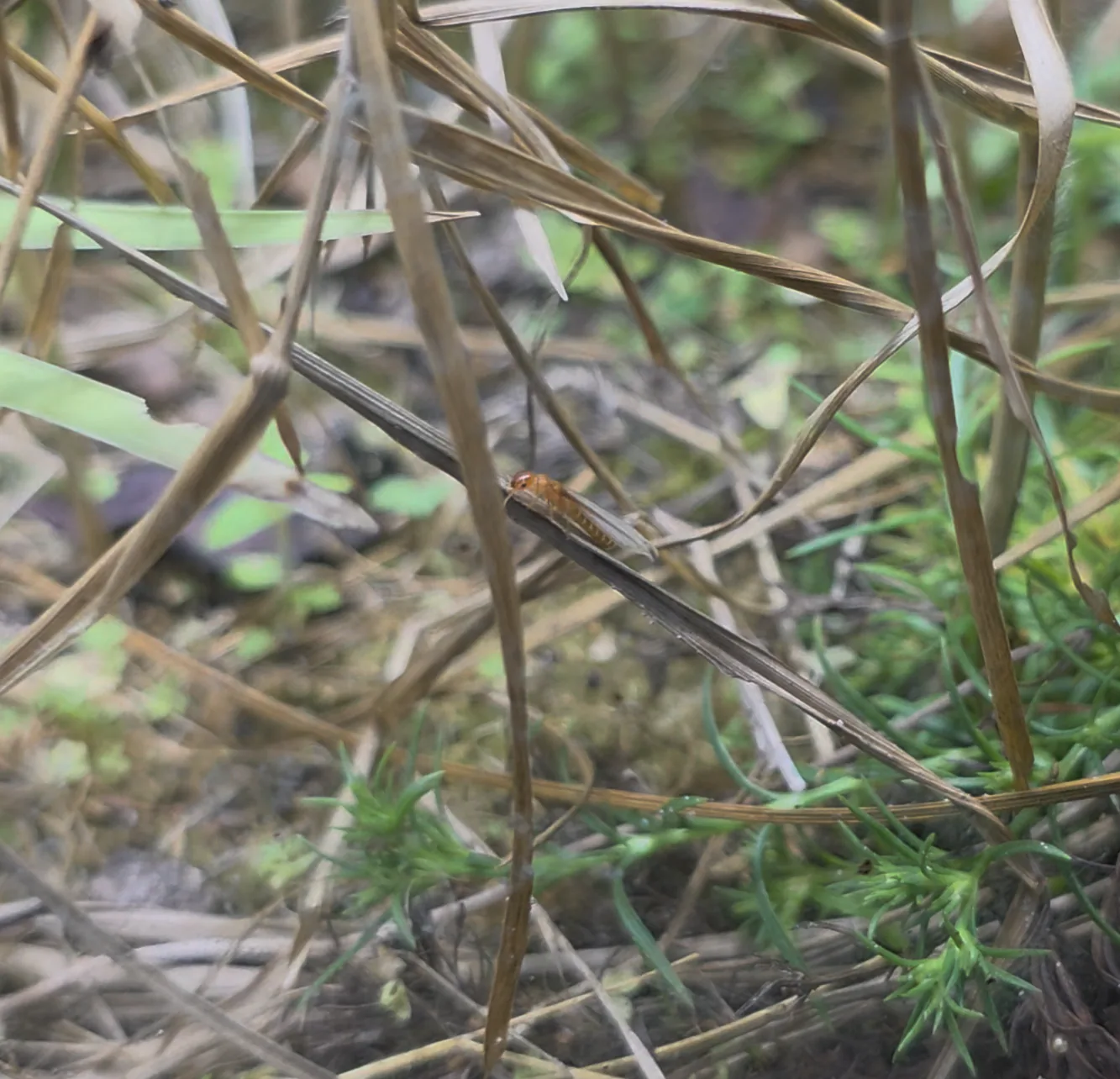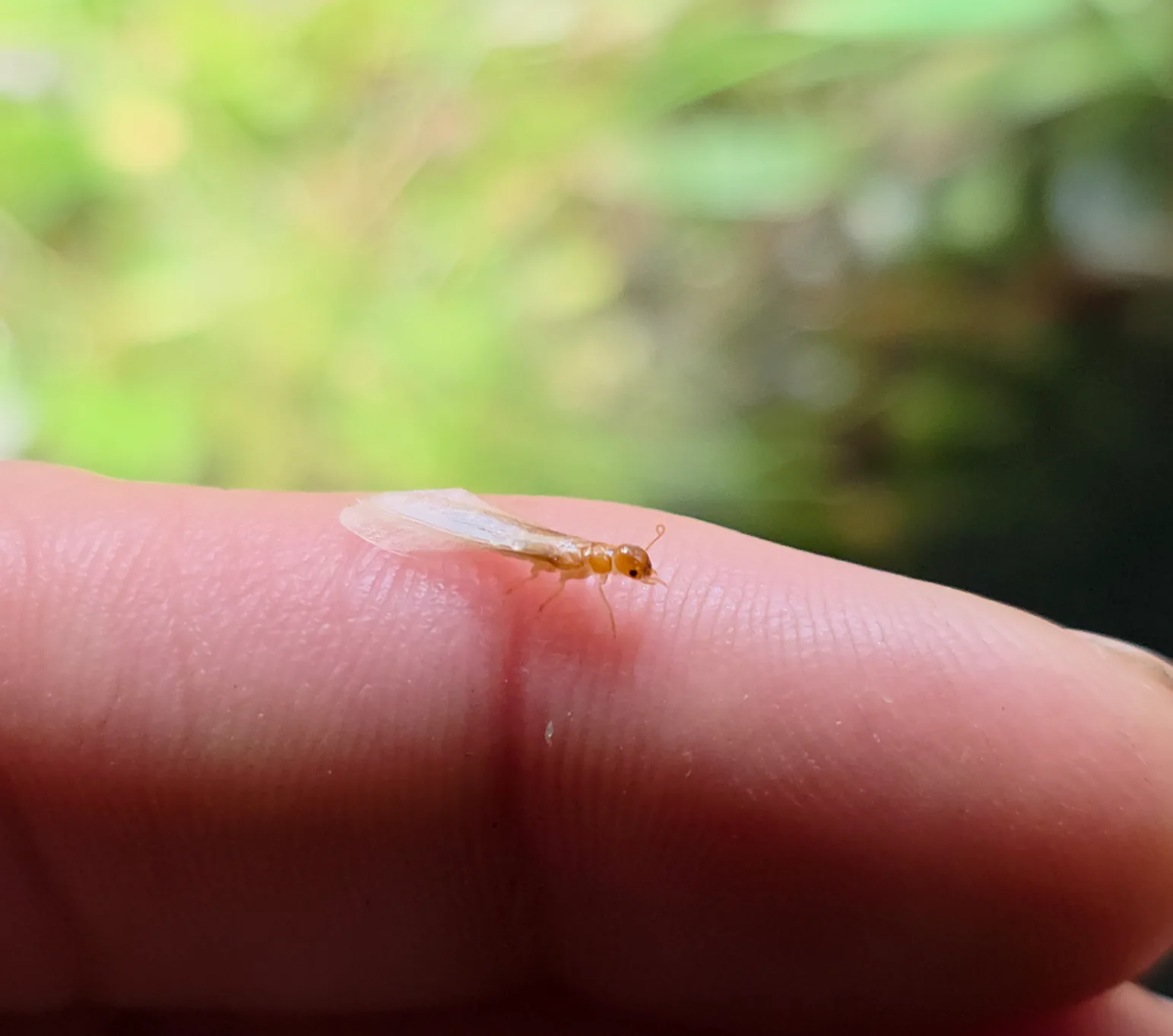
Isoptera sp. (unidentified)

Termite

Thirteen termites caught from a nuptial flight in February 2026 were placed in external cultivation with coconut husk substrate as a candidate wood-processing detritivore for future miniBIOTA introduction; the species has not yet been introduced to the system.

Visual Data Unavailable

Overview

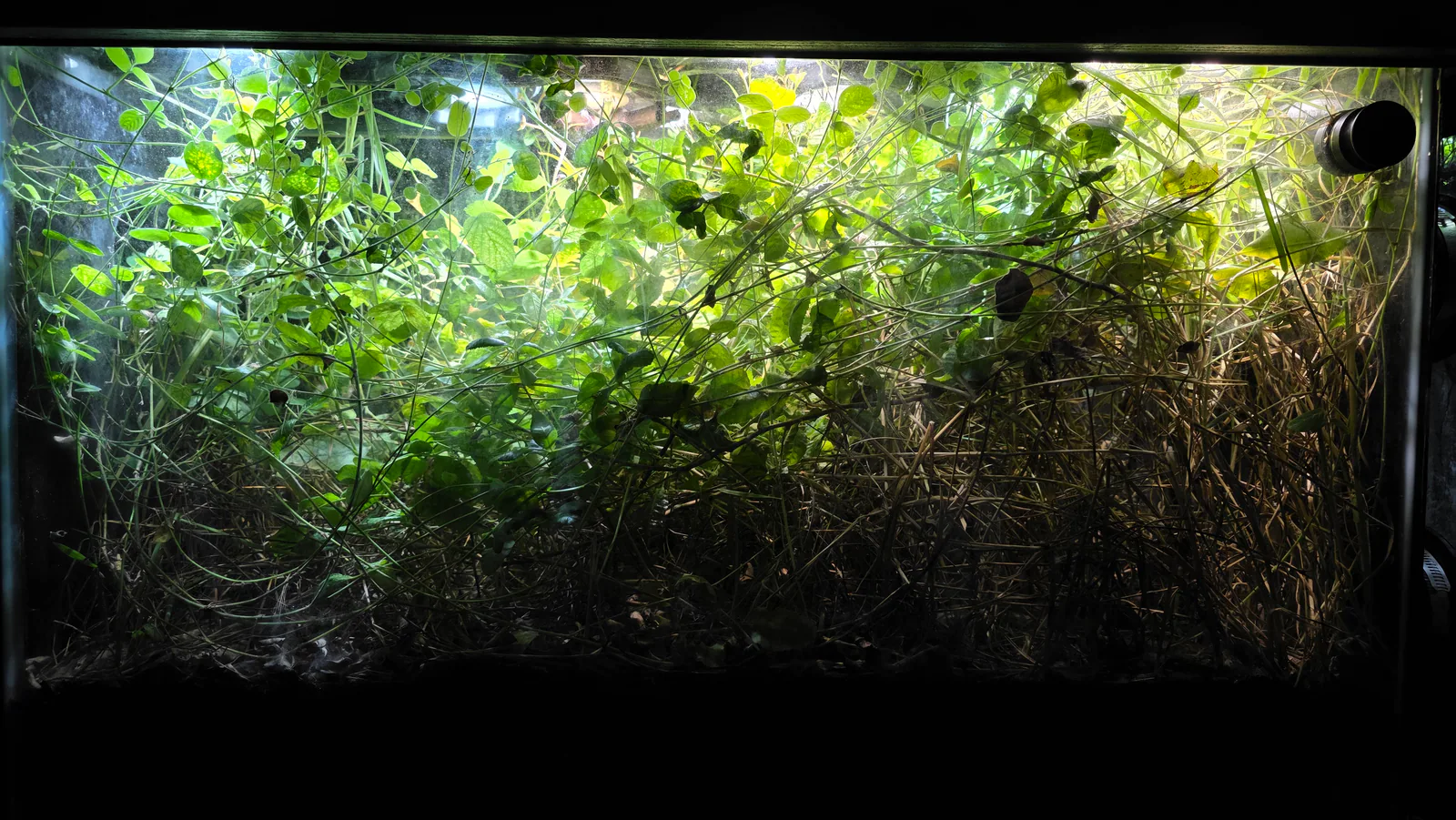
Thirteen termites caught from a nuptial flight in February 2026 were placed in external cultivation with coconut husk substrate as a candidate detritivore and wood-processing species for future introduction to miniBIOTA. The insects have not yet been introduced to the system; no colony or population exists in miniBIOTA as of the last recorded observation.

Identity

  • Common name: Termite
  • Alternate names: white ant, subterranean termite, drywood termite, wood termite
  • Scientific name: Isoptera sp. (unidentified)
  • Identification confidence: Infraorder level. The February 2026 nuptial flight collection was not identified to genus or species. In South Florida, the most common termites encountered in outdoor nuptial flights include Coptotermes formosanus (Formosan subterranean termite) and Reticulitermes flavipes (Eastern subterranean termite), as well as several drywood species; species-level identification would require microscopic examination of soldiers or workers. the record scientific name "Infraorder - Isoptera" has been corrected to "Isoptera sp. (unidentified)"; Isoptera is now classified as an infraorder within Blattodea rather than a separate order.
  • Uncertainty label: Observed

Taxonomy

  • Kingdom: Animalia
  • Phylum: Arthropoda
  • Class: Insecta
  • Order: Blattodea
  • Infraorder: Isoptera
  • Family: (unidentified)
  • Genus: (unidentified)
  • Species: (unidentified)

Natural History

Termites (Isoptera) are eusocial insects found throughout the tropics and subtropics, with dozens of species established in Florida. They are wood- and cellulose-processing detritivores; their gut microbiome (protozoa, bacteria, or both, depending on the group) allows them to digest lignocellulose, the structural material of plant cell walls that most other animals cannot access. This makes termites among the most important decomposers in tropical and subtropical terrestrial ecosystems.

Colony Structure

A termite colony consists of a reproductive pair (king and queen), sterile workers, and soldiers. Workers perform all foraging, tunneling, and nest construction; soldiers defend the colony using chemical or mechanical deterrents depending on the family. Reproductive alates (winged reproductives) are produced seasonally and leave the nest in nuptial flights, after which they shed their wings, pair up, and attempt to found new colonies.

Nuptial Flight and Colony Founding

Nuptial flights are triggered by environmental conditions, typically warmth and humidity following rain. The February 16, 2026 encounter was a nuptial flight event: the collected individuals were winged reproductives that had just left their parent colony. After collection, the observer noted "several appear to be mated pairs based on tandem movement." Tandem running is a behavior in which a newly mated female leads a male to a founding site; it is the first step in new colony establishment. The Talenti container with coconut husk substrate was set up to provide a founding environment.

Wood-Processing Role

The rationale for collecting and cultivating the February 2026 termites was their potential as a wood-processing and nutrient-cycling detritivore in miniBIOTA. Termites convert dead wood and lignocellulosic plant material into smaller particles and frass, which then become accessible to a broader detritivore community. Their gut symbionts also produce nitrogen-rich waste products that enrich the substrate. In miniBIOTA's terrestrial biomes, termites would process any dead wood or coarse plant debris in the Lowland Meadow substrate.

The Dampwood Termite Contrast

On April 29, 2026, a separate swarm of Dampwood Termites was encountered and collected. Unlike the February nuptial flight individuals, these were identified as dampwood termites and were evaluated and rejected for miniBIOTA introduction on the grounds that dampwood termites require rotting wood as their entire habitat and food source, and adding a rotting log would introduce an external energy source incompatible with the closed-loop system design. Those individuals were returned to a natural forest environment. This decision provides context for the kinds of termite species suitable for miniBIOTA: species that process natural in-system plant debris are preferred over those requiring externally supplied substrates.

Ecological Role

In their intended role in miniBIOTA, termites would function as wood-processing detritivores in the Lowland Meadow. By accessing lignocellulosic plant material that other detritivores cannot digest, they would expand the detrital food web to include coarse plant debris and dead woody material, contributing frass and processed particles to the substrate. This is the gap the February 2026 external cultivation was intended to fill.

No ecological role in miniBIOTA has been realized; the species has not been introduced.

miniBIOTA Evidence

External Cultivation

Thirteen individuals collected from a nuptial flight on February 16, 2026, and placed in a Talenti container with coconut husk substrate. The collection was specifically framed as external cultivation with a stated future introduction goal. As of the collection date, the species was "not yet in the system."

Observation Timeline

  • February 16, 2026: Termite nuptial flight encountered; 13 individuals collected and placed in external cultivation in a Talenti container with coconut husk substrate. Several individuals forming mated pairs, displaying tandem running behavior consistent with colony founding. Observer's stated goal: future introduction to miniBIOTA as a detritivore and wood-processing species. Explicitly noted as not yet in the system. Video: preparation of the container; paired male and female termites moving together and entering substrate.
  • April 29, 2026 (context only): A separate Dampwood Termite swarm was encountered; those individuals were evaluated and returned to the wild due to their requirement for rotting wood as a habitat, which is incompatible with miniBIOTA's closed-loop design.

What Is Confirmed

  • Thirteen termite alates collected from a nuptial flight on February 16, 2026.
  • Mated-pair tandem running behavior observed in the collection container; video documented.
  • External cultivation set up with the explicit intent of future miniBIOTA introduction as a detritivore.
  • The species was not in miniBIOTA as of February 16, 2026.

What Is Inferred

  • The collected individuals were likely newly mated pairs in the early stages of colony founding.
  • Whether the external cultivation was successful (colony established) is unknown.

What Remains Unknown

  • Whether the termites were successfully introduced to miniBIOTA after February 2026.
  • The species identity: Coptotermes, Reticulitermes, or another South Florida termite genus.
  • Whether the external colony established from the mated pairs.
  • The current status of the external colony and any future introduction plans.