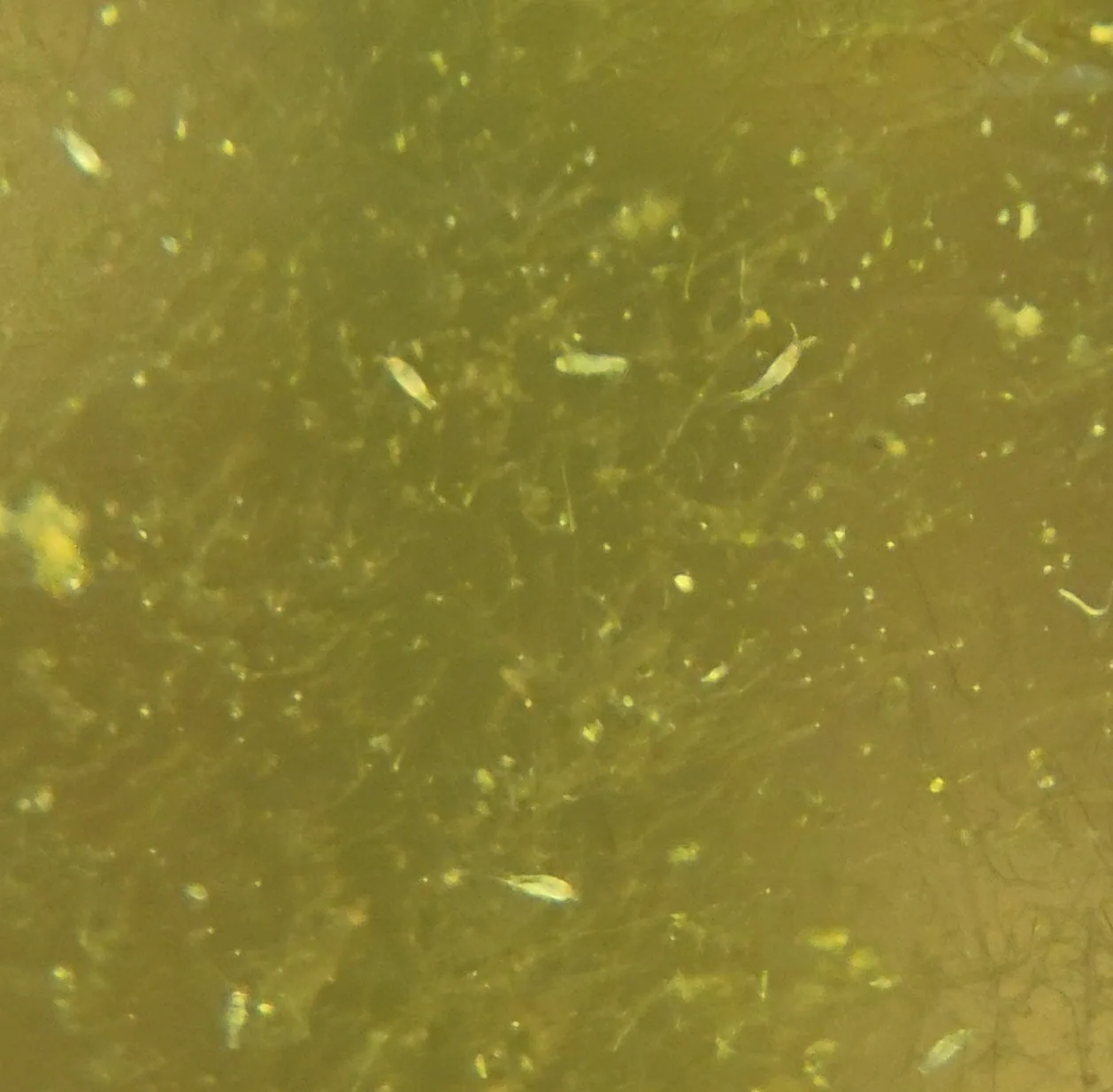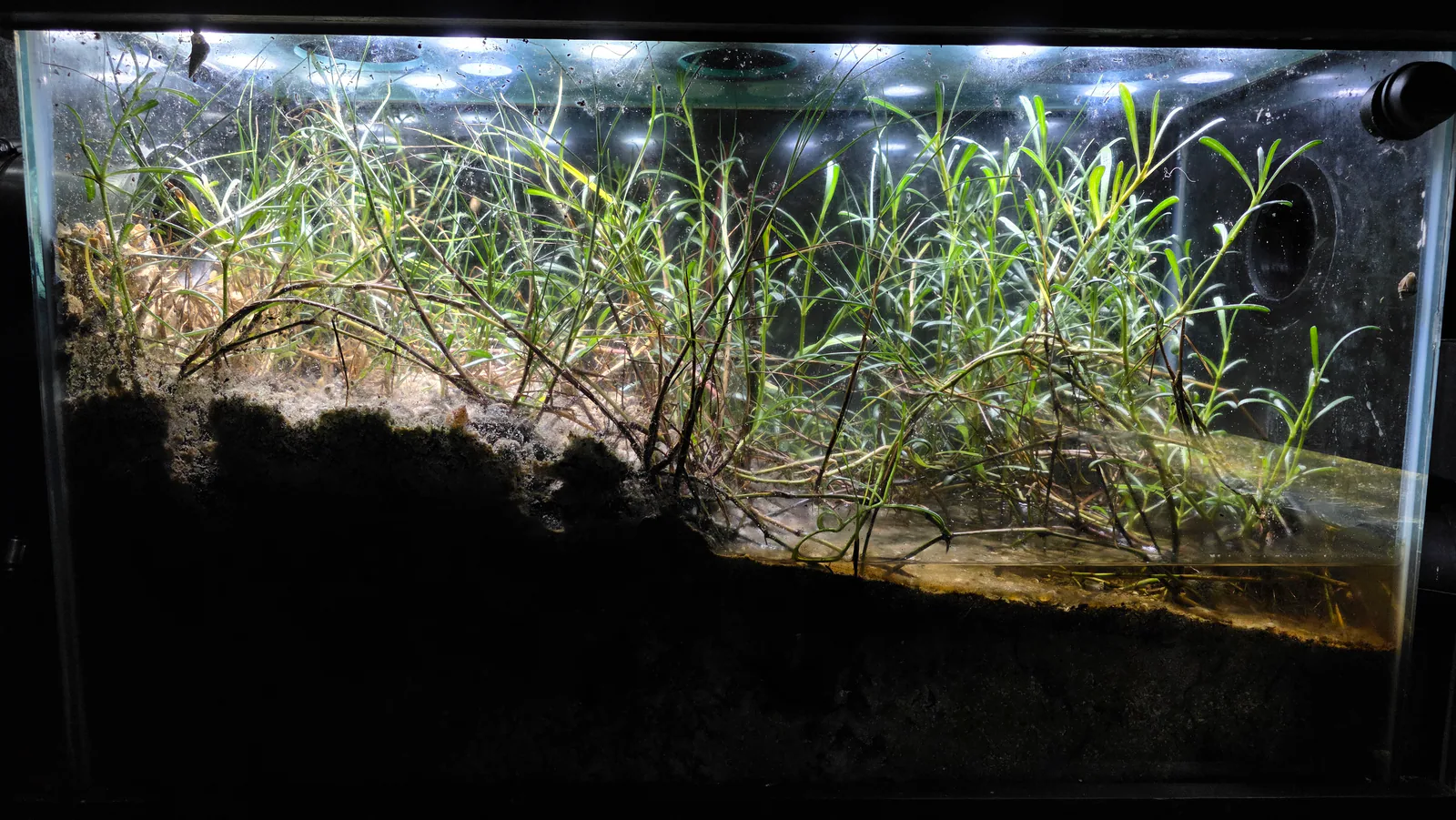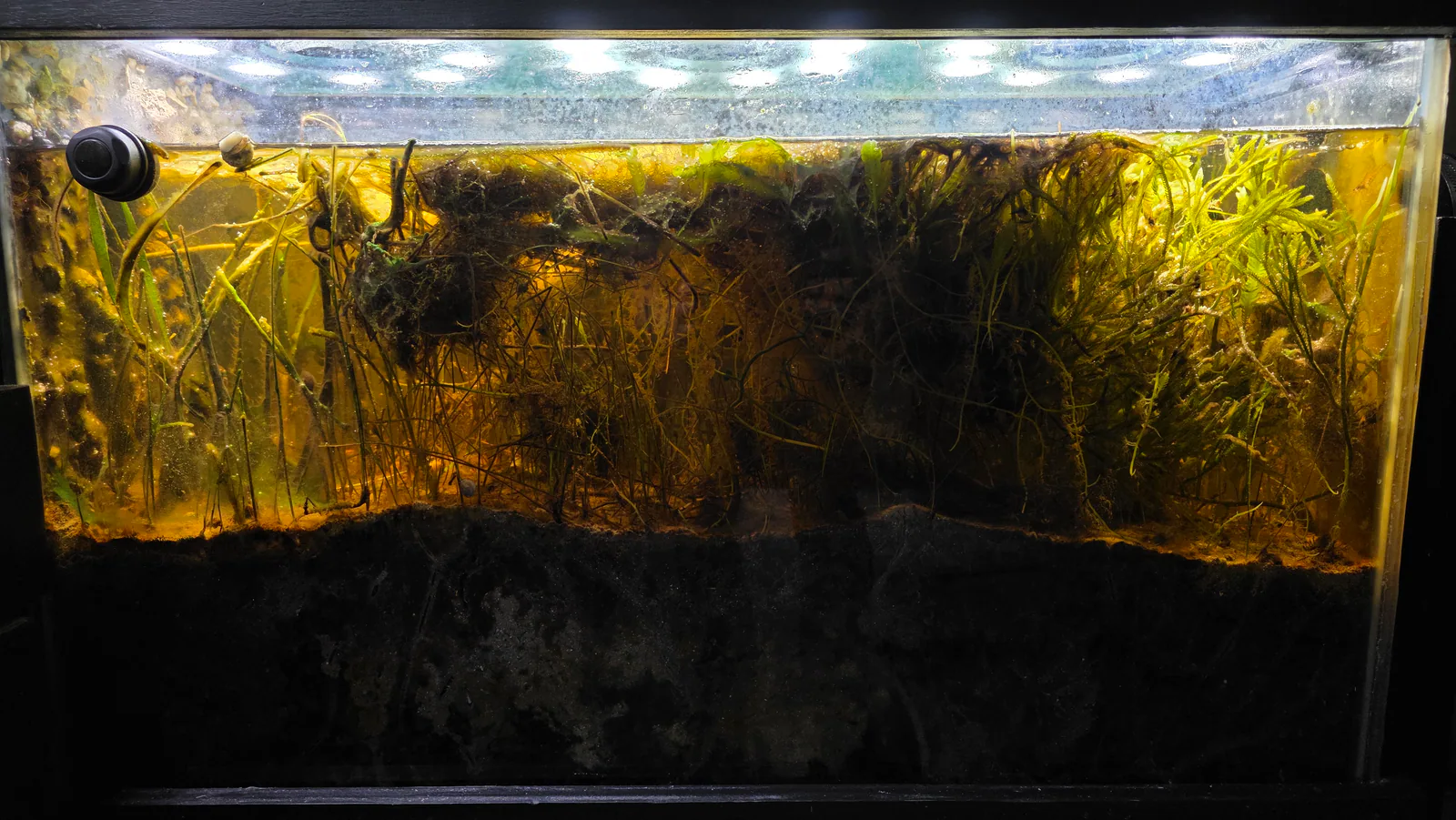
Copepoda sp. (unidentified)

Marine Copepod

Tiny benthic crustaceans, most probably harpacticoid copepods of the genera Tisbe or Tigriopus, that dart across hard surfaces in the Marine Shore and Seagrass Meadow grazing microalgae and biofilm, and serve as the primary live prey for reef fish.

Visual Data Unavailable

Overview

Tiny benthic crustaceans, most probably harpacticoid copepods of the genera Tisbe or Tigriopus based on the alternate name cluster, grazing microalgae and biofilm on hard surfaces throughout the Marine Shore and Seagrass Meadow, and serving as the primary live food source for the reef fish community. No species-level identification has been made from any archived observation.

Identity

  • Common name: Marine Copepod
  • Alternate names: copepod, reef pods, saltwater copepod, tisbe, tigriopus
  • Scientific name: Copepoda sp. (unidentified)
  • Identification confidence: Class-level (Copepoda); order and species unidentified; harpacticoid order inferred from alternate names
  • Uncertainty label: Observed

Taxonomy

  • Kingdom: Animalia
  • Phylum: Arthropoda
  • Subphylum: Crustacea
  • Class: Copepoda
  • Order: Harpacticoida (inferred from Tisbe/Tigriopus alternate names; not confirmed)
  • Family: Unidentified
  • Genus: Unidentified (Tisbe or Tigriopus probable)

Natural History

Copepods are among the most abundant animals on Earth, forming a dominant component of marine zooplankton and benthic communities globally. The class Copepoda is divided into several orders, of which the most ecologically important in reef and saltwater aquarium systems are:

  • Harpacticoida: benthic and epibenthic copepods that live on hard surfaces, macroalgae, and in substrate; graze microalgae, biofilm, and detritus. The reef pod trade primarily sells harpacticoid species, especially Tisbe biminiensis and Tigriopus californicus.
  • Calanoida: open-water (pelagic) filter feeders; the dominant zooplankton in the freshwater system but also present in saltwater.
  • Cyclopoida: mixed benthic and semi-pelagic; includes both grazers and predators.

Tisbe biminiensis is a small (0.5 to 1 mm) harpacticoid copepod native to tropical and subtropical marine waters worldwide; it has become one of the most widely used live food organisms in reef aquaculture because it colonizes surfaces readily, reproduces quickly, and tolerates a range of water quality conditions. Tigriopus californicus is a hardy harpacticoid copepod from tide pools along the Pacific coast; it is sold as a live food for its high nutritional content.

Both Tisbe and Tigriopus are characteristically epibenthic: they crawl and swim short distances near surfaces rather than swimming continuously in open water. Their jerky, darting swimming motion is characteristic of copepods and distinguishes them from similar-sized amphipods, which tend to swim with a more continuous motion.

Harpacticoid copepods carry their eggs in paired egg sacs attached to the female's body. Eggs hatch as nauplius larvae, which go through six nauplius stages and five copepodite stages before becoming adults. Development time depends on temperature; at tropical reef temperatures (24 to 28 degrees C), Tisbe completes development from egg to adult in approximately 7 to 10 days.

Ecological Role

In the Marine Shore and Seagrass Meadow, Marine Copepods function as benthic microalgae and biofilm grazers, processing the microalgal film on glass walls, rocks, macroalgae surfaces, and seagrass blades. They represent the primary live prey organism for the saltwater fish community: Naked Goby and Clingfish are both documented hunters of small crustaceans in the saltwater system, and harpacticoid copepods would be key prey items. Green Porcelain Crab uses mucus-coated filtering fans to collect small suspended particles including copepod nauplii.

In reef systems, the copepod population serves as a living bridge between the microbial/algal base and the fish layer, and its maintenance is considered critical for the health of small reef fish populations. Harpacticoid copepod cultures are commercially produced and introduced to reef tanks to sustain this trophic link.

miniBIOTA Evidence

Introduction context: No dedicated introduction event is on record in the miniBIOTA observation records. The alternate names "tisbe" and "tigriopus" suggest the species may have been deliberately introduced as commercial reef pod cultures commonly purchased for saltwater systems. Natural colonization as hitchhikers on live rock or macroalgae is also possible.

Observation timeline:

  • No dedicated observation records have been found in the miniBIOTA observation records for Marine Copepod.

Confirmed:

  • Species node exists for Marine Copepod in the Marine Shore and Seagrass Meadow; class-level identification as Copepoda; harpacticoid order inferred from alternate names

Inferred:

  • Benthic/epibenthic microalgae and biofilm grazing in the Marine Shore and Seagrass Meadow
  • Live prey availability for Naked Goby and Clingfish if copepods are present

Unknown:

  • Whether Tisbe, Tigriopus, or another copepod genus is present
  • Whether the population was deliberately introduced or colonized naturally
  • Current population density and whether self-sustaining reproduction is occurring