Gobiosoma bosc

Naked Goby

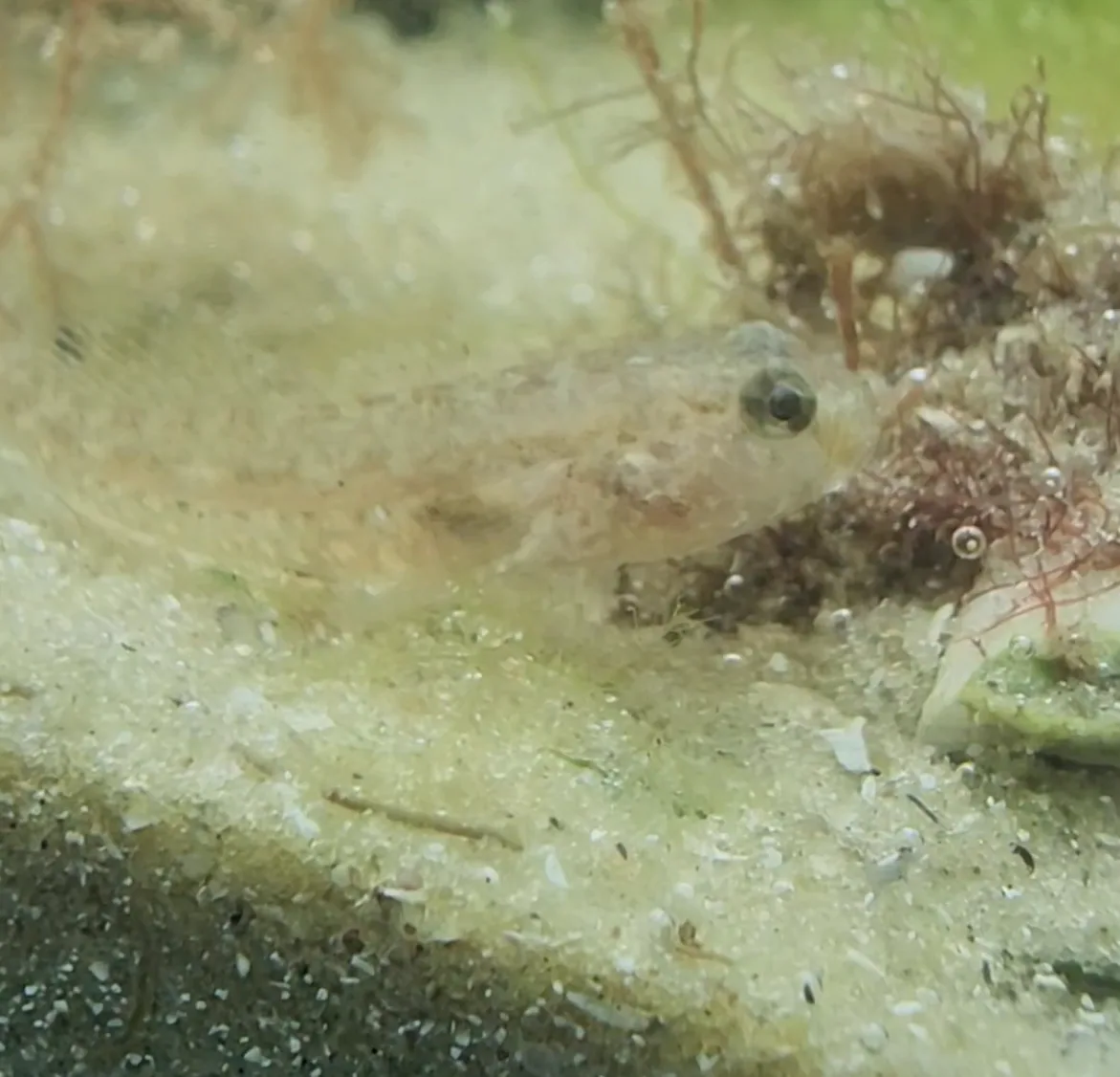
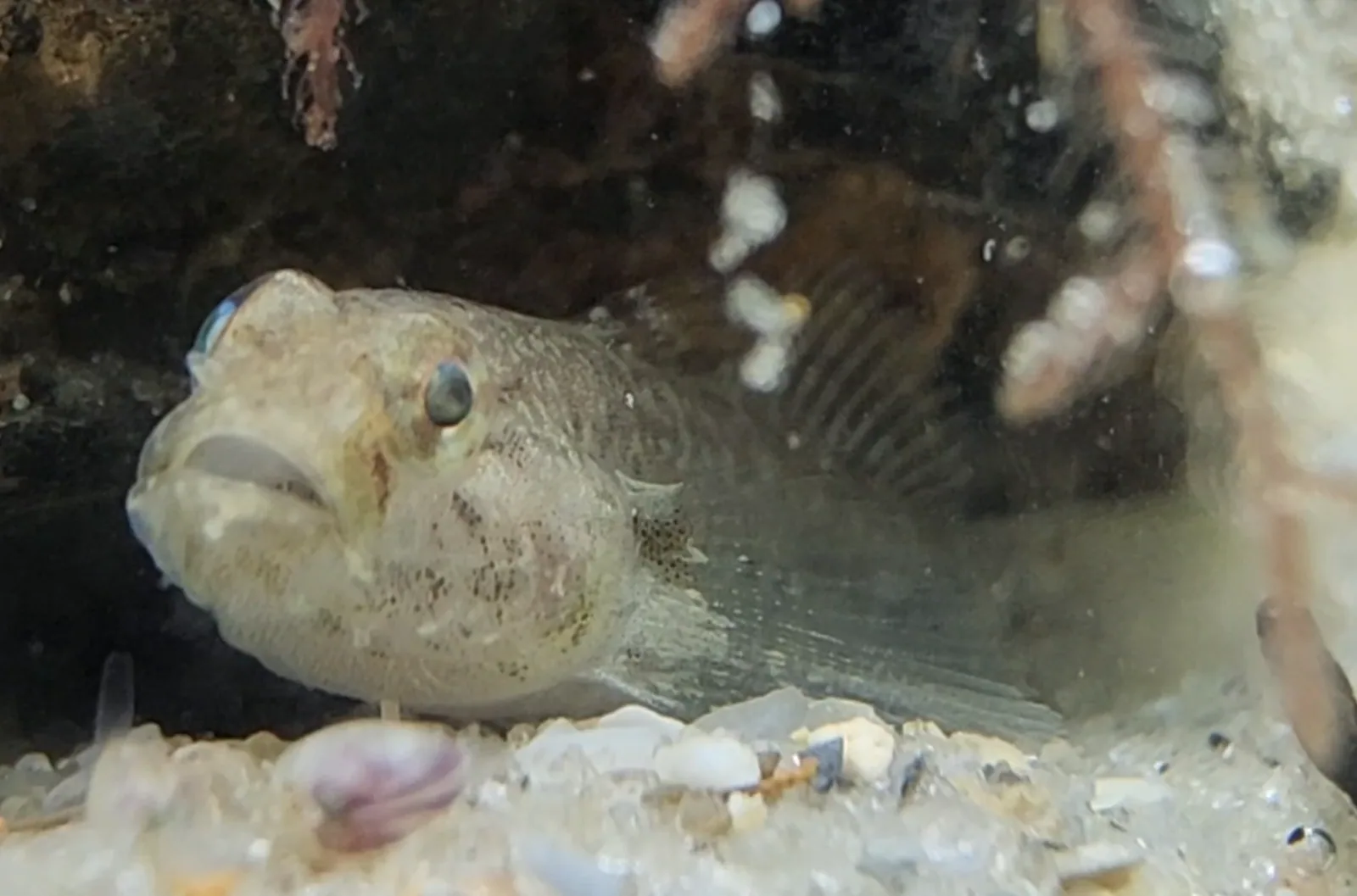
A scaleless estuarine fish that lives inside and among the oyster cluster in the Seagrass Meadow, foraging on copepods and small crustaceans within the reef matrix -- one of the most abundant small fish in Florida oyster-reef systems, and easy to miss among the shell crevices.

Visual Data Unavailable

Overview

The Naked Goby (Gobiosoma bosc) is one of the most common small fish in eastern US estuaries, living in close association with oyster reefs and hard substrate where it shelters, forages, and nests in empty shell cavities. Its presence in miniBIOTA is undocumented by any observation record; no introduction date, population count, or status has been recorded. Given the system's Eastern Oyster cluster, Naked Goby would be a natural associate if it were present.

Identity

  • Common name: Naked Goby
  • Alternate names: estuarine goby, naked goby, bay goby
  • Scientific name: Gobiosoma bosc
  • Identification confidence: Species-level. Gobiosoma bosc is inferred from the common name and is the most common small estuarine goby of the US Atlantic and Gulf coasts. The scaleless body ("naked") and small size are distinctive field characters within the genus.
  • Uncertainty label: Uncertain. Species ID is reasonable from the common name; all aspects of presence, origin, and current status are undocumented.

Taxonomy

  • Kingdom: Animalia
  • Phylum: Chordata
  • Class: Actinopterygii
  • Order: Gobiiformes
  • Family: Gobiidae
  • Genus: Gobiosoma
  • Species: G. bosc

Natural History

Range and Florida Relevance

Gobiosoma bosc is native to the western Atlantic from New York south through Florida and the Gulf of Mexico. It is one of the most abundant fish in Florida estuaries, virtually always associated with hard substrate and especially oyster reef. The species is a standard and dominant member of the Eastern Oyster reef community wherever oyster reefs occur in Florida coastal waters. Its high abundance, cryptic habitat use, and small size (typical adult 3-6 cm) make it easy to overlook but ecologically ubiquitous in seagrass and oyster reef systems.

Habitat

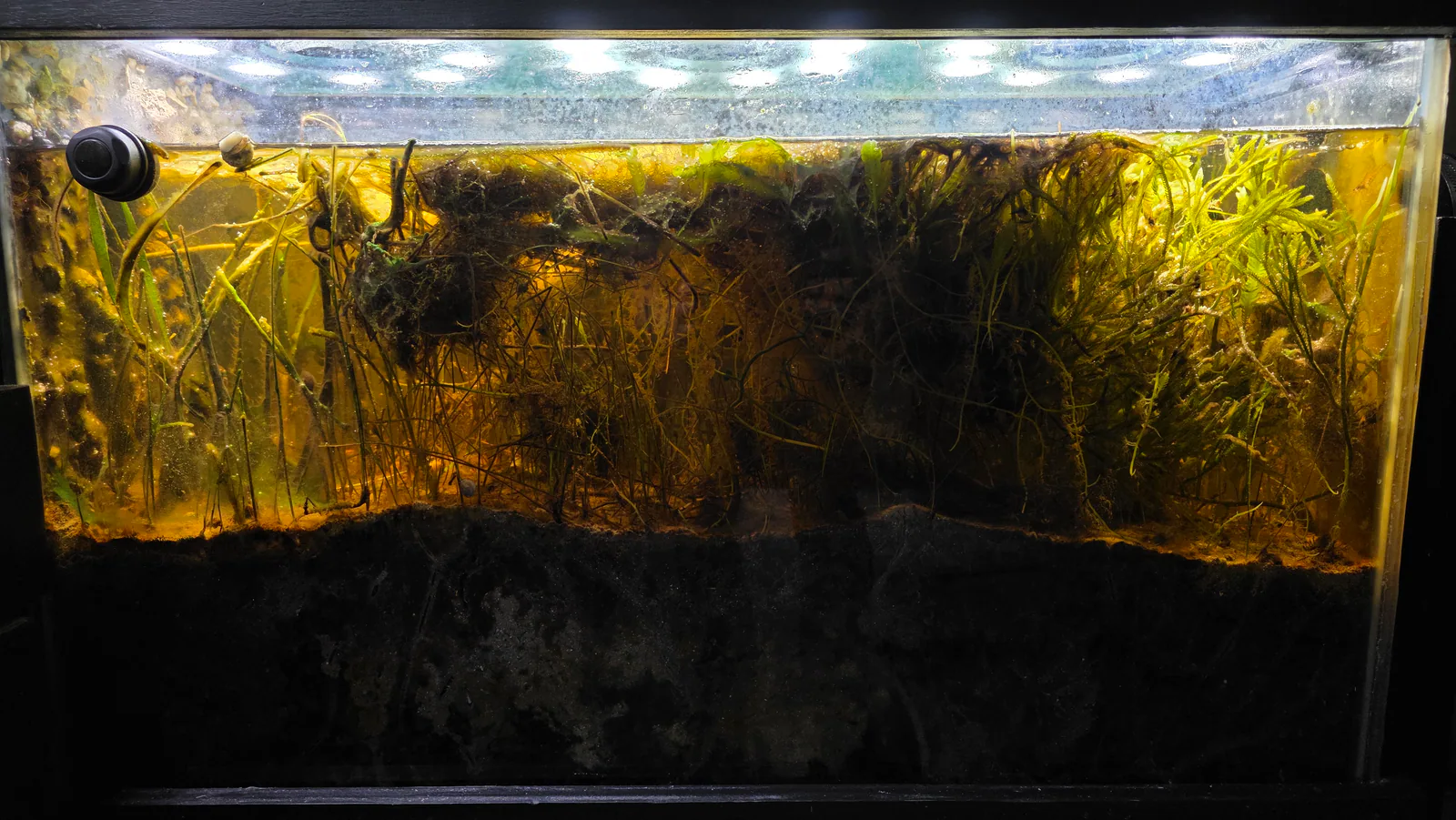
Naked Goby is an obligate hard-substrate associate. It shelters inside and among oyster shells, uses empty shells as nest cavities, and rarely ventures far from the reef structure. In natural estuaries, the species essentially tracks the distribution of oyster reefs; populations collapse when reef structure is removed or degraded. In miniBIOTA, the Eastern Oyster cluster (id 40) in the Seagrass Meadow represents exactly the habitat this species requires. An individual Naked Goby could inhabit the crevices and interiors of the oyster cluster without being easily visible.

Diet

Naked Goby is a micro-predator of benthic and epibenthic invertebrates. Diet includes copepods, amphipods, small crustaceans, polychaete worms, and other small invertebrates found in and around oyster reef habitat. It forages actively within the reef matrix and on adjacent substrate surfaces. In miniBIOTA, potential prey includes marine amphipods, copepods, small polychaetes such as Spaghetti Worm and Ragworm juveniles, and other small invertebrates in the Seagrass Meadow.

Reproduction

Gobiosoma bosc is a nest-guarder. Males select empty oyster shells or similar hard-cavity substrate and attract females to lay demersal egg masses inside. The male guards the egg mass through hatching. Larvae are planktonic after hatching. In miniBIOTA, reproduction is biologically possible if individuals are present -- the Eastern Oyster cluster provides cavity nesting substrate -- but no reproductive observation is on record.

Tolerance Ranges

Gobiosoma bosc is one of the most euryhaline small fish in North America, tolerating salinities from near-freshwater (2 ppt) to full marine (35 ppt) and temperatures from roughly 5-35 degrees C. Its wide tolerance range matches the broadly marine conditions of the Seagrass Meadow. No specific measurements have been taken for miniBIOTA.

Ecological Role

Naked Goby is a micro-predator in the Seagrass Meadow, consuming copepods, amphipods, and small polychaetes from within and around the oyster cluster. Its role as an invertebrate predator would impose predation pressure on the microcrustacean community -- similar in trophic position to the Big Claw Snapping Shrimp (id 105, Extirpated) but operating from within the oyster reef matrix rather than a sediment burrow.

Ecologically, Naked Goby is also notable as an indicator of oyster reef health: its presence or absence tracks reef structural quality. If the Eastern Oyster cluster in miniBIOTA is providing adequate crevice habitat, Naked Goby is among the species most likely to colonize it as a hitchhiker.

miniBIOTA Evidence

Introduction Context

No introduction date, source, or method is on record. Naked Goby is a frequent hitchhiker on oyster clusters in marine aquarium systems; arrival with or on the Eastern Oyster cluster is the most probable pathway if the species is or was present.

Observation Timeline

No observation files found.

What Is Confirmed

  • Naked Goby (Gobiosoma bosc) is present as a database node in miniBIOTA.

What Is Inferred

  • If ever present, most likely arrived as a hitchhiker associated with the Eastern Oyster cluster (id 40).
  • Given its cryptic habit of sheltering inside oyster shells, an individual could be present and easily overlooked during casual observation.

What Remains Unknown

  • Whether the species was ever present in miniBIOTA.
  • Introduction date, source, and method.
  • Current population status.
  • Whether reproduction has occurred.