Alitta succinea

Ragworm

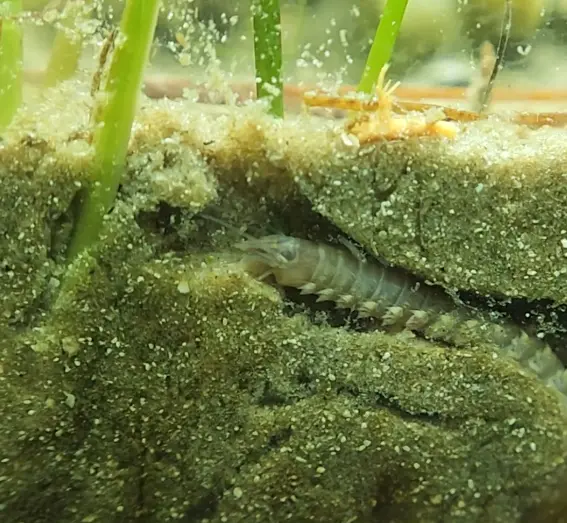
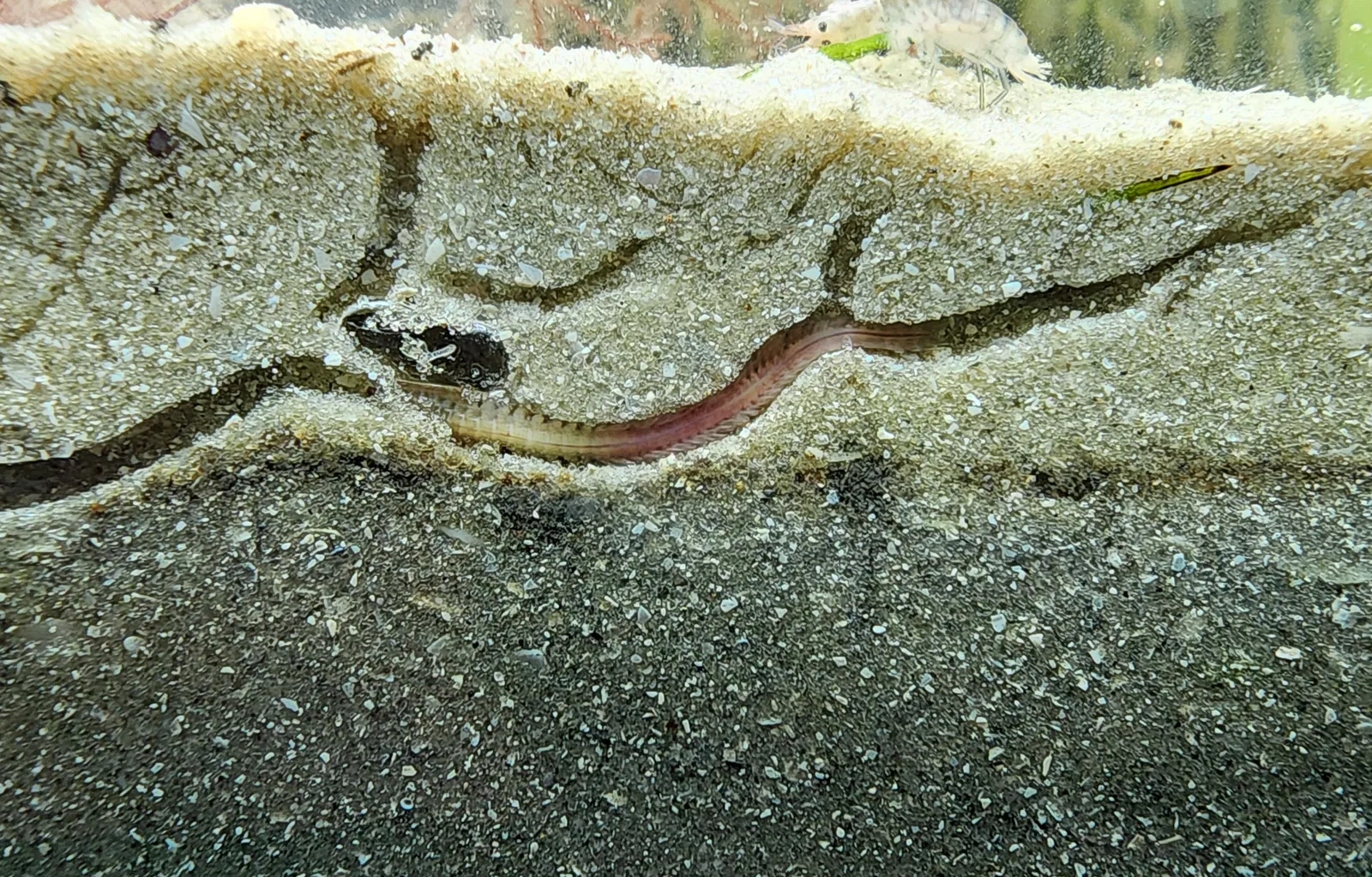
A bristly nereid polychaete that burrows through the sediment of the Seagrass Meadow and Marine Shore, consuming algae and detritus as an established breeding population, with nocturnal undulation outside the burrow documented as mating behavior.

Overview

The Ragworm (Alitta succinea, provisional) is a nereid polychaete established in the miniBIOTA Seagrass Meadow and Marine Shore. It arrived as a hitchhiker on December 10, 2023, and has maintained a stable population of approximately 40 individuals, confirmed breeding, classified as Established and At Capacity. Worms have been observed emerging from burrows at night in an undulating motion documented as mating behavior. The species is an omnivore and deposit feeder that actively bioturbates the benthic substrate. Scientific identity is assigned as A. succinea based on the DB record and geographic context; no formal morphological confirmation has been performed.

Identity

  • Common name: Ragworm
  • Alternate names: polychaete, nereid worm, pile worm, sandworm, clam worm, rag worm, nereids, marine worm, alitta
  • Scientific name: Alitta succinea (provisional)
  • Identification confidence: Provisional
  • Uncertainty label: Established, identity provisional

Taxonomy

  • Kingdom: Animalia
  • Phylum: Annelida
  • Class: Polychaeta
  • Order: Phyllodocida
  • Family: Nereididae
  • Genus: Alitta
  • Species: succinea (provisional)

Natural History

Range and Florida Relevance

Alitta succinea is distributed broadly along the Atlantic and Gulf coasts of North America from Canada to the Gulf of Mexico, and has been introduced to many other regions through shipping and aquaculture. It is among the most common polychaetes in Florida estuaries, seagrass beds, muddy intertidal flats, oyster reefs, and marina fouling communities. Its presence in miniBIOTA as a hitchhiker is consistent with its status as a common and widespread coastal species that readily colonizes new substrates.

Habitat

Alitta succinea constructs mucus-lined burrows in soft sediment and forages at the surface and through the upper substrate layer. It is found in a wide range of estuarine habitats from sandy to silty sediments, and commonly occurs among seagrass roots, beneath shell hash, and in organically rich benthic zones. In miniBIOTA, ragworms occupy the sediment of the Seagrass Meadow and Marine Shore, sharing the benthic layer with the much larger spaghetti worm population and with other deposit feeders and burrowers.

Diet

Alitta succinea is an omnivore. It deposit-feeds on algae, detritus, and fine organic matter in the sediment surface and substrate, and will also actively prey on small invertebrates and scavenge carrion using its everted muscular pharynx armed with jaw-like structures. Ragworms are among the few polychaetes capable of both passive deposit feeding and active prey capture. In miniBIOTA, feeding behavior is inferred from species biology; no direct feeding observations have been made.

Reproduction

Alitta succinea exhibits epitoky: sexually mature individuals modify their posterior body segments into an epitoke form adapted for swimming, which detaches from the parent worm and rises to the water surface to release eggs or sperm into the water column. This behavior typically occurs at night and may be synchronized within the population. The parent worm can survive after epitoky and may reproduce again. In miniBIOTA, worms have been observed undulating outside their burrows at night, behavior consistent with pre-epitoky mating activity. Reproduction is confirmed from the stable and established population since December 2023.

Tolerance Ranges

Alitta succinea is a hardy estuarine polychaete tolerant of a wide range of temperatures, salinities, and dissolved oxygen levels. It is frequently found in organically enriched sediments that would exclude many other species. This broad tolerance is consistent with its status as a successful hitchhiker and its sustained establishment in miniBIOTA across more than two years without any documented tolerance-related failures.

Ecological Role

Ragworms are bioturbators and omnivorous deposit feeders in the Seagrass Meadow and Marine Shore, contributing to sediment turnover, organic matter processing, and benthic nutrient cycling. Their burrowing mixes the upper substrate layer, redistributing organic material and disrupting potential anaerobic surface zones. Their omnivory adds a predation and scavenging layer that distinguishes them from the strictly deposit-feeding spaghetti worms that dominate the same benthic zone.

In miniBIOTA, the ragworm population of approximately 40 individuals supplements the much larger spaghetti worm population in processing the benthic detritus load. Both biome profiles list ragworms as part of the cleanup crew in the Seagrass Meadow and Marine Shore. No documented interactions with other named species have been recorded beyond shared substrate use.

miniBIOTA Evidence

Introduction Context

The Ragworm arrived as a hitchhiker on December 10, 2023, coming in with another introduction rather than being deliberately added. No specific source, vendor, or collection location has been documented. December 10, 2023 is the earliest introduction date recorded for any current saltwater species in miniBIOTA. The population has persisted and grown since that date.

Observation Timeline

  • December 10, 2023: Database date of first introduction as a hitchhiker. No dedicated observation file on record for the founding event.
  • Undated (prior to June 2026): Worms observed emerging from burrows at night in an undulating motion, documented in the species database as mating behavior consistent with epitoky or pre-epitoky display. No specific observation date or file on record.

What Is Confirmed

  • The species arrived as a hitchhiker on December 10, 2023 and has been established in miniBIOTA for more than two years.
  • The population is estimated at approximately 40 individuals, classified as Established and At Capacity.
  • Reproduction is confirmed from the sustained and established population trajectory.
  • Nocturnal undulation outside the burrow has been observed and is documented as a mating behavior.
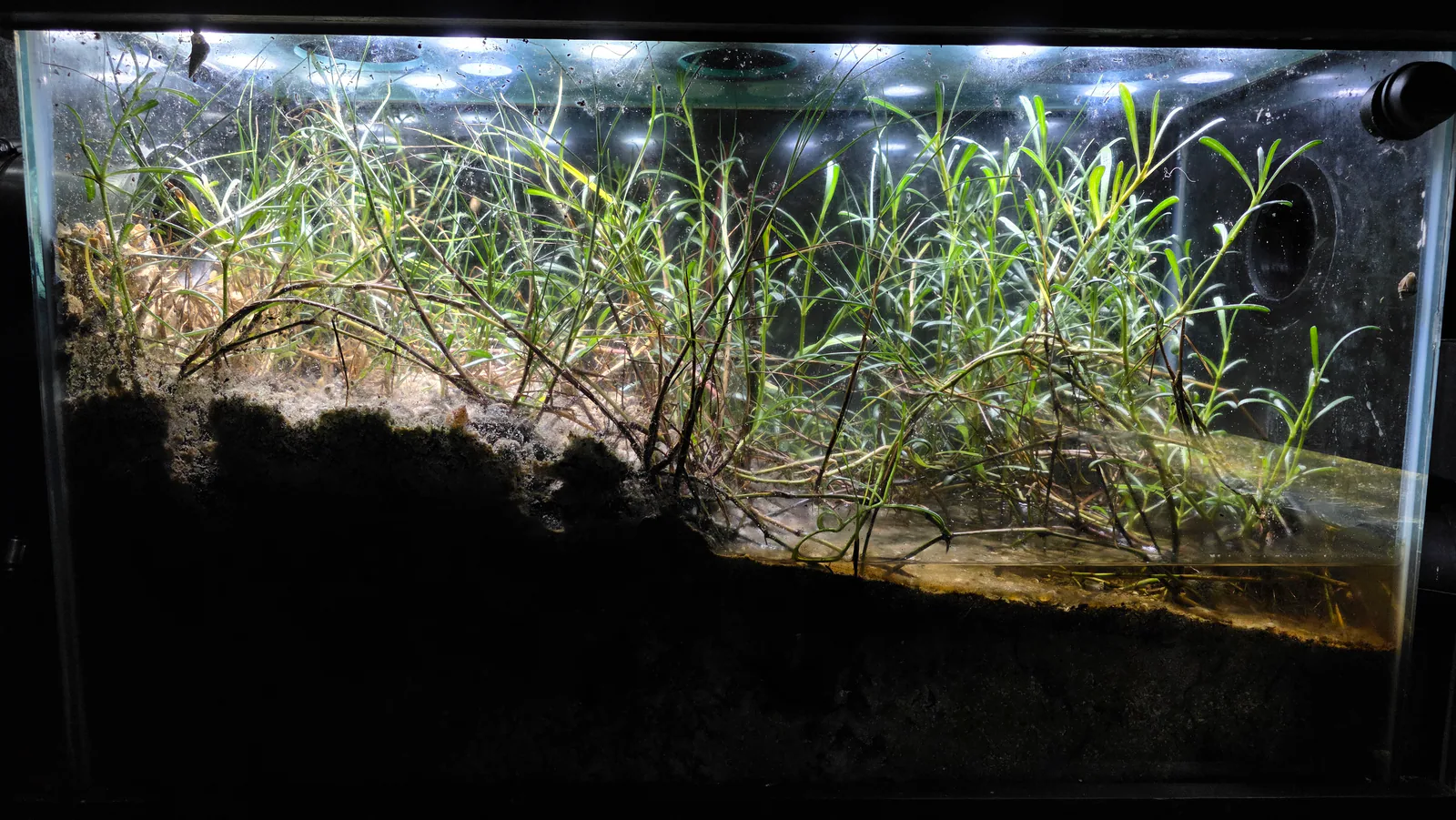
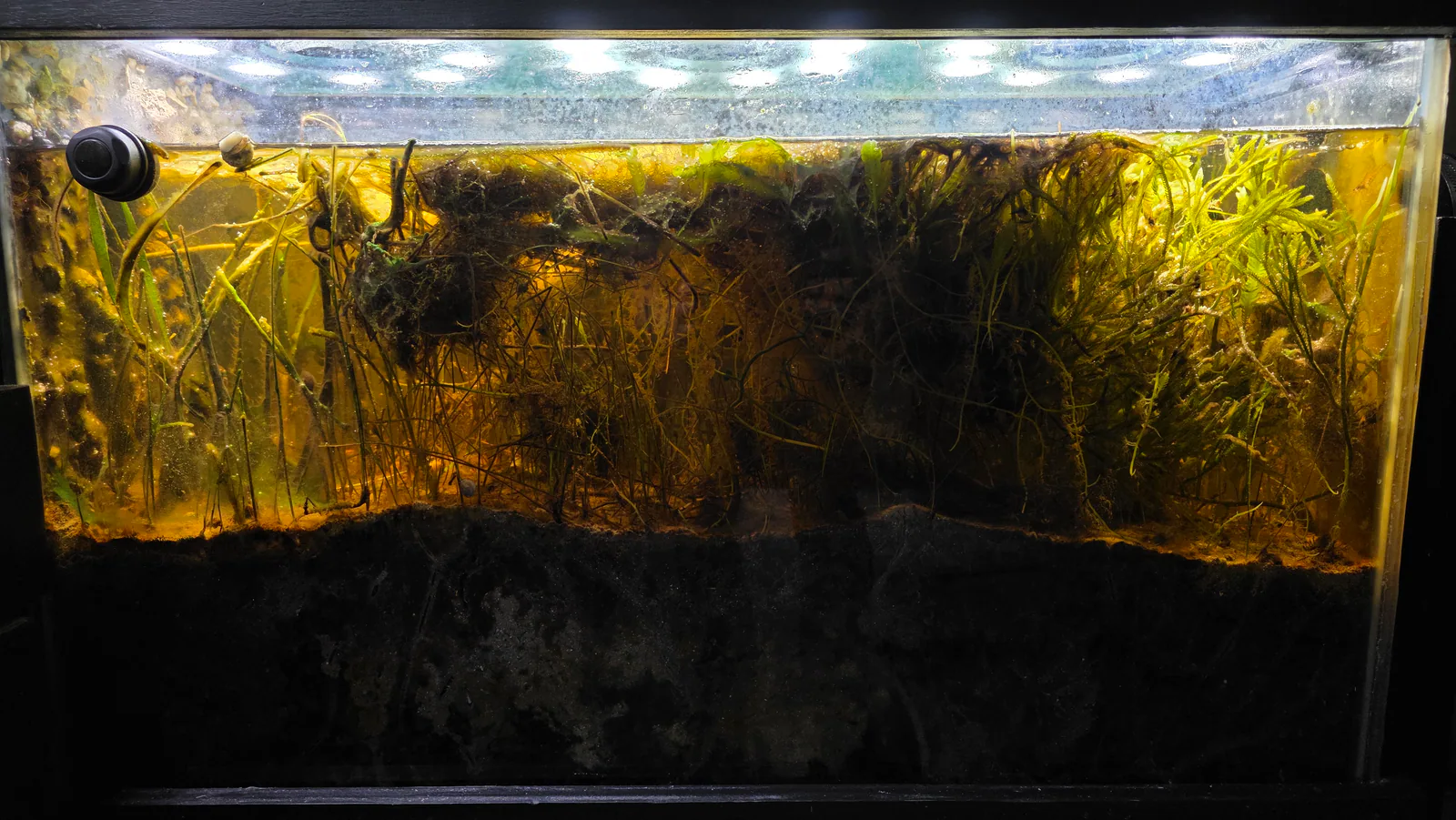
  • The species is present in both the Seagrass Meadow and Marine Shore.

What Is Inferred

  • Breeding events have occurred in miniBIOTA; the specific timing and frequency have not been documented.
  • Ragworms are contributing to sediment bioturbation alongside the larger spaghetti worm population.

What Remains Unknown

  • The exact source and founding population size.
  • The specific dates of any observed mating events.
  • Whether ragworm population size has changed following the June 2026 mud crab introduction.
  • Whether any mortality events have occurred since introduction.
  • The precise distribution of ragworms across the Seagrass Meadow and Marine Shore.
  • Whether the scientific identity should be confirmed as Alitta succinea or another nereid species; the biome file reference to Hediste diversicolor reflects an outdated or incorrect source assignment.