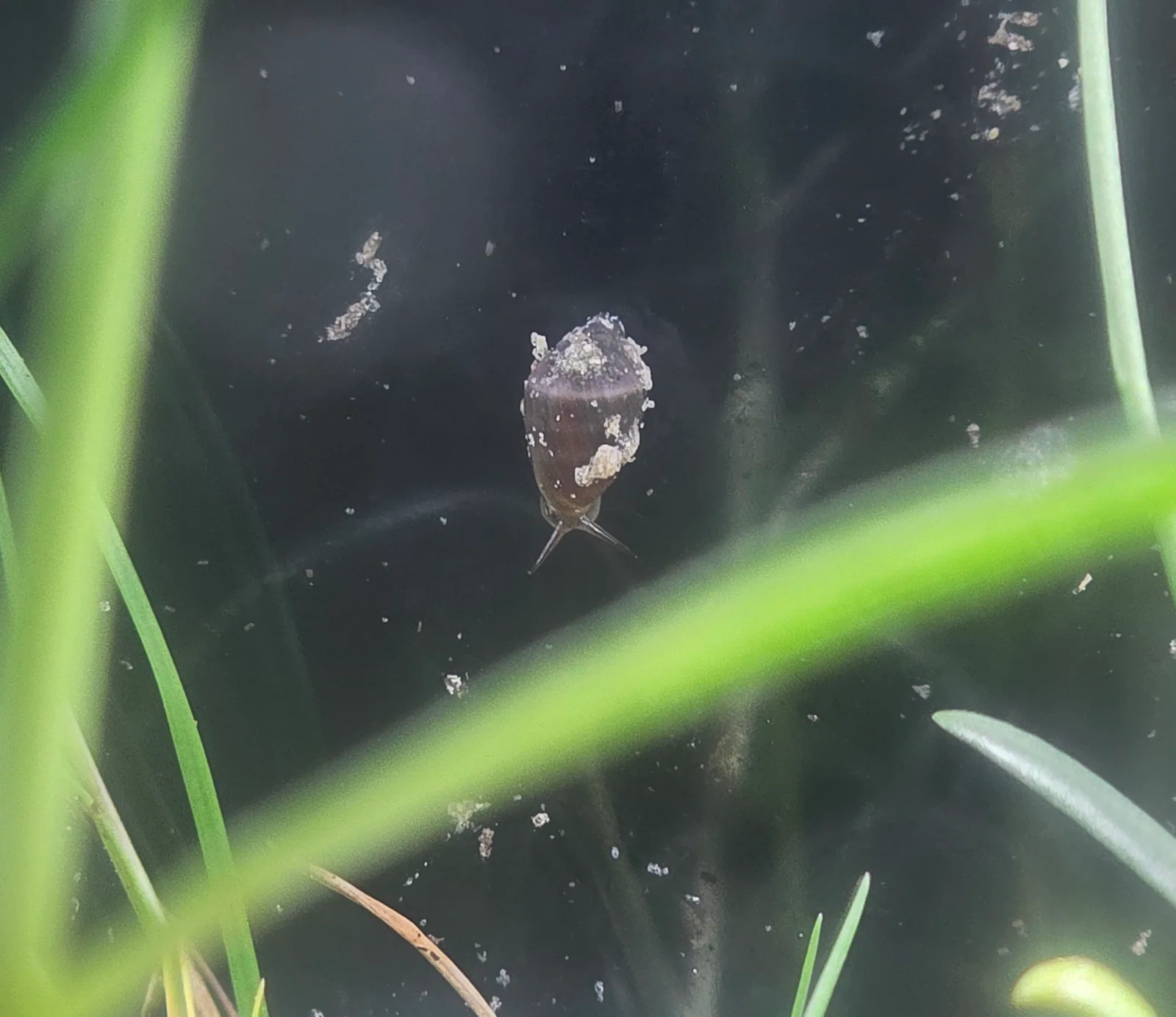
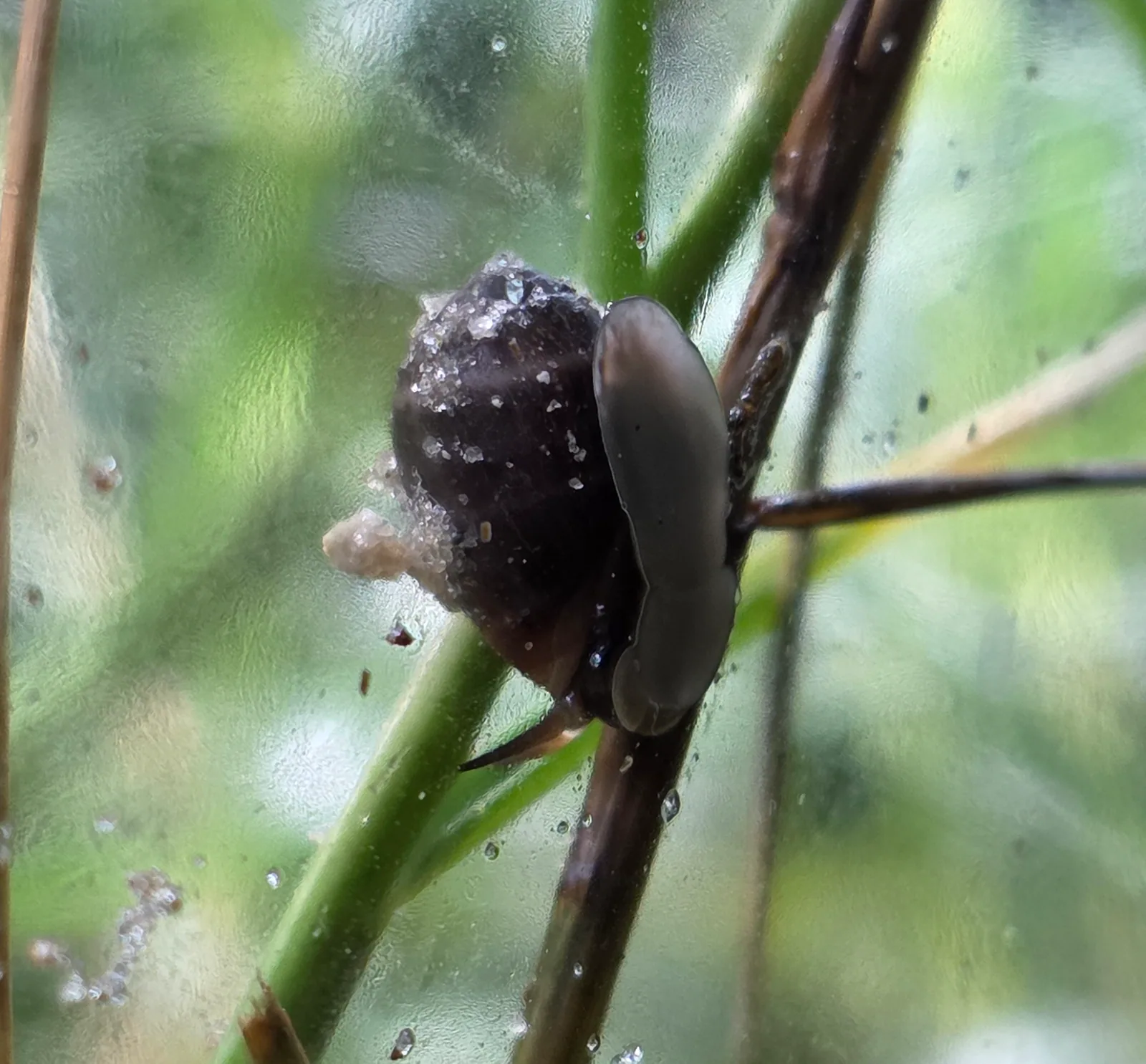
Melampus sp. (tentatively Melampus coffeus, unconfirmed)

Coffee Bean Snail

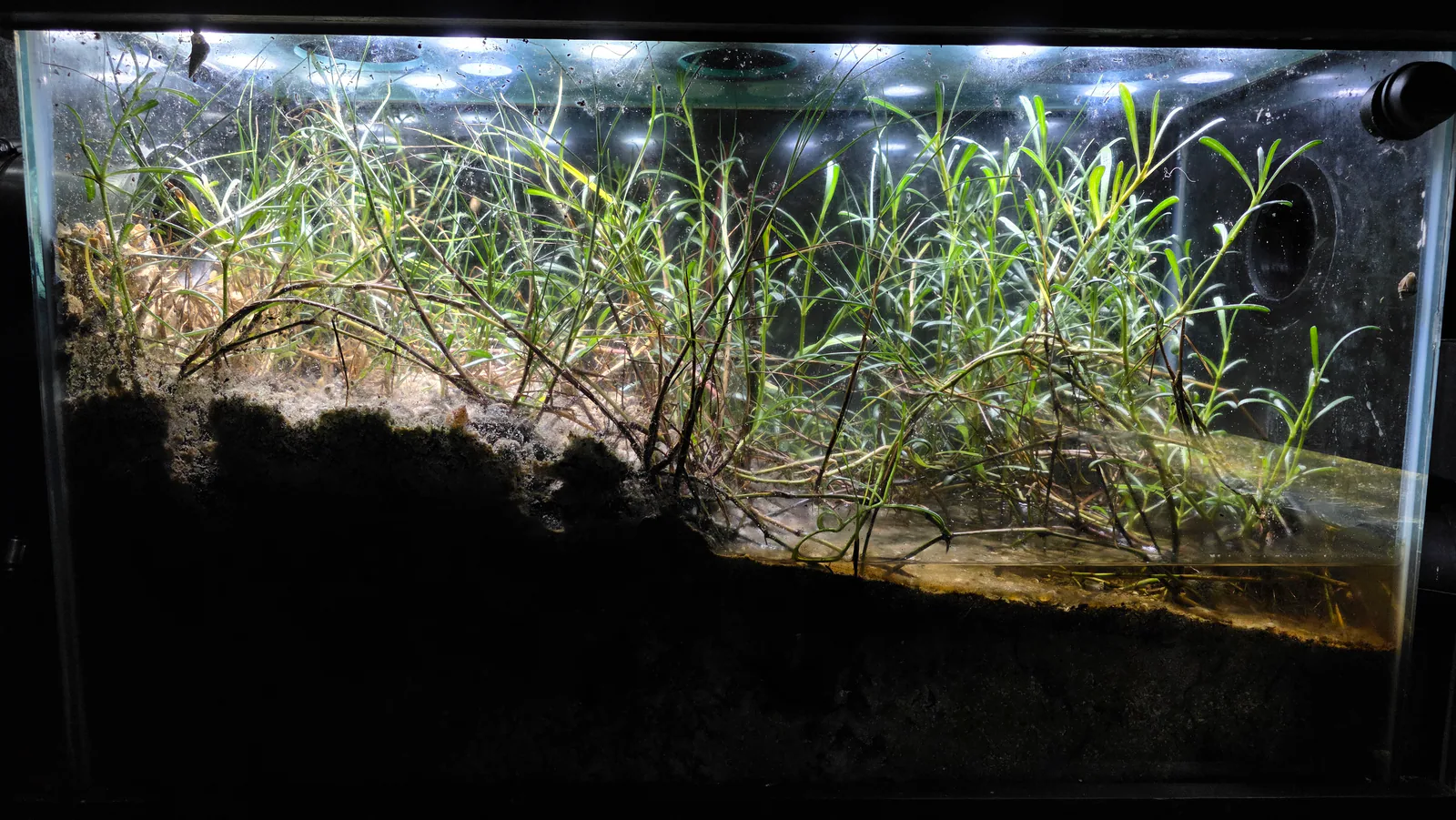
Found at the intertidal waterline of the Marine Shore, this small air-breathing snail is a close relative of Eastern Melampus, easily mistaken for it, and was only recognized as a separate species after weeks of living alongside it in the system.

Visual Data Unavailable

Overview

A small, air-breathing intertidal snail in the same genus as Eastern Melampus and easily confused with it in the field. Approximately 40 individuals, collected June 4, 2026 and initially logged as an expansion of the Eastern Melampus population, were identified on July 15, 2026 as this distinct congener.

Identity

  • Common name: Coffee Bean Snail
  • Alternate names: coffee bean snail
  • Scientific name: Melampus sp., tentatively Melampus coffeus (Gulf/Caribbean Coffee Bean Snail)
  • Identification confidence: Owner field identification only. Distinguished from Eastern Melampus (Melampus bidentatus) by direct comparison; genus-level confidence is high (same family, same collection context, same intertidal niche), but the tentative species-level call of Melampus coffeus has not been confirmed by morphological or genetic review.
  • Uncertainty label: Uncertain

Taxonomy

  • Kingdom: Animalia
  • Phylum: Mollusca
  • Class: Gastropoda
  • Order: Ellobiida
  • Family: Ellobiidae
  • Genus: Melampus
  • Species: Tentatively coffeus; unconfirmed

Natural History

Range and Florida Relevance

Melampus is a genus of small, air-breathing intertidal snails found throughout the Atlantic and Gulf coasts of the Americas, including Florida. Several species within the genus share the common name "coffee bean snail," a reference to the small, glossy, ovoid shell shape. Melampus coffeus, the species tentatively proposed here, occurs in mangrove-associated intertidal habitats across the Gulf of Mexico and Caribbean, often co-occurring with Melampus bidentatus (Eastern Melampus) in overlapping but not identical habitat zones; M. coffeus tends to be more closely associated with mangrove leaf litter and root structure than the higher-marsh grass zones favored by M. bidentatus. Confirmation of species-level identity for the miniBIOTA population has not been performed.

Habitat

Like Eastern Melampus, Coffee Bean Snail is an air-breathing pulmonate that lives at the intertidal boundary between land and salt water, using a modified lung rather than gills and requiring periodic air exposure rather than constant submersion. Species in this genus typically track the tide, grazing at the waterline during low tide and retreating upshore as the water rises. Melampus species commonly occurring under the "coffee bean snail" name are frequently associated with mangrove leaf litter, root structure, and other coarse woody or organic debris at the intertidal margin, in addition to grazing dead grass detritus.

Diet

Coffee Bean Snail, like other Melampus species, is a detritivore, feeding on dead grass, decaying coastal vegetation, mangrove leaf litter, and biofilm at the intertidal margin, processed using a radula. No miniBIOTA-specific feeding observation has been made under the corrected identity; the June 4, 2026 introduction's early presence in the Marine Shore is documented under the (now corrected) Eastern Melampus record, and its specific feeding behavior was not separately distinguished from that of the two true Eastern Melampus present at the same time.

Reproduction

Reproduction in Melampus species generally follows a pattern tied to the lunar tidal cycle: spawning at spring tides, egg masses deposited on vegetation near the waterline, and a brief planktonic veliger larval stage before settlement. No reproduction has been observed in miniBIOTA.

Tolerance Ranges

Not formally documented for the miniBIOTA population. Species in this genus, including candidates for the "coffee bean snail" common name, generally tolerate a range of salinity from brackish to full marine, consistent with the intertidal zone they occupy.
Ecological Role

Coffee Bean Snail is provisionally understood to occupy the same detritivore and nutrient-transport niche in the Marine Shore as Eastern Melampus: grazing dead plant material and biofilm at the waterline and moving organic matter between the aquatic and terrestrial sides of the intertidal margin through its droppings. Because its June 4, 2026 introduction was tracked jointly with Eastern Melampus until the July 15, 2026 identity correction, no ecological role or behavior has yet been documented specifically and exclusively for this species; prior joint observations (waterline detritus feeding) cannot be confidently attributed to one species versus the other.

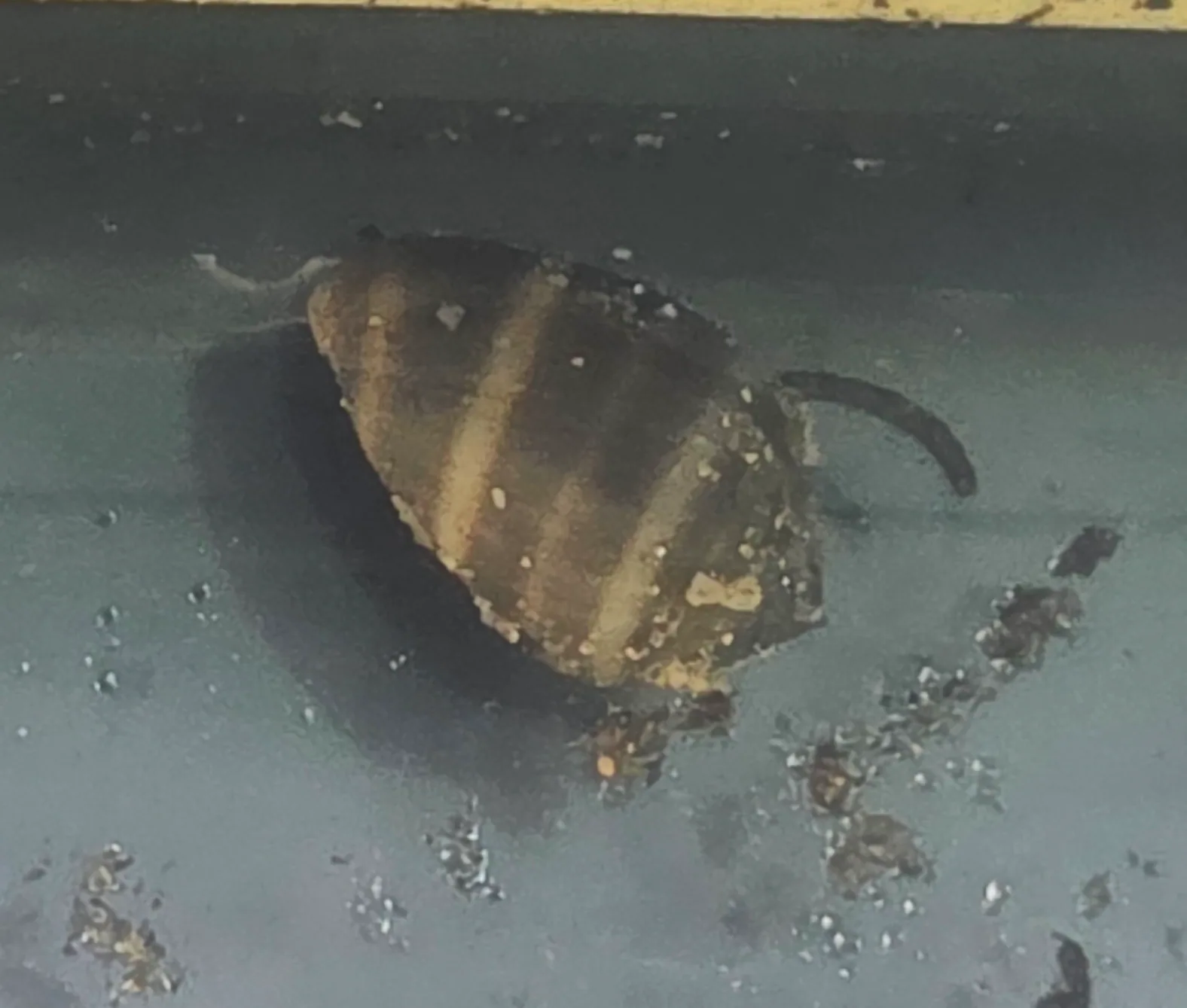
A cracked shell attributed to this species was found on Marine Shore sand July 15, 2026, with crab predation (Gulf Marsh Crab, unconfirmed) offered as a leading, circumstantial hypothesis. See research/species/gulf-marsh-crab.md for the corresponding unconfirmed predation note.

miniBIOTA Evidence

Introduction

Approximately 40 individuals were collected and introduced to the Marine Shore on June 4, 2026. At the time, they were believed to be an expansion of the Eastern Melampus population introduced April 23, 2026, and were logged accordingly. On July 15, 2026, Josue identified the June 4, 2026 group as a distinct species, a congener of Eastern Melampus easily confused with it in the field.

Observation Timeline

  • June 4, 2026: Approximately 40 individuals collected and introduced to the Marine Shore, initially logged as an expansion of the Eastern Melampus population.
  • July 15, 2026: Identity correction. Josue confirmed the June 4, 2026 group is a distinct species, Coffee Bean Snail, in the same genus as and easily confused with Eastern Melampus. The two original April 23, 2026 individuals are confirmed true Eastern Melampus, unaffected by this correction. Observation record, July 15, 2026.
  • July 15, 2026: A cracked shell attributed to this species was found on Marine Shore sand, damage consistent with crab-claw crushing. Gulf Marsh Crab predation is proposed as a leading, unconfirmed hypothesis; no predation was directly observed, and the population has declined noticeably from its original approximately 40 individuals. Video documented. Observation record, July 15, 2026.

What Is Confirmed

  • Approximately 40 individuals introduced to the Marine Shore on June 4, 2026, initially misattributed to Eastern Melampus.
  • Identified as a distinct species from Eastern Melampus on July 15, 2026, based on the owner's direct field comparison.
  • A cracked shell attributed to this species found on Marine Shore sand, July 15, 2026, damage consistent with crab-claw crushing.
  • Population has declined noticeably from the original approximately 40 individuals.

What Is Inferred

  • The species is a Melampus congener based on the owner's stated genus-level similarity to Eastern Melampus and the shared collection context.
  • Detritivore feeding behavior at the intertidal waterline, consistent with general Melampus biology, though not yet directly and exclusively observed for this species in miniBIOTA.
  • Gulf Marsh Crab predation is one plausible, unconfirmed explanation for both the cracked shell and the broader population decline; the Gulf Marsh Crab's own presence in miniBIOTA has not been directly confirmed since May 22, 2026.

What Remains Unknown

  • Confirmed scientific species identification; Melampus coffeus is a tentative candidate, not a confirmed determination.
  • Current population size following the decline from approximately 40.
  • Whether any reproduction has occurred.
  • Whether Gulf Marsh Crab, or another species, is responsible for the cracked shell and population decline.
  • Which prior joint Eastern-Melampus/Coffee-Bean-Snail observations (before the July 15, 2026 split) applied to this species specifically.