The Biosphere Biomes Species Engineering About

Sesarma schubarti

Gulf marsh crab

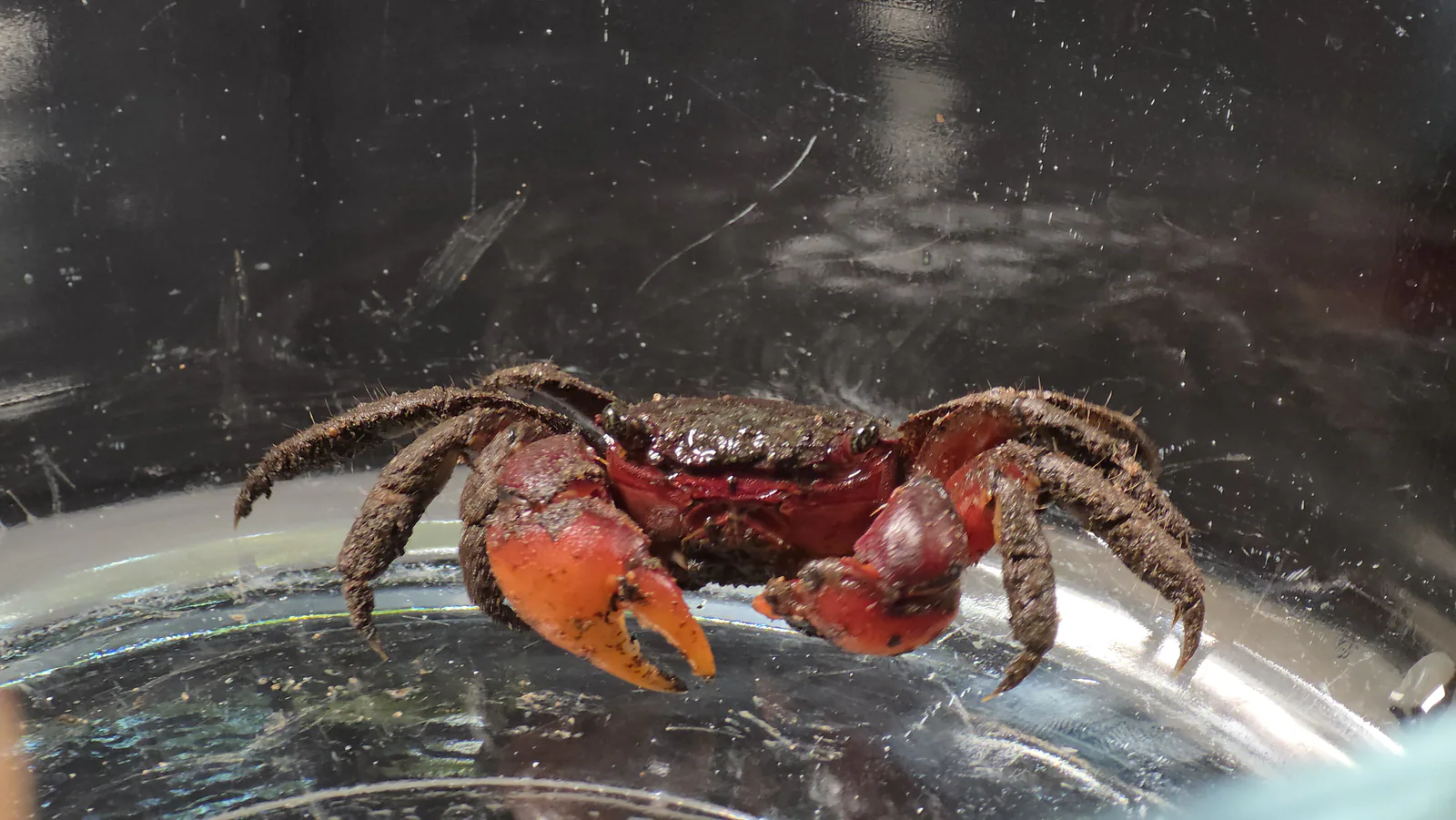
New species classified in 2024, diverged from the purple marsh crab (Sesarma reticulatum). Primarily herbivorous and feeds on coastal grasses and mangrove detritus. Also exhibits opportunistic scavenging behavior.

Common Name
Gulf marsh crab
Scientific Name
Sesarma schubarti
Realm
Terrestrial
Biome
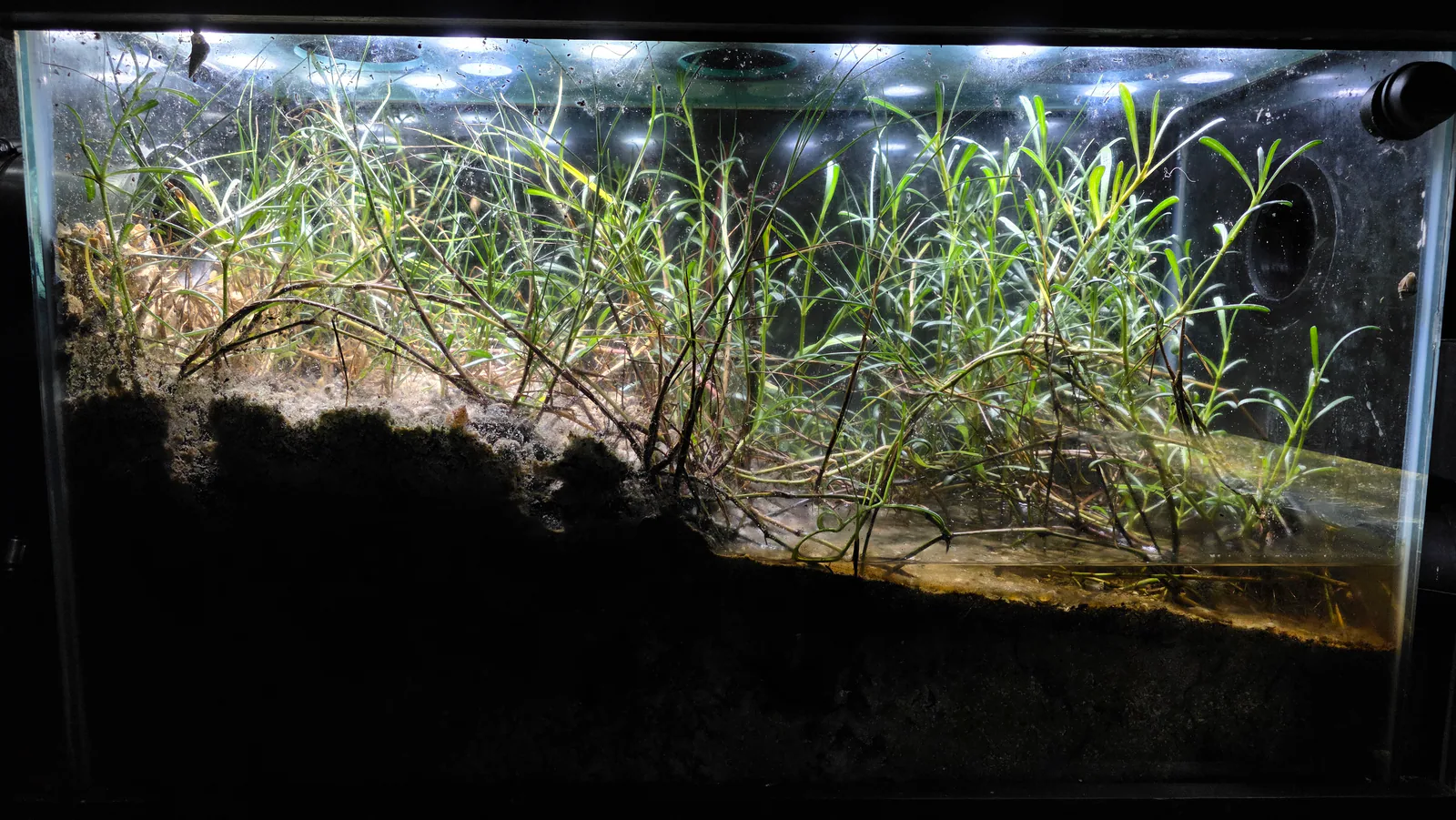
Marine Shore
Date First Introduced
April 22, 2026
Source / Origin
Wild brackish tidal ditch, Spring Hill, FL

Section Notes

Classified as a distinct species in 2024; previously grouped with Sesarma reticulatum (purple marsh crab).

Current Estimated Population
1 (male)
Population Status
Uncertain

Section Notes

Single male introduced 2026-04-22. Confirmed present and active as of 2026-04-26.

Dietary Inputs
Cordgrass, seashore paspalum, silverhead, waterlogged mangrove leaves, dry mangrove leaves

Section Notes

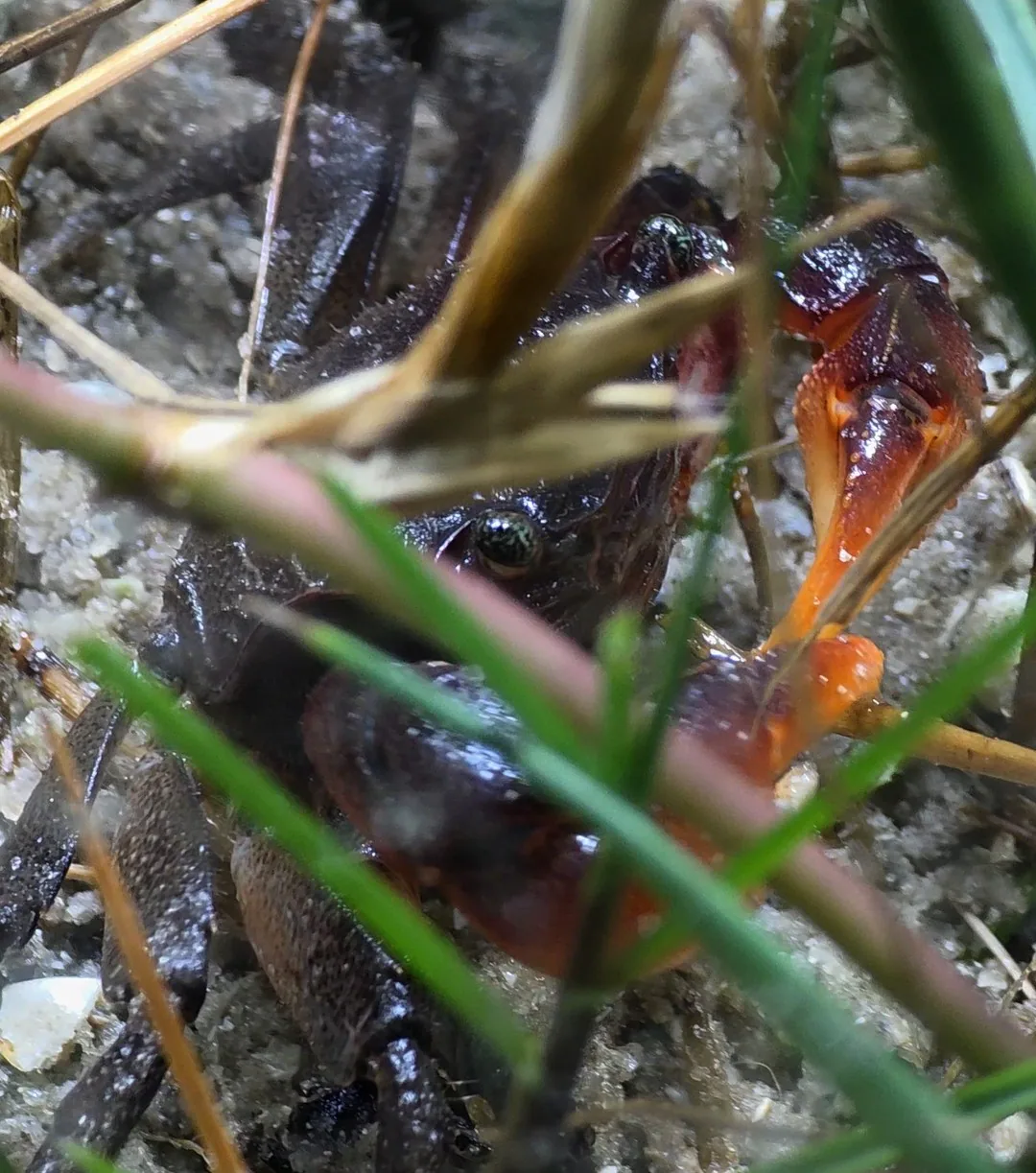
Confirmed feeding on live seashore paspalum (Paspalum vaginatum) on 2026-04-26, four days after introduction. Also observed scavenging a detached fiddler crab leg on the same date. Suggests a broader opportunistic diet than initially expected.

Classification Pending

Pending

This section will expand as more information is documented for this species.

Classification Pending

Pending

This section will expand as more information is documented for this species.

Microhabitat Preference
Coastal marsh, brackish tidal zones, shoreline vegetation margins.

Section Notes

Shares the Marine Shore biome with the Atlantic Sand Fiddler Crab (Leptuca pugilator). Coexistence is natural in coastal settings. Relationship in miniBIOTA is being actively monitored.

Biomes This Species Lives In

Follow this species across the habitats where it currently appears in the miniBIOTA biosphere.

April 26, 2026 Observation Video

Gulf Marsh Crab Confirmed Feeding on Live Seashore Paspalum

Four days after introduction, the Gulf marsh crab was observed actively grasping live seashore paspalum blades, pulling them apart, and consuming the finer strands. This confirms its herbivore role in the biome and represents the first direct evidence of grass regulation. On the same date the crab was also observed scavenging a detached fiddler crab leg, which was unexpected and suggests a broader opportunistic diet than its herbivore classification implies.