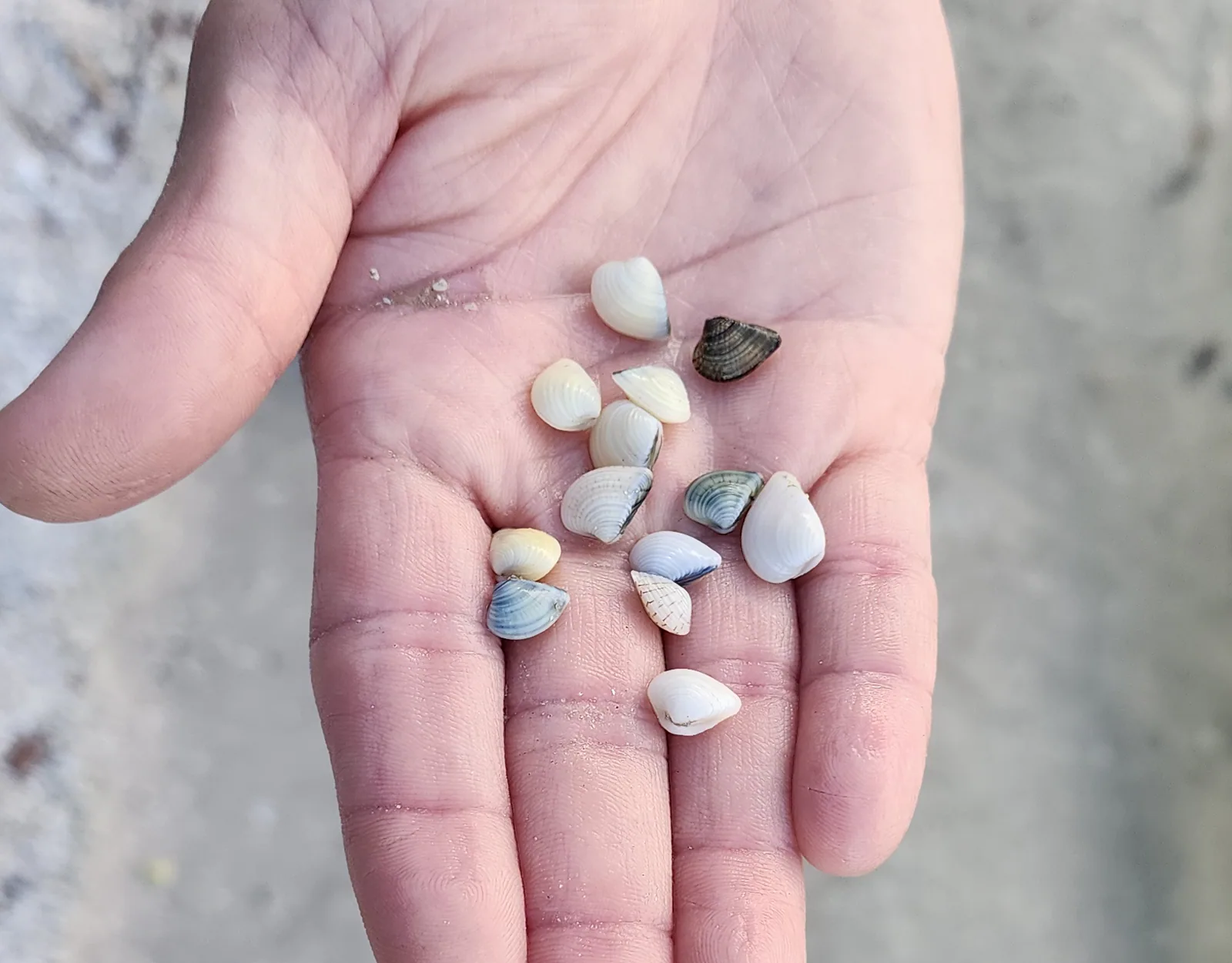
Bivalvia sp. (unidentified)

Marine Clam

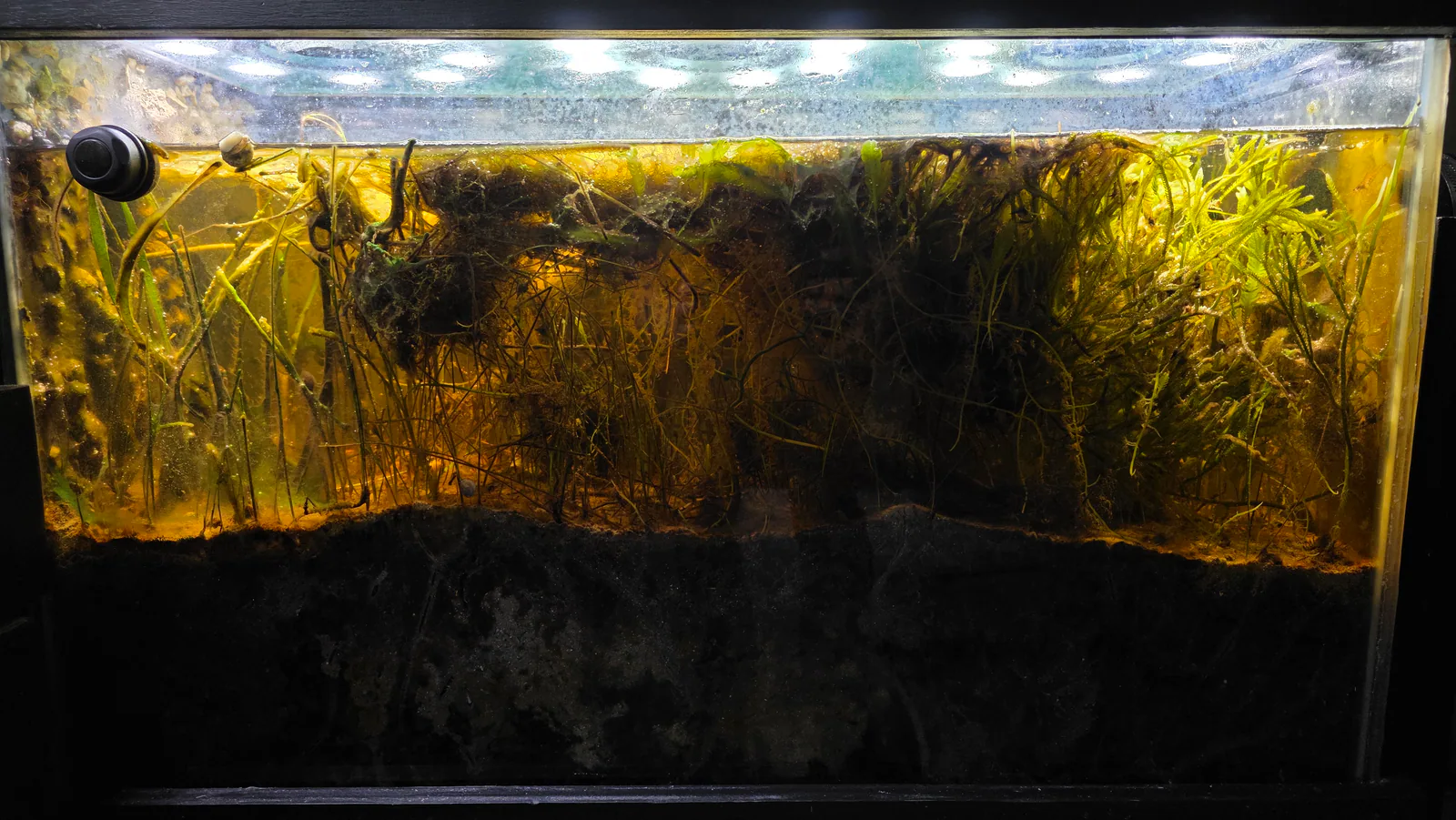
An unidentified saltwater bivalve in the Seagrass Meadow, drawing water through its gill-siphon system to filter phytoplankton and suspended particles from the water column and contributing to water clarity in the saltwater realm.

Visual Data Unavailable

Overview

An unidentified saltwater bivalve in the Seagrass Meadow, living in substrate or on hard surfaces and filtering phytoplankton and suspended particles from the water column through its gill-siphon system; distinct from Eastern Oyster, Scorched Mussel, and Asian Clam (Freshwater, Extirpated). No genus or species identification has been made from any archived observation.

Identity

  • Common name: Marine Clam
  • Alternate names: clam, bivalve, saltwater clam
  • Scientific name: Bivalvia sp. (unidentified)
  • Identification confidence: Class-level (Bivalvia); genus and species unidentified
  • Uncertainty label: Observed

Taxonomy

  • Kingdom: Animalia
  • Phylum: Mollusca
  • Class: Bivalvia
  • Order: Unidentified
  • Family: Unidentified
  • Genus: Unidentified

Natural History

Bivalvia is a large class of mollusks characterized by two calcium carbonate shell valves hinged by an elastic ligament. Bivalves are one of the dominant groups of benthic invertebrates in coastal marine ecosystems worldwide, with approximately 10,000 to 15,000 described species. In tropical and subtropical coastal habitats like the Seagrass Meadow, bivalves may live buried in soft substrate (infaunal), attached to hard substrate or other organisms (epifaunal), or nestled within crevices.

Most bivalves are suspension (filter) feeders: they draw water in through an incurrent siphon, pass it over the ctenidia (gills, which function simultaneously as the respiratory and feeding organ), trap suspended food particles including phytoplankton, suspended microalgae, bacteria, and fine organic matter on mucus-coated gill filaments, and transport the collected material to the mouth. Clean water exits through the excurrent siphon.

Bivalves are important contributors to water quality in coastal systems: their filter-feeding activity removes suspended particles from the water column, contributing to water clarity and nutrient cycling. In a closed system like the Seagrass Meadow, a resident bivalve population would provide continuous water-column filtration similar to the Eastern Oyster in the Marine Shore.

Reproduction in most bivalves is gonochoristic (separate sexes), with gametes broadcast into the water for external fertilization. Larvae pass through a veliger stage before settling and metamorphosing into juveniles. Some species brood their young.

Ecological Role

In the Seagrass Meadow, Marine Clam would function as a benthic filter feeder, drawing suspended phytoplankton and organic particles from the water column. Its filtration activity would complement the Eastern Oyster in the Marine Shore and represent an additional water-column filtration node in the saltwater realm. Shell surfaces provide attachment substrate for epifaunal organisms including bryozoans, tube worms, and microalgae.

miniBIOTA Evidence

Introduction context: No introduction event is recorded. Bivalves may have arrived as natural colonizers attached to live rock or substrate, or been deliberately introduced. No introduction date, source, or method is on file.

Observation timeline:

  • No dedicated observation records have been found in the miniBIOTA observation records for Marine Clam.

Confirmed:

  • Species node exists for Marine Clam in the Seagrass Meadow; class-level identification as Bivalvia

Inferred:

  • Filter-feeding activity removing suspended phytoplankton and particles from the Seagrass Meadow water column, inferred from bivalve biology

Unknown:

  • Genus, family, and species within Bivalvia
  • Whether Marine Clam is currently present in the Seagrass Meadow
  • Introduction date, source, and method
  • Whether the bivalve lives buried in substrate (infaunal) or attached to hard surfaces (epifaunal)