Cerithiidae sp. (unidentified)

Unidentified Cerith

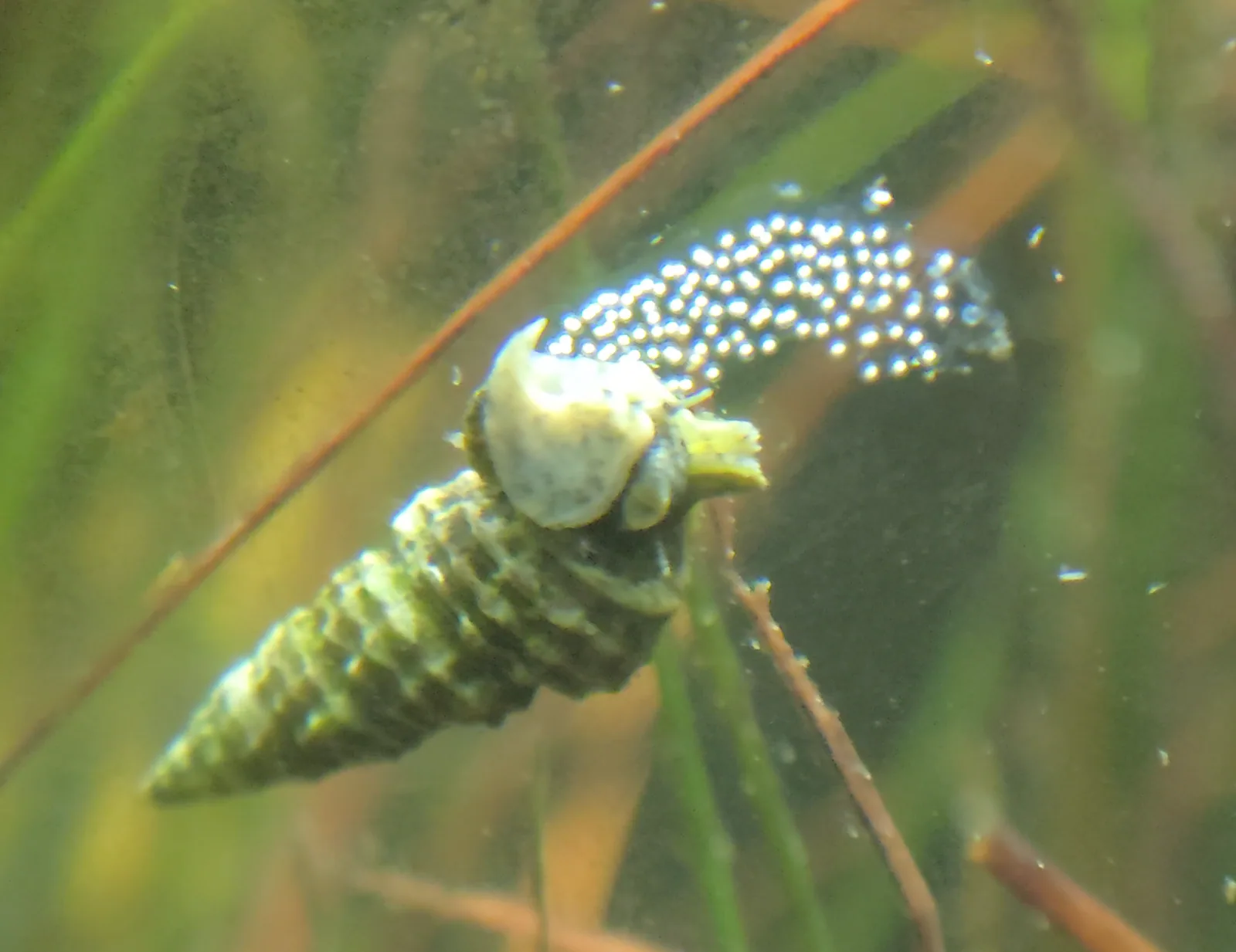
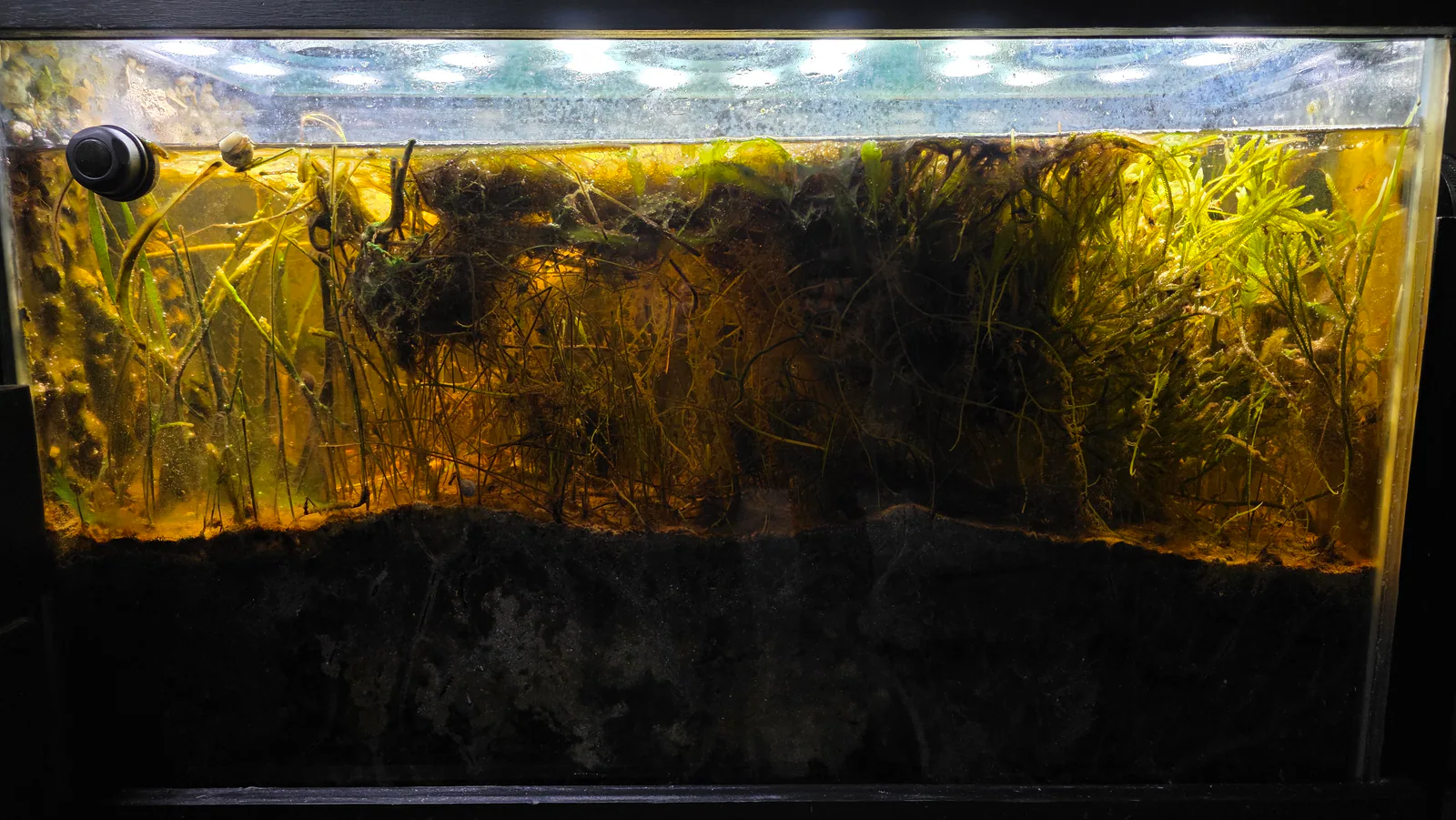
A slimmer-shelled cerith snail, not yet identified to species, that laid a semicircular cluster of white eggs on the Seagrass Meadow glass in February 2026 and grazes beside the Dark Cerith on blades and sand.

Realm
Saltwater
Population
Uncertain
Primary biome
Seagrass Meadow

Overview

A second, slightly slimmer-shelled cerith snail species shares the Seagrass Meadow with the Dark Cerith (Cerithium atratum). On February 11, 2026 it was filmed laying eggs on the glass in a semicircular cluster of small white dots, a pattern Josue distinguishes from the Dark Cerith's. Its species is not identified. No introduction event is on record for this species; like the Dark Cerith, it likely arrived via live rock, seagrass material, or deliberate introduction as a cleaning crew species.

Identity

  • Common name: Unidentified Cerith
  • Alternate names: cerith, cerith snail, Unidentified Cerith Snail 2 (former name)
  • Scientific name: Cerithiidae sp. (unidentified; not Cerithium atratum)
  • Identification confidence: Unknown at species level; family Cerithiidae. Josue tells it apart from the Dark Cerith by a slightly slimmer shell and a different egg-laying pattern (October 20, 2026).
  • Uncertainty label: Unknown

Taxonomy

  • Kingdom: Animalia
  • Phylum: Mollusca
  • Class: Gastropoda
  • Order: Caenogastropoda
  • Family: Cerithiidae
  • Genus: Unresolved
  • Species: Unresolved

Natural History

The cerith family's general biology is described on the Dark Cerith page and applies here as well: biofilm and algae grazing on seagrass blades and sandy substrate, clustered or coiled egg masses, and wide distribution in Florida seagrass beds. In miniBIOTA this species laid its eggs as a semicircular cluster of separate white dots on the glass. Species-level biology, morphology, and size class are unresolved until identification is performed.

Ecological Role

This second cerith species is presumed to be a grazer of biofilm and algae on seagrass blades and sandy substrate, as other members of the family Cerithiidae are. That role is inferred from family-level biology. It was photographed on the Seagrass Meadow glass on August 8, 2026, and a cerith tentatively identified as this species was filmed grazing the glass film on September 16, 2026. Whether it occupies a different niche from the Dark Cerith or competes with it for the same food and surfaces is not yet known.

miniBIOTA Evidence

Introduction Context

No introduction event is on record for this species. Like Dark Cerith, it likely arrived as part of a saltwater cleaning crew introduction or via live seagrass or rock material.

Observation Timeline

  • February 11, 2026: This species was filmed laying eggs on the Seagrass Meadow glass, its foot beside a semicircular cluster of small white egg dots; a Dark Cerith was present in the biome at the same time. Josue identified the egg layer as this species from its egg pattern and slightly slimmer shell (October 18 and 20, 2026).
  • February 17, 2026: Last recorded cerith sighting of the early period, likely a follow-up check six days after the egg laying. At the time, the two species were not yet recorded separately.
  • July 29, 2026: Cerith snails described as having declined over time in the Seagrass Meadow, alongside the Lightning Nerite. No cerith sighting had been confirmed since February 17, 2026.
  • August 8, 2026: Josue identifies the cerith photographed from beneath on the Seagrass Meadow glass at night as this species.
  • September 16, 2026: A single cerith was filmed hanging tip-down on the Seagrass Meadow glass and grazing upward with its foot and head extended. Josue tentatively identifies it as this species and believes it is the last remaining cerith in the Seagrass Meadow.

What Is Confirmed

  • A second cerith snail species, distinct from the Dark Cerith (C. atratum), laid eggs in the Seagrass Meadow on February 11, 2026 (video; identified by Josue).
  • A cerith was alive and grazing on the Seagrass Meadow glass on September 16, 2026.

What Is Inferred

  • Family Cerithiidae based on the original February 2026 observation.
  • Ecological role as a biofilm and algae grazer consistent with Cerithiidae biology.
  • The September 16, 2026 individual is likely this species (Josue's tentative identification).
  • Josue believes the September 16, 2026 individual is the last remaining cerith; no count was made.

What Remains Unknown

  • Species identity.
  • Whether the February 11, 2026 eggs hatched or any juveniles recruited.
  • Whether the September 16, 2026 individual is this species, and whether it is still present.
  • Whether it and Dark Cerith are occupying distinct niches or competing for the same substrate and food source.