Landoltia punctata

Dotted Duckweed

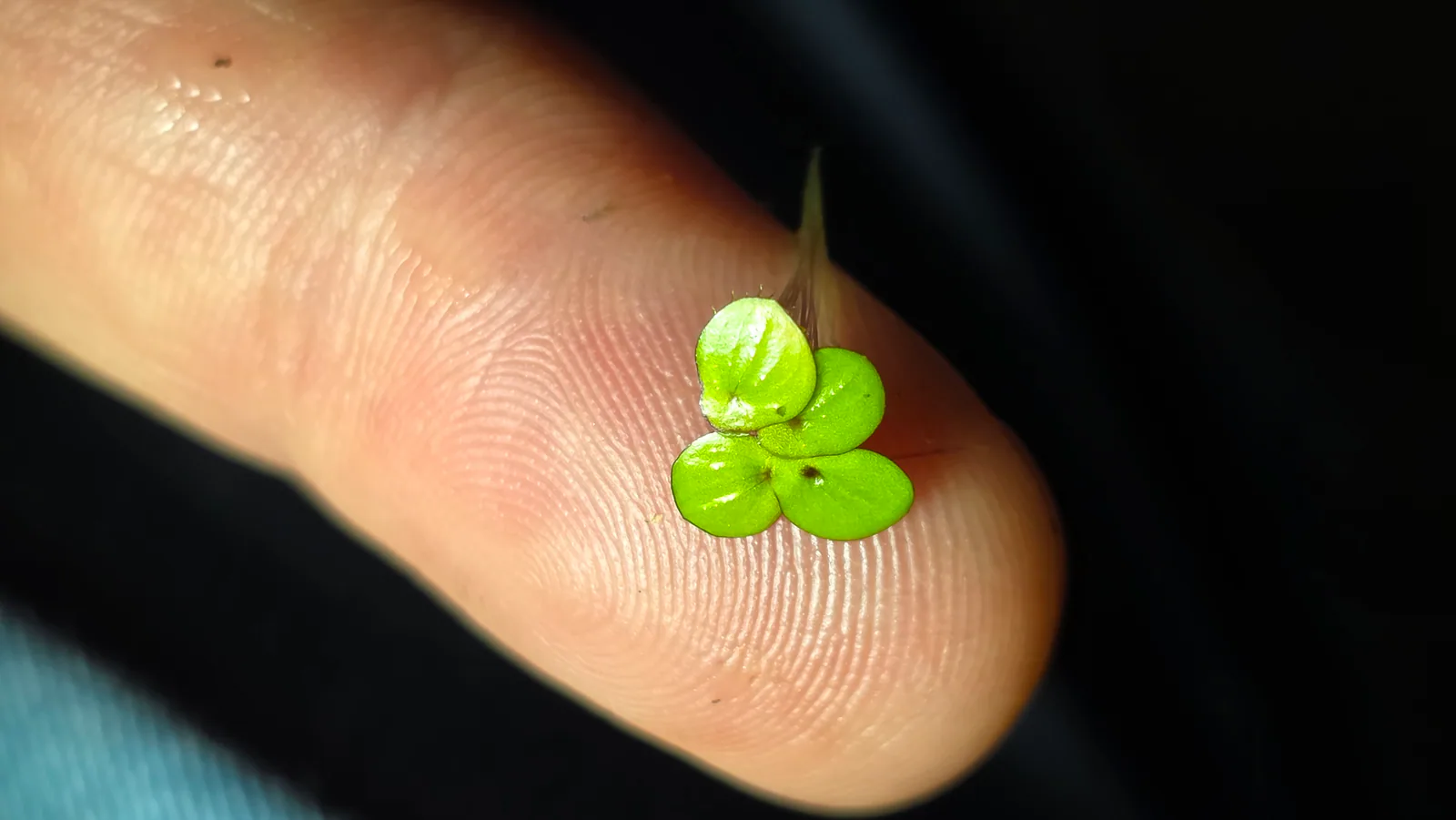
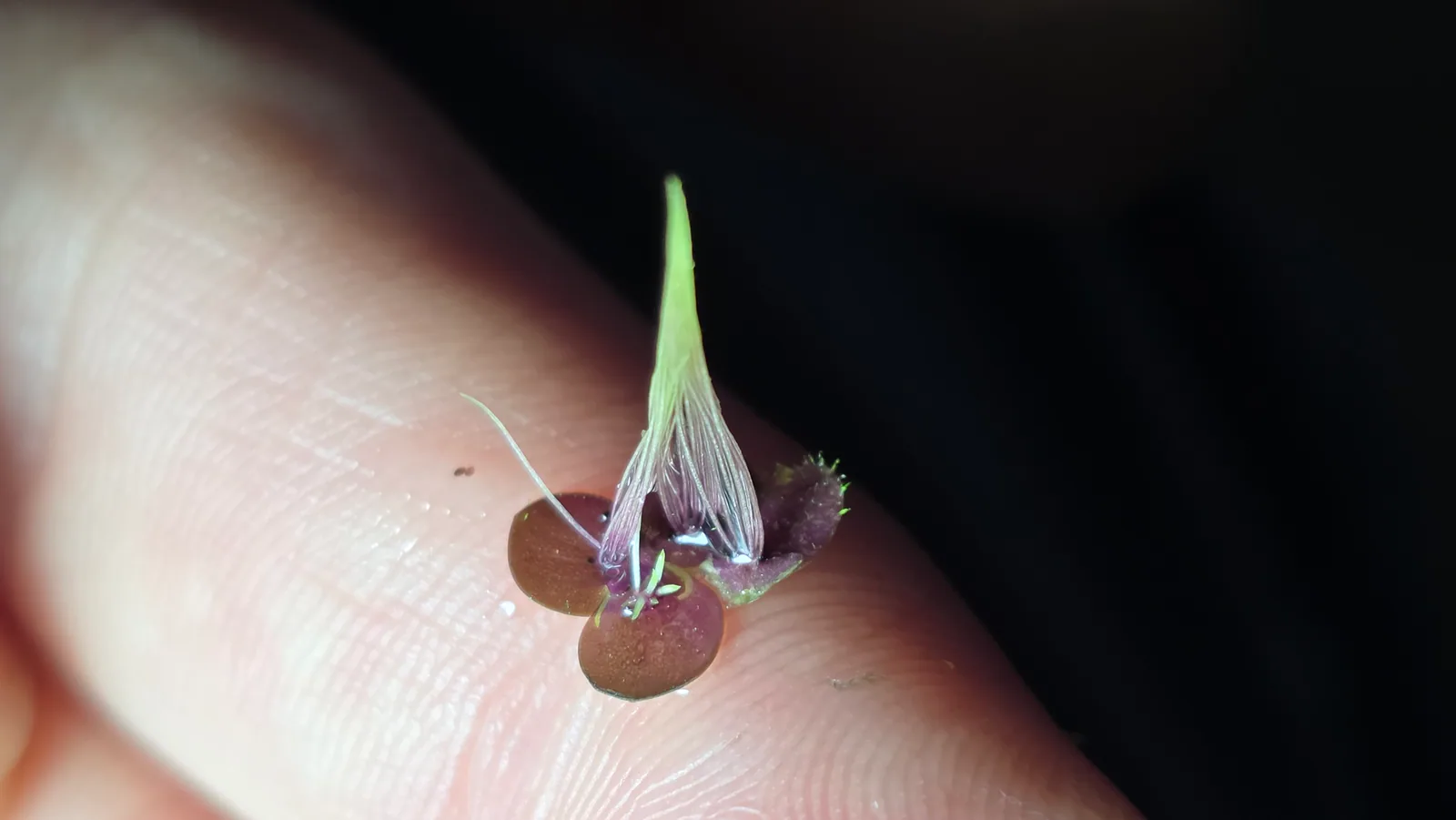
Larger than a typical duckweed frond and flushed purple on its underside, Dotted Duckweed trails multiple fine rootlets beneath the lake surface, drawing nutrients from the water as it floats freely alongside the other duckweed species in miniBIOTA's Freshwater Lake.

Overview

Larger and more robust than the Lemna species introduced alongside it, Dotted Duckweed (Landoltia punctata) is a free-floating aquatic plant native to Southeast Asia and naturalized throughout Florida, distinguished by multiple rootlets and reddish-purple pigmentation on the underside of its fronds. Introduced to the Freshwater Lake on June 30, 2026 as part of a floating vegetation trial to reduce nutrients and improve water clarity.

Identity

  • Common name: Dotted Duckweed
  • Alternate names: spotted duckweed, Landoltia, Spirodela punctata (former classification)
  • Scientific name: Landoltia punctata
  • Identification confidence: Species level
  • Uncertainty label: Observed

Taxonomy

  • Kingdom: Plantae
  • Phylum: Tracheophyta
  • Class: Liliopsida
  • Order: Alismatales
  • Family: Araceae
  • Genus: Landoltia
  • Species: Landoltia punctata

Natural History

Landoltia punctata is native to tropical and subtropical Asia, with its range extending from South and Southeast Asia through Australia. It has naturalized broadly across warm-climate freshwater systems in the United States, including Florida, where it is commonly found in ponds, ditches, marshes, and slow-moving canals. The genus Landoltia is monotypic (containing only this single species), positioned phylogenetically between the larger Spirodela duckweeds and the smaller Lemna duckweeds.

Each frond is oval to broadly elliptical, 2 to 5 millimeters across, and typically bears 2 to 7 rootlets trailing beneath the water surface. The upper surface is green; the underside is often flushed reddish-purple from anthocyanin pigments, which can intensify under high light or stress conditions. Air-filled spaces (aerenchyma) within the frond tissue contribute to buoyancy. This pigmentation and the multiple rootlets are the key field identification characters distinguishing it from Lemna species.

Like all duckweeds, Dotted Duckweed reproduces primarily through vegetative budding; new fronds emerge from the parent frond and separate. Population growth rate depends on dissolved nitrogen and phosphorus availability in the water column. Its larger frond size and multiple rootlets give it somewhat different nutrient uptake characteristics compared to the smaller single-rootlet Lemna species.

Ecological Role

Dotted Duckweed functions as a floating primary producer, intercepting surface light and fixing carbon through photosynthesis. Multiple rootlets provide greater contact with the water column compared to single-rootlet Lemna species, potentially improving nutrient absorption. Dense mats can shade the water below, suppressing submerged algae and phytoplankton competing for the same light.

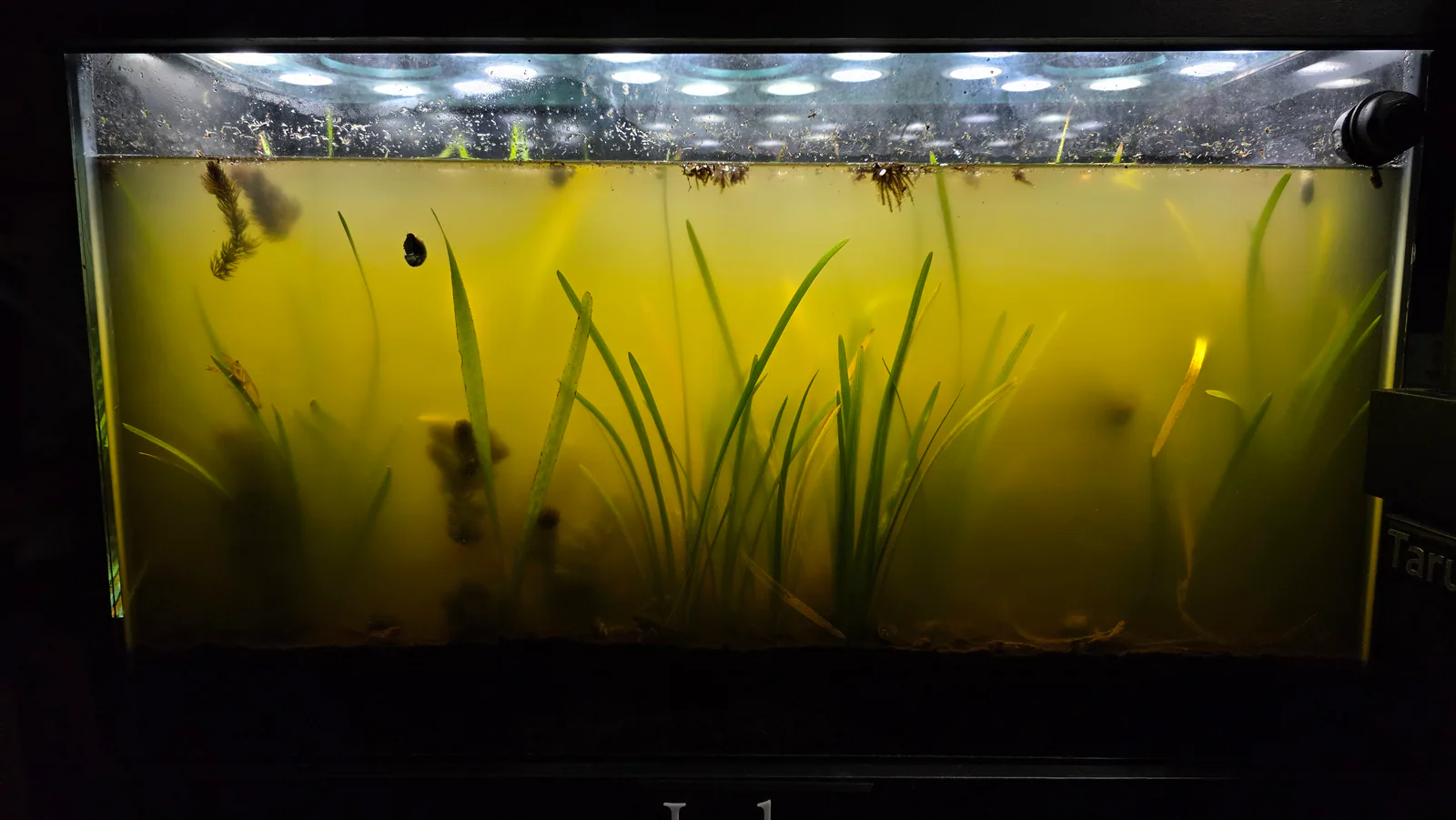
In miniBIOTA's Freshwater Lake, the target functions are surface shading to reduce phytoplankton growth responsible for persistent green water, and nutrient uptake to reduce dissolved nitrogen and phosphorus from the water column. Whether Dotted Duckweed's larger frond size and multiple rootlets confer any practical establishment advantage over the Lemna species introduced at the same time is unknown.

miniBIOTA Evidence

Introduction context: Dotted Duckweed was introduced to the Freshwater Lake on June 30, 2026 as one of four floating plant species in a deliberate management trial prompted by persistent green water. No fish remain in the lake to graze the plants. This is the first time this species has been in miniBIOTA. The introduction is framed as a final evaluation of whether floating vegetation can help shift nutrient dynamics and improve water clarity.

Observation timeline:

Confirmed:

  • Introduction to the Freshwater Lake on June 30, 2026 (direct observation, video)

Inferred:

  • Nutrient uptake and surface shading are the target mechanisms; outcome unresolved
  • Multiple rootlets may offer different nutrient uptake dynamics compared to Lemna species

Unknown:

  • Whether Dotted Duckweed can establish a persistent population in miniBIOTA
  • How it will perform relative to the other three species introduced simultaneously
  • Whether invertebrate grazing (crayfish, snails, shrimp) will limit its expansion