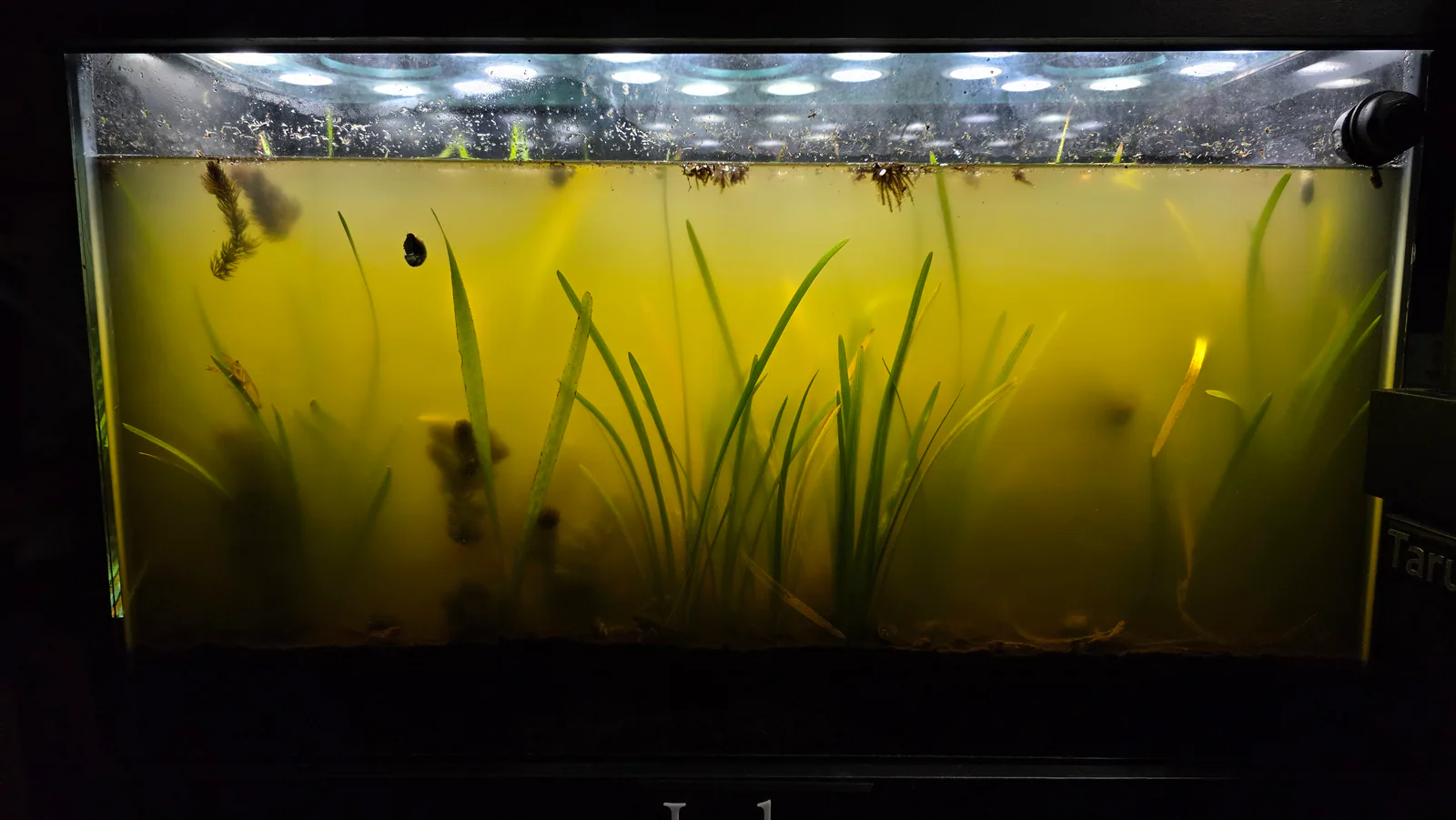
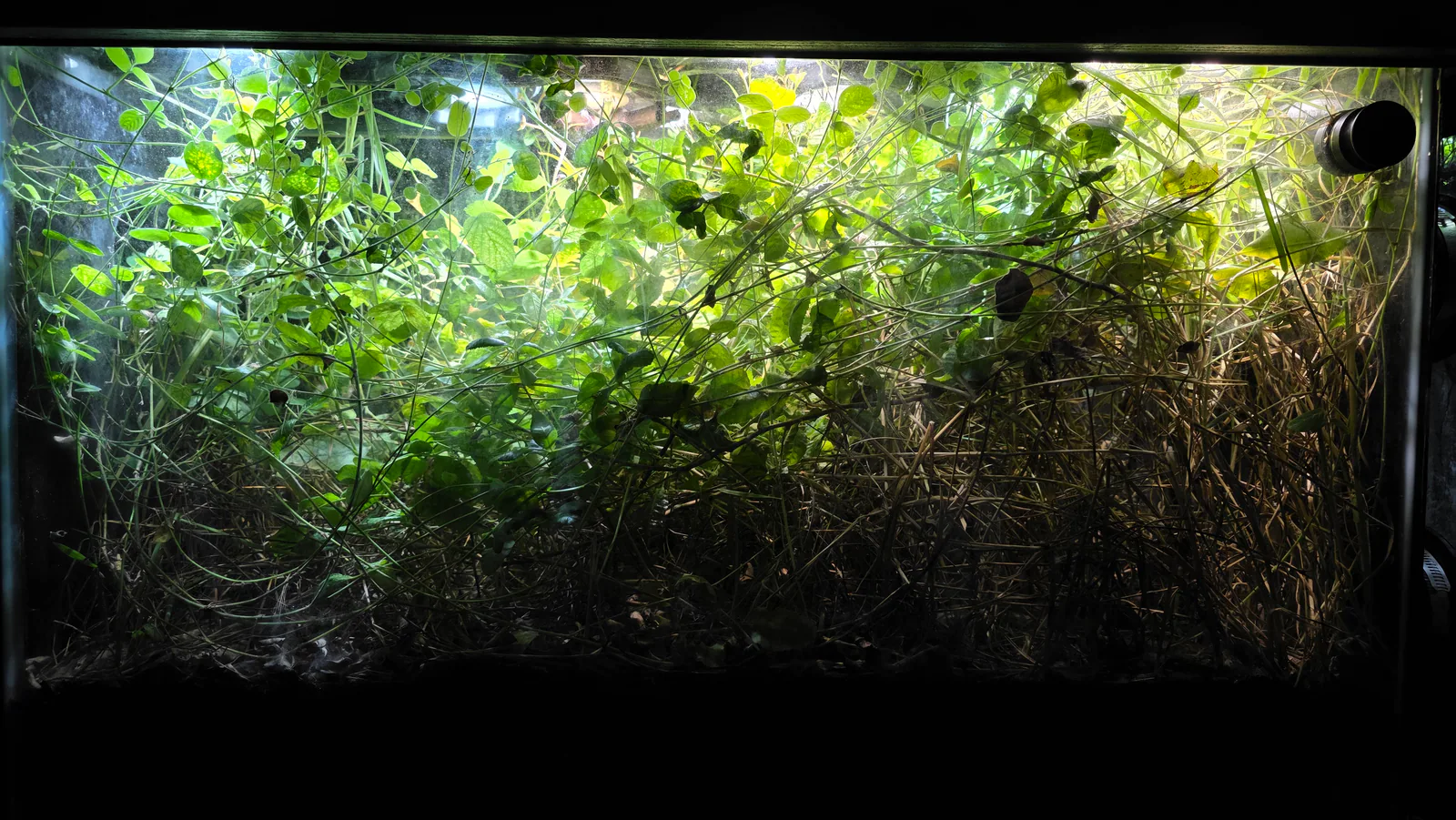
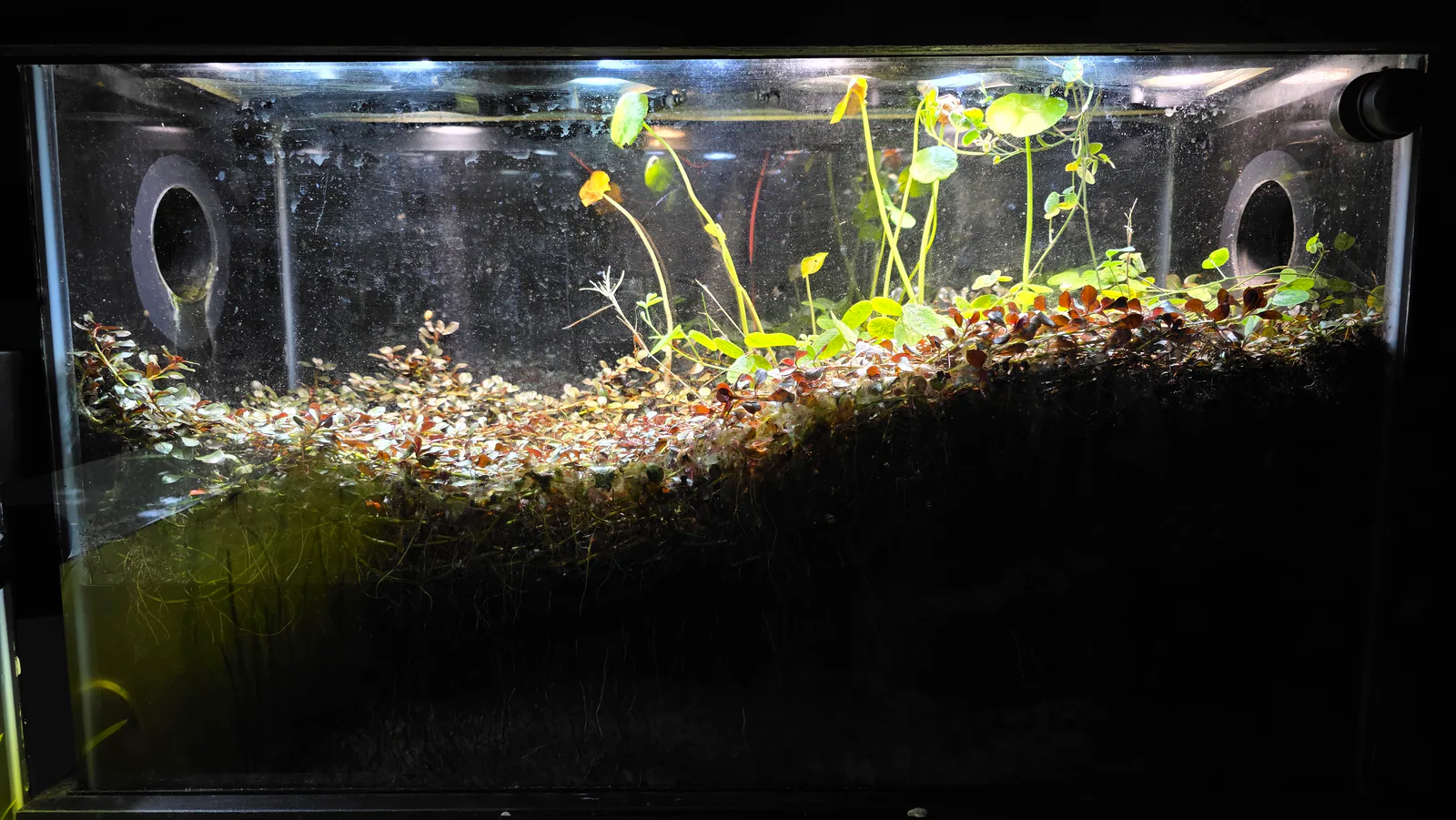
Freshwater Lake is the system's most complex and actively tracked food web. After the April 2026 food web reset, the trophic structure is as follows: submerged macrophytes (tapegrass, sagittaria, Amazon sword, hornwort) and suspended algae and phytoplankton form the producer base; Daphnia-like microcrustaceans, Moina, copepods, and ostracods (fate uncertain) form the zooplankton grazer layer; bladder snails, Malaysian Trumpet Snails, and freshwater amphipods graze biofilm and algae on surfaces; Ghost Shrimp scavenge and graze at the substrate; Slough Crayfish occupy the top of the invertebrate food web as a generalist omnivore consuming detritus, algae, biofilm, plant tissue, and, confirmed August 7, 2026, live invertebrate prey (Bladder Snail, via a shell-breach predation sequence); Mesostoma (predatory flatworm) may occupy a predator role above the microcrustacean layer, but its presence and activity are unresolved. As documented on September 5, 2026, intense herbivory by Slough Crayfish has prevented introduced hornwort from accumulating biomass: grazing reduces hornwort faster than the plant can regenerate, establishing top-down consumer control over submerged macrophyte survival and leaving suspended algae dominant in visibly greener water.
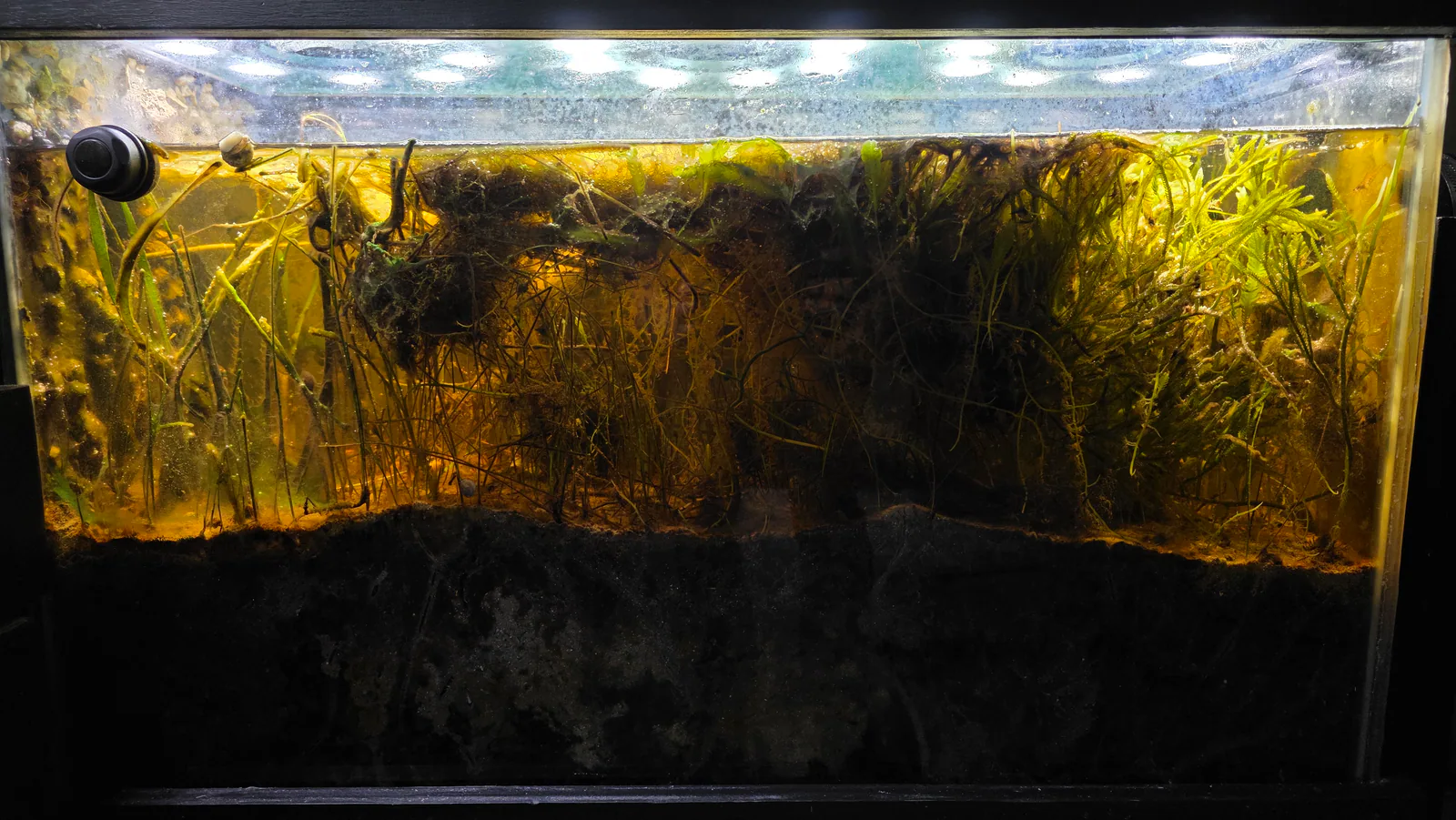
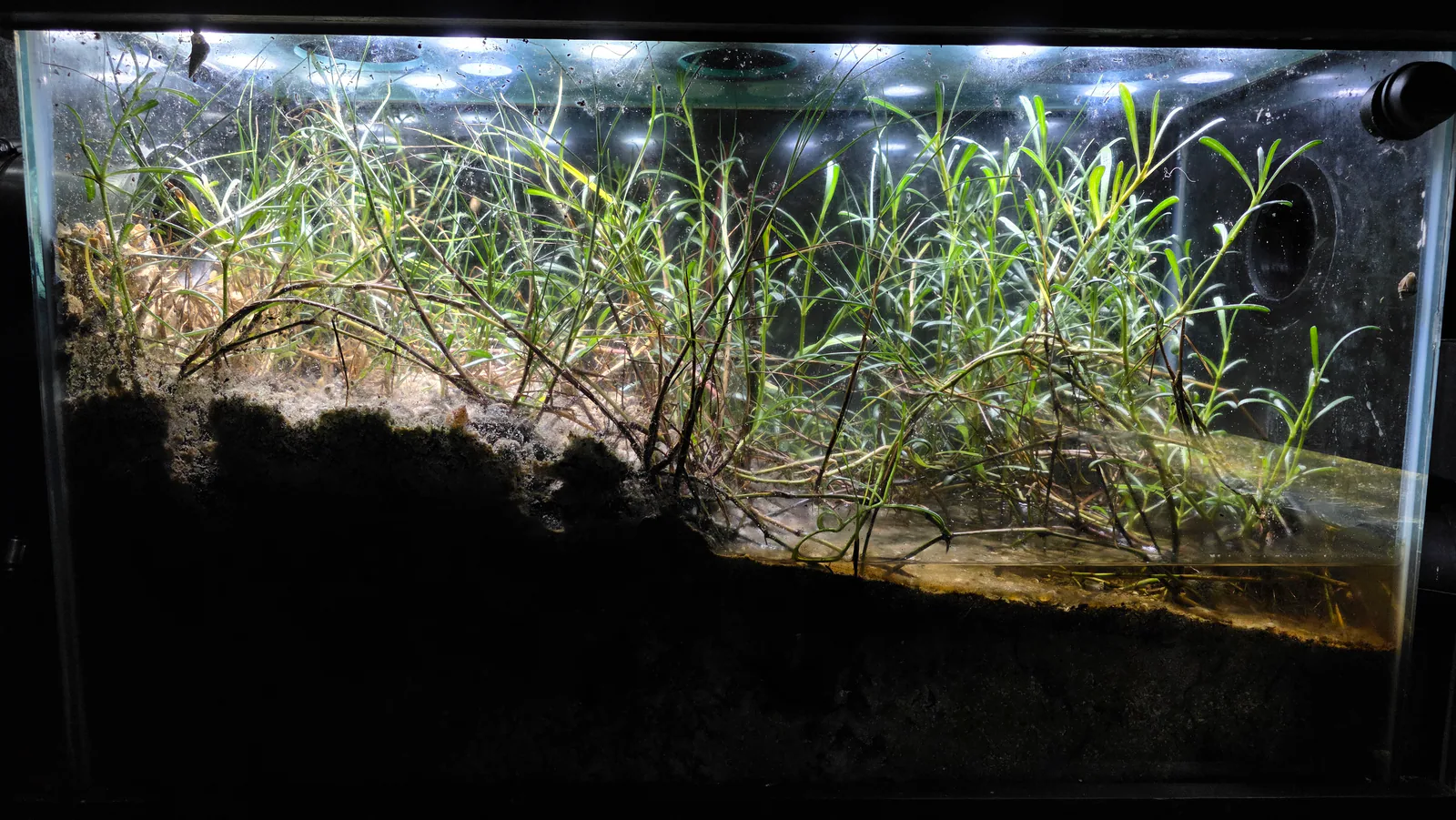
Seagrass Meadow food web is built on the three-way producer competition between shoal grass, turtle grass, and manatee grass versus Graceful Redweed, Fern Alga, Giant Feather Alga, and surface growth. Grazers including the Mud Crab, Variegated Sea Urchin, Eelgrass Isopod, and hard-surface snails controlled algal and epiphytic growth, which indirectly maintains light access for seagrasses. That grazer layer has been severely depleted over 2026: while a nighttime observation on September 5, 2026 reconfirmed living Eelgrass Isopods (*Erichsonella attenuata*) and disproved complete extirpation following the Florida Glass Shrimp crash, abundance remains very low and provides minimal grazing control. Hard-surface snails are near zero, the Mud Crab is being deliberately removed, and the Variegated Sea Urchin was extirpated September 1, 2026 (its remains found in the Marine Shore). Common Atlantic Marginella is not among the grazers: that species was a predator of juvenile gastropods and a sediment bioturbator, not an algal grazer, and its listing here as a grazer was an error corrected July 29, 2026. Without effective grazer control, proliferating *Caulerpa* species (*C. taxifolia* and *C. ashmeadii*) expanded across approximately seven-eighths of the substrate length by September 14, 2026, driving Graceful Redweed into renewed recession through nutrient and spatial competition. The three true seagrasses are confined to the remaining one-eighth open area, where their blades bear visible cyanobacterial coatings.
Prairie is intended to support plant growth, consumers, soil life and decomposition as an interconnected food web. Plant litter enters decomposition directly; omnivorous crickets need not occupy a single trophic step. Historical grasshopper feeding and isopod frass consumption document particular links, while sustained consumer persistence and exchanges with Lakeshore and Freshwater Lake remain investigation targets.
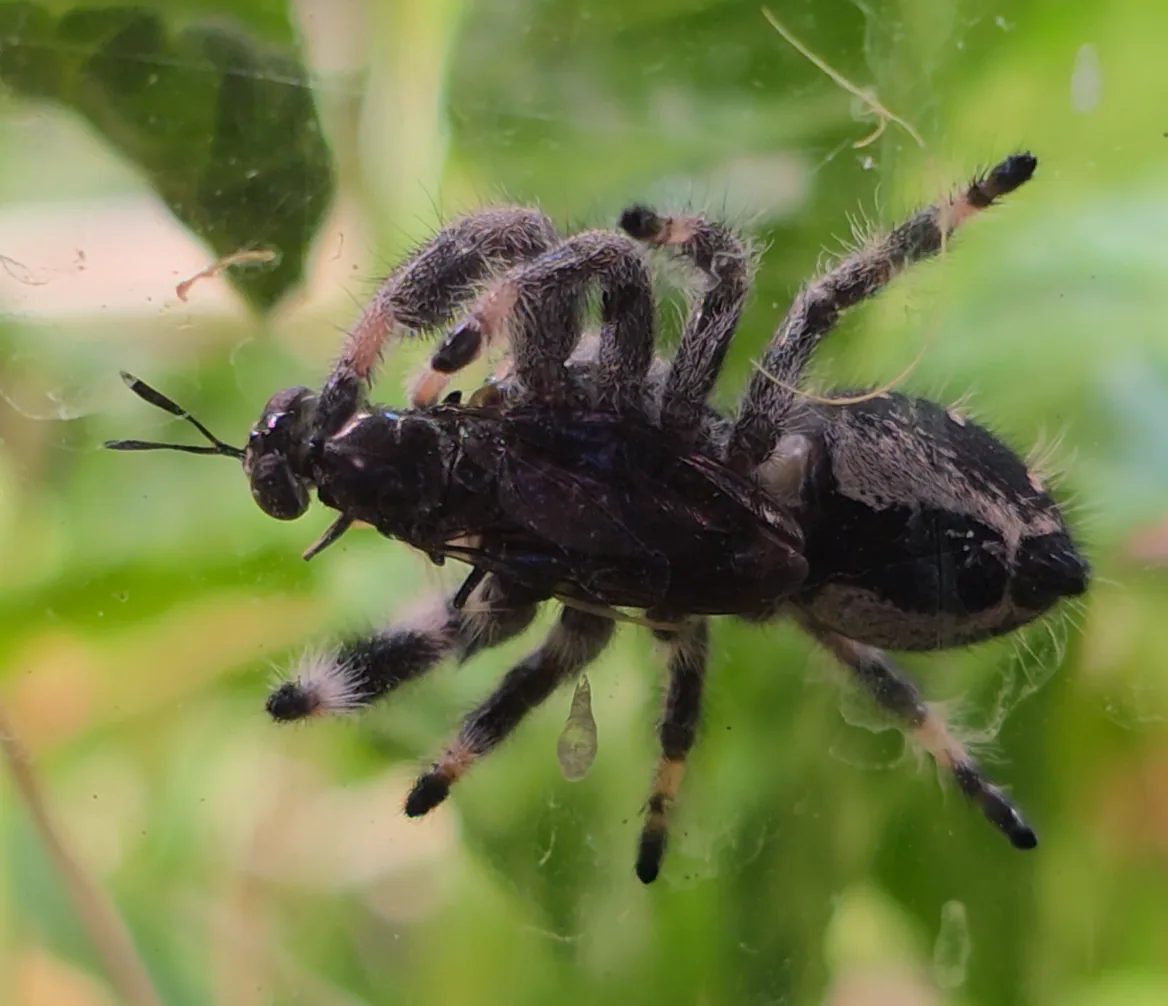
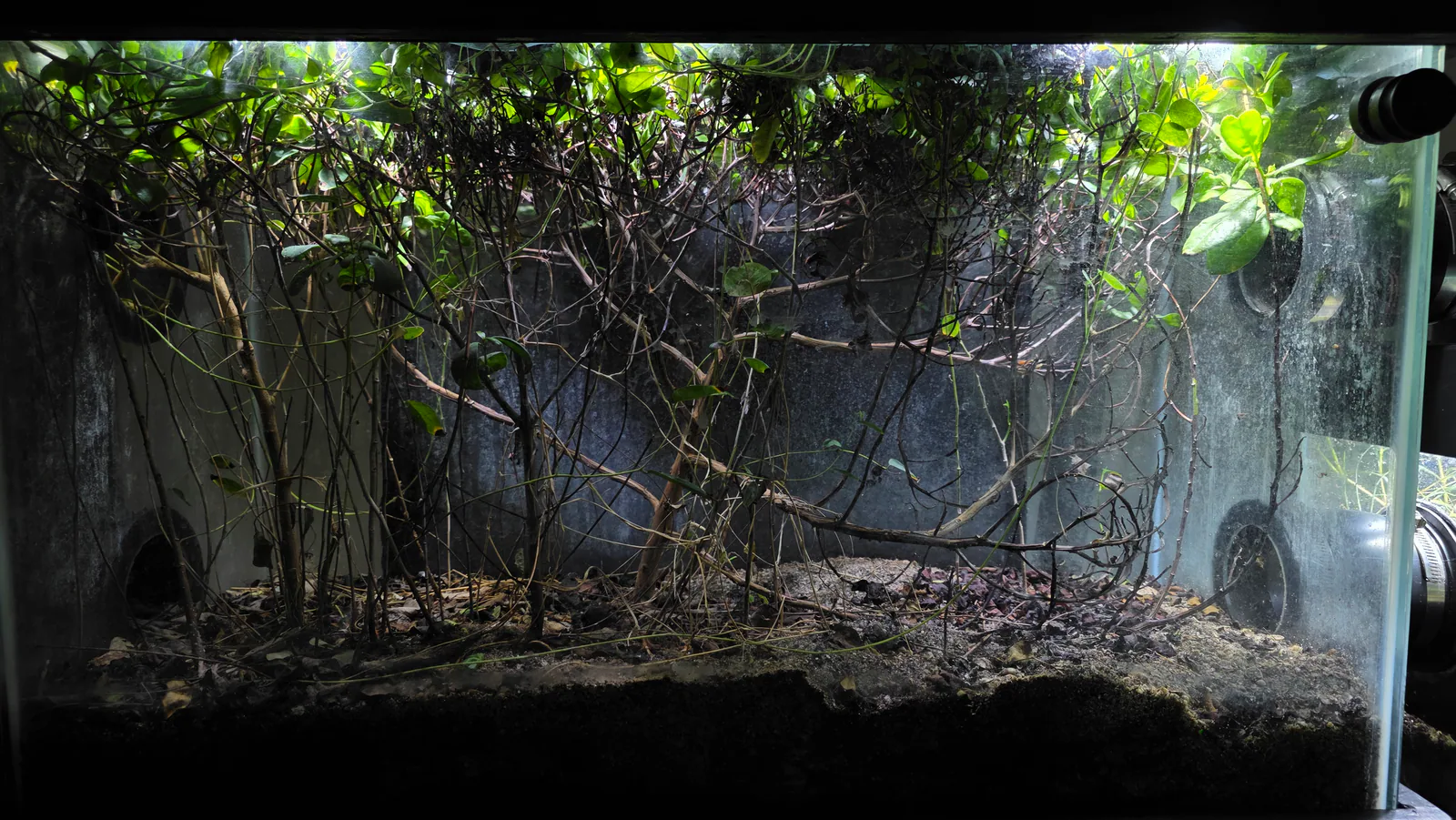
Mangrove Forest food web is primarily detritus-based. Mangrove leaf litter is the energy base rather than live plant tissue; cockroaches, isopods, and millipedes are the primary consumers of this slow-release substrate; and there is no documented top predator in the Mangrove Forest beyond the scorpion and spider community feeding on smaller invertebrates.
Marine Shore and Lakeshore host edge food webs driven by biofilm, algae, and organic matter from adjacent biomes. Atlantic Sand Fiddler Crabs and Gulf Marsh Crabs graze and scavenge on the Marine Shore; Eastern Melampus and Marsh Periwinkle graze biofilm on glass and shoreline surfaces.
Slough Crayfish is the dominant top-level invertebrate consumer in the Freshwater Lake. As a generalist omnivore, it feeds across trophic levels and its population size has outsized effects on the community below it. Confirmed feeding on tapegrass tissue, detritus, biofilm, and cyanobacterial surface growth indicates it is active across multiple feeding modes. On August 7, 2026, direct predation on live prey was confirmed for the first time: a crayfish fully overcame a Bladder Snail's shell defenses through a multi-stage sequence culminating in a breach at the shell's narrow terminal tip, then extracted and consumed the snail. On September 5, 2026, crayfish grazing pressure on hornwort was confirmed to outpace plant regeneration even after substantial biomass additions, demonstrating strong top-down herbivory that prevents macrophyte stabilization.
Daphnia-like microcrustaceans and Moina occupy the zooplankton grazer layer in the Freshwater Lake. Their role in the trophic cascade is central: if established, they graze phytoplankton and suspended algae, improving water clarity and maintaining conditions that favor macrophyte dominance. Their current fate is the most important unresolved question in the Freshwater Lake food web. A recurring pattern in miniBIOTA's Daphnia record is that daytime, open-water observation methods have repeatedly undercounted the population: dense Lakeshore vegetation was found to hold the bulk of the population at night (July 2, 2026), and a light-driven behavioral response, coordinated downward migration to the substrate at lights-on, with a separate portion refuging in floating-plant roots, revealed further population strength (July 10, 2026). Estimating true grazing pressure on the Freshwater Lake's algae bloom requires accounting for population held in refuge zones outside the open water column, not just what is visible there during the day.
Mesostoma (predatory turbellarian flatworm) is a documented microcrustacean predator in small freshwater systems. Its presence in miniBIOTA has been noted and its potential to suppress Daphnia, Moina, and copepod populations in the absence of fish predation is the central alternative predation risk in the post-Flagfish food web. Its current status in the Freshwater Lake is unresolved.
Ghost Shrimp occupy a middle position in the Freshwater Lake food web as scavengers and grazers. Their zoea production represents a reproductive signal that the population is sustaining itself, though juvenile recruitment from zoea is unresolved. In some systems, adult Ghost Shrimp can be intermediate predators on zooplankton; this interaction has not been documented in miniBIOTA.
Bladder Snails and Malaysian Trumpet Snails are primary consumers of biofilm and algae. Their grazing activity controls surface growth across the Freshwater Lake and Lakeshore and represents a significant secondary pathway of primary production entering the consumer layer. Bladder Snail also occupies a confirmed prey role: Slough Crayfish was directly observed preying on and consuming a Bladder Snail via a shell-breach mechanism on August 7, 2026, moving snail biomass up a trophic level into the crayfish.
Mud Crab, Variegated Sea Urchin, and Eelgrass Isopod represent the shifting marine consumer layer. Mud Crab and Variegated Sea Urchin were the last of the Seagrass Meadow's larger-bodied algal grazers, but both are now gone from that role: the Mud Crab is being deliberately removed under a predation-pressure management decision, and the Variegated Sea Urchin was extirpated September 1, 2026. The Eelgrass Isopod, which formerly controlled epiphytic algae on seagrass blades, was reconfirmed living at very low abundance on September 5, 2026 (disproving extirpation), but its density is too low to exert meaningful grazing control. The hard-surface snails (Lightning Nerite, cerith species) have been lost or reduced to near-zero over mid-2026. Introduced hard-surface snails (Chestnut Turban Snail, Astraea Snail) are the current grazing intervention, their effect still unevaluated. Florida Glass Shrimp maintain persistent predatory pressure on small invertebrates and larvae. Common Atlantic Marginella is not a grazer and never was: its documented roles were predation on juvenile gastropods and sediment disturbance.
Lighting System sets the base of the food web by determining the rate of primary production. A weaker or shorter light period reduces producer biomass available to all consumer levels above it. The undocumented PAR levels mean the current ceiling on primary production and therefore on the food web above it cannot be estimated.
Rain System delivers organic inputs and nutrient pulses from the terrestrial biomes to the Freshwater Lake, connecting the terrestrial and aquatic food webs. Each rain event carries dissolved organic matter, arthropod frass, and fine particles that enter the Freshwater Lake detritus and dissolved organic carbon pools, supplementing in-lake production as food sources for filter feeders and detritivores.