Decomposition
Everything that grows in miniBIOTA eventually dies and falls to the substrate, where snails, shrimp, amphipods, cockroaches, and bacteria break it back down into the nutrients that feed the next generation of plants and algae.
Everything that grows in miniBIOTA eventually dies and falls to the substrate, where snails, shrimp, amphipods, cockroaches, and bacteria break it back down into the nutrients that feed the next generation of plants and algae.
Decomposition is the breakdown of dead organic matter back into inorganic compounds, and it is the process that closes the loop between primary production and nutrient availability. Everything that grows in miniBIOTA eventually dies or is shed, and decomposition is what determines whether that material becomes a persistent substrate layer, a nutrient pulse back into the water column, or a slow-release store for future plant growth. In a sealed enclosure with no export pathway, decomposition is not just a recycling process: it is the only mechanism that prevents organic matter from accumulating indefinitely in the substrate.
Decomposition is the physical and chemical breakdown of dead organic matter by a community of organisms working in sequence. The process operates in two overlapping stages.
Physical fragmentation comes first. Detritivores, including invertebrates, worms, and other macroscopic organisms, shred, grind, and ingest large pieces of dead material. This fragmentation is not primarily about nutrition; it is about surface area. A shredded leaf exposes far more surface area to microbial colonization than an intact one. Detritivore feces are themselves finely fragmented organic particles with large surface area, making them prime substrate for microbial activity.
Microbial decomposition follows. Bacteria and fungi colonize fragmented organic particles, secreting extracellular enzymes that break complex organic molecules (cellulose, lignin, proteins, chitin) into simpler compounds. This chemical digestion releases carbon as CO2, and releases bound nutrients, primarily nitrogen and phosphorus, into inorganic forms that producers can absorb. The speed and completeness of microbial decomposition depend on temperature, oxygen availability, pH, and the chemical composition of the organic material itself. Lignin-rich material (wood, mangrove leaves) decomposes far more slowly than protein-rich material (animal tissue) or simple carbohydrates (algal cells).
The end products of complete aerobic decomposition are CO2, water, and inorganic nutrients. Incomplete or anaerobic decomposition produces partially decomposed organic matter, methane, and hydrogen sulfide alongside CO2.
Decomposition rate in natural ecosystems is primarily controlled by temperature, moisture, and substrate chemistry. Florida's subtropical warmth accelerates decomposition compared to temperate systems: a leaf that might persist for years in a boreal forest can decompose in weeks under warm, moist conditions. This fast decomposition keeps nutrients cycling rapidly through Florida's terrestrial and freshwater systems.
Florida's coastal mangrove forests are an exception. Mangrove leaves are high in tannins and structural complexity, which makes them resistant to rapid decomposition. In waterlogged mangrove soils where oxygen is limited, decomposition slows further, allowing organic matter to accumulate into deep, carbon-rich peat over centuries. This slow decomposition is what makes mangrove forests such significant carbon storage systems.
Florida's seagrass meadows produce substantial quantities of dead leaf material that is either decomposed in place, exported to adjacent habitats as drift wrack, or buried in sediment. In enclosed systems without export pathways, seagrass detritus accumulates at the substrate surface and is processed by the local detritivore and microbial community.
In miniBIOTA, decomposition is constrained by the absence of any export pathway. All organic matter produced in the system must be decomposed within it or accumulate in the substrate. There is no tide to export seagrass wrack, no river current to carry dissolved organic matter downstream, no large-bodied export consumer to remove organic matter from the system as biomass. This means the internal decomposition community bears the full processing load.
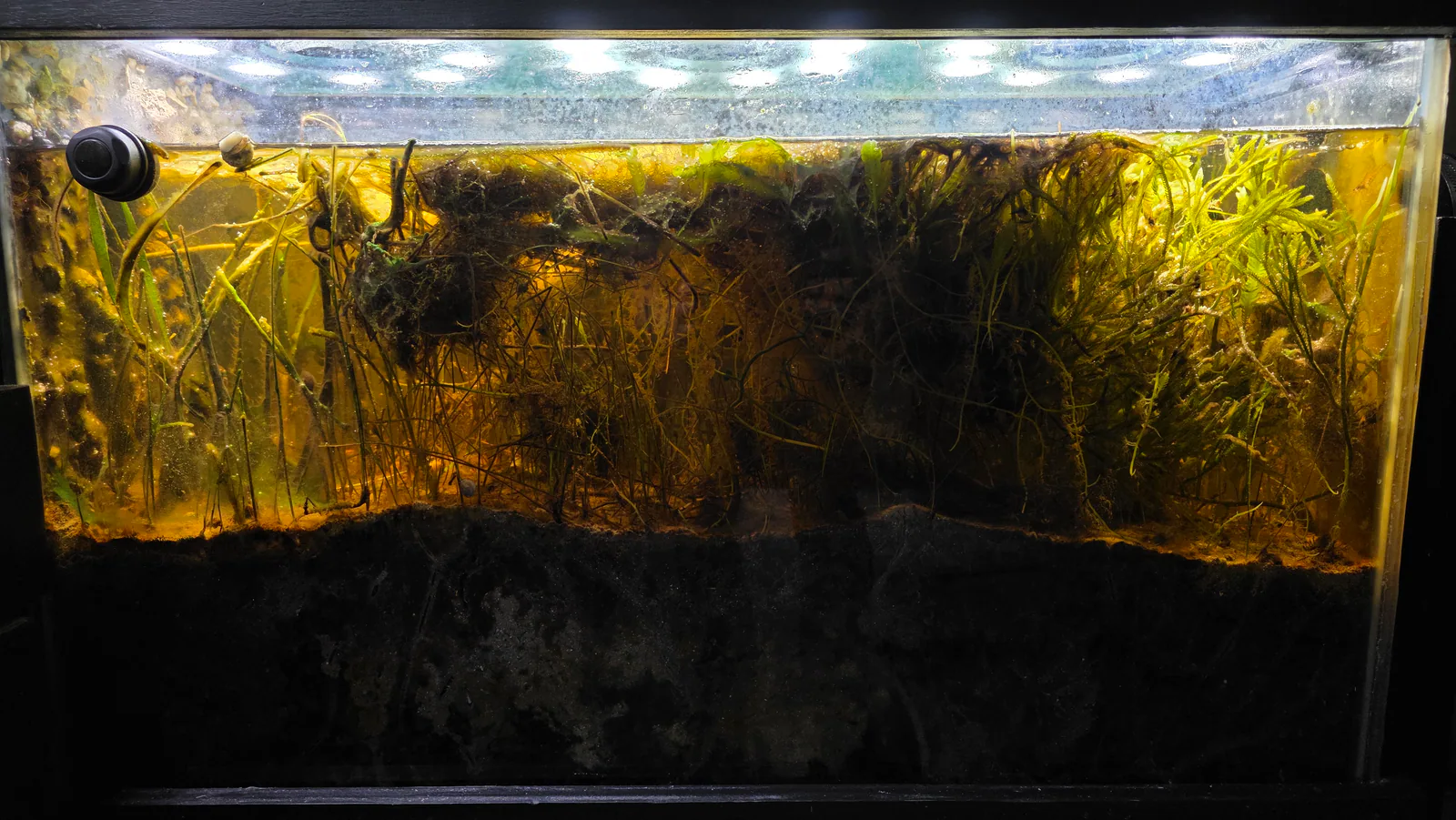
Substrate accumulation is the default outcome when decomposition cannot keep pace with production. In every biome with a substrate, organic matter is building up over time. The Freshwater Lake substrate shows developing anaerobic zones that are direct evidence of decomposition lagging behind organic input. As the organic layer deepens, the ratio of anaerobic to aerobic decomposition increases, slowing the overall rate further in a self-reinforcing pattern.
Oxygen availability is the critical variable. Aerobic decomposition is faster and more complete than anaerobic decomposition, but it consumes dissolved oxygen. In the substrate, where oxygen is supplied only by diffusion from the water column above, decomposition demand can exceed supply, pushing deeper layers into anoxia. Malaysian Trumpet Snails, which burrow through substrate, are one of the few organisms that mechanically disrupt this stratification, drawing oxygenated water into subsurface layers.
Nutrient release from decomposition is concentrated and retained within the system. In an open system, nutrients released from decomposing material are diluted in a larger water body or transported downstream. In miniBIOTA, released nutrients stay within the biome and are available for immediate uptake by producers. This makes the decomposition-production loop tighter and faster than in natural systems, but it also means that any disruption to decomposition directly affects nutrient availability for producers.
Temperature shapes decomposition rate throughout the enclosure. If the Climate System's thermal management shifts enclosure temperature, microbial activity and therefore decomposition rate shifts with it. The current chiller repair may be affecting enclosure temperature in ways that alter decomposition rates, though this has not been measured.
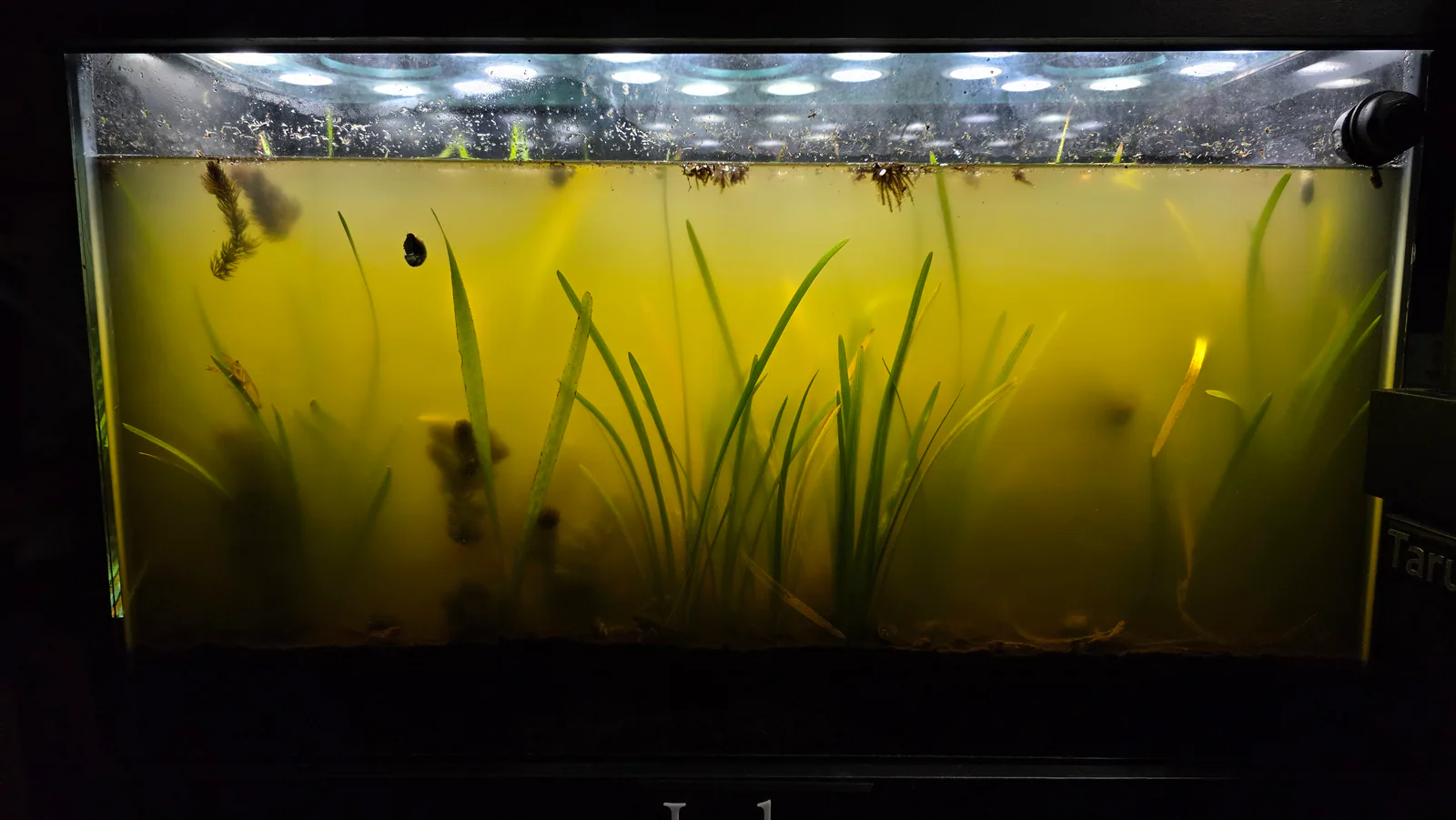
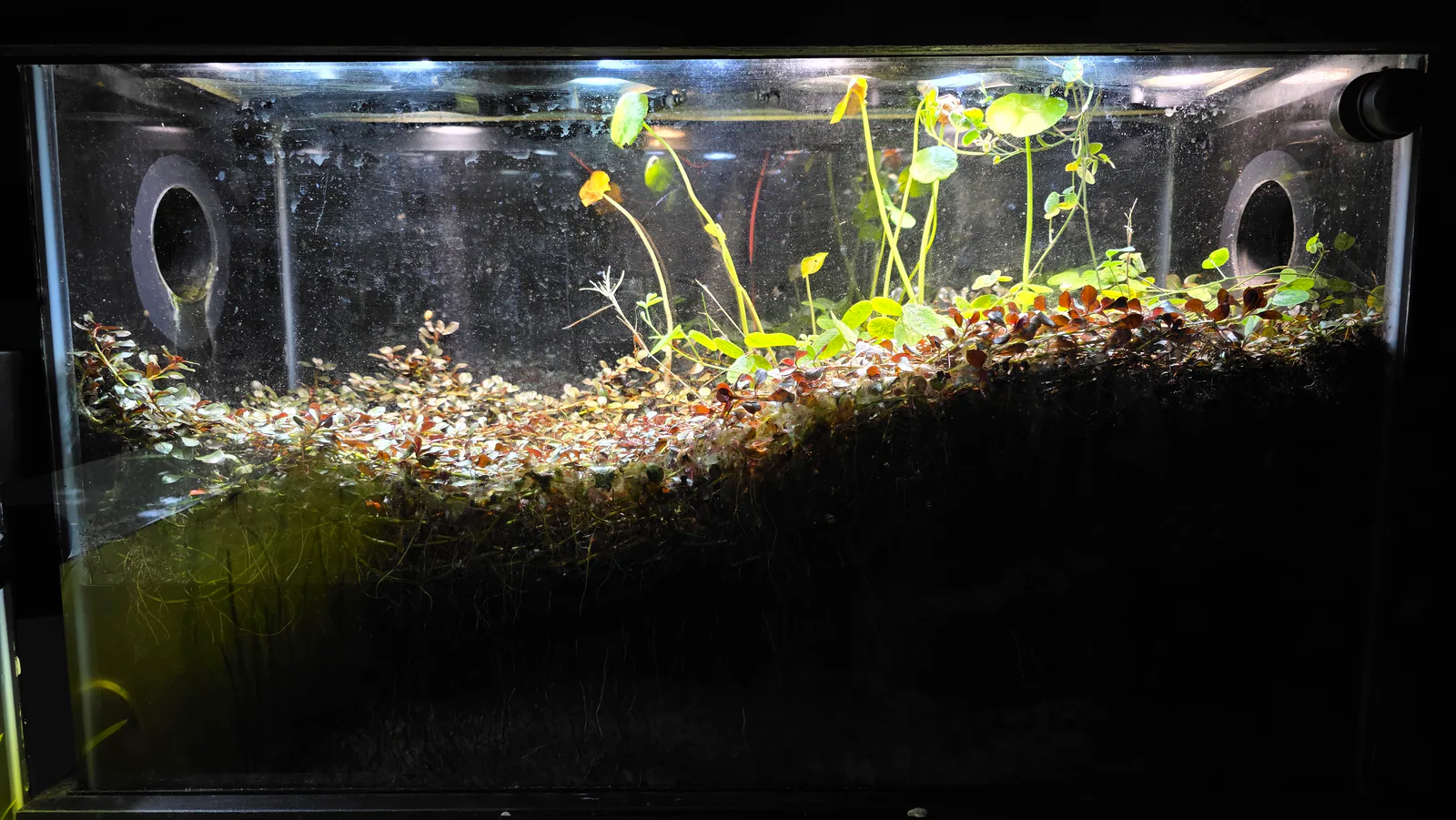
Freshwater Lake carries the largest decomposition processing load in the system. Dead tapegrass leaves, shed crayfish and snail material, amphipod feces, algal cells, and fine organic particles from rain drainage all accumulate in the lake substrate. Malaysian Trumpet Snails burrow through the substrate, fragmenting organic particles and drawing oxygenated water into subsurface layers. Amphipods process detritus at the substrate surface. Ghost Shrimp scavenge larger particles. Slough Crayfish disturb the substrate through digging, redistributing accumulated organic matter and exposing buried material to the aerobic surface layer. The developing anaerobic zone below the aerobic surface is the most consequential active decomposition tension in the system.
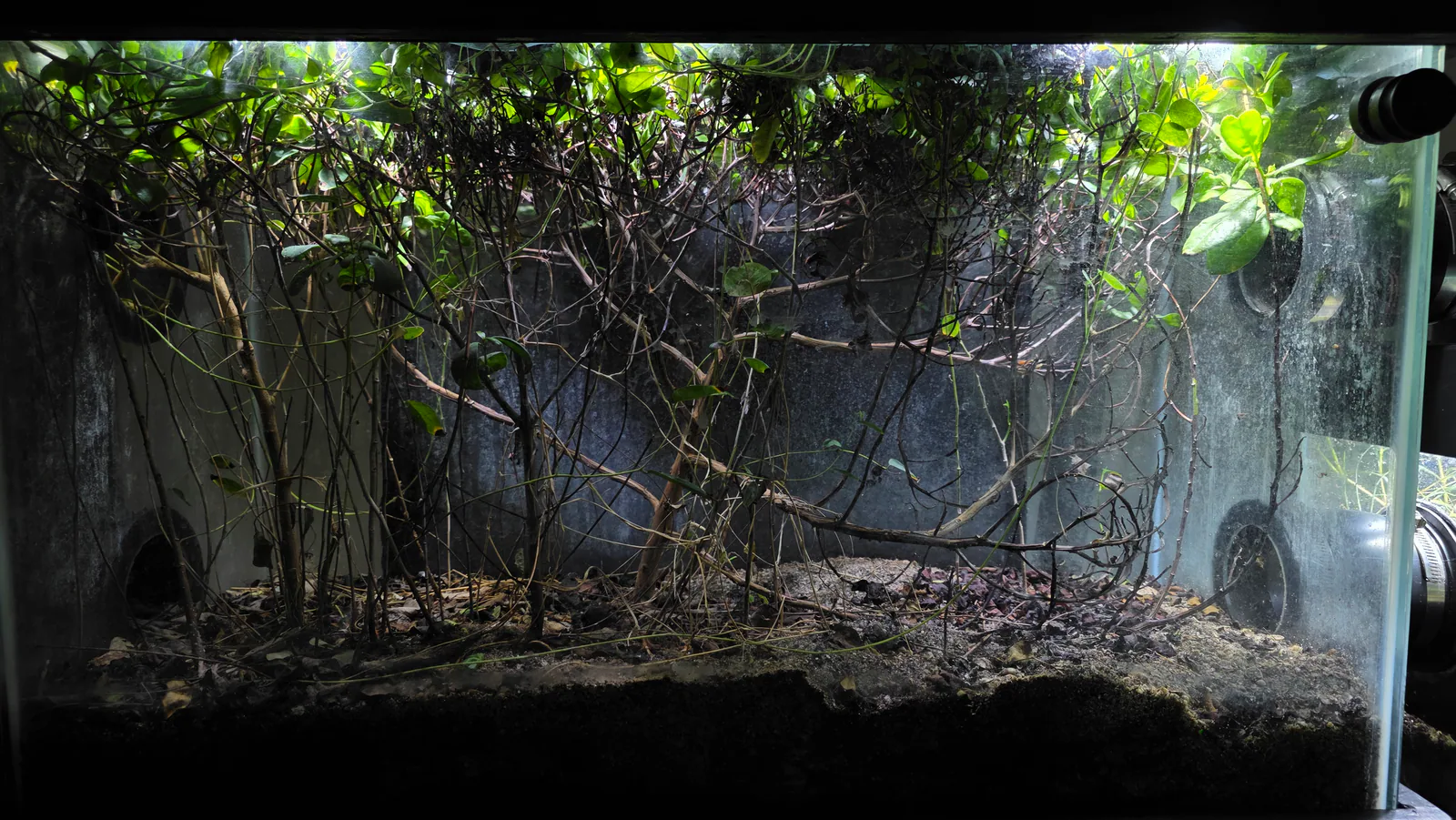
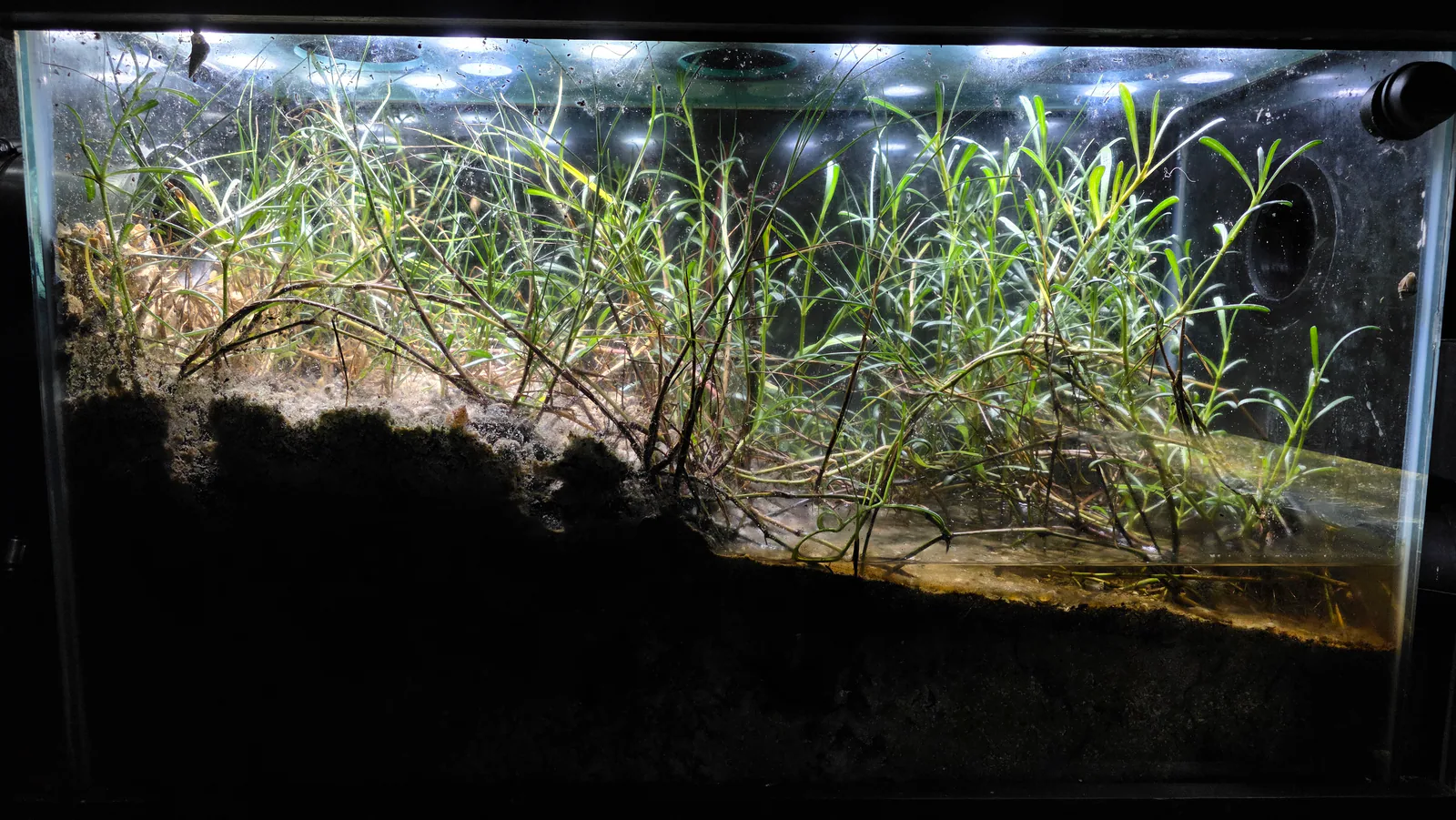
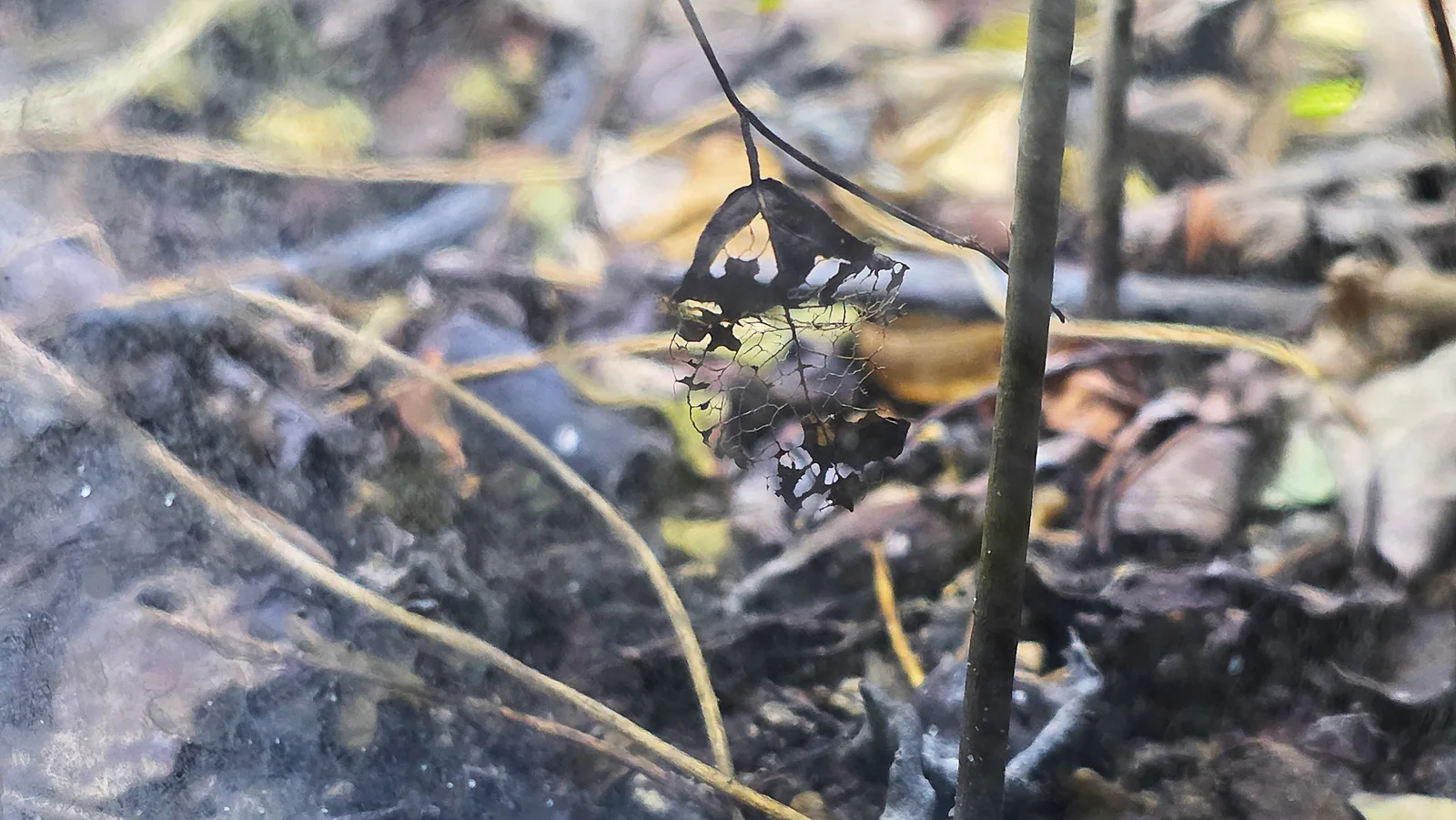
Mangrove Forest produces decomposition through a distinct pathway dominated by slow-turnover leaf litter. Mangrove leaves are thick, waxy, and tannin-rich; they resist rapid breakdown. Cockroaches, isopods, and millipedes shred and ingest the litter, fragmenting it into smaller particles that the microbial community then processes more slowly. The Mangrove Forest floor likely holds the longest-residence organic matter in the terrestrial realm, building a deep layer of partially decomposed material over time.
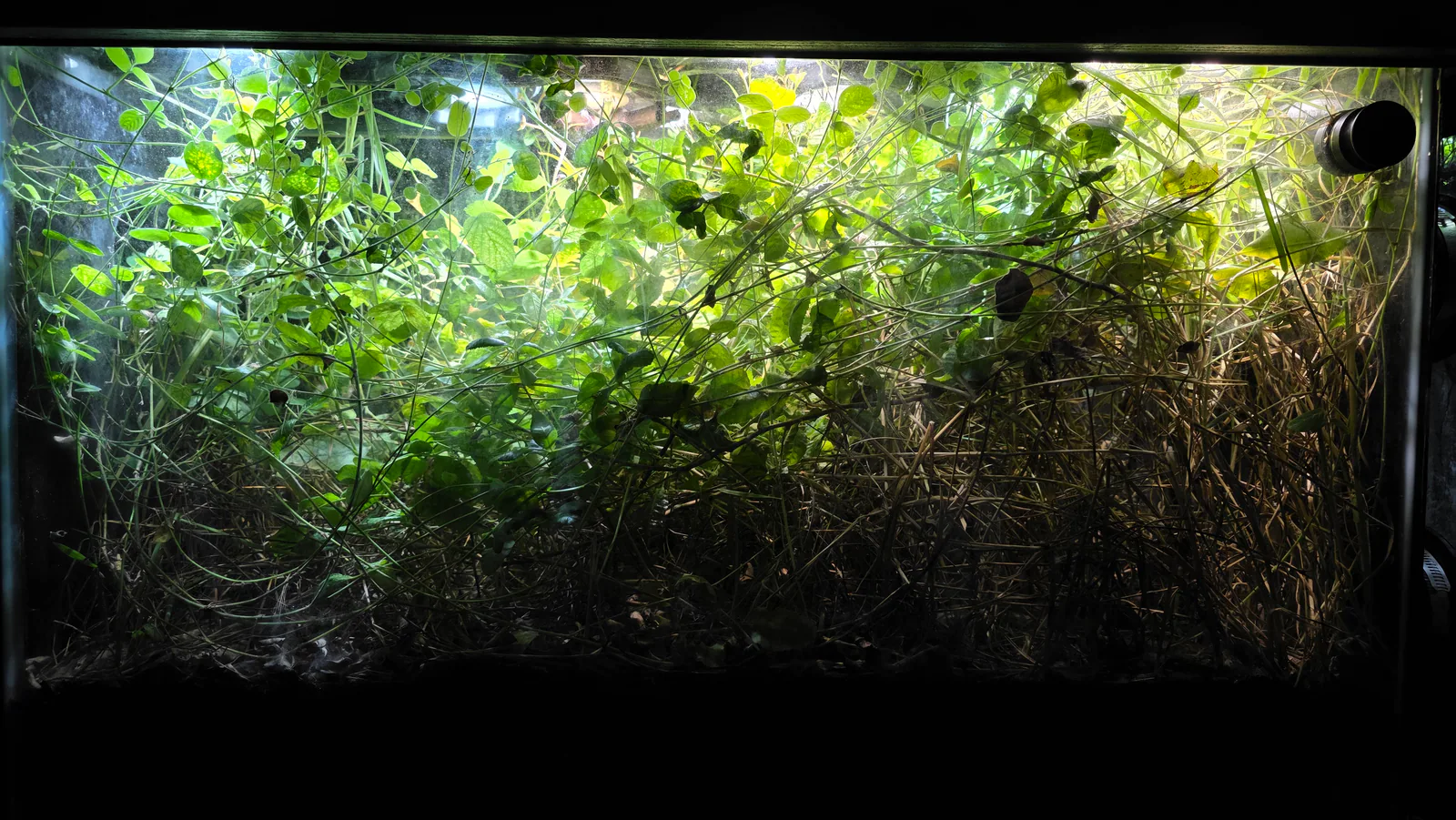
Prairie has faster decomposition than the Mangrove Forest. Grass tissue and broadleaf forbs are structurally simpler and lower in tannins; they break down more readily under the same community of cockroaches, isopods, and millipedes. Arthropod frass from the herbivore community (grasshoppers, crickets) is a fine-grained organic input that decomposes rapidly. Rain events carry the soluble products of this decomposition toward the Freshwater Lake through the Lakeshore drainage pathway.
Seagrass Meadow decomposes seagrass leaf material and macroalgal tissue at the substrate. The benthic community (Mud Crab, hermit crabs, and substrate-associated invertebrates) processes some of this material, but the primary decomposers are microbial. Common Atlantic Marginella contributed to this layer as a detritivore and sediment bioturbator until its removal completed in January 2026; it was not an algal grazer, a role previously misattributed to it and corrected July 29, 2026. The Seagrass Meadow substrate is likely accumulating organic matter similarly to the Freshwater Lake substrate, though the saltwater environment affects which microbial pathways dominate. On August 29, 2026 this pathway produced its first clearly documented pulse event: a partial die-off of the intermeshed Caulerpa mass released a large quantity of algal biomass into decomposition simultaneously, generating visible water cloudiness, a sour to rotting odor, and a suspected but unmeasured nitrogenous-waste or ammonia release across the connected saltwater volume. The disturbance was easing within about a day, indicating the marine detritivore and microbial community absorbed the first pulse, though still-intact white tissue may decompose in later waves.
Lakeshore and Marine Shore receive organic inputs from adjacent biomes and decompose them through biofilm, microbial activity, and the grazing of edge-biome invertebrates.
Malaysian Trumpet Snails are the most important macroscopic decomposition facilitators in the Freshwater Lake. They burrow through the substrate, fragment organic particles, ingest detritus, and draw oxygenated water into subsurface layers through their burrowing activity. In small freshwater systems, Malaysian Trumpet Snail populations are often the primary check on substrate anoxia development.
Amphipods process detritus at and just below the substrate surface in the Freshwater Lake, fragmenting material and making it available to microbial breakdown.
Ghost Shrimp scavenge larger organic particles and dead organisms in the Freshwater Lake, fragmenting them and distributing organic material through their feeding and movement.
Slough Crayfish disturb the substrate through digging, redistributing organic matter and exposing buried material. Their feces contribute fine organic particles back to the detritus pool.
Cockroaches, millipedes, and isopods are the primary litter-processing detritivores in the Mangrove Forest and Prairie, shredding plant material and fragmenting it into particles available for microbial breakdown.
Microbial community (bacteria and fungi throughout substrates and water columns) is the ultimate decomposer in every biome. All macroscopic fragmentation serves to increase substrate surface area and microbial access. The microbial community is responsible for the actual chemical breakdown of organic molecules and the release of inorganic nutrients. It is the least directly observable component of decomposition in miniBIOTA.
Climate System affects decomposition rate through its control of enclosure temperature. Microbial activity is temperature-sensitive; warmer conditions accelerate decomposition and colder conditions slow it. The chiller's current repair status may be affecting enclosure temperature and therefore decomposition dynamics, though no temperature measurements are available to confirm this.
Rain System provides a possible route for soluble decomposition products and fine particles from Prairie through Lakeshore toward Freshwater Lake. The amount, timing and ecological effects of this transport are unmeasured. Rain disruption changes this pathway but does not establish that all carbon or nutrient transfer stops.
Freshwater Lake anaerobic zone development (active risk): The Freshwater Lake substrate is accumulating organic detritus with confirmed developing anaerobic zones. As organic input continues and the aerobic layer is consumed by decomposition, the anoxic boundary rises toward the substrate surface. Malaysian Trumpet Snails are the primary biological check on this process, but whether their population is large enough to maintain adequate substrate aeration is unknown. If the anoxic boundary rises too close to the surface, benthic organisms including amphipods, Ghost Shrimp juveniles, and other substrate-associated invertebrates face desiccation or hypoxia stress from below.
Mangrove litter processing rate (unresolved): Mangrove leaves are structurally complex and tannin-rich; they resist rapid breakdown by the cockroach, isopod, and millipede community. Whether litter accumulation in the Mangrove Forest floor is in balance with the processing capacity of the current detritivore community, or whether litter is building up faster than it is being fragmented and mineralized, is not documented.
Malaysian Trumpet Snail population adequacy (unresolved): Malaysian Trumpet Snails are the key substrate aerators and detritus processors in the Freshwater Lake. Their population size and burrowing activity relative to the rate of organic matter input determines whether the substrate aerobic zone is maintained or shrinks over time. Current population size and burrowing activity have not been assessed.
Nutrient release timing and production coupling (unmeasured): Decomposition releases inorganic nitrogen and phosphorus from organic matter, making nutrients available for uptake by producers. In a small closed system, the timing and rate of nutrient release from the substrate directly affects how much nutrient is available to plants and algae in the water column above. Whether the current decomposition rate is releasing nutrients fast enough to support producer growth, or too fast (causing nutrient pulses and algal blooms), or too slow (limiting production through nutrient scarcity), has not been measured.
Marine decomposition pulse capacity (new, August 29, 2026): A partial die-off of the Seagrass Meadow Caulerpa mass put a large quantity of algal biomass into simultaneous decomposition, producing a transient realm-wide water-quality disturbance that eased within about a day. This is the first clearly documented marine decomposition-pulse event in miniBIOTA and a direct test of how much simultaneous organic load the saltwater detritivore and microbial community can absorb before water quality degrades. The margin remaining for a larger or repeated pulse, and the coupling to the Seagrass Meadow's unmeasured dissolved oxygen, are both unknown. The August 29 to 30, 2026 pulse also coincided with a repeated Wave and Tide System failure that removed mechanical water movement during the decomposition load, meaning the system absorbed the first pulse without its usual oxygen-distribution support; whether this deepened the disturbance or contributed to the concurrent marine mortalities (see the September 1, 2026 Variegated Sea Urchin and Astraea Snail records) is a reasonable suspicion but unmeasured.
Species named in this cycle summary and matched to active public species pages.
Habitats where this cycle operates inside the miniBIOTA biosphere.
Other ecological cycles connected to this one.