Bopyridae sp. (unidentified)

Shrimp Gill Isopod

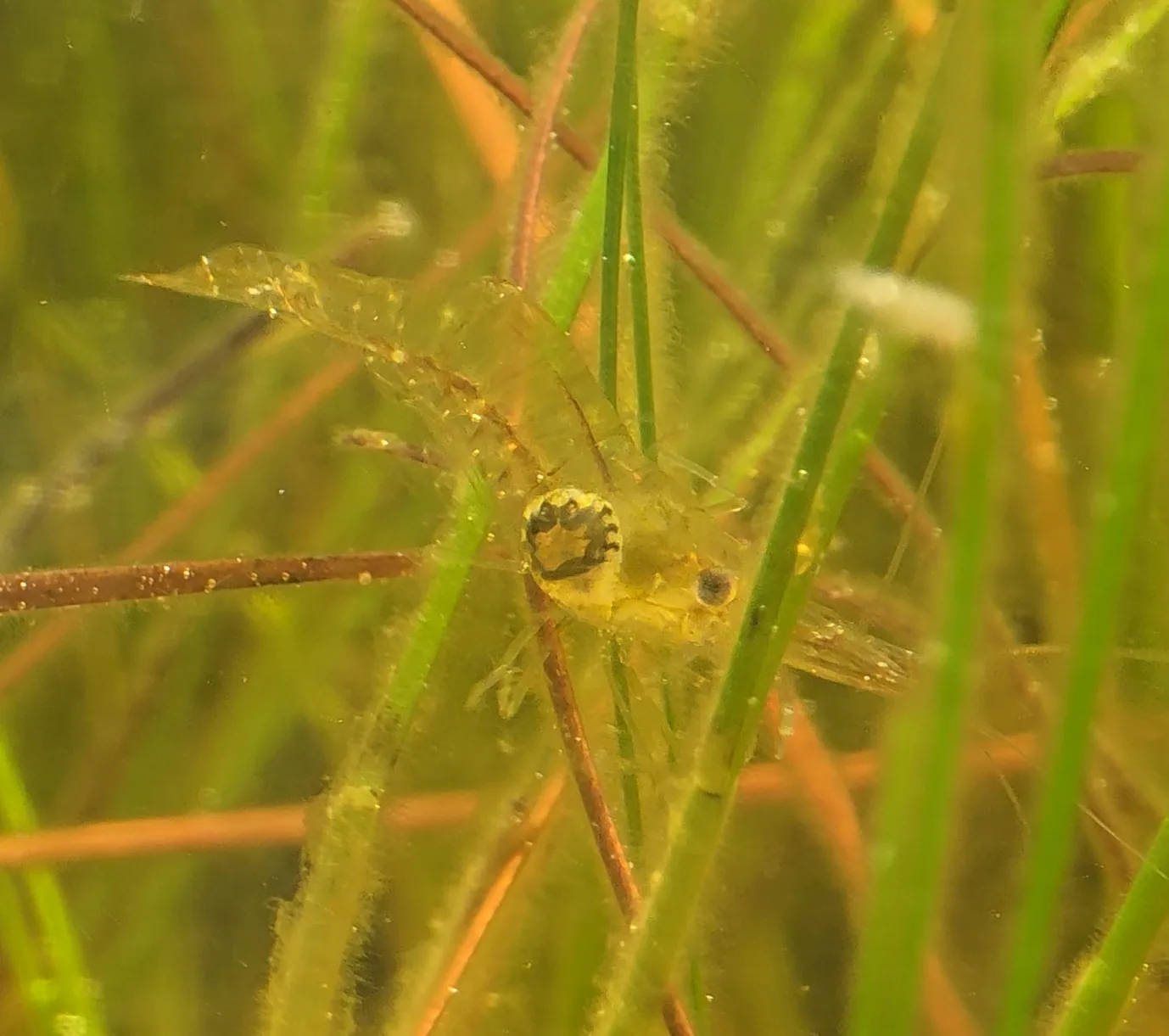
A parasitic isopod that nestles in a shrimp's gill chamber and causes a visible lateral bulge on the host's carapace; one specimen arrived on a Daggerblade Grass Shrimp in 2024 and has been retained for observation.

Overview

A parasitic isopod that nestles in a shrimp's gill chamber and causes a visible lateral bulge on the host's carapace; one specimen arrived on a Daggerblade Grass Shrimp in 2024 and has been retained for observation.

Identity

  • Common name: Shrimp Gill Isopod
  • Alternate names: parasitic isopod, gill isopod, bopyrid isopod, parasite, bopyrids
  • Scientific name: Bopyridae sp. (unidentified)
  • Identification confidence: Family-level only
  • Uncertainty label: Vulnerable

Taxonomy

  • Kingdom: Animalia
  • Phylum: Arthropoda
  • Class: Malacostraca
  • Order: Isopoda
  • Suborder: Epicaridea
  • Family: Bopyridae

Natural History

Bopyridae is a family of obligate parasitic isopods that infest decapod crustaceans, primarily shrimp, hermit crabs, and other crustaceans. They are found in temperate and tropical marine and estuarine habitats worldwide. In Florida, bopyrids are commonly associated with palaemonid grass shrimp (Palaemon and Palaemonetes spp.) in seagrass beds, salt marshes, and estuaries.

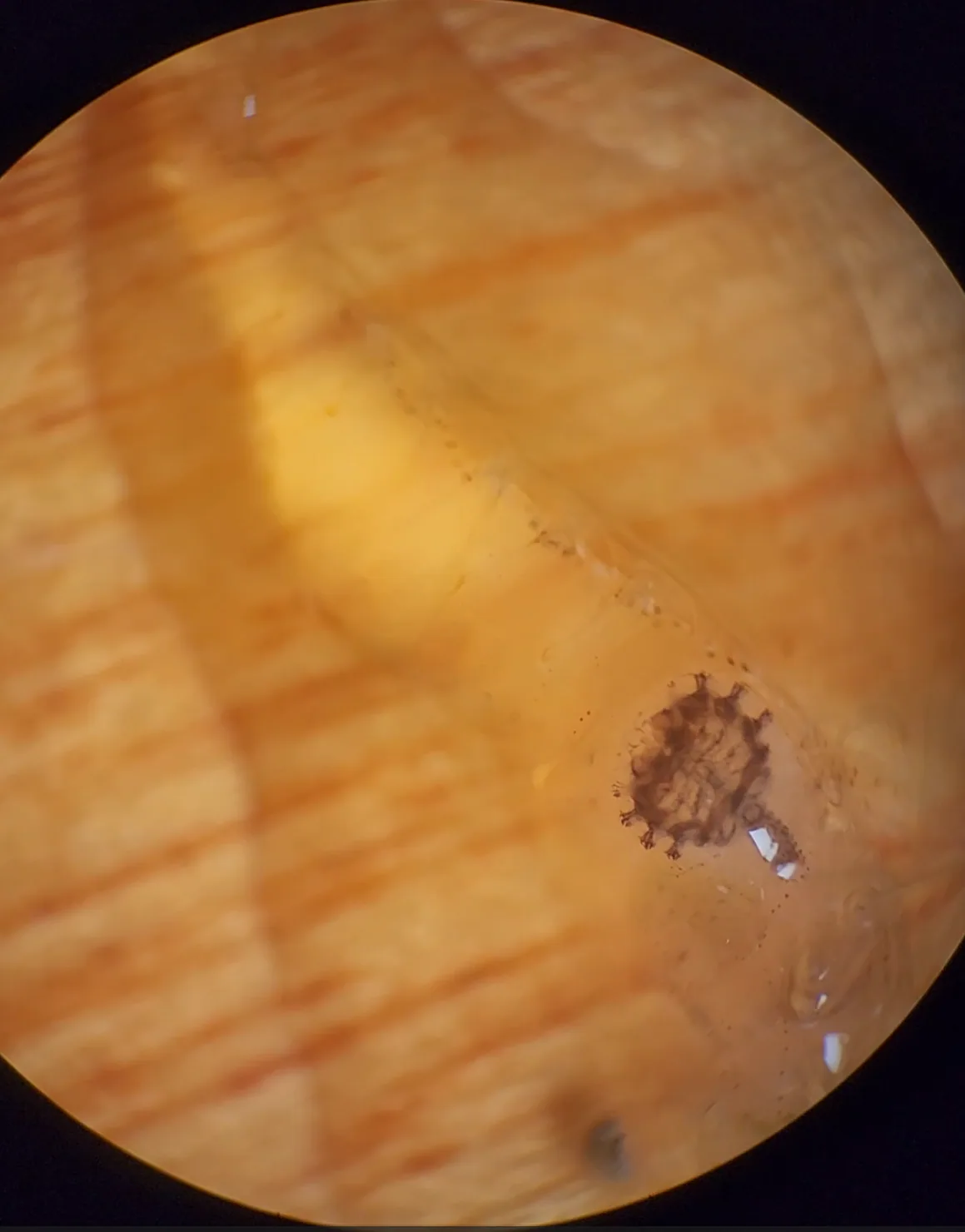
The female bopyrid is the visible form: she embeds in the host's gill chamber, where her flattened, asymmetrical body conforms to the space between the carapace and the gill tissue. Her presence causes the host's carapace to bulge outward on one side, producing a diagnostic external swelling called the "bopyrid bulge", a visible lump under the gill cover that is observable to the naked eye. The female feeds on host hemolymph and gill tissue. The male bopyrid is much smaller and attaches to the ventral surface of the female; he is often overlooked.

The life cycle of bopyrids requires two hosts. Larvae are released into the water as free-swimming epicaridium larvae, which must first parasitize a copepod intermediate host (cryptoniscus stage). After developing in the copepod, the juvenile bopyrid transfers to a suitable decapod final host. The first larva to settle on a host becomes female; subsequent arrivals become male.

At high infestation densities, bopyrids cause parasitic castration in female shrimp hosts, the metabolic drain of hosting the parasite can suppress or eliminate the host's reproductive output. At low parasite burdens (one parasite per host, as in miniBIOTA), the direct effect on the host is reduced but still present.

Ecological Role

In natural seagrass and salt marsh systems, bopyrids are regular background parasites of grass shrimp populations. Infestation rates in wild populations typically range from a few percent to occasionally higher, depending on larval copepod availability and host density. They are part of the parasitic burden that shapes shrimp reproductive success and population structure.

In miniBIOTA, a single Bopyridae specimen has been present since at least October 2024, attached to a Daggerblade Grass Shrimp. The observer noted it "seems to be doing well along with its shrimp host" as of late 2025. The bopyrid has been retained deliberately for observation rather than removed; no additional specimens are planned. The presence of one parasite on one host represents a minimal parasitic load with limited impact on the broader system.

The most relevant closed-system concern is the effect on the individual host shrimp: a parasitized female shrimp may not contribute to reproduction at the level an unparasitized individual would. Given that the Daggerblade Grass Shrimp population is already small (approximately 5 individuals as of 2026) and reproduction is struggling past the mysis larval stage, any reduction in host reproductive output is a watchpoint.

miniBIOTA Evidence

Introduction context: The Shrimp Gill Isopod was formally recorded in miniBIOTA on October 22, 2024, almost a year after the Daggerblade Grass Shrimp host was first introduced (December 10, 2023). The parasite almost certainly arrived as an undetected hitchhiker on a host shrimp and was noticed upon inspection. It was not deliberately introduced. No dedicated observation record exists for the discovery date.

Observation record: No dedicated observation records exist for the Shrimp Gill Isopod. All evidence comes from the species record.

  • October 22, 2024: date of first introduction. No observation file. Most likely the date the parasite was formally recorded, not the date it arrived.
  • 2024-2025: Observer noted the parasite "seems to be doing well along with its shrimp host (Daggerblade Grass Shrimp) for over a year." A separate reference in the dossier stub mentions a chronicle record of shrimp parasite removal under a microscope (Chronicle 296, Pipeline 269), suggesting at least one parasite removal event was documented, but the outcome and whether this refers to this specimen is unresolved.
  • October 30, 2025: last recorded date. No dedicated observation file.

Confirmed:

  • One Bopyridae specimen recorded in miniBIOTA since at least October 22, 2024
  • Host confirmed as Daggerblade Grass Shrimp (Palaemon pugio)
  • Parasite retained deliberately for observation; no plans to introduce more
  • Present as of October 30, 2025, over a year after first recorded

Inferred:

  • The parasite arrived as an undetected hitchhiker on a host shrimp, not as a deliberate introduction
  • The visible bopyrid bulge is likely detectable on the host carapace upon inspection
  • At one specimen with one host, the impact on system-level shrimp reproduction is minimal but present
  • If the parasite is female, a male bopyrid may be attached to her ventrally and is not separately counted

Unknown:

  • Whether the specimen is still alive in miniBIOTA as of 2026
  • Whether any other Daggerblade Grass Shrimp individuals are parasitized
  • Whether the chronicle reference (Chronicle 296) documents removal of this specimen or a different event
  • Species-level identity of the parasite