Palaemon pugio

Daggerblade Grass Shrimp

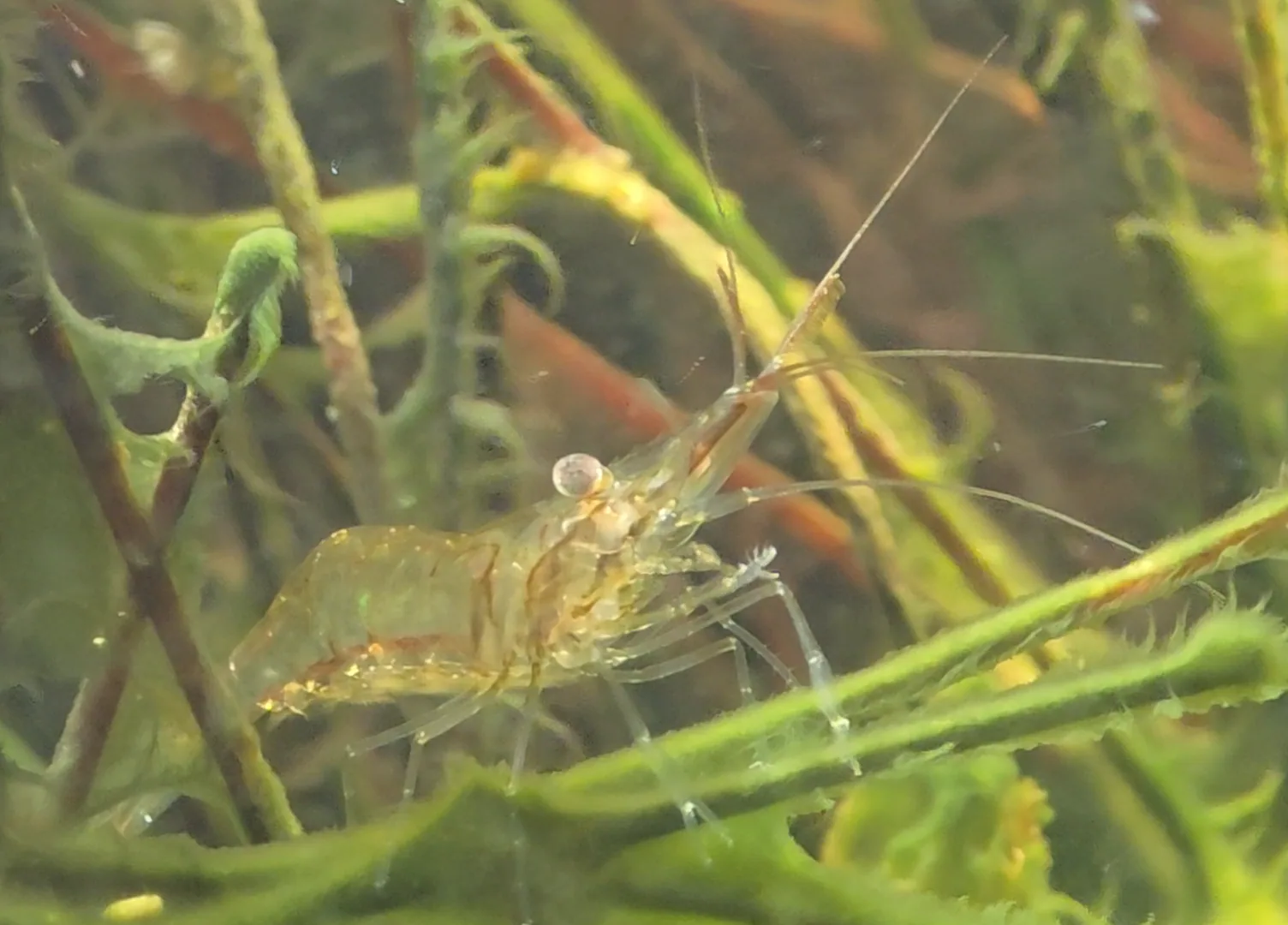
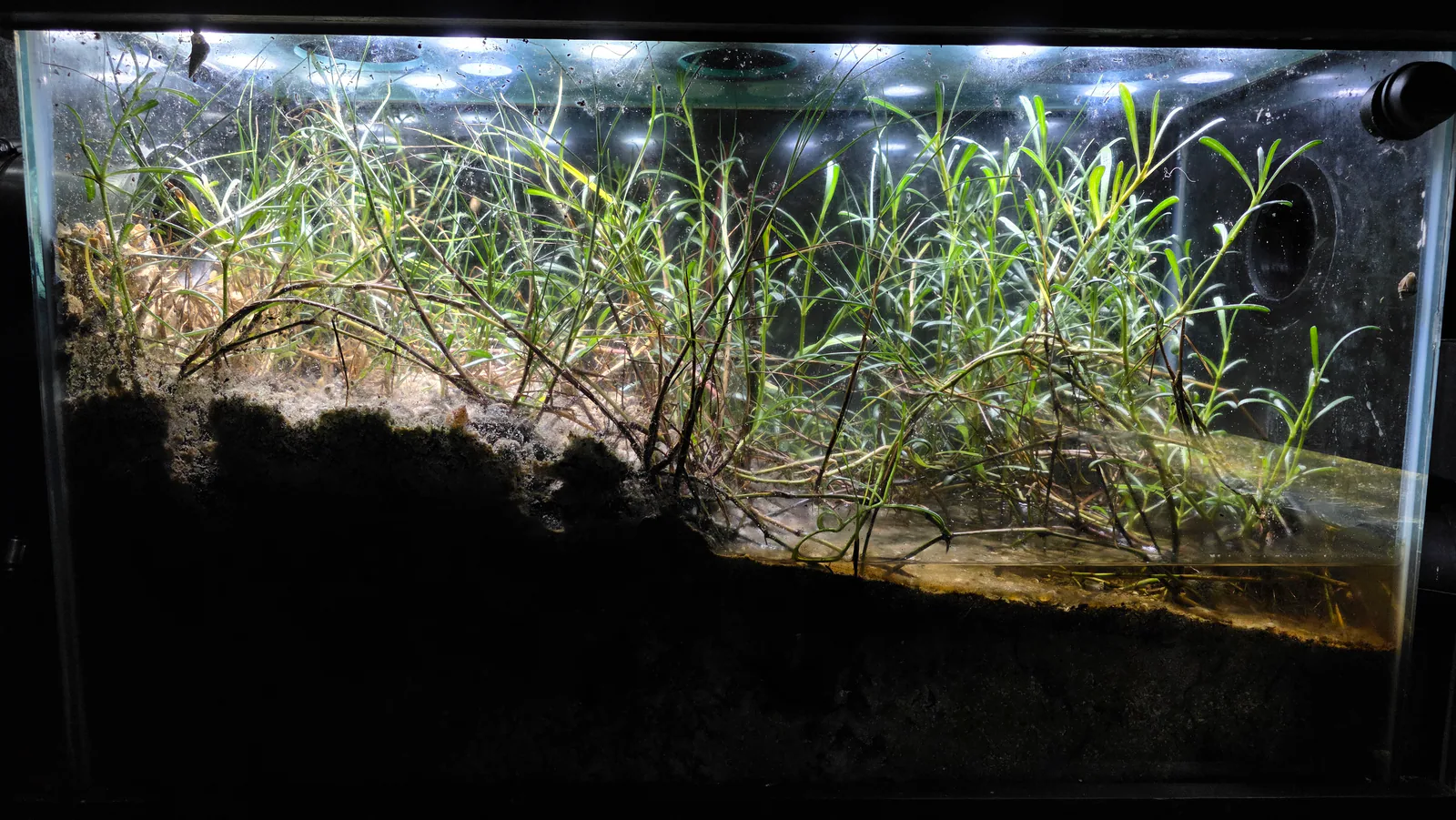
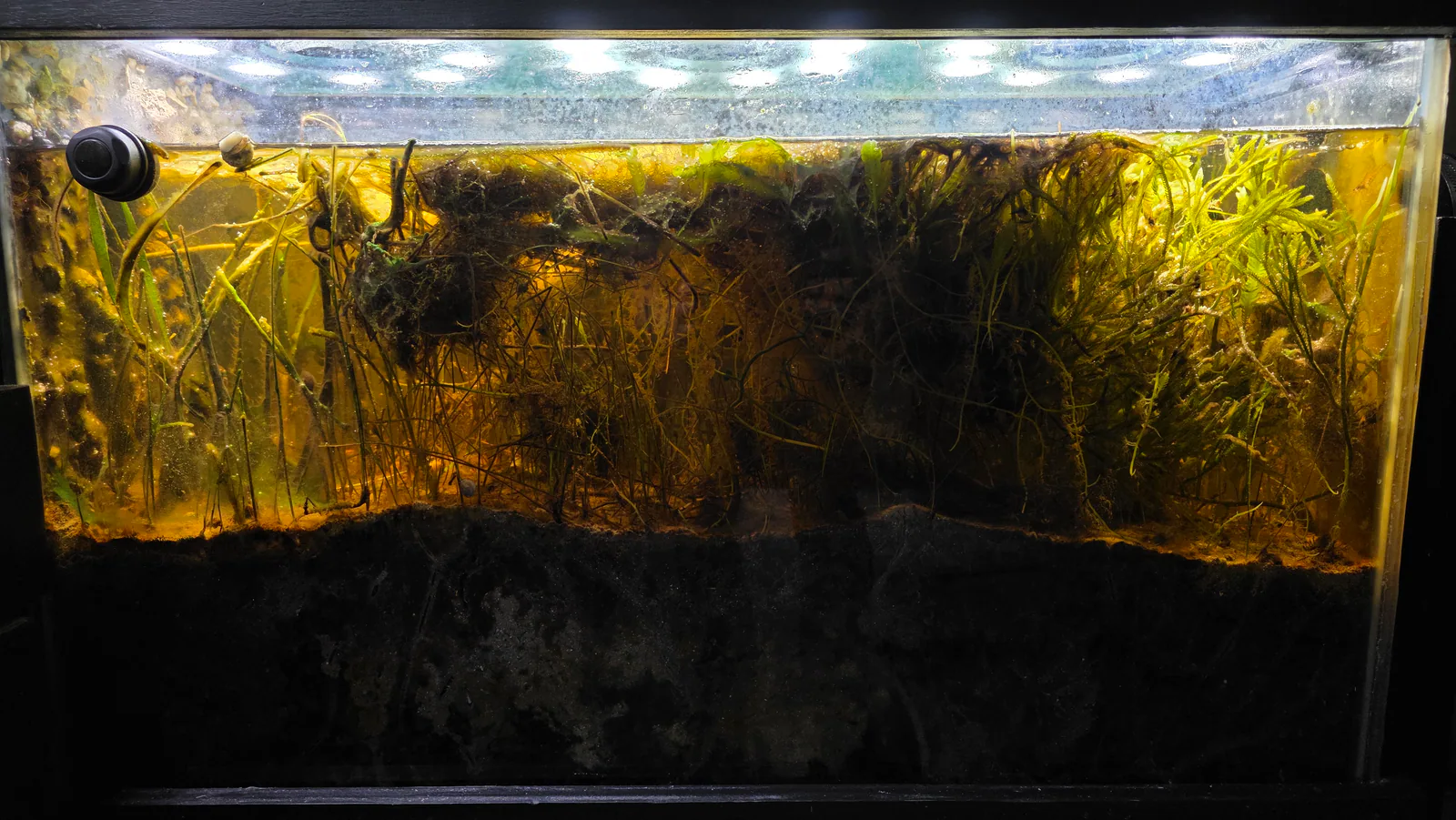
Found in the Seagrass Meadow and Marine Shore, this small nearly transparent shrimp grazes algae and detritus from submerged surfaces and has been observed scavenging dead isopod carcasses in the Seagrass Meadow.

Overview

Found in the Seagrass Meadow and Marine Shore, this small nearly transparent shrimp grazes algae and detritus from submerged surfaces and has been observed scavenging dead isopod carcasses in the Seagrass Meadow. One of the longest-established species in miniBIOTA, introduced December 10, 2023, it is actively reproducing but offspring have not been observed surviving past the mysis larval stage.

Identity

  • Common name: Daggerblade Grass Shrimp
  • Alternate names: Grass shrimp, daggerblade shrimp, estuary shrimp, glass shrimp, transparent shrimp, palaemon shrimp
  • Scientific name: Palaemon pugio (formerly Palaemonetes pugio)
  • Identification confidence: Confirmed at species level.
  • Uncertainty label: Mixed. Species ID is confirmed. Offspring mortality cause, long-term population trajectory, and full dietary range remain uncertain.

Taxonomy

  • Kingdom: Animalia
  • Phylum: Arthropoda
  • Class: Malacostraca
  • Order: Decapoda
  • Family: Palaemonidae
  • Genus: Palaemon
  • Species: P. pugio

Natural History

Range and Florida Relevance

Palaemon pugio is native to estuaries, seagrass beds, and salt marshes along the Atlantic and Gulf coasts of North America, including throughout Florida. It is one of the most common small shrimp in Florida's coastal and estuarine systems, typically found in shallow vegetated habitats near seagrass, algae mats, and submerged structure. It is a euryhaline species, tolerating a wide range of salinities from nearly fresh to fully marine.

Habitat

Daggerblade Grass Shrimp inhabit shallow coastal and estuarine environments with abundant structure: seagrass beds, algae mats, mangrove prop roots, and submerged debris. They move through vegetation and along substrate surfaces, using structure for cover and foraging. They are semi-pelagic and can swim short distances but spend most of their time associated with submerged surfaces. Their nearly transparent bodies provide camouflage against open water backgrounds.

Diet

These shrimp are omnivores and opportunistic feeders. They graze algae and biofilm from seagrass blades and submerged surfaces, process detritus and fine organic particles, and will scavenge dead animal matter when it is available. On June 10, 2026, two individuals in the miniBIOTA Seagrass Meadow were documented feeding directly on dead Eelgrass Isopod carcasses, confirming animal-matter scavenging in this system. This observation does not indicate the shrimp killed the isopods.

Reproduction

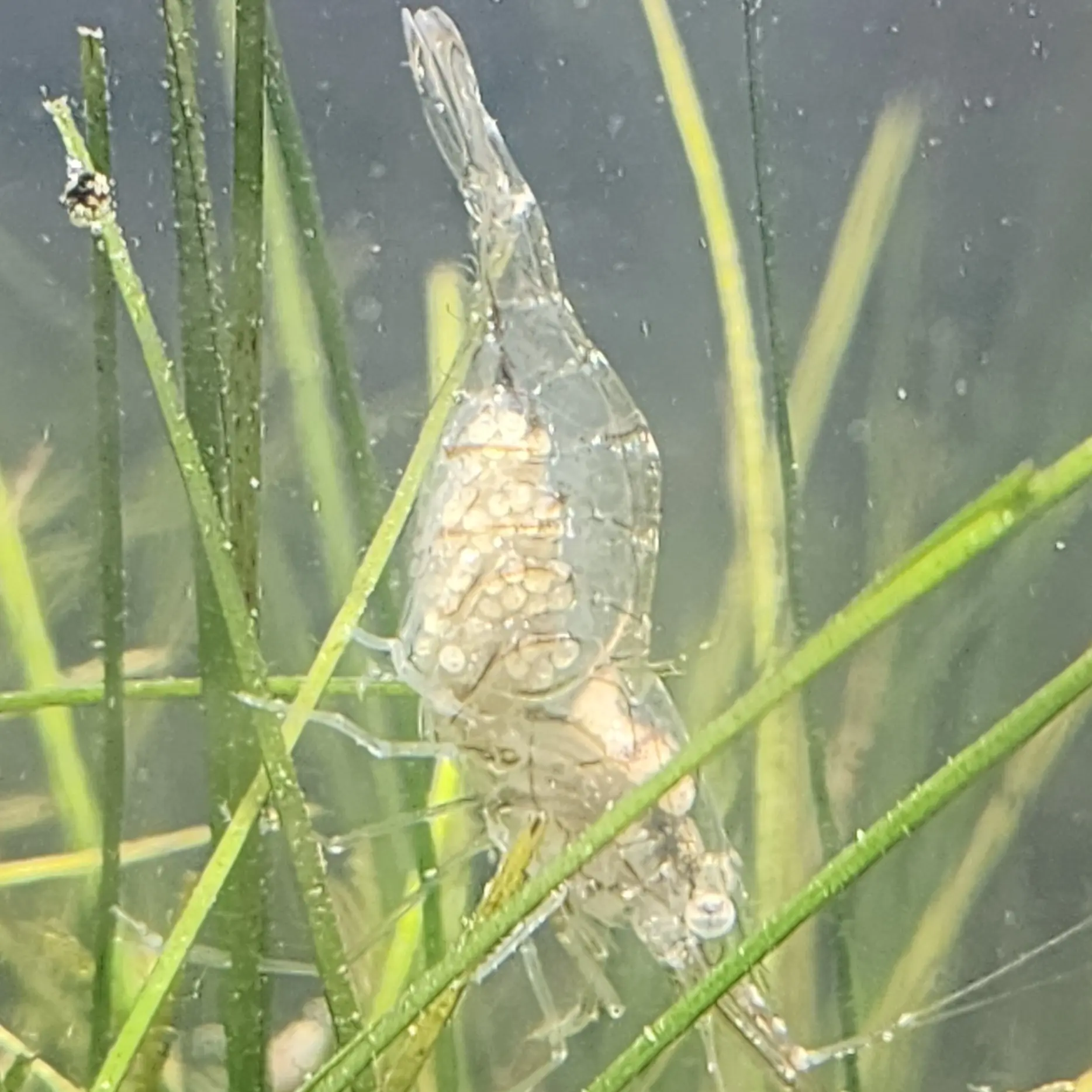
Females carry eggs under the abdomen until hatching. Larvae pass through several zoea stages before reaching the mysis stage, at which point they require fine suspended food particles to continue development. In the wild, mysis larvae feed on microalgae and fine zooplankton. In miniBIOTA, larvae have been observed reaching the mysis stage but have not been documented surviving past it. The cause is unresolved; leading candidates are insufficient food availability for mysis larvae and predation by the green porcelain crab.

Tolerance Ranges

Palaemon pugio is euryhaline and tolerates salinities from near-freshwater to full marine, a key adaptation for estuarine life. It tolerates the temperature range typical of Florida coastal systems, with a preferred range roughly between 18 and 28 degrees Celsius. Specific pH, lighting, and flow preferences for miniBIOTA conditions have not been formally measured.

Ecological Role

Daggerblade Grass Shrimp serve as small-scale omnivores that process multiple food sources simultaneously: grazing algae and biofilm from surfaces, breaking down detritus, and scavenging dead animal matter. This positions them as connectors between the primary producer layer, the detritus chain, and the animal food web. They are also important prey for larger animals, sitting in the middle of coastal food webs as both consumer and consumed.

In miniBIOTA, the population is small and vulnerable, but the scavenging observation from June 10, 2026 confirms an active ecological role in the Seagrass Meadow. Their long presence in the system since December 2023 makes them one of the most established marine species, despite the ongoing recruitment failure. The population has remained low but persistent, suggesting the adults are surviving in the current conditions even when larvae are not.

A key closed-system concern is the mysis larval mortality. Without resolving whether the cause is food limitation or predation, it is not possible to support recruitment to a self-sustaining level.

miniBIOTA Evidence

Introduction

Daggerblade Grass Shrimp were introduced to miniBIOTA on December 10, 2023 by intentional seeding. They are among the earliest established marine species in the system.

Observation Timeline

  • December 10, 2023 — Introduced by intentional seeding into the Marine Shore and Seagrass Meadow.
  • Ongoing — Population has persisted at low density. Reproduction confirmed; larvae reach mysis stage but have not been observed surviving past it.
  • June 10, 2026 — Two individuals documented buried in the Seagrass Meadow substrate, each feeding on a separate dead Eelgrass Isopod carcass. Scavenging confirmed; predation on living isopods not implied. Video documented.

What Is Confirmed

  • Long-term persistence in Marine Shore and Seagrass Meadow since December 2023.
  • Active reproduction: eggs and larvae to mysis stage confirmed.
  • Scavenging of dead Eelgrass Isopod carcasses observed June 10, 2026.
  • Current estimated population of approximately 5 individuals.

What Is Inferred

  • Adults are surviving in current system conditions despite low numbers.
  • Mysis larval mortality is limiting recruitment; food availability and/or predation by the green porcelain crab are the leading candidate causes.
  • Scavenging behavior likely contributes to recycling of dead animal matter in the Seagrass Meadow on an ongoing basis.

What Remains Unknown

  • Whether larvae are dying from food limitation, predation, or both.
  • Whether the population can reach a self-sustaining level under current conditions.
  • How often scavenging of animal carcasses occurs relative to algae and detritus grazing.
  • What the population was at peak and how it declined to approximately 5 individuals.