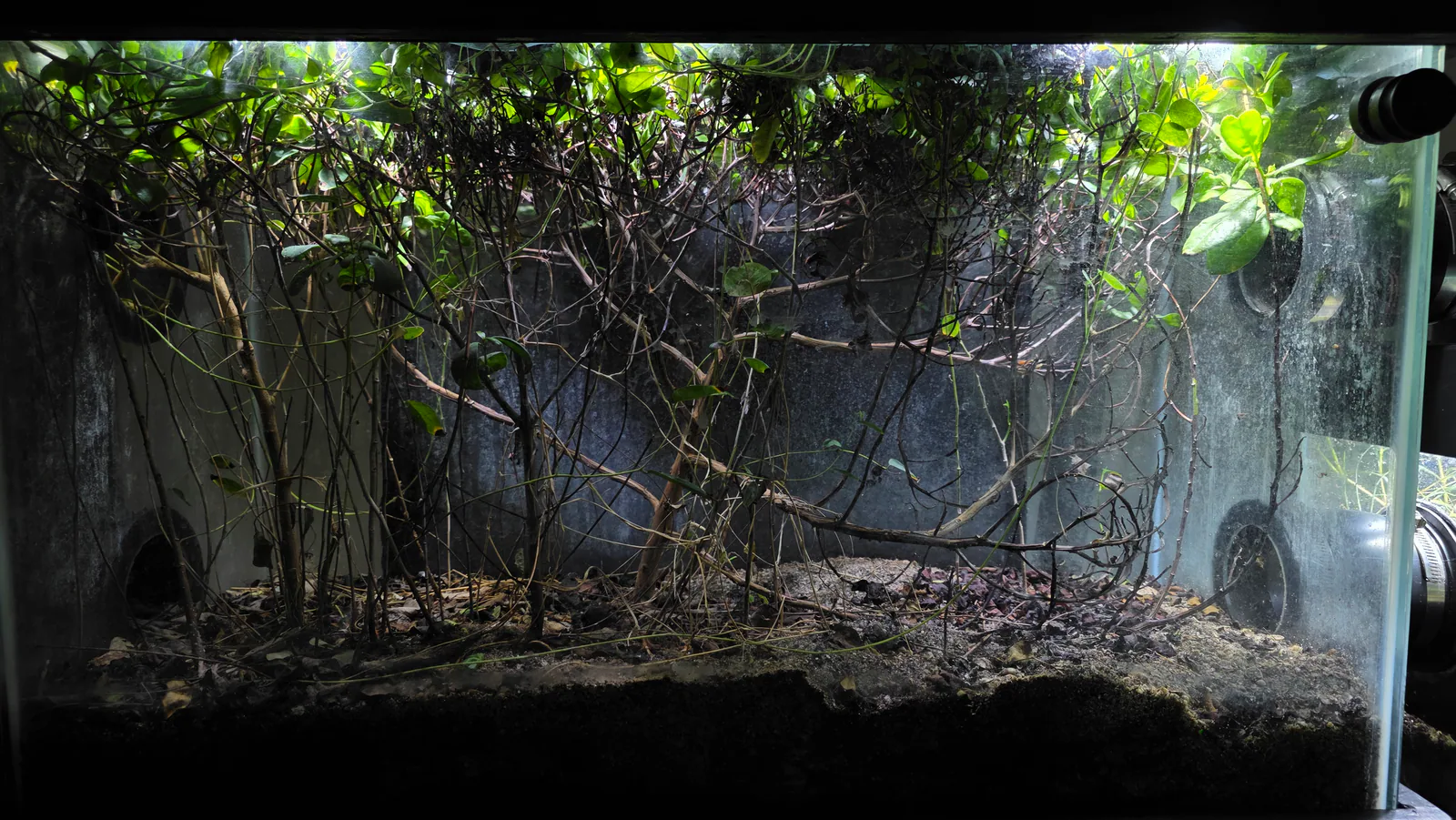
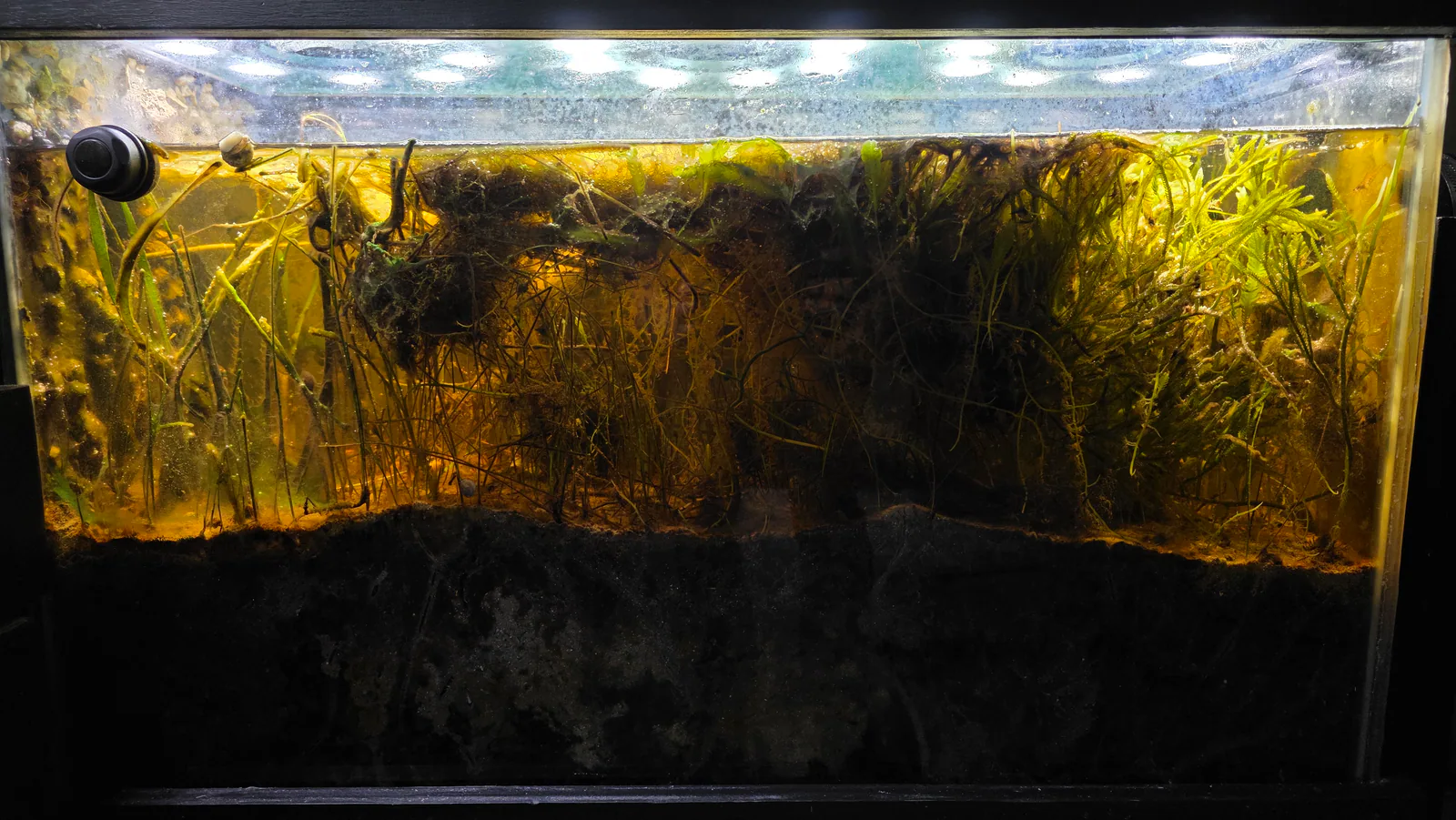
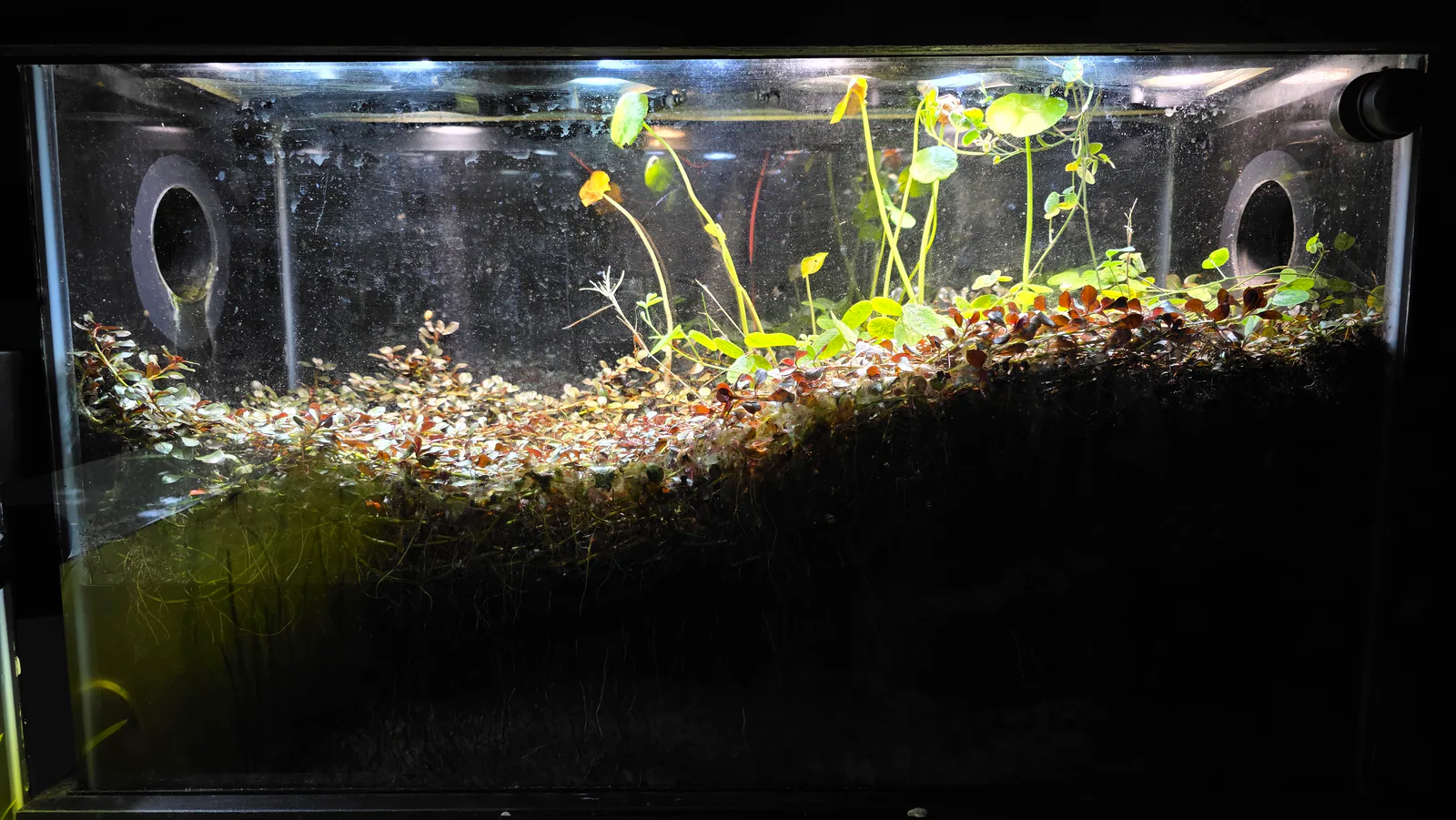
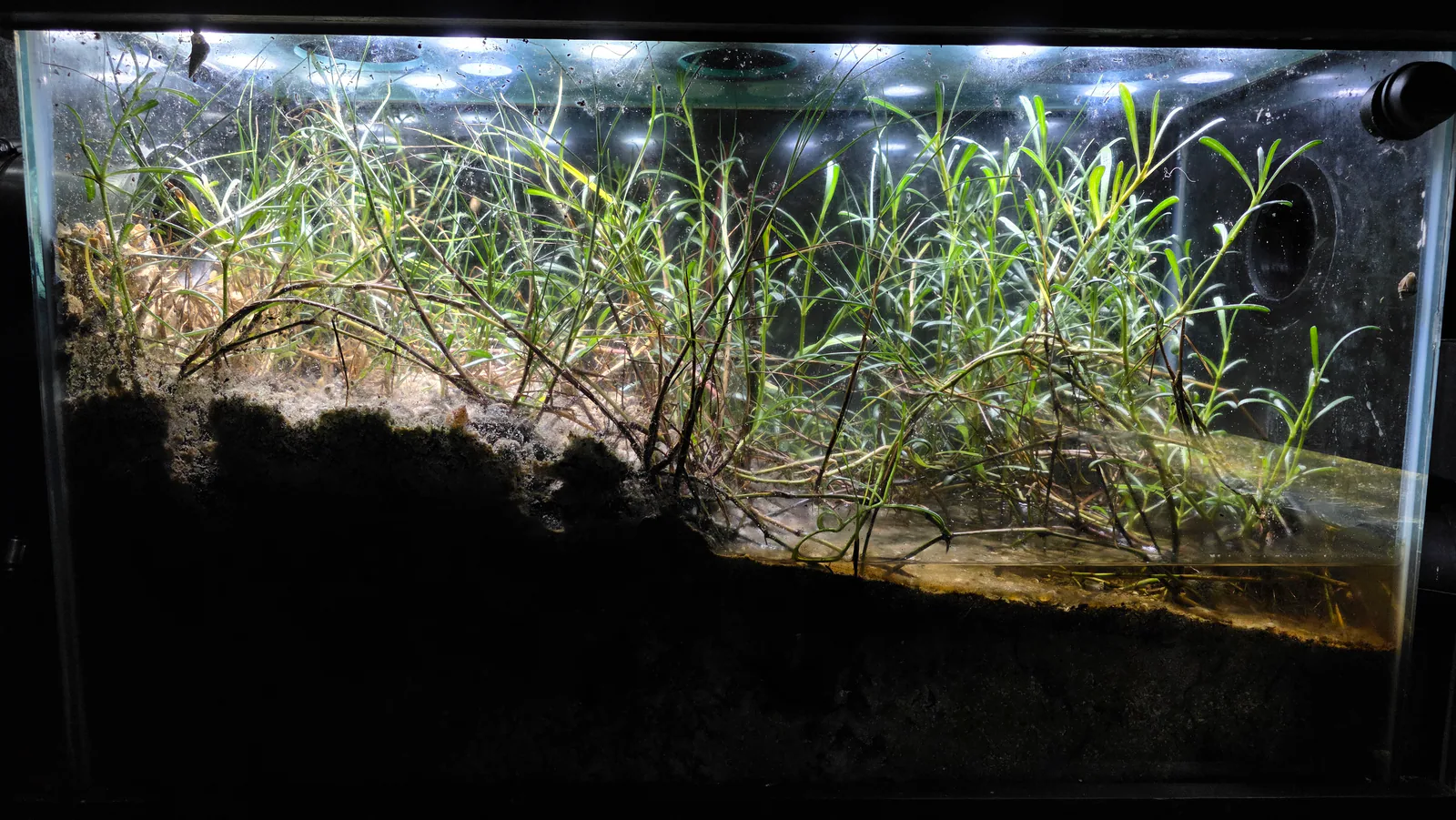
Nutrient cycling describes the movement of essential inorganic elements, primarily nitrogen (N) and phosphorus (P), through the biological and chemical components of an ecosystem. Unlike carbon, which moves through a gas phase as CO2 and is tied to the energy cycle, nitrogen and phosphorus cycle primarily as dissolved ions in water and soil, with nitrogen also passing through a gas phase at specific transformation steps.
Nitrogen passes through several chemical forms with distinct biological roles and availabilities. Organic nitrogen in dead tissue is released as ammonium (NH4+) during decomposition (ammonification). Nitrifying bacteria in aerobic zones convert ammonium first to nitrite (NO2-) and then to nitrate (NO3-) through nitrification. Both ammonium and nitrate can be taken up by plants and algae. In anaerobic zones, denitrifying bacteria convert nitrate back to nitrogen gas (N2) through denitrification, removing it from the biological cycle entirely. N2 can only re-enter the biological cycle through nitrogen fixation, carried out by specific bacteria and cyanobacteria.
Phosphorus has no gas phase. It moves between organic forms (in living tissue and dead matter), dissolved inorganic phosphate (PO43-, available to producers), and adsorbed or mineral-bound forms (attached to substrate particles and temporarily or permanently unavailable). Decomposition releases phosphate from organic matter; plants and algae take it up; organisms excrete it in feces and urine; and it can bind to substrate particles, especially under high-pH or high-iron conditions. Unlike nitrogen, phosphorus cannot leave the biological cycle as a gas, but it can be locked in the substrate in forms that are not biologically accessible.
Global and Florida Relevance
Nitrogen and phosphorus are the two nutrients most commonly limiting primary production in natural ecosystems. Freshwater systems are most often phosphorus-limited; marine and estuarine systems are more often nitrogen-limited; but both nutrients are important in complex systems with multiple producer types.
Florida's freshwater systems face a well-documented nutrient challenge. Agricultural and urban runoff loads Florida's lakes and rivers with excess nitrogen and phosphorus, driving the algal blooms and cyanobacterial mats that characterize hypereutrophic systems across the state. Florida's seagrass meadows are sensitive to elevated nutrients: high nitrogen availability favors epiphytic algae growth on seagrass leaves, shading them and reducing photosynthesis at a smaller scale than the water-column turbidity effect.
Florida's mangrove forests fix nitrogen through microbial activity in their root zones, adding biologically available nitrogen to nutrient-poor coastal soils. Seagrass roots and rhizomes stabilize sediments that would otherwise release bound phosphorus under disturbance. These nutrient dynamics are tightly linked to habitat health in Florida's coastal systems.
In a sealed enclosure, nutrient cycling operates under constraints that make certain dynamics far more consequential than they would be in open natural systems.
The total nutrient pool is fixed. All the nitrogen and phosphorus in miniBIOTA entered with the founding organisms, water, and substrate, and with any organisms or water added since. No new nutrients enter from outside. This means the system is running on a recycled nutrient budget; every molecule of nitrogen or phosphorus available to producers today has already cycled through the system at least once.
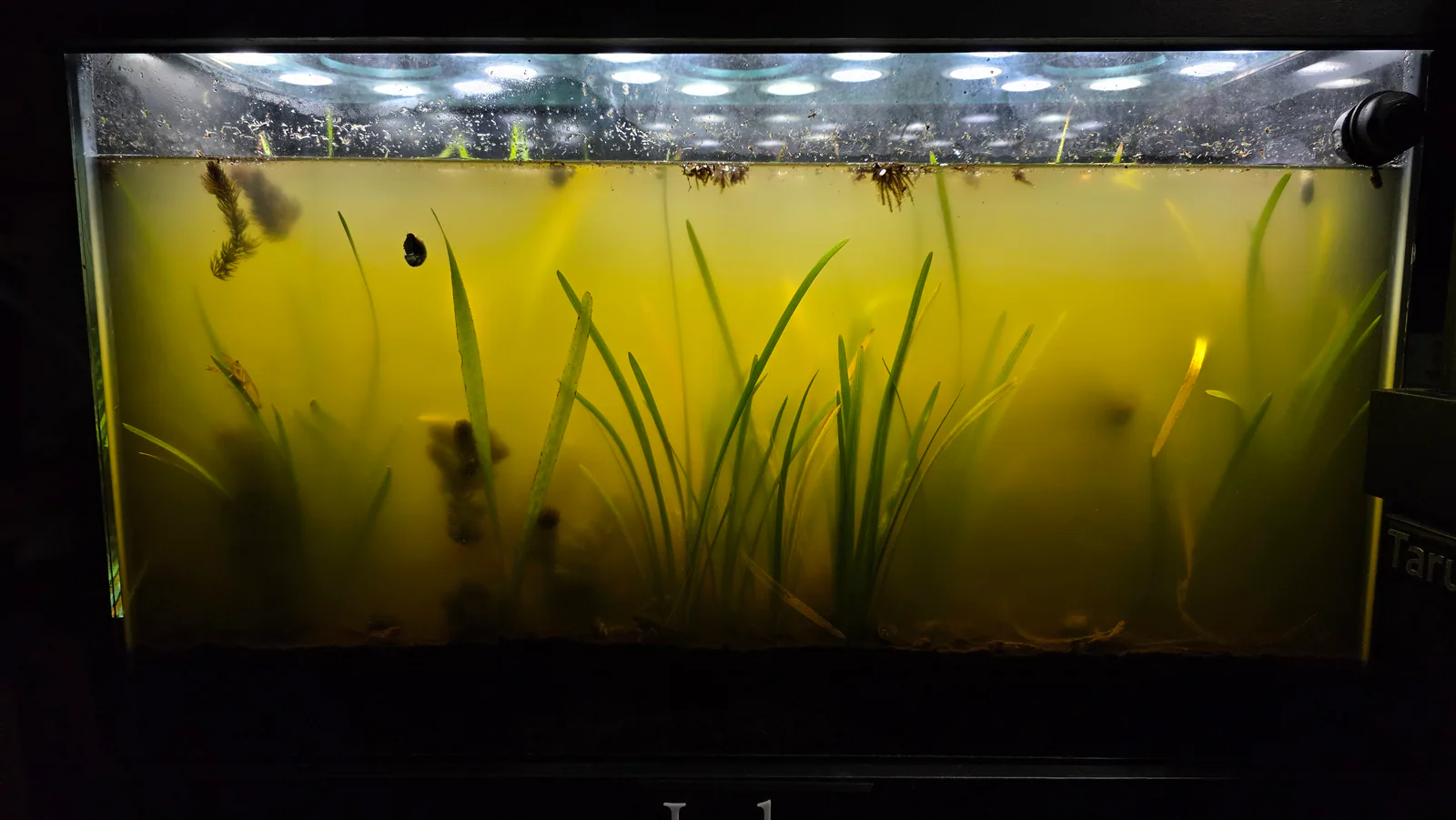
Denitrification is a potential nitrogen sink with no offset. In the developing anaerobic zones of the Freshwater Lake substrate, denitrifying bacteria convert nitrate to N2 gas. This N2 is biologically inert and escapes into the enclosure atmosphere, where it is not available to any organism in miniBIOTA. The only way to return atmospheric N2 to a biologically usable form is nitrogen fixation, which requires specialized bacteria or cyanobacteria. Whether nitrogen-fixing organisms are present and active in miniBIOTA is unknown. If denitrification is occurring and nitrogen fixation is absent or insufficient, the total pool of biologically available nitrogen in miniBIOTA is slowly declining.
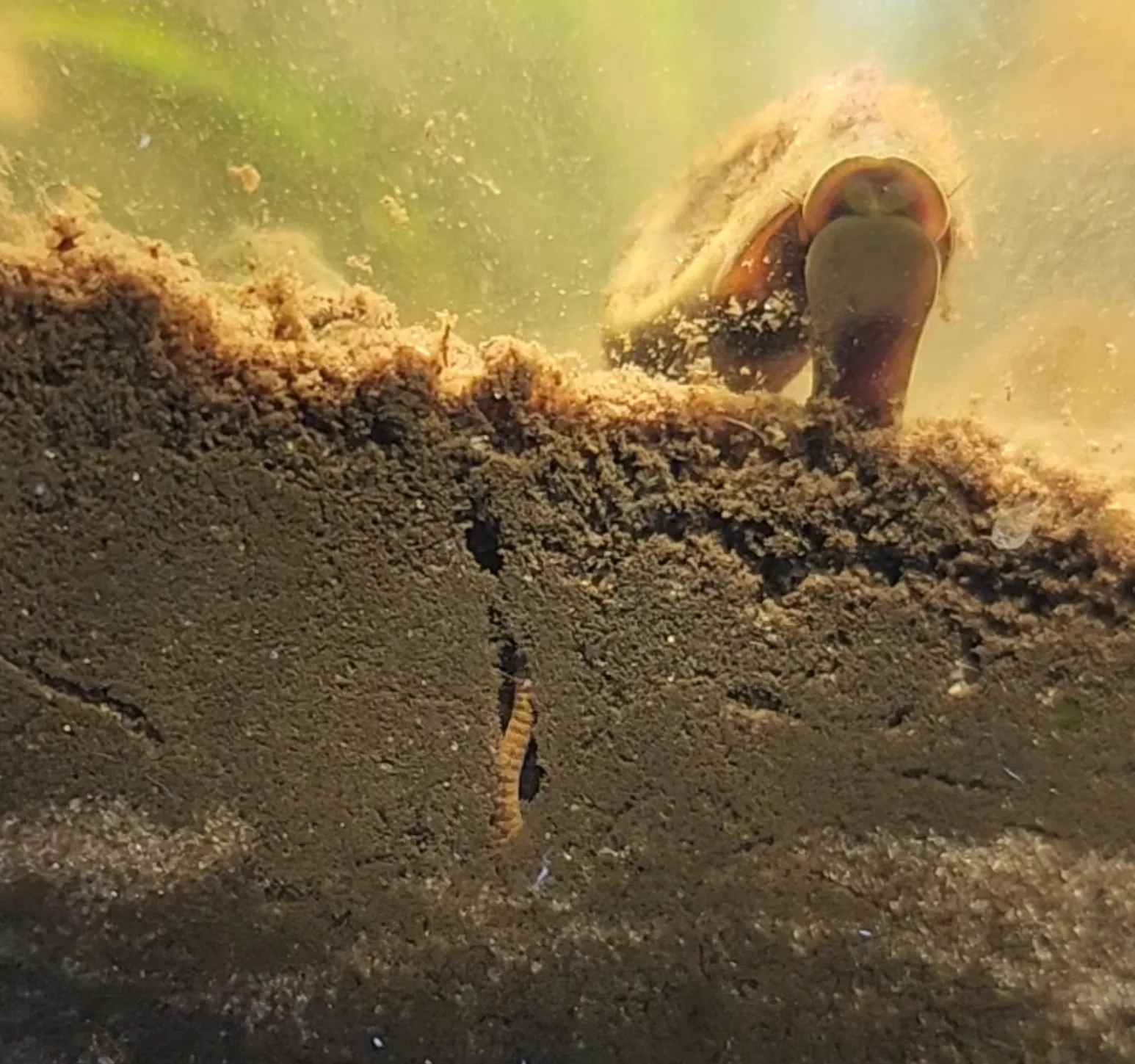
Phosphorus can be locked in the substrate. Phosphate released from decomposing organic matter can adsorb to substrate particles, particularly under conditions of high pH, high dissolved oxygen, or high iron concentrations. If phosphorus accumulates in the substrate in bound form rather than staying in the dissolved pool, it becomes unavailable to producers unless substrate disturbance, pH change, or anoxia releases it. Crayfish digging and Malaysian Trumpet Snail burrowing may both periodically release bound substrate phosphorus back into the water column.
Nutrient concentration is higher than in comparable natural systems. Because there is no dilution by external water input and no export pathway, nutrients released by decomposition remain within the biome at high local concentrations. A pulse of decomposition following a die-off of plant material could temporarily elevate nutrient concentrations significantly, potentially favoring opportunistic algae and phytoplankton over macrophytes. This scenario was partly realized in the saltwater realm on August 29, 2026, when a partial die-off of the Seagrass Meadow Caulerpa mass put a large quantity of algal biomass into simultaneous decomposition and produced a transient realm-wide water-quality disturbance with a suspected but unmeasured nitrogenous-waste or ammonia pulse.
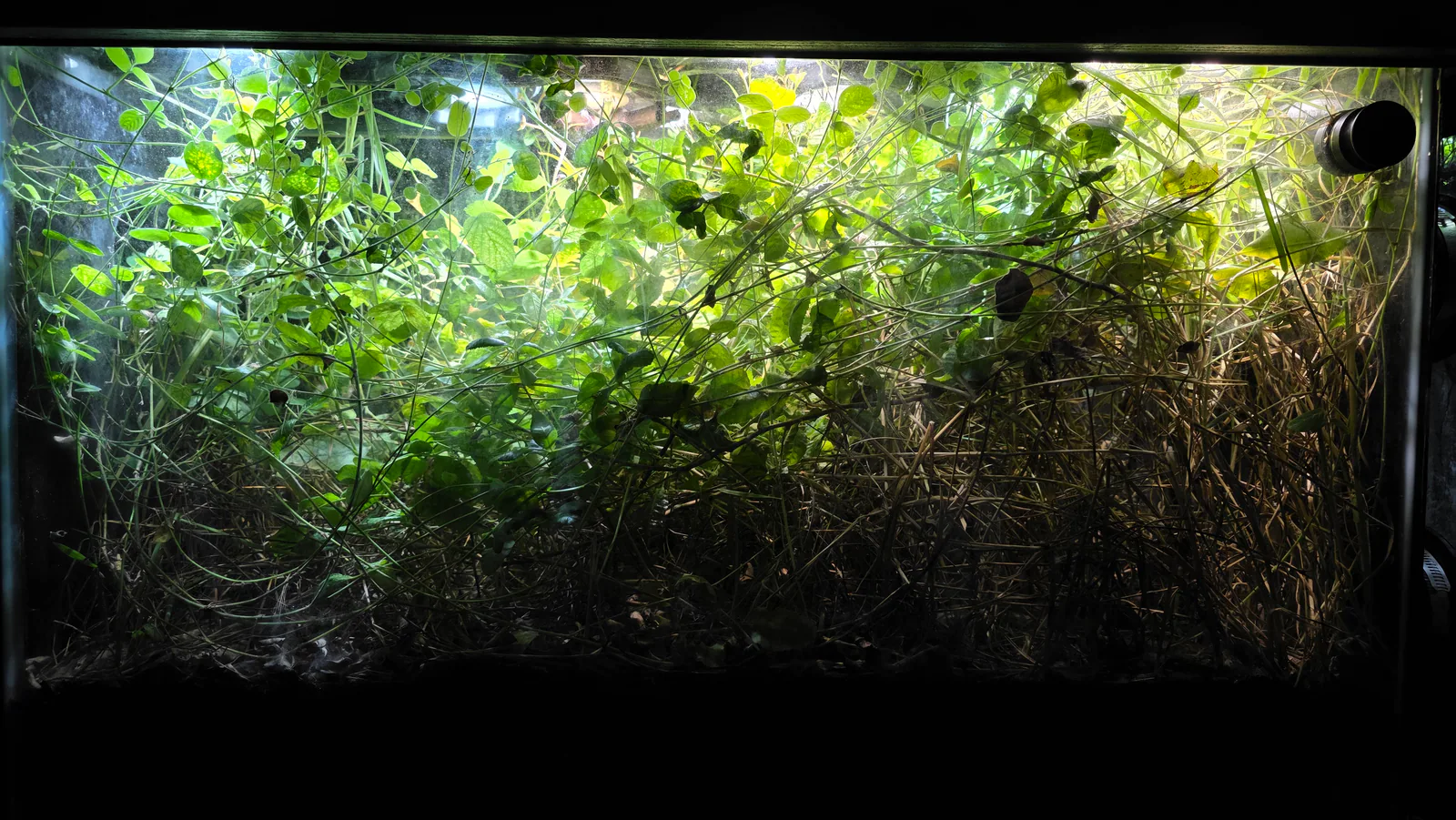
Cross-biome nutrient movement remains unquantified. Rain-driven drainage from Prairie through Lakeshore toward Freshwater Lake provides a possible transport pathway for terrestrial nutrients. Passive subsurface connections are bidirectional and equalize water levels; neither net export nor beneficial lake fertilization is established. A separate, unconfirmed cross-realm pathway was proposed the same week as the August 29, 2026 Caulerpa die-off: that a recent addition of approximately two gallons of water could have washed terrestrial nutrients across the land and down into the Seagrass Meadow, briefly raising marine nutrient availability. This was raised and then superseded by the die-off as the explanation for the observed cloudiness, and terrestrial-to-marine nutrient transport by surface drainage remains undocumented.
Calcium and carbonate form a third closed-system mineral budget, alongside nitrogen and phosphorus. In the saltwater realm, dissolved calcium and carbonate alkalinity cycle between the water column and a solid reservoir of shells, carbonate sediment, and mineral deposits, in a closed loop with the same "no external input" constraint that governs nitrogen and phosphorus. Calcifying organisms remove dissolved calcium and carbonate to build shells and skeletons; death, shell dissolution, and anaerobic sediment reactions (see [Carbon Cycle](carbon-cycle.md) for the sulfate-reduction mechanism) return some of it to solution. A Seagrass Meadow water test on August 1, 2026 found elevated alkalinity alongside notably low dissolved calcium, indicating that at the time of testing, a substantial share of this biome's calcium likely resided in the solid reservoir rather than the dissolved one. The Depressed Slippersnail's shell-dissolution turnover (see [Depressed Slippersnail](../species/depressed-slippersnail.md)) is the most direct documented biological pathway in this budget, though it is not confirmed sufficient on its own to hold dissolved calcium steady.