The Terrestrial Realm in Global Context
Terrestrial realms are defined by their air-atmosphere interface, soil-based nutrient cycling, and dependence on precipitation rather than standing water for moisture. Unlike aquatic realms where primary production often occurs in the water column and food webs are shaped by dissolved chemistry, terrestrial food webs are structured by plant tissue (leaves, stems, roots, seeds), the soil beneath them, and the animals that consume, decompose, and recycle that plant material.
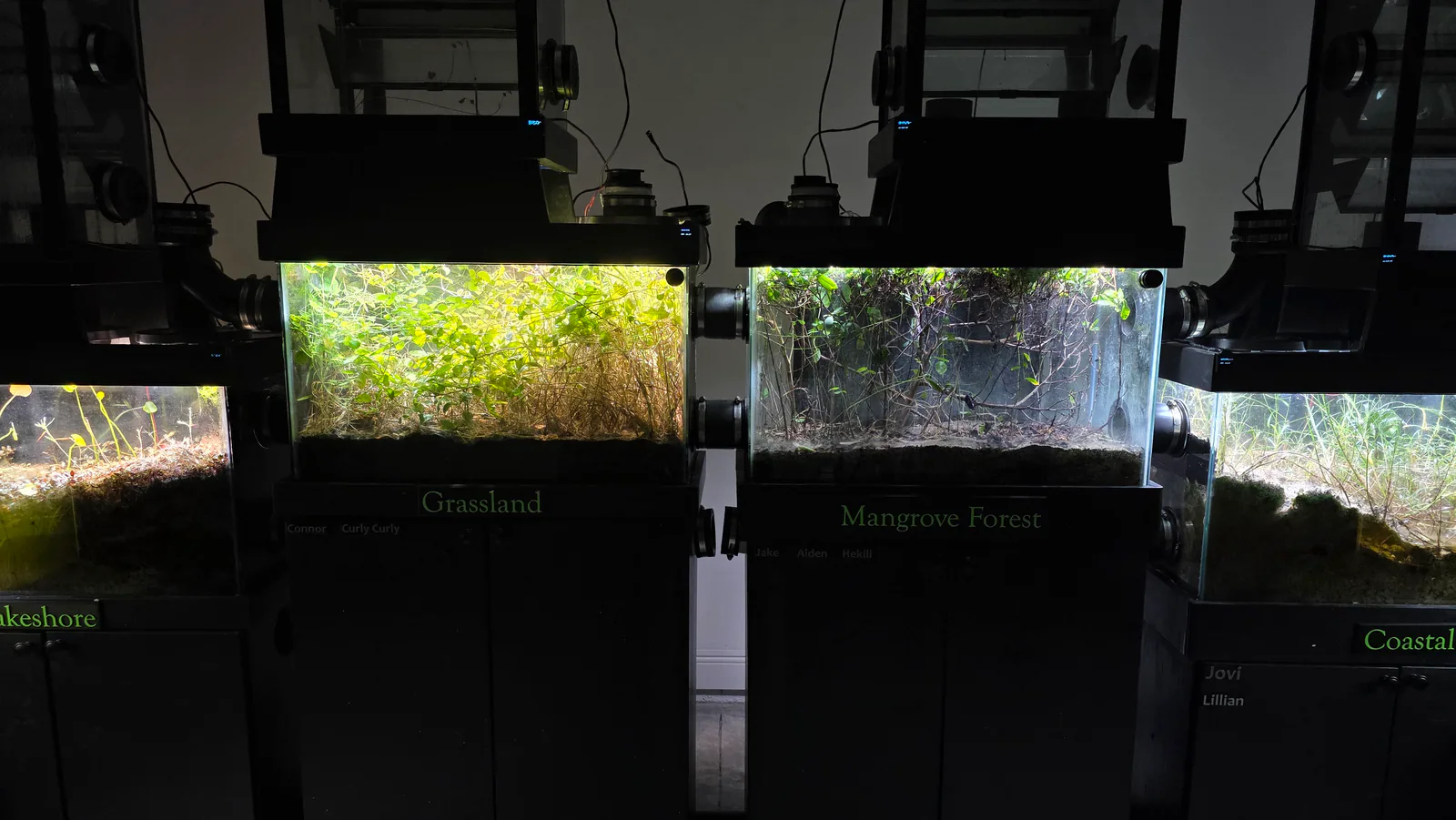
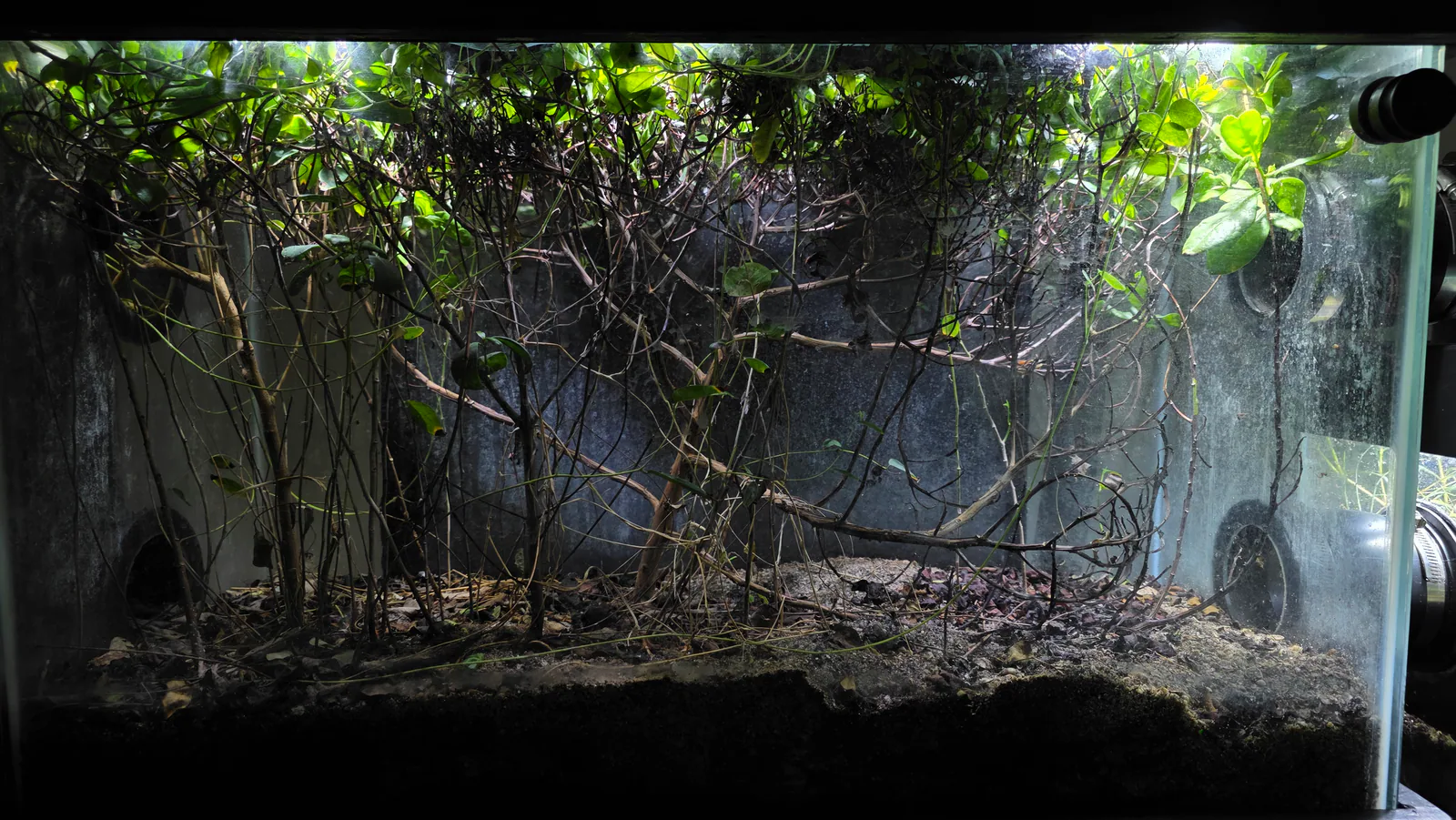
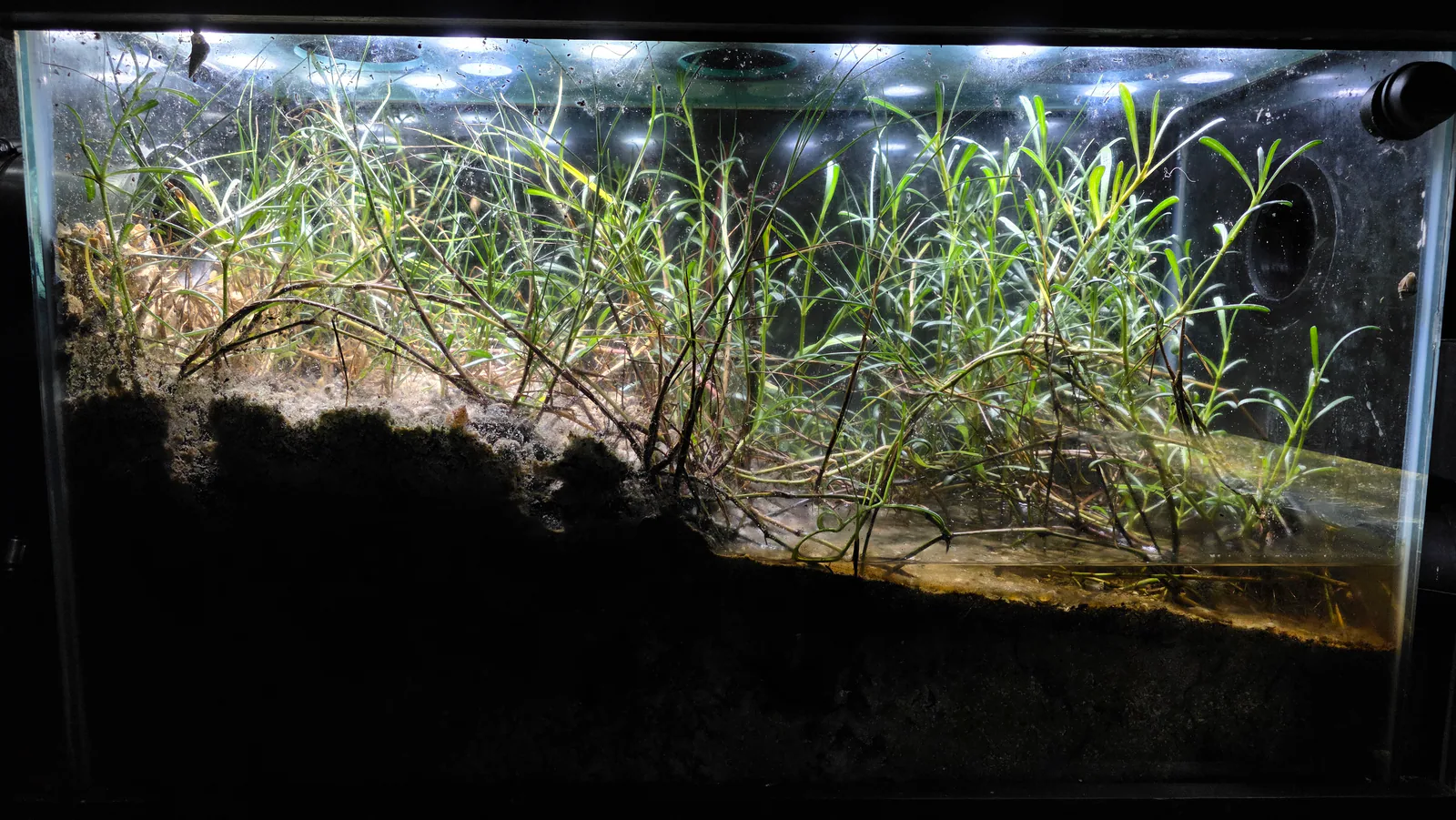
In coastal terrestrial systems (the habitat type miniBIOTA most closely resembles), the terrestrial food web is closely linked to marine inputs. Leaf litter from mangroves enters the adjacent saltwater system as detritus. Intertidal organisms carry marine-derived organic matter above the waterline when they graze biofilm on emergent surfaces. Salt spray and tidal influence shape which plant species survive at the waterline and which cannot. This salt-influence gradient is physically present in the miniBIOTA Terrestrial realm: the Mangrove Forest is salt-influenced and marine-adjacent; the Marine Shore's emergent zone is directly above the saltwater; the Lakeshore is freshwater-adjacent and humid; the Prairie is the driest and most purely terrestrial.
Florida Coastal Terrestrial Context
Florida's coastal terrestrial habitats span a similar gradient to miniBIOTA in compressed form: salt flat and beach strand give way to mangrove forest, which transitions to freshwater wetland edge, then to upland coastal scrub or mesic flatwoods. Each zone in this gradient is defined by the degree of saltwater influence (controlled by elevation, tidal flooding frequency, and wind-driven salt spray), the resulting soil chemistry, and the plant community that can tolerate those conditions.
The miniBIOTA Terrestrial realm uses these environmental and vegetation contrasts as functional habitat context:
- Marine Shore emergent zone: salt-tolerant plants (Seashore Paspalum, Silverhead) and intertidal invertebrates adapted to regular saltwater contact and air exposure
- Mangrove Forest: red, black, and white mangrove trees anchoring the classic Florida coastal transition zone; Florida's most iconic salt-tolerant terrestrial tree community
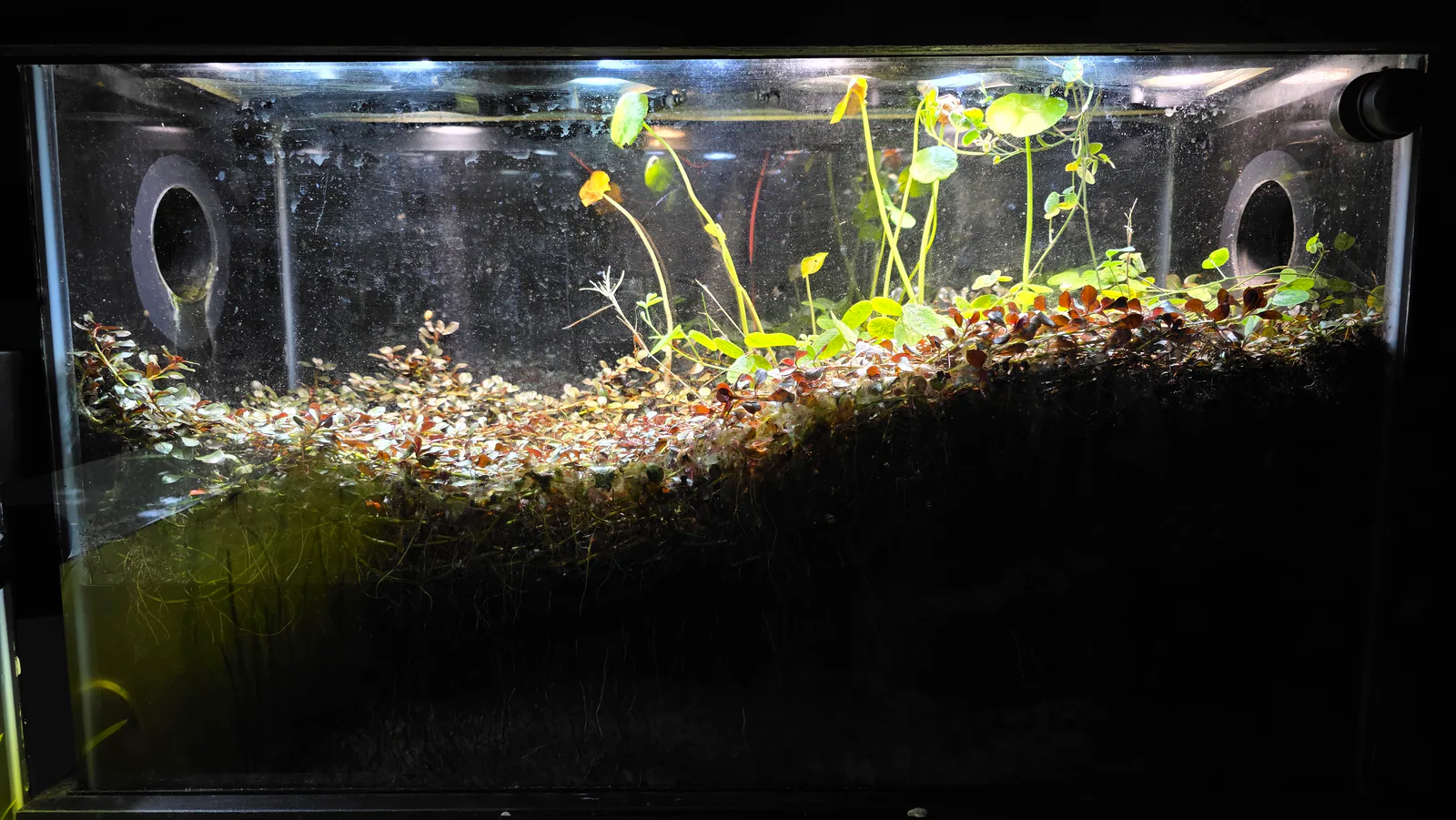
- Lakeshore: freshwater-adjacent, humid, with native Florida shoreline plants (ludwigia, dollarweed, shoreline grasses) characteristic of Florida freshwater edge habitat
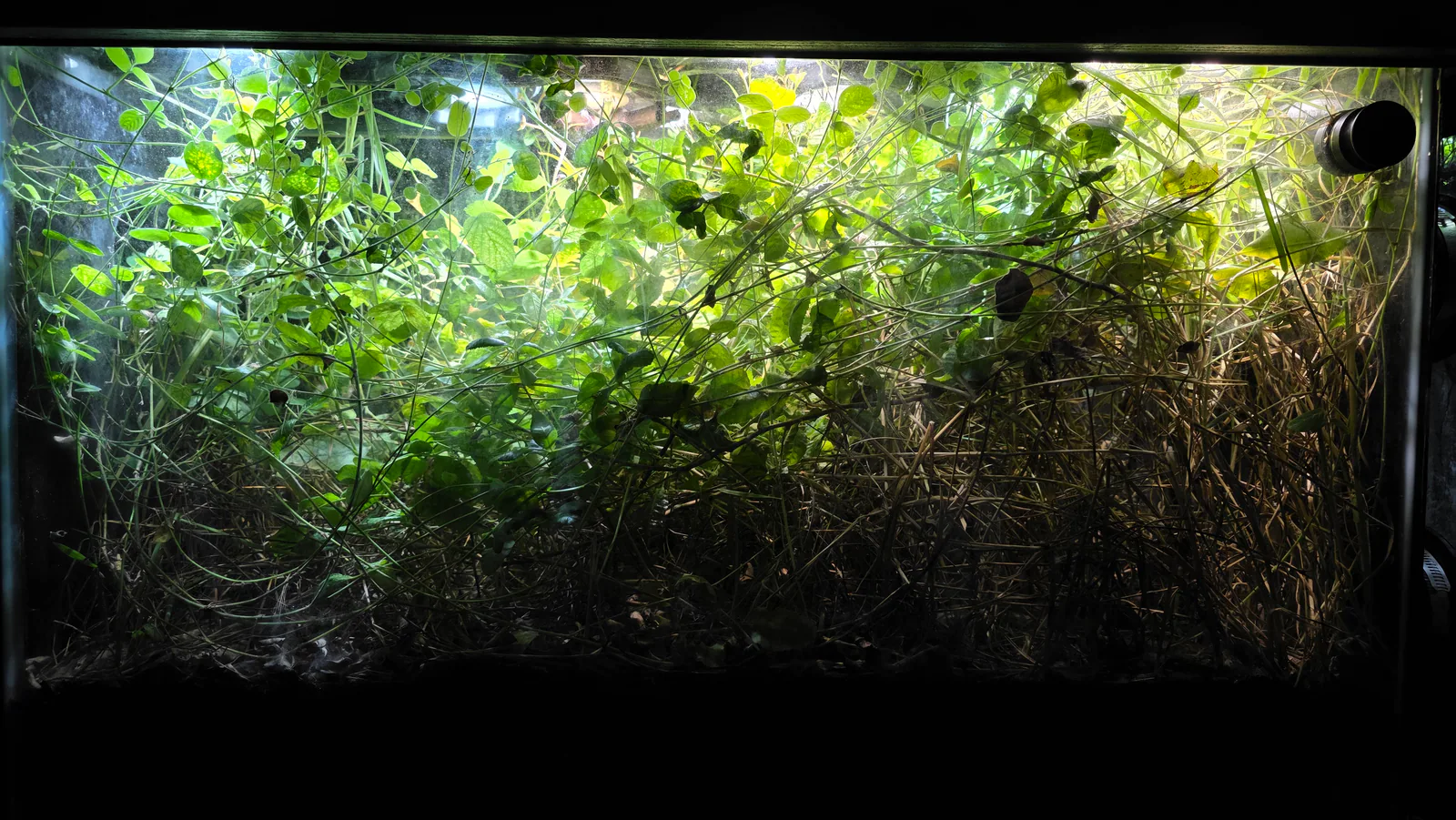
- Prairie: the driest, most upland biome; grasses, Mexican primrose, creeping beggarweed, and broadleaf plants typical of Florida disturbed terrestrial edge
Key Ecological Processes of the Terrestrial Realm
Leaf litter and detritus production: Mangrove trees shed large, waxy leaves at a high rate. This leaf litter is the primary organic input for the Mangrove Forest food web and a key resource for detritivores including Mangrove Tree Crab, Florida Woods Cockroach, isopods, and worms. In the Prairie, plant die-off and grasshopper frass accumulate as detritus in the organic-rich soil, processed by Smoky Oak Millipedes, isopods, springtails, and cockroaches.
Rain-driven plant growth and succession: The miniBIOTA rain system delivers periodic precipitation to four terrestrial biomes from the atmosphere tanks above them. The Terrestrial realm straddles both hydrological sides of the system, and rain feeds each side into a separate subsurface network. On the freshwater side, rain over the Prairie and Lakeshore drains downhill through the Lakeshore toward the Freshwater Lake. On the marine side, rain over the Mangrove Forest and the Marine Shore emergent zone drains downhill from the Mangrove Forest through the Marine Shore toward the Seagrass Meadow. The two subsurface networks do not connect: there is deliberately no subsurface link between the Prairie and the Mangrove Forest, though the two are joined above ground by air and by a normally-dry emergent corridor. Rain-driven plant growth fuels the herbivore and detritivore layers across the realm. The Mole Cricket's burrowing and grass decline in the Prairie reflects the sensitivity of terrestrial plant cover to simultaneous stressors: herbivory, soil disturbance, and moisture variation.
Cross-biome movement as an active process: The Mangrove Tree Crab is the clearest example of a species that treats multiple terrestrial biomes as a single home range. Introduced June 4, 2026, the six true Mangrove Tree Crabs were documented feeding on leaves, detritus, and red mangrove in the Marine Shore, moving through the Mangrove Forest, and ranging through the Lakeshore (June 9, 2026). The Ridgeback Sand Grasshopper similarly ranged across the Marine Shore, Lakeshore, and Lowland Meadow, grazing Ludwigia at the shoreline, plants at the waterline, and grasses in the meadow before its June 2026 extirpation. The Field Cricket, tracked mainly in the Lowland Meadow and Mangrove Forest, was documented in the Lakeshore for the first time on September 1, 2026, feeding on the same shoreline Ludwigia the grasshopper had used. These cross-biome movements carry biomass, frass, and behavioral pressure across what would otherwise be separate food webs.
Predator web activity: The Terrestrial realm supports miniBIOTA's most diverse confirmed predator community: Hentz Striped Scorpion (juveniles documented in Mangrove Forest), Red House Spider (young documented in Mangrove Forest), wolf spider, Common Crypt Ant (Lakeshore alates documented), and ghost ant (Mangrove Forest). This predator community exerts pressure on the detritivore and small invertebrate layer (cockroaches, isopods, beetle larvae) across all terrestrial biomes, though the predator web has not been confirmed as stable or dominant.
Soil building: The Mangrove Forest and Lowland Meadow are both actively building soil organic matter through detritivore processing, root decay, and microbial decomposition. The Mangrove Forest substrate (quartz sand mixed with shell and accumulating organic material) is in early-stage soil development; the Lowland Meadow substrate (dense organic-rich soil with moisture retention) reflects several years of detritivore processing since November 2022.
Herbivory and plant stress: In the Prairie, grass cover is declining under combined pressure from Mole Cricket burrowing and cricket herbivory (grasshopper feeding contributed until both grasshopper species were lost in mid-2026). In the Mangrove Forest, Mangrove Tree Crabs graze red mangrove leaves and litter. In the Marine Shore emergent zone, Mangrove Tree Crab and Mangrove Periwinkle graze biofilm and plant tissue. The Terrestrial realm has more active herbivory relative to its producer base than either the Saltwater or Freshwater realms.