Mesovelia mulsanti

Water Treader

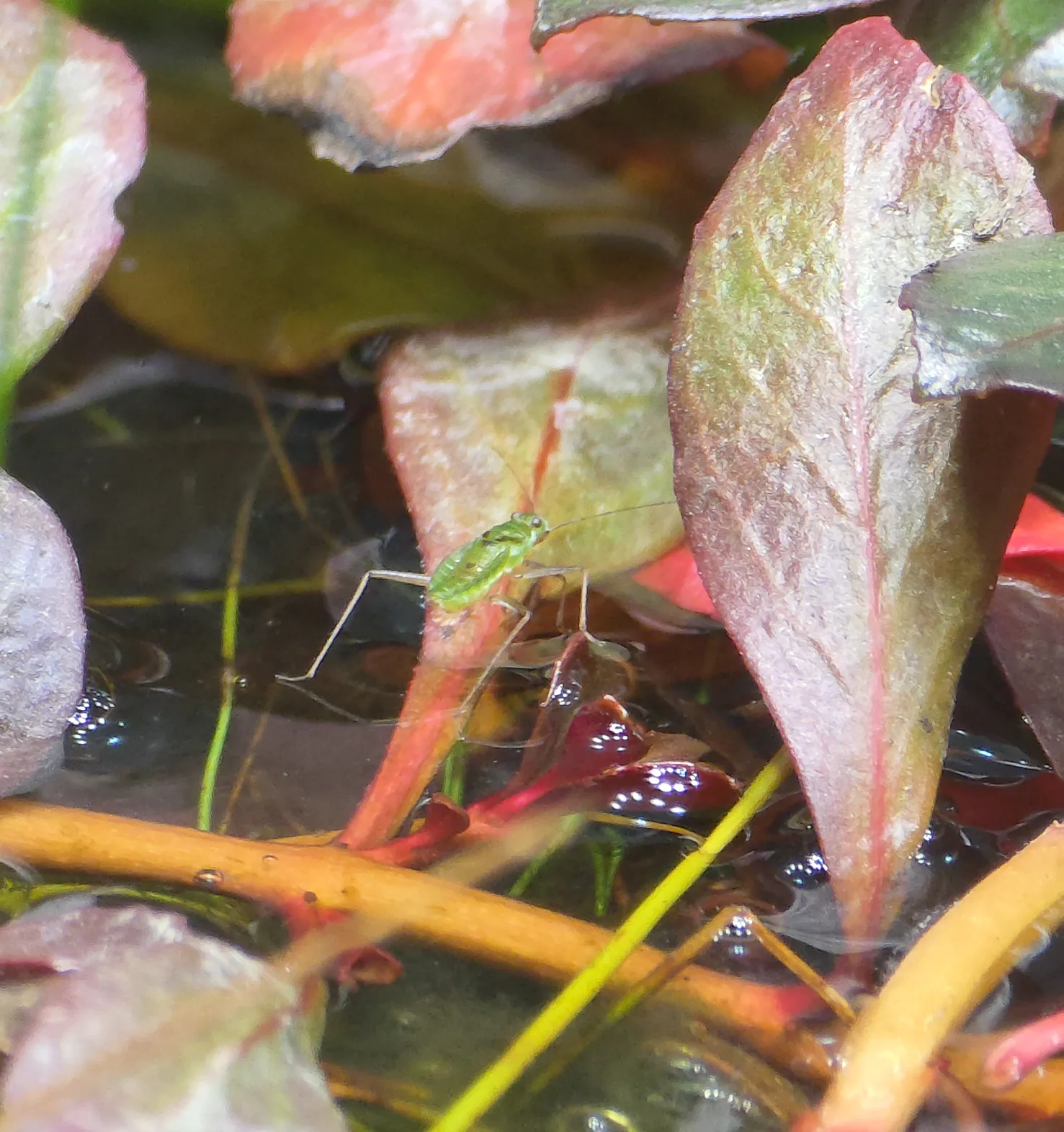
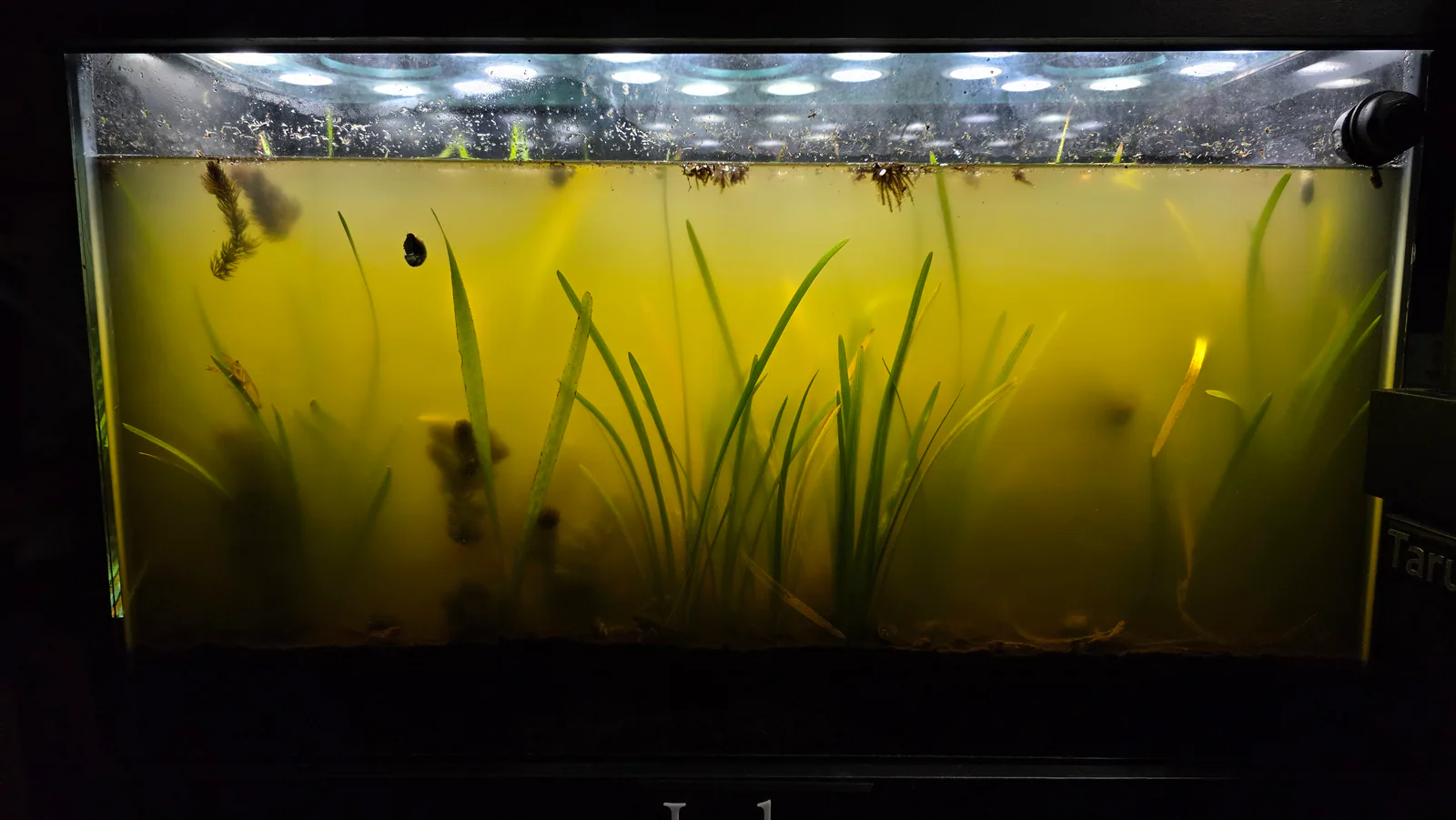
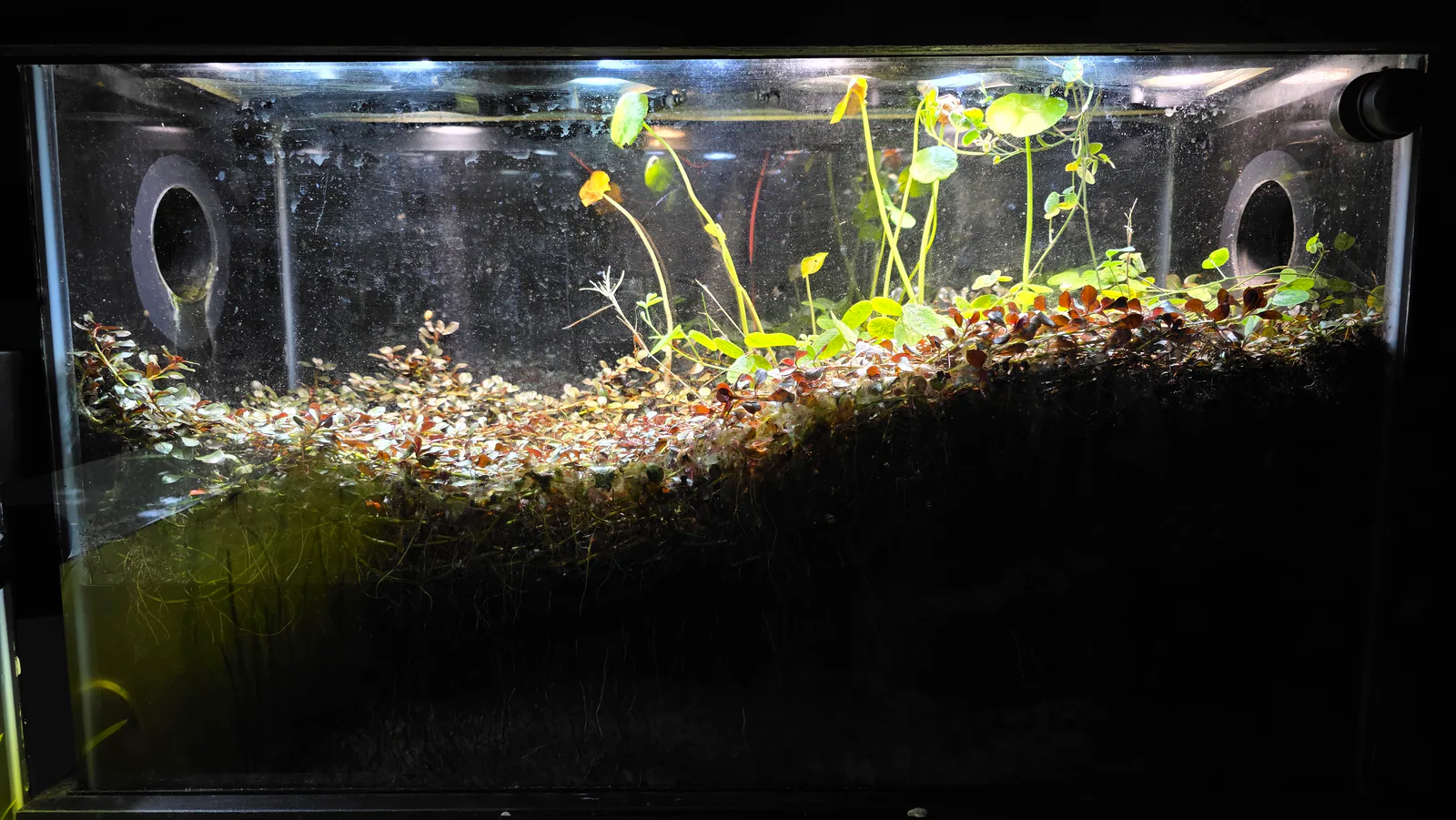
Found walking on the surface film of the Freshwater Lake and Lakeshore, this tiny predatory bug hunts small invertebrates trapped at the water-air boundary.

Visual Data Unavailable

Overview

The water treader (Mesovelia mulsanti) is a tiny semi-aquatic true bug that walks freely on the surface film of still and slow-moving freshwater, hunting small invertebrates trapped at the water-air boundary. It has been present in miniBIOTA since at least February 2025, documented with video evidence skimming the Lakeshore surface in April 2025, and observed on the Freshwater Lake surface as well. Approximately 15 individuals were noted at peak observation. Population status is Uncertain; no reproduction has been documented and the species has not been recorded since July 2025.

Identity

  • Common name: Water Treader
  • Alternate names: Pond treader, water treader bug, mesovelia
  • Scientific name: Mesovelia mulsanti (White, 1879)
  • Identification confidence: Probable species-level. Identified from video observation April 3, 2025. M. mulsanti is the most common Mesovelia species in North America and the expected species in Florida freshwater habitats. Species-level confirmation without microscopy cannot exclude M. amoena or other regional congeners; identification is treated as probable.
  • Uncertainty label: Observed

Taxonomy

  • Kingdom: Animalia
  • Phylum: Arthropoda
  • Class: Insecta
  • Order: Hemiptera
  • Suborder: Heteroptera
  • Family: Mesoveliidae
  • Genus: Mesovelia
  • Species: M. mulsanti (White, 1879)

Natural History

Range and Florida Relevance

Mesovelia mulsanti is distributed across North America, Central America, and parts of South America, and is one of the most widespread semi-aquatic bugs on the continent. In Florida it is a common resident of ponds, lake edges, ditches, and slow freshwater habitats statewide. It is a characteristic member of the surface-film invertebrate community associated with still or slow-moving freshwater and emergent aquatic vegetation. Its presence in miniBIOTA at the Freshwater Lake and Lakeshore is consistent with this ecology.

Habitat

Water treaders are surface-film specialists. They walk on the water surface using hydrophobic tarsal pads, exploiting surface tension rather than swimming or flying. They favor still or slow-moving water, particularly along the vegetated edges of ponds and lakes, where floating debris, plant films, and surface tension remain stable. They are also found on moist shoreline substrate immediately adjacent to the water's edge. Strong surface agitation from waves, currents, or aeration disrupts their surface-film locomotion and is a key environmental constraint. In miniBIOTA, they have been documented at both the Lakeshore margin and on the surface of the Freshwater Lake itself.

Diet

Water treaders are predatory on small invertebrates trapped in the surface film: springtails, chironomid larvae and pupae, mosquito larvae, small crustaceans, and other soft-bodied organisms that become stuck at the water-air boundary. They also scavenge organic particles and microorganisms from the surface. They are not soil feeders; all foraging occurs at or immediately adjacent to the water surface. They use vision to locate prey and pierce it with their piercing-sucking mouthparts (rostrum), injecting saliva and consuming liquefied contents.

Reproduction

Female water treaders use a short ovipositor to insert eggs into plant tissue at or near the water surface. Eggs hatch into nymphs that pass through successive instars before reaching adulthood. Multiple generations per year are possible in Florida's climate. Wing polymorphism is a notable characteristic of Mesovelia populations: some individuals are fully winged (macropterous), others have reduced wings (brachypterous) or lack wings entirely. Wingless forms are common in stable, established populations; winged individuals may indicate recent colonization or dispersal from a source habitat.

Tolerance Ranges

Water treaders require still or slow-moving freshwater with a stable surface film. They are sensitive to surface disturbance and are unlikely to persist on agitated water surfaces. Temperature and pH tolerances in the literature are broad, consistent with Florida's year-round warm freshwater conditions. No miniBIOTA-specific measurements have been taken.

Ecological Role

Water treaders patrol the surface film at the boundary between the aquatic and terrestrial food webs, removing surface-trapped invertebrates, larvae, and microorganisms from this interface. This positions them as a niche predator connecting both realms: their prey may include drowned or stranded terrestrial arthropods as well as aquatic larvae completing their surface stage. As small, slow-moving insects walking on an exposed surface, they are themselves prey for surface-feeding fish and waterline predators. In miniBIOTA, the resident Flagfish (Jordanella floridae) was a probable predator during the Water Treader's documented tenure; Flagfish are known surface feeders and were present in the Freshwater Lake throughout the Water Treader's observed period (February through July 2025). No feeding or predation events were directly documented.

miniBIOTA Evidence

Introduction and History

The water treader was first recorded in miniBIOTA on February 27, 2025. The introduction method and source origin are unknown; the species may have self-colonized or been introduced deliberately. Video documentation from April 3, 2025 confirmed surface-film presence at the Lakeshore, with the observation noting individuals skimming the water surface and prompting photographic and video ID documentation. The species was last recorded July 23, 2025. Approximately 15 individuals were noted at peak observation. No reproduction has been documented. Population persistence after July 2025 is unresolved.

Observation Timeline

  • February 27, 2025: First recorded date in miniBIOTA (DB date_first_introduced). No dedicated observation file; introduction method unknown.
  • April 3, 2025: Insects observed skimming the Lakeshore water surface, identified as Mesovelia mulsanti from video. Photos and video taken for ID.
  • July 23, 2025: Last recorded observation (DB date_last_observed; no dedicated observation file).

What Is Confirmed

  • Water treaders (Mesovelia mulsanti, probable species-level ID from video) present at Lakeshore from at least February 27, 2025.
  • Video documentation of surface-skimming behavior, April 3, 2025.
  • Approximately 15 individuals at peak observation.
  • Last recorded July 23, 2025.
  • Species present on both Freshwater Lake surface and Lakeshore margin.

What Is Inferred

  • Surface-film predation on small trapped invertebrates is inferred from published species biology; no feeding was directly observed in miniBIOTA.
  • The Flagfish, resident in the Freshwater Lake during this period, is a probable predator of the water treader.
  • Population decline after July 2025 may be linked to summer environmental conditions, Flagfish predation, or natural seasonal fluctuation; no evidence distinguishes between these.

What Remains Unknown

  • Whether the species self-colonized or was deliberately introduced.
  • Whether water treaders reproduced in miniBIOTA at any point.
  • Whether the species persists in miniBIOTA after July 2025 at any density.
  • Whether the peak count of approximately 15 individuals represents an established population or a transient colonization event.