
Sparganophilus sp. (unidentified)

Sparganophilus

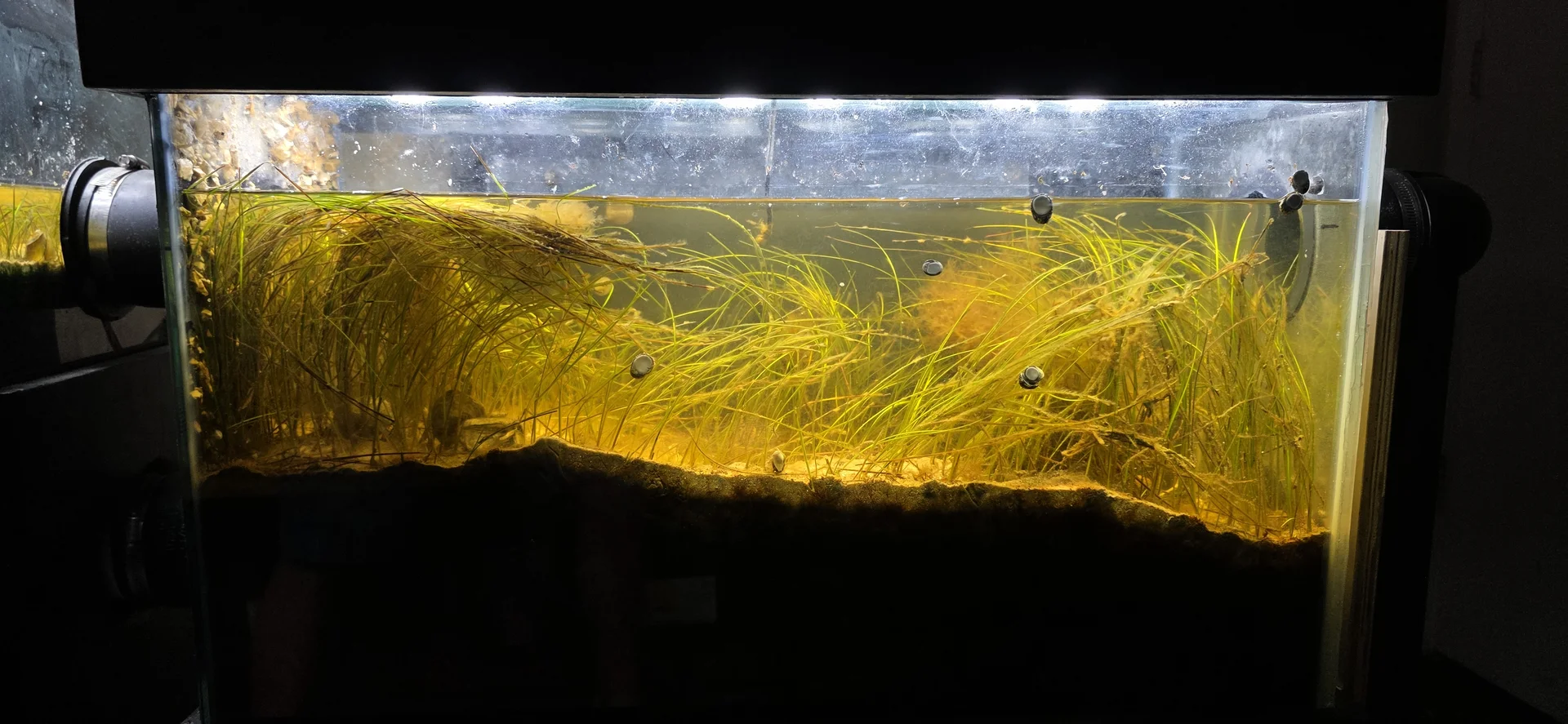
A tube-building worm in the Seagrass Meadow, filmed in December 2024 inside a glass-wall tunnel extending tentacle-like structures to capture food; eleven days later it had left the burrow and was moving in the open, which the observer flagged as possibly a stress response.
Visual Data Unavailable

Overview

A tube-building worm found in the Seagrass Meadow, identified by the observer as Sparganophilus. On December 12, 2024, it was filmed for the first time inside a tunnel constructed against the tank glass, with tentacle-like structures extending outside the tube. On December 23, 2024, the worm had left the burrow and was out in the open; the observer flagged this as unusual behavior, possibly a stress response. The identification is tentative and the "tentacle" feeding behavior described does not match typical oligochaete biology; the possibility that this is a polychaete worm is noted.

Identity

  • Common name: Sparganophilus
  • Alternate names: sparganophilid worm, aquatic earthworm, water earthworm, semi-aquatic worm
  • Scientific name: Sparganophilus sp. (unidentified)
  • Identification confidence: Genus level, tentative. The observer identified the worm as Sparganophilus, but two aspects of the December 2024 observation are not consistent with typical oligochaete (earthworm) biology: (1) tube-building against the tank glass, and (2) "tentacles extending outside to capture prey or food." Earthworms do not extend true tentacles; this behavior is characteristic of sabellid or serpulid polychaetes, which build tubes and extend feathery radioles to filter-feed. The possibility that the miniBIOTA worm is a polychaete rather than Sparganophilus is flagged as an open question. The genus name is retained as the best available identification from the observer's record.
  • Uncertainty label: Observed

Taxonomy

  • Kingdom: Animalia
  • Phylum: Annelida
  • Class: Clitellata (if Oligochaeta); or Polychaeta (if identification is a polychaete; see Identity notes)
  • Order: Haplotaxida (if Oligochaeta)
  • Family: Sparganophilidae (if Oligochaeta)
  • Genus: Sparganophilus (tentative)
  • Species: (unidentified)

Natural History

**If Sparganophilus (Oligochaeta)**

Sparganophilus is a genus of aquatic and semi-aquatic oligochaetes, related to earthworms but adapted to life in or near freshwater. They burrow in soft sediments of streams and riverbanks, and some species can tolerate temporary immersion in water. They are deposit feeders, ingesting sediment and processing organic matter as they burrow, in the manner of most oligochaete worms. Sparganophilus do not build structured tubes (in the architectural sense) and do not extend feeding tentacles; deposit feeding occurs through simple sediment ingestion while burrowing.

Finding Sparganophilus in a marine saltwater environment (Seagrass Meadow) would be highly unusual. The genus is strictly freshwater to semi-aquatic, and saltwater would be inhospitable under natural conditions. This raises the question of whether the miniBIOTA worm was introduced as a freshwater or terrestrial hitchhiker in substrate or plant material and survived in an unexpected location, or whether the identification is incorrect.

If a Polychaete (alternative identification)

Several marine polychaete families build tubes against hard surfaces (including glass) and extend feathery radioles or tentacles from the tube opening to capture suspended particles. Sabellidae (feather duster worms) and Serpulidae (calcareous tube worms) are common in marine systems and are commonly introduced to saltwater aquaria. If the miniBIOTA worm is a tube-building sabellid or serpulid, the December 12, 2024 video description ("tunnel constructed against the glass, tentacles extending outside to capture prey or food") would be entirely consistent with normal behavior. Sabellidae and Serpulidae are suspension filter feeders, not deposit feeders.

The December 23, 2024 observation of the worm "out in the open" and outside its tube is less consistent with sabellid behavior (which are tube-obligate) but could represent a stressed or displaced individual. The observer's own note flags this as unusual.

Ecological Role

If the identification is correct and the worm is an oligochaete, it would function as a sediment deposit feeder in the Seagrass Meadow, processing organic particles and contributing to nutrient cycling in the substrate. This role would complement Hair Worm, Southern Lugworm, and other Seagrass Meadow infaunal worms.

If the worm is a tube-building polychaete, its role would be as a suspension filter feeder, drawing suspended particles from the water column, an ecologically distinct role closer to the barnacle and mussel community than to the deposit-feeding guild.

miniBIOTA Evidence

Introduction

No introduction record is on file. The worm was first observed on December 12, 2024, building a tunnel against the Seagrass Meadow glass. No deliberate introduction is documented; the worm most likely arrived as a hitchhiker in seagrass, substrate, or live rock material.

Observation Timeline

  • December 12, 2024: Worm filmed for the first time inside a tunnel constructed against the Seagrass Meadow glass. Tentacle-like structures extending outside the tunnel opening, described by observer as capturing prey or food. Observer notes: "Questions remain: what does it feed on and how do the tentacles function?" Video recorded.
  • December 23, 2024: Worm (likely the same individual) observed leaving the burrow and moving in the open. Observer flagged this as unusual: "unclear if natural or a stress response to its environment." Monitoring noted. No video for this observation.

What Is Confirmed

  • One worm present in the Seagrass Meadow in December 2024.
  • Tube/tunnel constructed against the Seagrass Meadow glass; video December 12, 2024.
  • Structures described as tentacles extending from the tube; behavior described as consistent with capturing food.
  • Worm left the tube and moved in the open by December 23, 2024; observer noted this as potentially a stress response.
  • No observations on file after December 23, 2024.

What Is Inferred

  • The worm arrived as a hitchhiker rather than a deliberate introduction.
  • The December 23 open-substrate movement may represent a stress response, consistent with an organism outside its optimal environment.
  • No follow-up observation is recorded; current status is unknown.

What Remains Unknown

  • Whether the worm persisted after December 23, 2024.
  • Whether the identification as Sparganophilus is correct, or whether this is a tube-building polychaete.
  • What the "tentacle" structures are: if Oligochaeta, these may be the prostomium (head) or prostomial sensory structures, but not true tentacles in the polychaete sense.
  • How the worm arrived in the Seagrass Meadow.