Cirratulidae sp. (unidentified)

Hair Worm

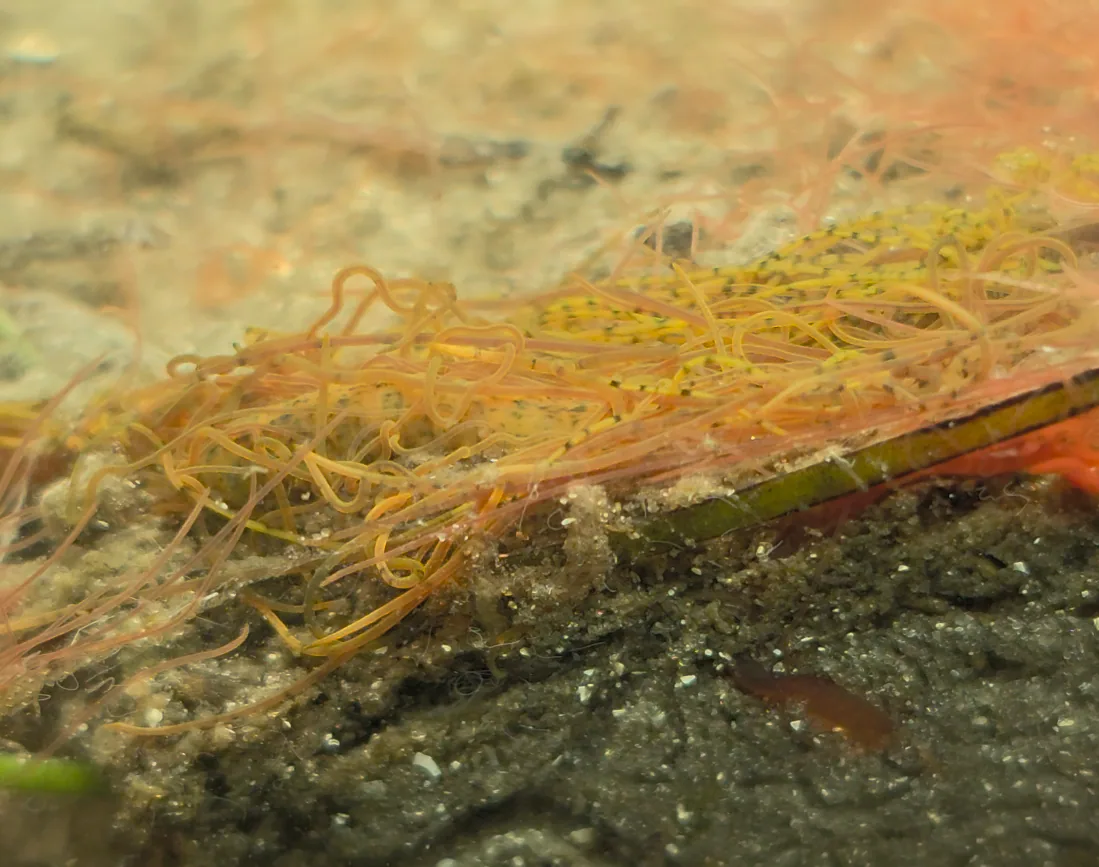
A soft-bodied polychaete buried in the Seagrass Meadow sediment that extends dozens of thread-thin cirri across the substrate surface to collect organic particles and absorb oxygen -- family Cirratulidae, genus unresolved among Cirratulus, Cirriformia, and Timarete.

Visual Data Unavailable

Overview

Hair Worm is a placeholder node for an unidentified cirratulid polychaete observed in miniBIOTA's Seagrass Meadow -- a soft-bodied worm that extends numerous long, hair-thin cirri across the sediment surface to collect organic particles and exchange oxygen. The database records three candidate genera (Cirratulus, Cirriformia, and possibly Timarete), none confirmed to species. No introduction date, population count, or observation file is on record.

Identity

  • Common name: Hair Worm
  • Alternate names: cirratulid worm, tentacled worm, bristle worm, thread worm
  • Scientific name: Cirratulidae sp. (unidentified)
  • Identification confidence: Family-level. Family Cirratulidae is inferred from the common name and the genera listed in the database record. Three candidate genera are noted: Cirratulus (common in US estuaries), Cirriformia (similar; also estuarine), and Timarete (noted as "once spotted"; less common in Atlantic/Gulf systems). Genus and species are unresolved without specimen examination.
  • Uncertainty label: Unknown. Family-level placement is reasonable; genus and species are unresolved.

Taxonomy

  • Kingdom: Animalia
  • Phylum: Annelida
  • Class: Polychaeta
  • Order: Terebellida
  • Family: Cirratulidae
  • Genus: Unresolved (Cirratulus, Cirriformia, or Timarete suspected)
  • Species: Unresolved

Natural History

Range and Florida Relevance

Family Cirratulidae is cosmopolitan in soft-sediment marine and estuarine habitats worldwide. In Florida, cirratulid polychaetes are common members of seagrass bed and estuarine infaunal communities, living buried in sandy and muddy substrate with their cirri extending across the sediment surface. Cirratulus and Cirriformia are the dominant cirratulid genera in US Atlantic and Gulf estuaries; Timarete is more common in Pacific settings but has been recorded in Gulf habitats.

Habitat

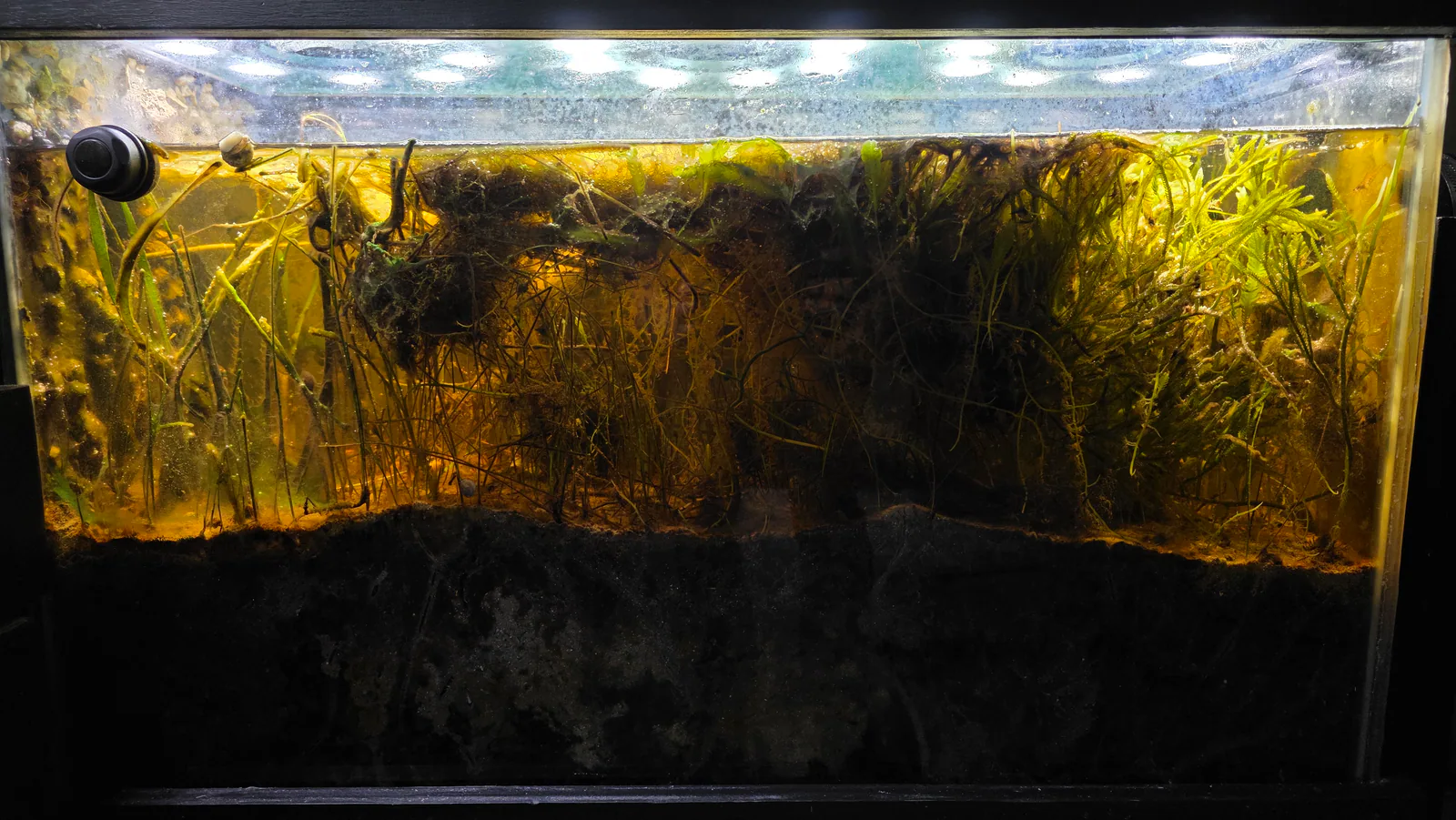
Cirratulid polychaetes live partially or fully buried in soft sediment, typically in sandy to muddy substrate with organic enrichment. The body is buried in the substrate while long, thread-like cirri (which function simultaneously as gills and food-collection organs) extend outward across the sediment surface. In miniBIOTA's Seagrass Meadow, this species would be expected in the soft sandy substrate and among the rhizome mats of the seagrass bed.

Diet

Cirratulid polychaetes are deposit feeders and surface collectors. The cirri extending across the sediment surface collect fine organic particles, bacteria, and detritus. Food is transported along the cirri to the mouth by ciliary action. Some species also ingest bulk sediment, digesting the organic fraction and passing mineral grains. This feeding mode complements Trumpet Worm (id 31) and Southern Lugworm (id 100) in the benthic infaunal deposit-feeding guild.

Reproduction

Cirratulids reproduce sexually via broadcast spawning; some species also reproduce asexually through fragmentation of the body. No reproductive observations have been made in miniBIOTA.

Tolerance Ranges

Marine to estuarine, tolerating a range of salinities and low-oxygen conditions common in soft sediment environments. Specific tolerance ranges for miniBIOTA conditions have not been measured.

Ecological Role

Hair Worm is a deposit feeder and sediment bioturbator in the Seagrass Meadow, occupying a similar ecological niche to Trumpet Worm (id 31) and Southern Lugworm (id 100). Its cirri extend across the sediment surface in a fine network of organic-particle collectors, functioning as both a feeding structure and a gas exchange surface. Dense cirratulid populations can visibly carpet sediment surfaces with their extended cirri, a phenomenon common in organically rich estuarine sediment.

miniBIOTA Evidence

Introduction Context

No introduction date, source, or method is on record. Cirratulid polychaetes are common hitchhikers in sandy substrate, live rock, and seagrass rhizome material. Arrival with an early saltwater introduction is the most probable pathway.

Observation Timeline

No observation files found.

What Is Confirmed

  • Hair Worm (Cirratulidae sp., unidentified) is present as a database node in miniBIOTA, with three candidate genera noted.

What Is Inferred

  • Family Cirratulidae, based on the genera listed in the database record and the common name.
  • Deposit-feeding role in the Seagrass Meadow substrate, consistent with cirratulid biology.
  • Arrival via sandy substrate or live rock with an early saltwater introduction.

What Remains Unknown

  • Genus and species.
  • Introduction date, source, and method.
  • Whether the species is currently present.
  • Population size at any point.