
Pectinaria gouldii

Trumpet Worm

Living head-down in a distinctive cone of cemented sand grains in the Seagrass Meadow substrate, this polychaete uses golden bristle-tipped tentacles to sort and collect organic particles from the sediment immediately surrounding its cone opening.
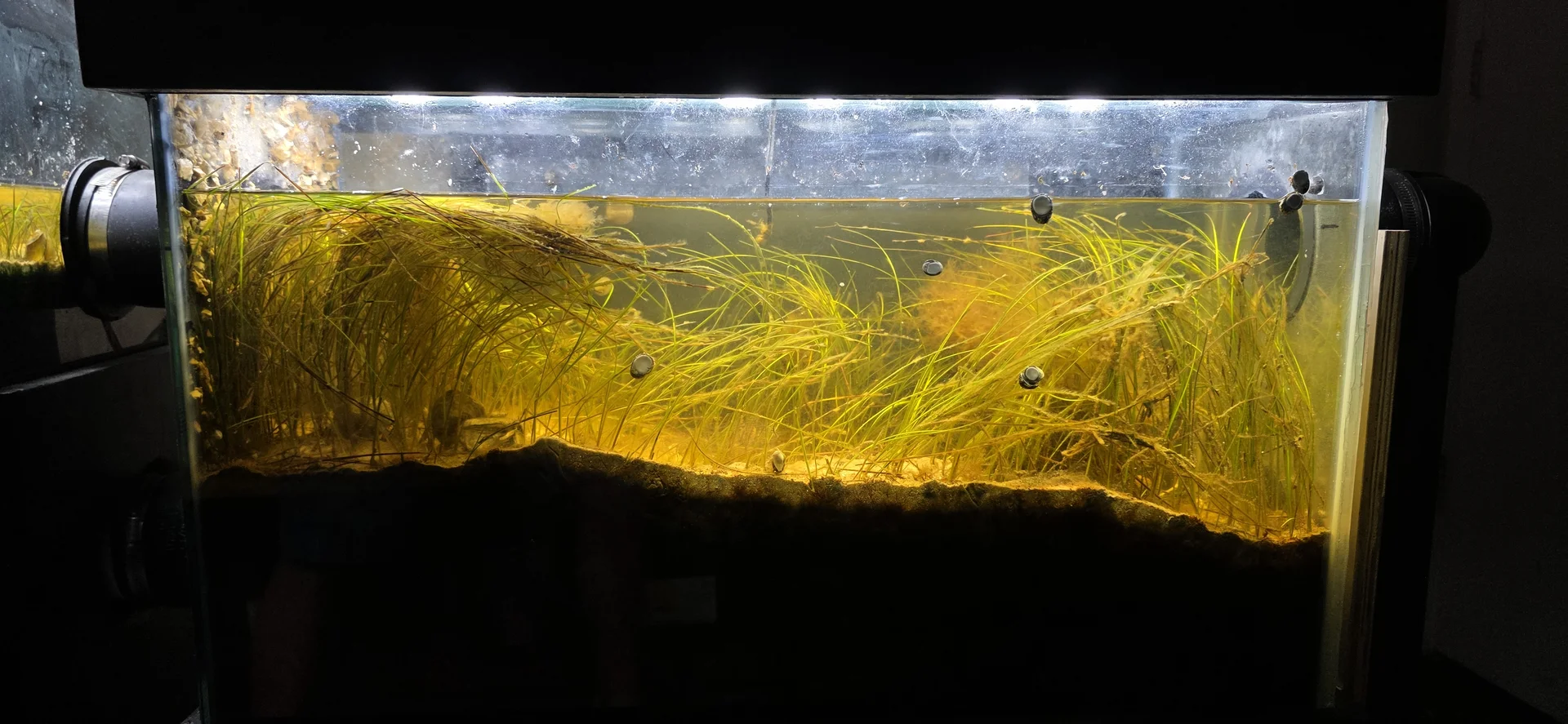
Visual Data Unavailable

Overview

The Trumpet Worm (Pectinaria gouldii) is a tube-building polychaete that constructs a distinctive cone from individual sand grains, each grain cemented in place, and lives within it head-down in the sediment. It is a deposit feeder, using golden bristle-tipped tentacles to sort organic particles from the sandy substrate around its cone opening. No introduction date, source, or dedicated observation is on record; presence in miniBIOTA is noted in the database but not documented by a specific observation event.

Identity

  • Common name: Trumpet Worm
  • Alternate names: cone worm, ice cream cone worm, Gould's trumpet worm
  • Scientific name: Pectinaria gouldii
  • Identification confidence: Species-level. Pectinaria gouldii is inferred from the common name and is the primary Pectinaria species of the US Atlantic and Gulf coasts. The iconic sand-grain cone tube is sufficient for genus-level confirmation on sight.
  • Uncertainty label: Uncertain. Species ID is reasonable; presence and population status in miniBIOTA are undocumented.

Taxonomy

  • Kingdom: Animalia
  • Phylum: Annelida
  • Class: Polychaeta
  • Order: Terebellida
  • Family: Pectinariidae
  • Genus: Pectinaria
  • Species: P. gouldii

Natural History

Range and Florida Relevance

Pectinaria gouldii is native to the western Atlantic coast from Canada south through the Gulf of Mexico and Caribbean. It is common throughout Florida's coastal sandy and muddy sediment habitats, including seagrass beds, tidal flats, and estuarine bottoms. The species is widespread in Florida estuaries and is a standard component of marine sandy-bottom infaunal communities.

Habitat

Trumpet Worm inhabits sandy and sandy-muddy subtidal and intertidal sediment. It lives head-down inside its cone tube, with the wide end of the cone at or just below the sediment surface and the narrow pointed end pointing up. The worm uses golden tentacle-like chaetae (bristles) at its head end to collect and sort sediment particles, consuming organic-rich grains and passing coarser mineral sand through its gut. The cone is mobile -- the worm carries it wherever it moves.

Diet

Pectinaria gouldii is a deposit feeder. It sorts organic particles from the sediment using prehensile tentacle-like chaetae, selectively ingesting organic-rich sediment and depositing cleaner mineral sand behind it. Dietary inputs include sedimented detritus, bacteria, microalgae, decaying organic matter, and fine organic particles embedded in the substrate. This is deposit feeding, not filter feeding; the worm does not draw water through its tube to collect suspended particles.

Reproduction

Pectinaria gouldii reproduces seasonally. Adults release gametes; larvae are planktonic before settling and building their first cone tube. No reproductive observations have been made in miniBIOTA.

Tolerance Ranges

Marine to estuarine species tolerating a range of salinities. Found in full marine to moderate estuarine salinities along the US coast. No specific tolerance measurements taken for miniBIOTA.

Ecological Role

Trumpet Worm contributes to sediment turnover and nutrient cycling in the Seagrass Meadow substrate. As a deposit feeder ingesting and sorting organic-rich sediment, it processes organic matter and passes reworked sediment, aerating the substrate and accelerating the decomposition of buried organic particles. This bioturbation function is shared with the Southern Lugworm (Arenicola cristata, id 100), though via a different mechanism: Lugworm creates J-shaped burrows and irrigates them with water, while Trumpet Worm carries a portable cone and selectively picks at sediment particles.

miniBIOTA Evidence

Introduction Context

No introduction date, source, or method is on record. No dedicated observation event is documented for this species. Presence is noted in the database but undocumented by a specific observation.

Observation Timeline

No observation files found.

What Is Confirmed

  • Trumpet Worm (Pectinaria gouldii) is present as a database node in miniBIOTA.

What Is Inferred

  • Likely present in or on the sandy sediment of the Seagrass Meadow, consistent with the species' habitat requirements.
  • Likely arrived via sandy sediment or live rock material during an early saltwater introduction, given the absence of any deliberate introduction record.

What Remains Unknown

  • Introduction date, source, and method.
  • Whether the species is currently present in the system.
  • Population size at any point.
  • Whether reproduction has occurred.