Hydra viridissima

Hydra

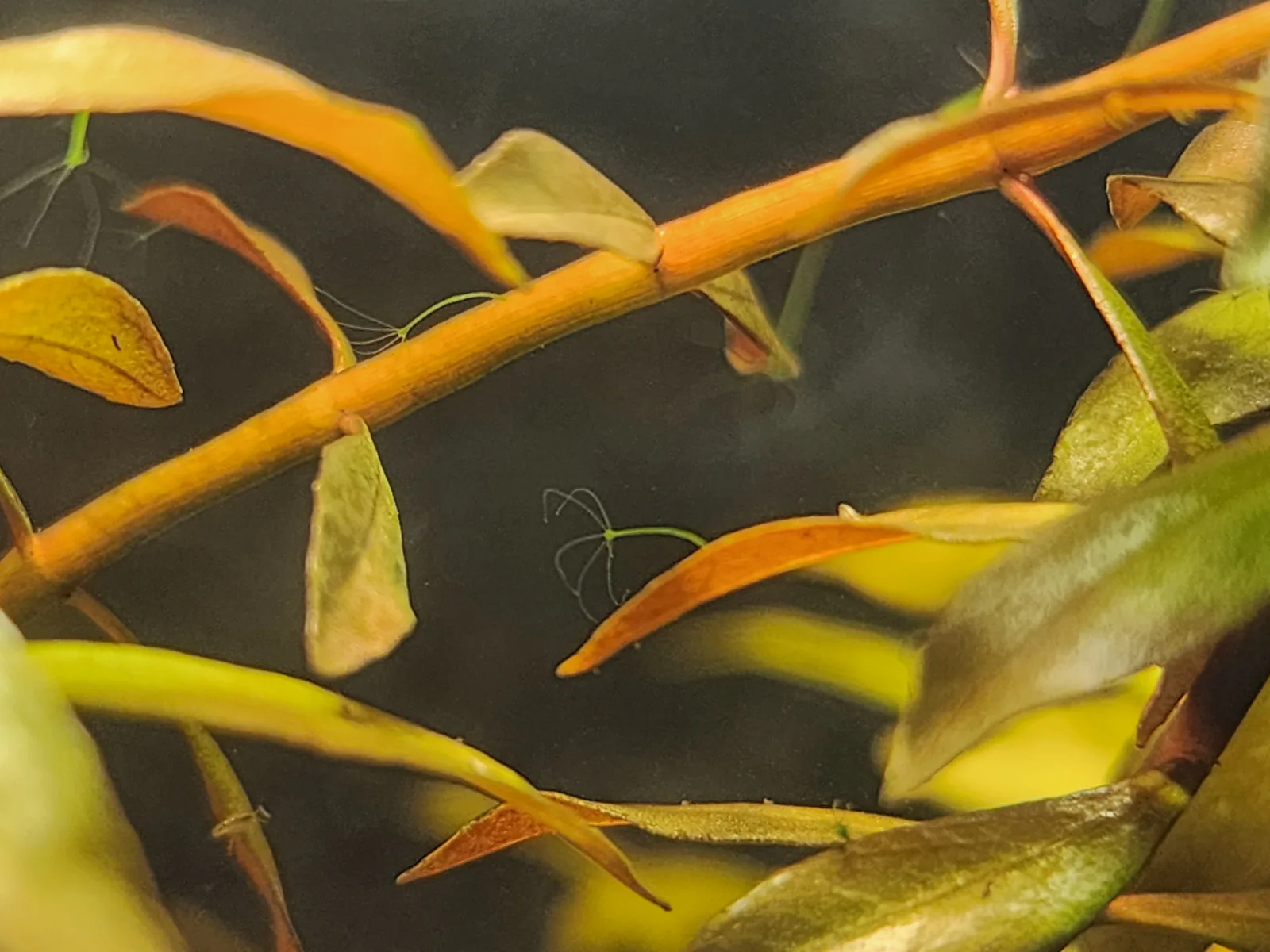
A tiny freshwater predator with stinging tentacles, the green hydra anchors to surfaces in the Freshwater Lake and ambushes passing water fleas and copepods, harboring photosynthetic algae in its cells that give it a distinctive green color.

Visual Data Unavailable

Overview

A tiny freshwater cnidarian predator (Hydra viridissima) listed in the Freshwater Lake biome. The green hydra is distinguished from other Hydra species by endosymbiotic green algae (Chlorella) living in its cells, giving it a distinctive green color and supplementing its energy through photosynthesis. No dedicated observation file has been archived; introduction date, source, and current status are all unknown.

Identity

| Field | Value | |---|---| | Common name | Hydra | | Alternate names | Green hydra, freshwater hydra, pond hydra | | Scientific name | Hydra viridissima | | miniBIOTA ID | 121 | | Slug | hydra | | ID confidence | Species level | | Uncertainty label | Uncertain | | Identity notes | Hydra viridissima, the green hydra, identified at species level from the DB record. The species-level identification is plausible: the green color from symbiotic Chlorella algae is a distinctive visual feature, and H. viridissima is one of the most common Hydra species in freshwater aquarium and pond systems. No observation file directly confirms the identity or presence of this species in the Freshwater Lake. The alternate name "budding hydra" has been removed; budding is a reproductive behavior shared by all Hydra species, not a distinguishing name for this one. |

Taxonomy

| Rank | Name | |---|---| | Kingdom | Animalia | | Phylum | Cnidaria | | Class | Hydrozoa | | Order | Anthoathecata | | Family | Hydridae | | Genus | Hydra | | Species | Hydra viridissima |

Natural History

Hydra are small freshwater cnidarians related to sea anemones and jellyfish. A single polyp consists of a basal adhesive disk, a cylindrical body column typically 2 to 15 millimeters long when extended, and a ring of 5 to 8 tentacles surrounding a central mouth. The tentacles are covered in stinging cells called nematocysts: each cell fires a coiled, barbed thread on contact that penetrates prey and delivers a paralyzing toxin. This allows Hydra to capture and subdue animals far larger and more active than itself.

Hydra viridissima, the green hydra, is distinguished from other Hydra species by its color. The green pigmentation comes from endosymbiotic green algae of the genus Chlorella that live inside the gastrodermal cells of the body column. This is a genuine mutualistic symbiosis analogous to the zooxanthellae that give tropical corals their color: the Chlorella photosynthesize, providing the hydra with sugars and oxygen, while the hydra provides the algae with CO2, nitrogen waste products, and shelter from grazers. This symbiosis allows H. viridissima to survive extended periods of low prey availability by deriving energy from light, a trait that distinguishes it from non-symbiotic Hydra species.

Hydra prey on water fleas, copepods, small aquatic worms, midge and mosquito larvae, and other small invertebrates. Feeding behavior is straightforward: the animal extends its tentacles into the water column; when a prey organism contacts a tentacle, nematocysts discharge, immobilizing the prey; the tentacle bends toward the mouth, and the prey is ingested whole. A single Hydra can catch several prey items per day when food is abundant.

Hydra reproduction is primarily asexual through budding: small lateral projections grow from the body column, develop tentacles and a mouth, and detach as independent polyps. Under good conditions (warm water, abundant food), a single individual can produce a new bud every two to three days, enabling rapid population growth. Sexual reproduction occurs under environmental stress: individuals develop gonads, producing eggs and sperm; fertilized eggs form an encased resting stage that can survive harsh conditions and resume development when conditions improve. This resting stage is also the primary means of dispersal between water bodies, typically in the gut of waterfowl or attached to aquatic plants.

In natural systems, Hydra are found attached to submerged vegetation, glass, rocks, and any stable submerged surface in clean, slow-moving or still freshwater. They do well in neutral to slightly alkaline water with adequate light (for the algal symbiont) and moderate temperatures. They are sensitive to many common aquarium treatments, pesticides, and heavy metals, which has made them a standard laboratory toxicity bioassay organism.

Expected lifespan is biologically unusual: under normal conditions, Hydra show no measurable senescence (biological aging) and appear to be potentially immortal if conditions are maintained. In practice, individual polyps are killed by predation, desiccation, and adverse conditions, so they do not live forever in natural systems, but the absence of age-related decline is a scientifically documented and remarkable trait.

Ecological Role

In freshwater food webs, Hydra occupy a predatory niche at the boundary between primary and secondary consumers. They prey primarily on copepods and water fleas, which are themselves primary consumers, placing Hydra at the secondary consumer level. At the same time, the Chlorella symbiont provides a degree of autotrophy (self-feeding through photosynthesis), giving H. viridissima an unusual dual trophic status: it is simultaneously a predator and partially autotrophic through its algal partner.

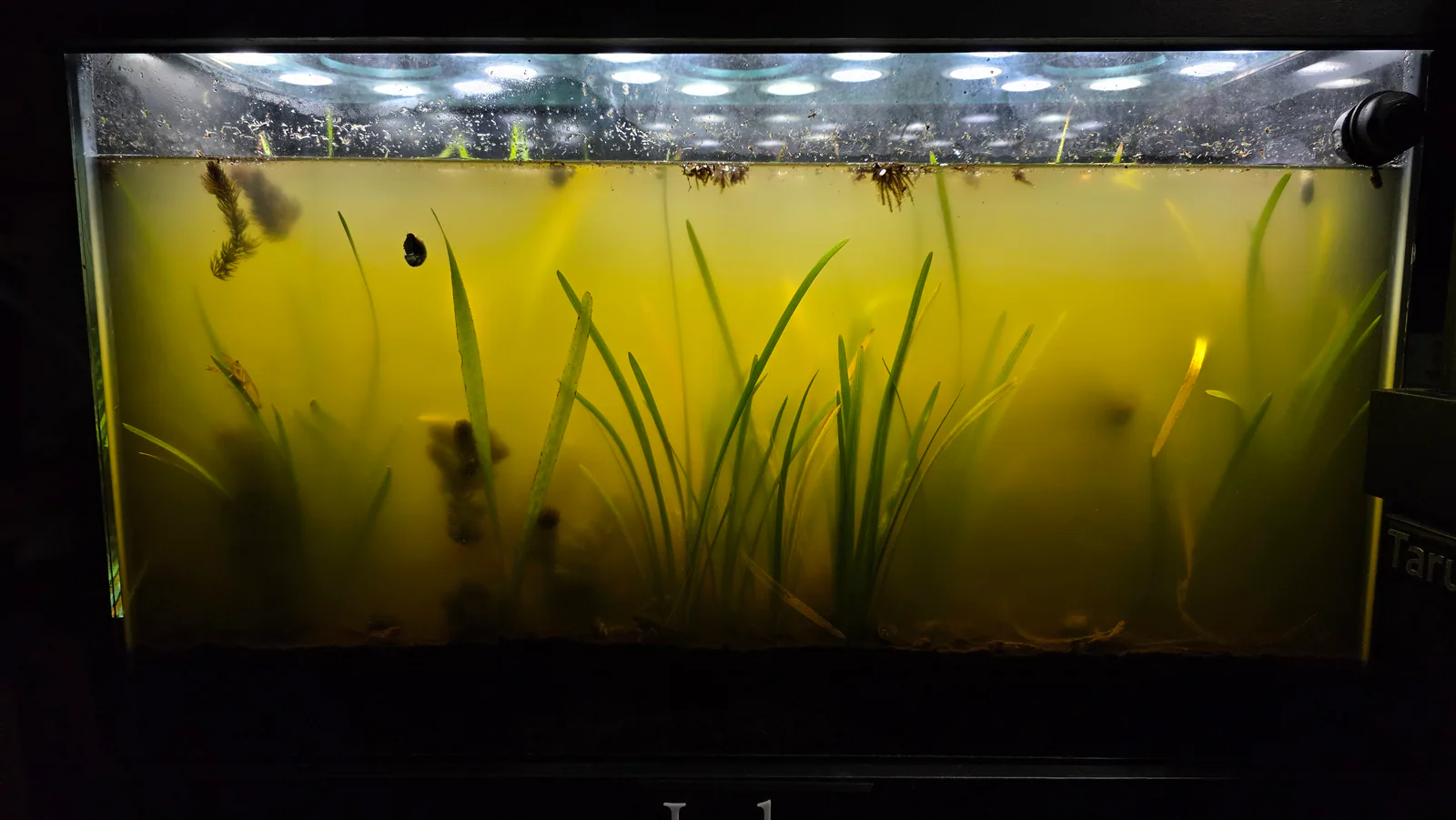
In the Freshwater Lake, the presence of Hydra would connect the zooplankton layer (water fleas, copepods) to a benthic predator attached to tapegrass, glass, and substrate. Hydra attached to tapegrass fronds or glass walls would extend their tentacles into the water column and capture passing microcrustaceans. If the Hydra population were large enough, they could exert meaningful predation pressure on the zooplankton community, similar in direction to (but smaller in scale than) fish predation from Flagfish.

The Chlorella symbiosis also makes H. viridissima uniquely suited to an illuminated, low-nutrient closed system: when prey is scarce, the symbiotic algae can sustain the animal through photosynthesis, making it more resilient to starvation than non-symbiotic cnidarian predators.

Hydra are a common hitchhiker on aquatic plants. If they arrived with a tapegrass addition or other freshwater plant introduction, they may have been present in the Freshwater Lake for some time without being specifically documented, appearing to a casual observer as small green specks on the glass or plant surfaces that could easily be overlooked.

miniBIOTA Evidence

Introduction context: Unknown. No introduction record, source origin, or observation file has been archived specifically for Hydra in miniBIOTA. Hydra are frequent hitchhikers on aquatic plant material, tapegrass being a likely carrier if introduction occurred via a freshwater plant addition. They can also arrive as resting eggs in freshwater sample material.

Observation timeline: No observations archived.

Confirmed: A Hydra viridissima species row exists in the miniBIOTA database with an active node assignment in the Freshwater Lake biome.

Inferred: Arrival as a hitchhiker on aquatic plant material or freshwater sample is the most plausible introduction pathway. If present, individuals would attach to tapegrass, glass walls, and substrate in the Freshwater Lake.

Unknown:

  • Whether Hydra are currently present in the Freshwater Lake
  • When and how they entered the system
  • Whether the symbiotic Chlorella algae are present in the individuals in miniBIOTA
  • What the population size is at any point
  • Whether they have been observed casually without being formally documented