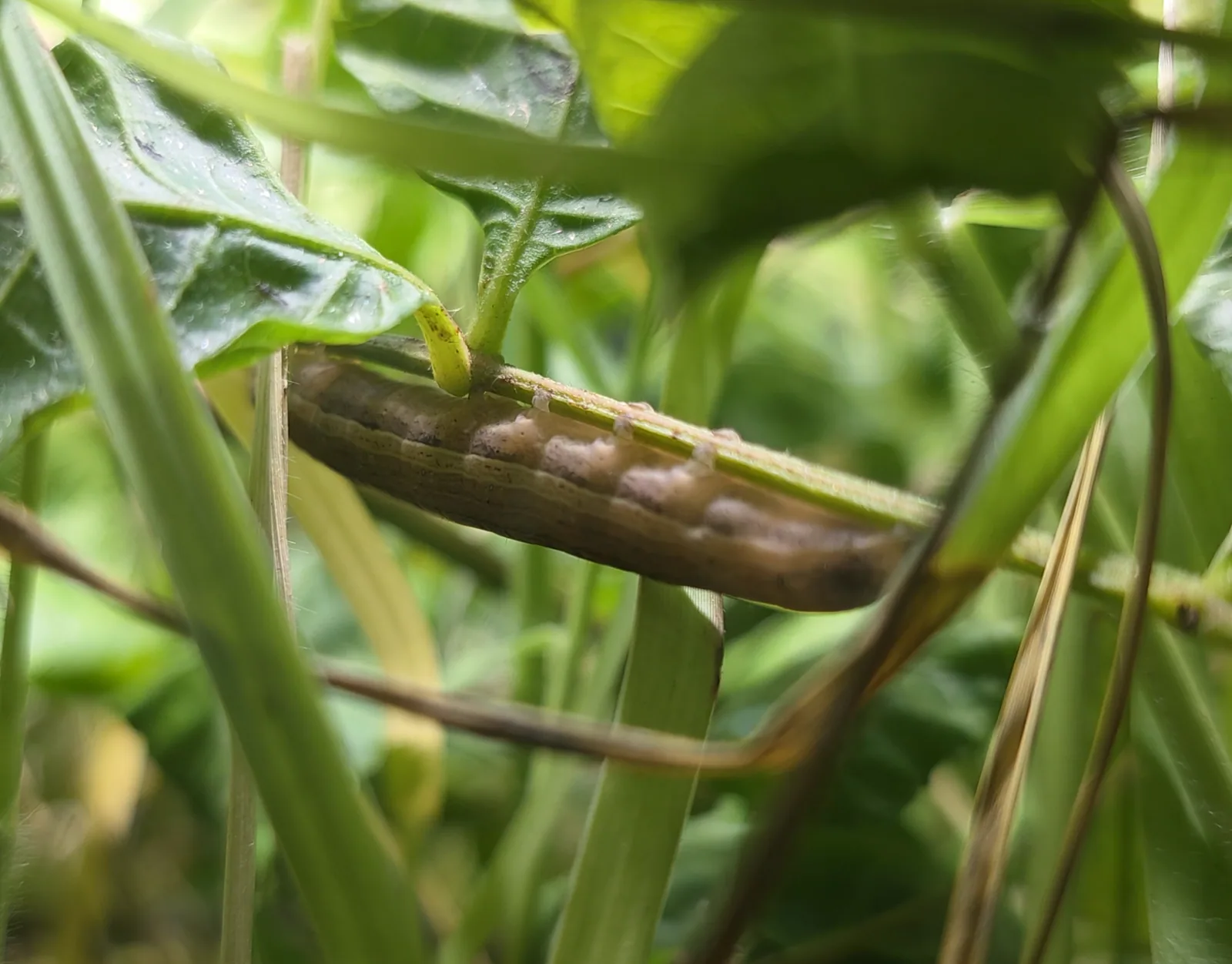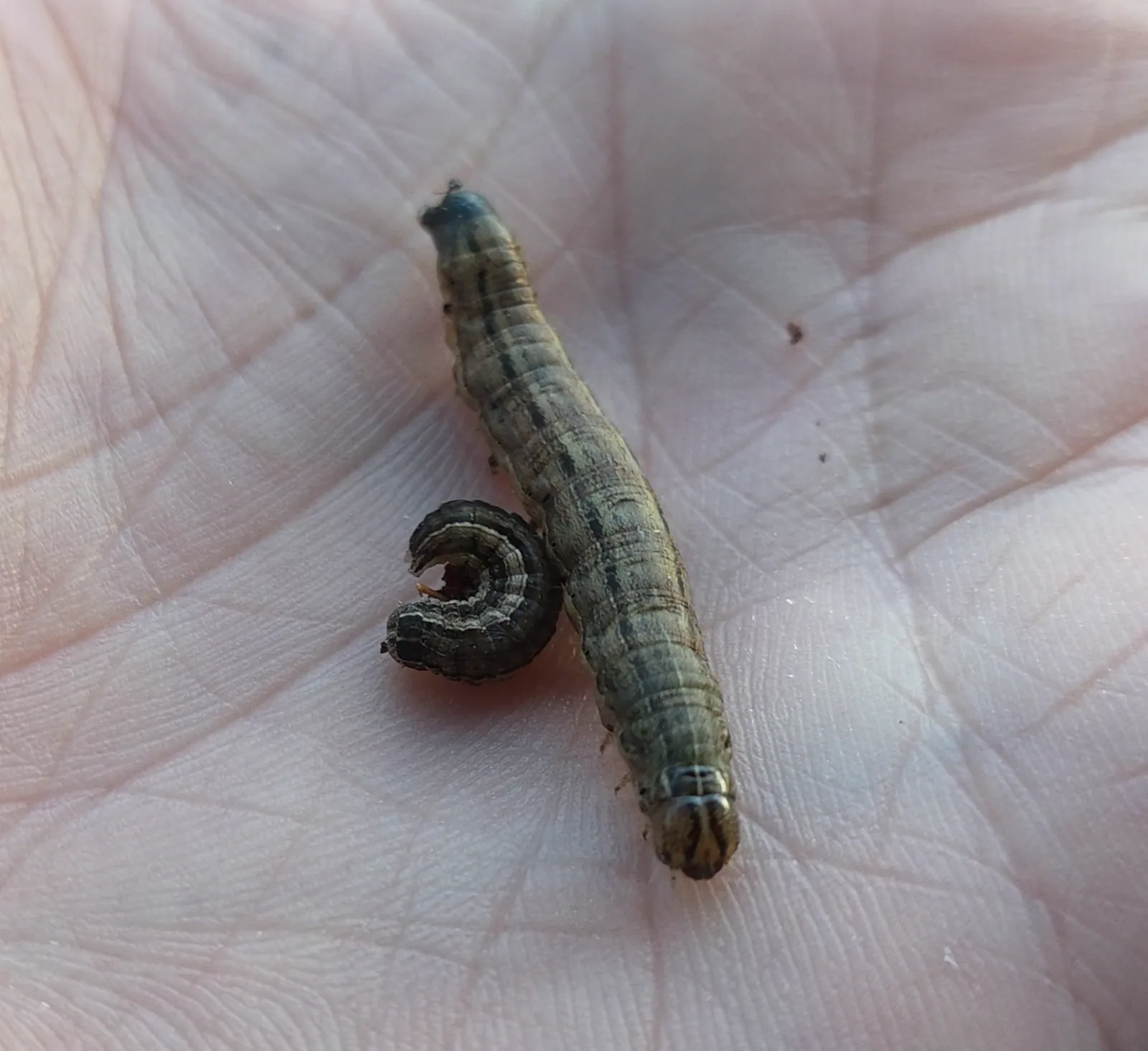
Spodoptera sp. (unidentified)

Armyworm

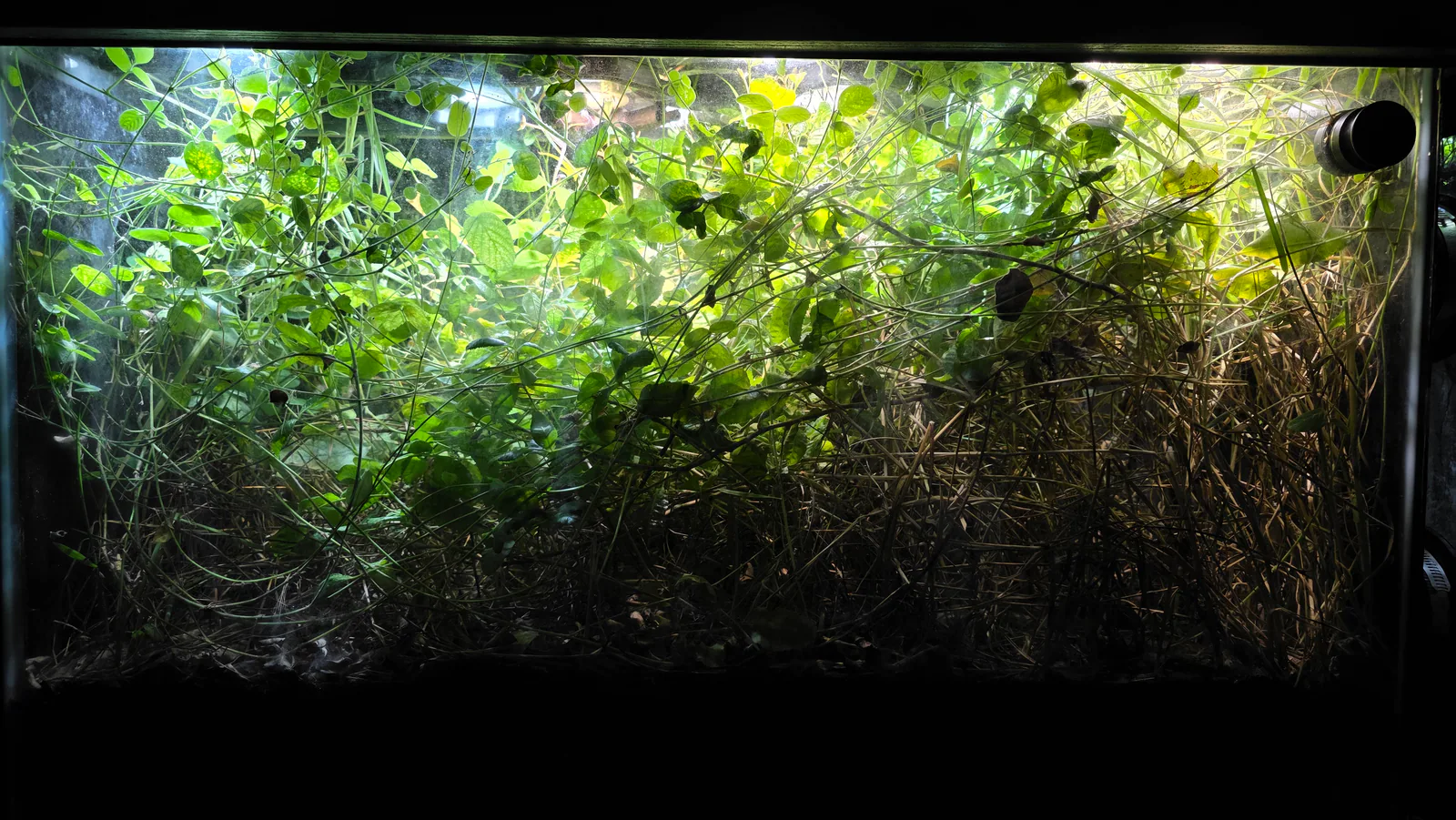
A grass-eating caterpillar deliberately introduced to the Lowland Meadow twice in 2026 as a biological control agent to reduce dense vegetation; wild-collected from outdoor finds, with persistence and establishment outcome unresolved as of the most recent April 2026 introduction.

Visual Data Unavailable

Overview

A grass-eating caterpillar in the genus Spodoptera, deliberately introduced to the Lowland Meadow in two batches (February and April 2026) as a biological control agent to cut back dense vegetation. Both batches were wild-collected from outdoor finds. Whether the species has persisted or established in the Lowland Meadow is unresolved as of the most recent documented introduction in April 2026.

Identity

  • Common name: Armyworm
  • Alternate names: fall armyworm, beet armyworm, grass armyworm, army cutworm
  • Scientific name: Spodoptera sp. (unidentified)
  • Identification confidence: Genus level. The observer used the common name "armyworm," which in Florida most commonly refers to larvae of Spodoptera species. No species-level identification was recorded. The two most common Florida Spodoptera species are S. frugiperda (fall armyworm, primary grass feeder) and S. exigua (beet armyworm, broader diet). the record alternate names include both; neither is confirmed for the miniBIOTA individuals.
  • Uncertainty label: Observed

Taxonomy

  • Kingdom: Animalia
  • Phylum: Arthropoda
  • Class: Insecta
  • Order: Lepidoptera
  • Family: Noctuidae
  • Genus: Spodoptera
  • Species: (unidentified)

Natural History

Spodoptera is a large genus of moths in the family Noctuidae, widespread throughout the tropics and subtropics. The larvae (caterpillars) of most species are generalist or specialist plant feeders, with several species being significant agricultural pests. Adults are nocturnal moths; only the larval stage is typically called "armyworm."

**Fall Armyworm (S. frugiperda)**

The fall armyworm is among the most common and economically significant caterpillar pests in Florida and the Americas. Larvae feed primarily on grasses: corn, sorghum, pasture grasses, and lawn grasses are primary hosts. In South Florida, S. frugiperda is active year-round due to the warm climate, with population surges during the warmer months. Adults are strong fliers and disperse widely; wild caterpillars collected from outdoor grass areas in South Florida are most likely this species.

**Beet Armyworm (S. exigua)**

The beet armyworm has a broader host range and feeds on vegetables, ornamentals, and some grasses. It is also common in South Florida but less specifically tied to grass-dominated habitats.

Larval Biology

Armyworm caterpillars are voracious feeders that can strip vegetation rapidly when present in high numbers. The name "armyworm" comes from the mass-marching behavior of larvae when they exhaust food in one area and move in groups to find new vegetation. Individual larvae collected from the wild and introduced at low densities (as in miniBIOTA) do not display the mass-movement behavior. Larvae go through 6 instars over approximately 2 to 3 weeks before pupating in the soil. Pupae take 10 to 14 days to develop into adult moths.

As Biological Control

The use of armyworms as deliberate vegetation management agents is unusual; in most agricultural contexts they are pests to be controlled, not used as controllers. In a small enclosed ecosystem like miniBIOTA, the intense localized feeding of even a few caterpillars can meaningfully reduce dense grass coverage. The February 2026 introduction was explicitly framed as a test of whether their feeding could rebalance plant growth in the Lowland Meadow.

Ecological Role

In miniBIOTA, the Armyworm was introduced as a deliberate vegetation management tool in the Lowland Meadow: a caterpillar whose intense grass-feeding could cut back overly dense grass coverage and rebalance plant community composition. If established, armyworms would function as primary consumers at the herbivore layer, converting grass biomass into caterpillar biomass and frass, with the frass enriching the soil detrital pathway. Adult moths, if they eclosed and remained in the system, could serve as prey for spiders and possibly as minor pollinators.

The dual role of the species is ecologically interesting: as a larva it is a net consumer of plant biomass (potentially destabilizing); as an adult it is nutrient-neutral to beneficial (frass, soil enrichment). In a closed system, a persistent reproducing armyworm population would require sufficient grass regrowth to sustain it and could face top-down pressure from spider predators in the Lowland Meadow.

miniBIOTA Evidence

Introduction History

Two documented introduction events, both using wild-collected individuals from outdoor finds.

Observation Timeline

  • February 18, 2026: 4 armyworms introduced to the Lowland Meadow over the course of approximately 3 days preceding the observation date. Framed as biological control to reduce dense grass coverage; stated goal was to determine whether feeding behavior could cut back vegetation and rebalance plant growth. Video: armyworms held in hand and introduced to the Lowland Meadow.
  • April 12, 2026: 2 more armyworms added to the Lowland Meadow as part of what the observer described as "an ongoing establishment trial." Note: "Grass present as food source. Repeated introductions from outdoor finds; testing whether available resources can support persistence over time. Population stability remains uncertain."

What Is Confirmed

  • Four armyworms introduced to the Lowland Meadow around February 15 to 18, 2026; video evidence.
  • Two additional armyworms introduced April 12, 2026 as part of an ongoing trial.
  • Both batches were wild-collected from outdoor environments.
  • Grass was present as a food source in the Lowland Meadow at the time of both introductions.
  • As of April 12, 2026, persistence and population stability were explicitly uncertain.

What Is Inferred

  • Spodoptera frugiperda (fall armyworm) is the most probable species given the grass-focused habitat and South Florida wild-collection context.
  • At least some larvae from the February batch fed in the Lowland Meadow before the April reintroduction (the April note describes an "ongoing" trial, not a fresh restart).
  • Whether any individuals pupated and produced adult moths in or near miniBIOTA is unknown.

What Remains Unknown

  • Whether the armyworm has established a self-sustaining population in the Lowland Meadow.
  • Whether the February 2026 larvae fed on grass, pupated, or disappeared before the April reintroduction.
  • Whether the April 2026 individuals persisted or fed.
  • The species-level identity of the introduced individuals.