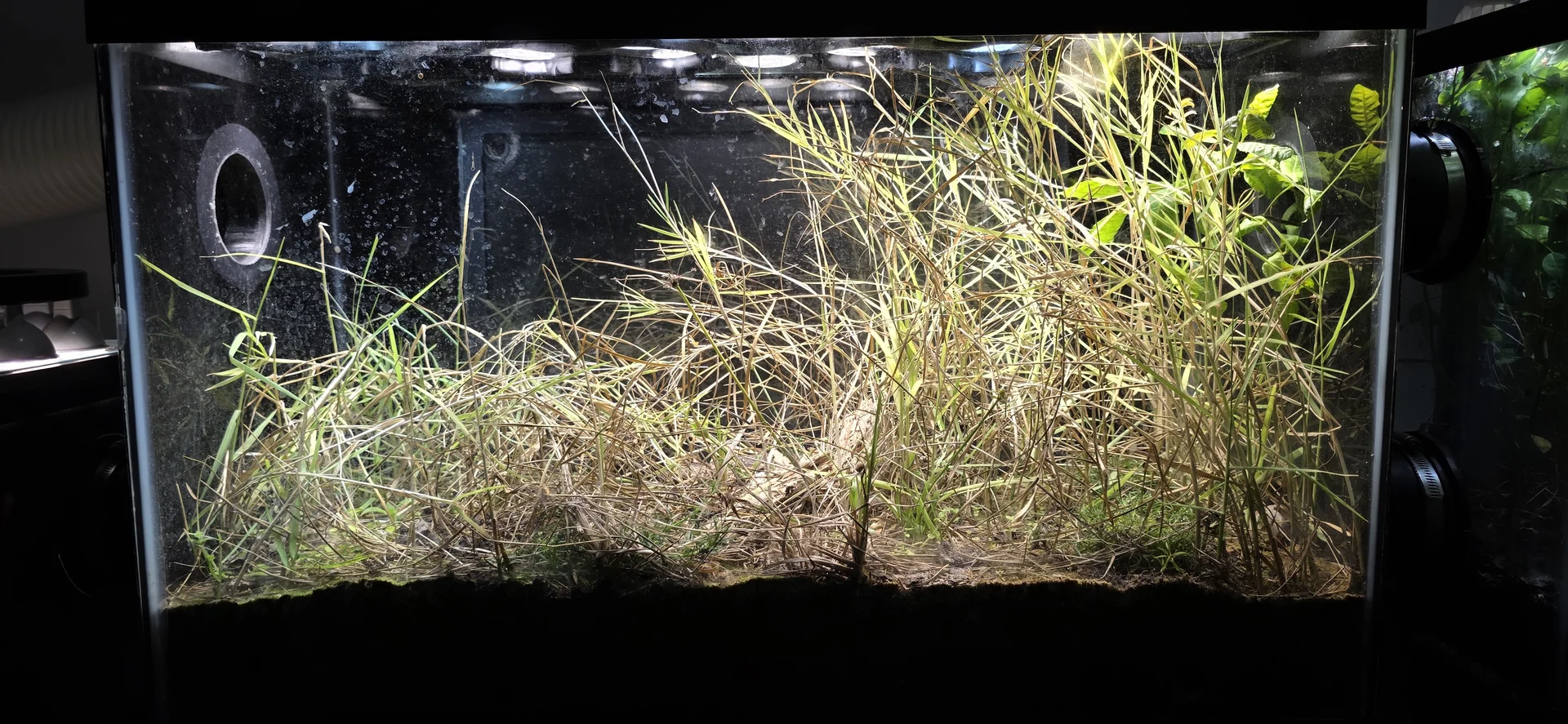
Crazy ants (tribe Lasiini, primarily genera Paratrechina and Nylanderia) are small, fast-moving ants recognized by their characteristically erratic, non-directional foraging runs that give the group its common name. Paratrechina longicornis (longhorn crazy ant) is the species most commonly referred to in North America by the name "longhorn crazy ant"; it has notably long antennae and legs relative to body size. P. longicornis is a widely introduced tramp ant, now established in tropical and subtropical regions globally through the movement of soil, plants, and cargo.
In Florida, P. longicornis and related crazy ant species are common in disturbed habitats, gardens, landscaped areas, and the edges of moist meadows and grasslands. Crazy ants are omnivores, foraging for seeds, small insects and invertebrates, food scraps, plant sap, honeydew from sap-sucking insects (aphids, scale insects, mealybugs), nectar, and carrion. When honeydew-producing insects are present on vegetation, crazy ants form trophobiotic relationships, tending and protecting the insects in exchange for honeydew.
Because the identification of this node as Paratrechina longicornis was specifically flagged as uncertain, the full range of species-specific biological detail cannot be applied here. The observations motivating the "longhorn crazy ant" common name and the initial P. longicornis identification (long antennae, erratic runs, ant colony in the Lowland Meadow) suggest this is in the crazy ant group, but species-level confirmation requires morphological examination.
The electric ant (Wasmannia auropunctata) noted as "misidentified" in alternate_names is a distinct fire-ant-like invasive ant with a painful sting; it is unrelated to crazy ants and the confusion likely arose from the "ant" and "invasive" overlap in South Florida.