Realm

Freshwater

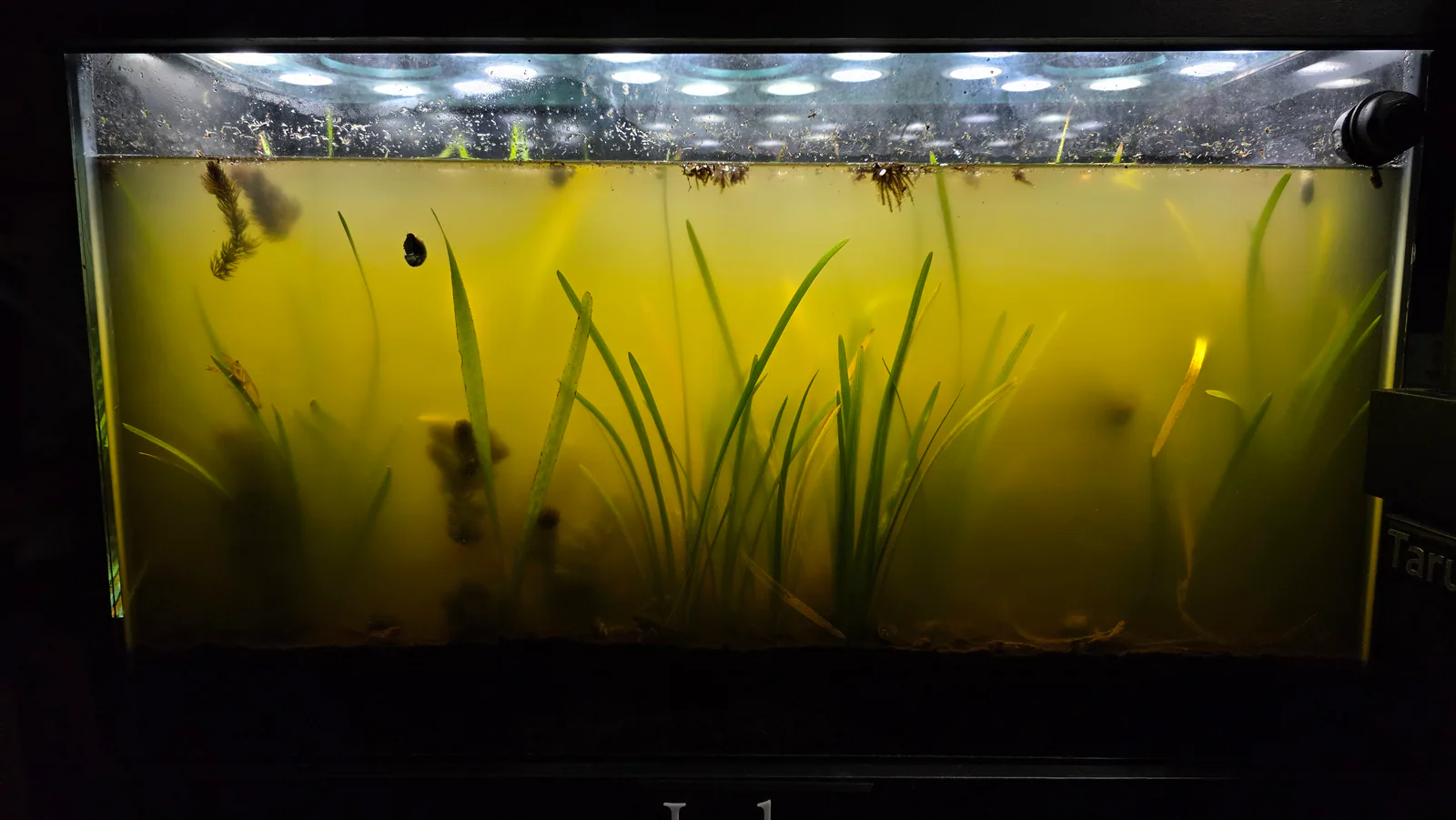
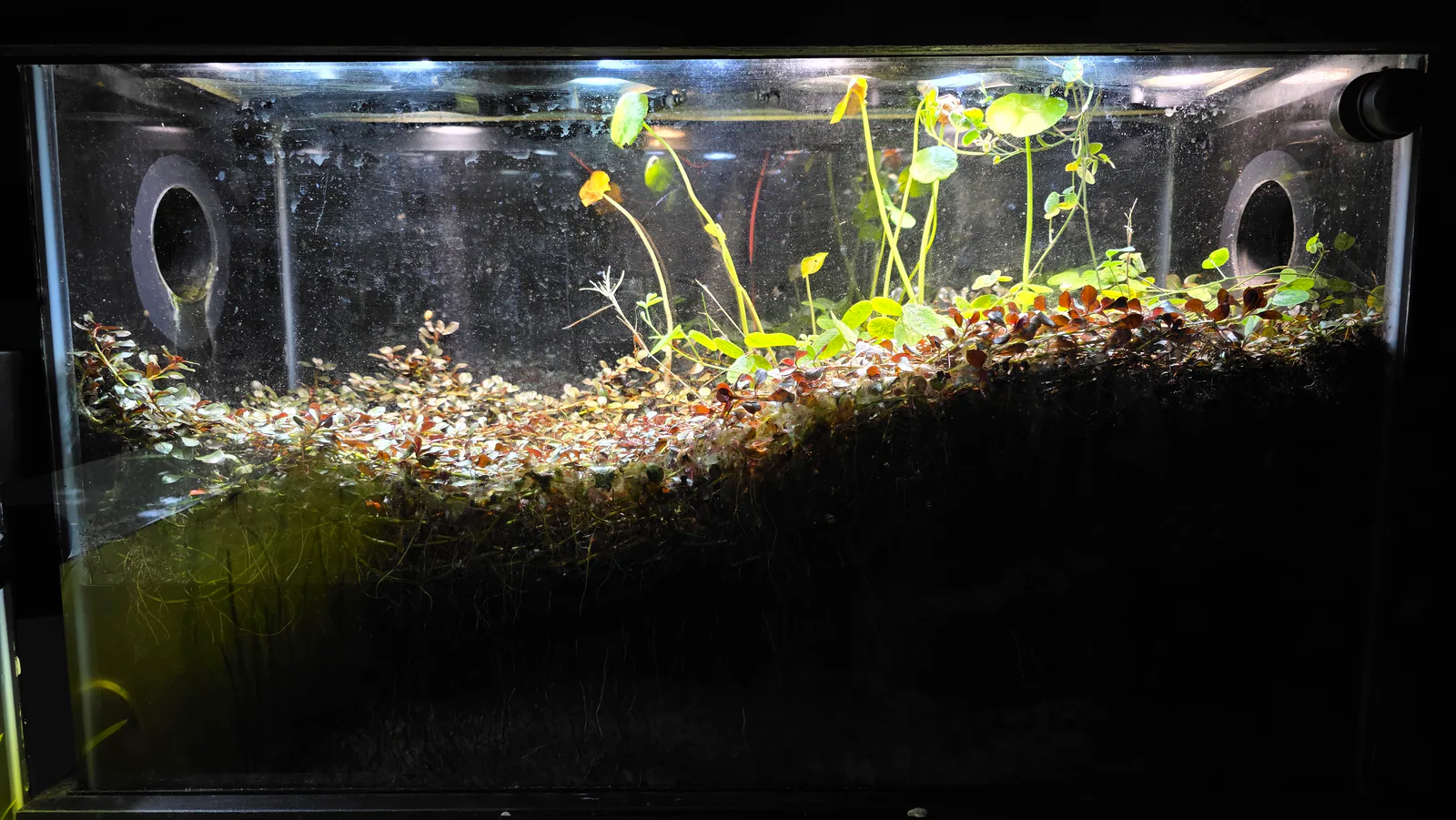
A still, closed freshwater lake and its shoreline edge, the oldest realm in the system. Submerged macrophytes, amphipods, snails, Ghost Shrimp, and Slough Crayfish fill the water column, while Amber Snails, baby crayfish, and visiting crabs concentrate reproductive and refuge activity at the Lakeshore edge. The defining arc is a food-web reset in active and unresolved progress.

Visual Data Unavailable

Overview

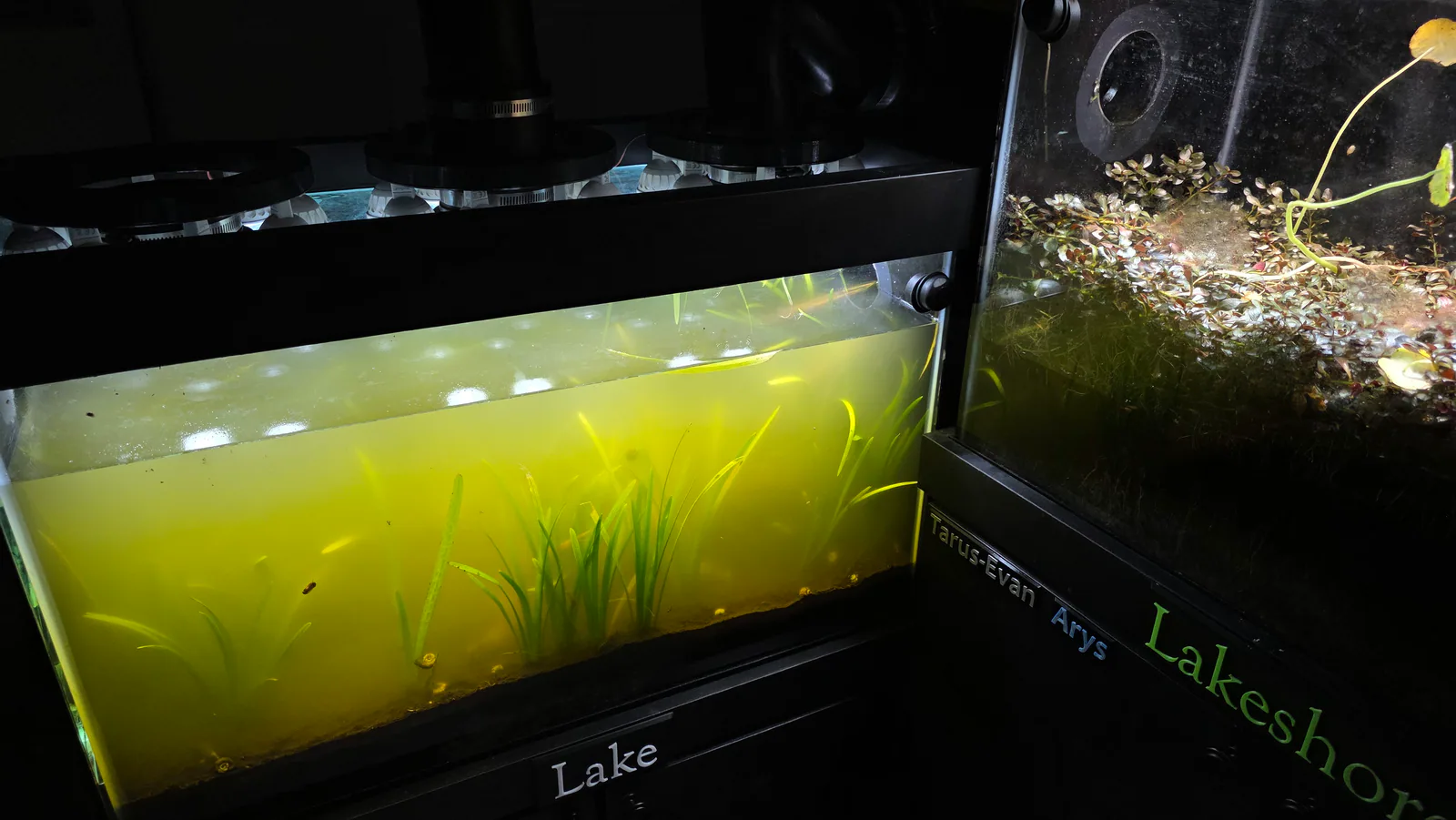
The Freshwater realm is the still-water, freshwater side of miniBIOTA: a closed lentic system containing two biomes: the Freshwater Lake (the fully aquatic core) and the Lakeshore (the damp shoreline edge that bridges freshwater and terrestrial). It is the oldest established realm in the system, with both biomes dating to November 14, 2022. The defining ecological arc of the current period is the post-Flagfish-removal food-web reset: the deliberate removal of the system's only fish on April 5, 2026 reduced predation pressure on microcrustaceans, and the subsequent introduction of Daphnia-like organisms and a visual improvement in water clarity opened a period of active observation and unresolved recovery. The Lakeshore is where the Freshwater realm ends and the Terrestrial realm begins; the shoreline moisture gradient is the shared boundary.

What This Realm Is

The Freshwater Realm in Global Context

Freshwater covers approximately 2.5 percent of Earth's water surface by volume but contains a disproportionate share of global aquatic biodiversity. Freshwater realms are divided into lentic (still water: lakes, ponds, wetlands) and lotic (flowing water: rivers, streams) systems. The miniBIOTA Freshwater realm is entirely lentic: a closed still-water lake with no flowing-water exchange, no tidal input, and no external recruitment. Populations in the Freshwater realm must persist from introduced stock, breed within the system, or move in from adjacent biomes through the Lakeshore.

Like all lentic systems, the Freshwater Lake's ecology is governed by the balance between primary producers (submerged macrophytes and phytoplankton), zooplankton grazers, benthic invertebrates, and the predators that regulate each group. When this balance is disturbed (by the removal of a fish, the introduction of new grazers, or a change in nutrient levels) the system can shift between alternative states: a clear, macrophyte-dominated state and a turbid, algae-dominated state. The trophic cascade (zooplankton grazing down phytoplankton, improving water clarity, allowing macrophytes to recover) is one of the most studied dynamics in freshwater ecology and the explicit framework behind the April 2026 Flagfish removal.

Florida Freshwater Context

Florida has over 7,700 named lakes, the majority of which are shallow, warm, and subject to algal pressure during summer. Florida's freshwater systems commonly support submerged aquatic vegetation communities dominated by species such as tapegrass (Vallisneria americana), sagittaria, and various macrophytes: all represented in miniBIOTA's Freshwater Lake. The Slough Crayfish (Procambarus fallax) is Florida's most widespread freshwater crayfish, found throughout the Everglades and adjacent freshwater habitats, and is the primary benthic grazer and detritivore in the Freshwater realm.

Freshwater shorelines in Florida (represented in miniBIOTA by the Lakeshore) are dominated by emergent and semi-aquatic plants including ludwigia, dollarweed, sedges, and grasses. These shoreline zones are among the most biologically productive freshwater habitats by local species density, concentrating reproduction events, refuge use, and cross-biome movement in a narrow physical strip.

Key Ecological Processes of the Freshwater Realm

Trophic cascade and zooplankton grazing: The removal of the Flagfish (April 5, 2026) was designed to reduce fish predation pressure on large-bodied zooplankton (Daphnia, Moina), allowing these filter feeders to graze down phytoplankton and improve water clarity. The visual improvement in water clarity following fish removal and microcrustacean introduction is consistent with this mechanism, though the cause has not been confirmed as a single organism or group.

Macrophyte production and plant competition: Tapegrass, Amazon sword, and sagittaria are the primary rooted submerged producers in the Freshwater Lake. They compete with phytoplankton and algae for light and nutrients. In a clear, low-phytoplankton state, macrophytes dominate; under high turbidity or high nutrient load, algae can outcompete them. The current state (improved water clarity, active macrophytes) is favorable for macrophytes, but stability is unconfirmed.

Detritivore and benthic processing: Slough Crayfish, snails, amphipods, and worms process detritus and algae in the Freshwater Lake substrate. Slough Crayfish were documented feeding on tapegrass tissue after a long period of low visible grazing pressure (obs-271, May 24, 2026), signaling that the benthic grazer-plant relationship is still active and may be shifting.

Nursery and refuge function at the shoreline: The Lakeshore's dense plant root structure functions as nursery habitat for baby Slough Crayfish, refuge for Daphnia-like organisms, and egg-laying habitat for Amber Snails. The Freshwater realm concentrates its reproduction signals disproportionately in the Lakeshore rather than in the open Freshwater Lake, reflecting the physical refuge value of shoreline plant structure.

Moisture gradient and cross-biome movement: The Lakeshore's moisture gradient from submerged to moist-terrestrial supports different species assemblages at each level, and organisms move along this gradient. Mangrove Tree Crabs were documented crossing the terrestrial Lakeshore edge (obs-282, June 9, 2026) without entering the lake water, confirming the Lakeshore as a movement corridor even for saltwater-realm species passing through the system's interior.

Downhill hydrological flow: Rain falling on the Lowland Meadow and terrestrial biomes drains downhill through the Lakeshore into the Freshwater Lake. This hydrological connection means the Freshwater realm receives nutrients, organic matter, and fine particles from the terrestrial side through the Lakeshore, linking freshwater chemistry to terrestrial plant and detritivore activity. This flow has not been measured.

Mesostoma predation risk (unresolved): Mesostoma (predatory turbellarian flatworms) are documented in miniBIOTA as a predation concern for zooplankton. If Mesostoma are active in the Freshwater Lake, they represent a significant constraint on the microcrustacean recovery that the Flagfish removal was intended to enable. Their current presence and impact are unresolved.

Biomes in This Realm

Freshwater Lake (ID 1): Primary Aquatic Biome

The Freshwater Lake is the fully aquatic core of the Freshwater realm. Submerged macrophytes (tapegrass, Amazon sword, sagittaria), phytoplankton, biofilm, and a layered invertebrate community (amphipods, snails, Ghost Shrimp, Slough Crayfish) form the food web above a quartz sand and detritus substrate. The defining event of the current period is the April 2026 post-Flagfish-removal reset: the system entered an active recovery window whose outcomes (microcrustacean persistence, water clarity cause, Ghost Shrimp juvenile recruitment, Mesostoma status) are all unresolved as of June 2026. The Freshwater Lake is the oldest biome in miniBIOTA, established November 14, 2022.

Full treatment: Freshwater Lake

Lakeshore (ID 2): Freshwater/Terrestrial Boundary Biome

The Lakeshore is the damp shoreline zone of the Freshwater realm. It physically contains both freshwater (the semi-submerged root zone and aquatic plant edge) and terrestrial habitat (the moist-but-emergent shoreline above the waterline). For the Freshwater realm, the Lakeshore is the outer edge of the aquatic system: the zone where the lake's water body ends, where shoreline plants root in a moisture gradient, and where the Freshwater realm's organisms extend their range into the terrestrial interface. The Terrestrial realm begins at and above the shoreline moisture threshold. Both realms claim the Lakeshore because it physically spans both.

Full treatment: Lakeshore

Realm-Level Ecological Patterns

The Post-Fish-Removal Reset as the Defining Arc

The Freshwater realm's current ecological identity is defined by the decision made on April 5, 2026 to remove the Flagfish: the system's only fish: and the cascading effects that followed. Water clarity improved visually. Daphnia-like microcrustaceans introduced on April 8, 2026 were observed short-term. Amphipods continue grazing biofilm. Ghost Shrimp zoea have been observed. The question of whether this reset has produced a durable new food-web state (or whether Mesostoma, starvation, or other factors have already eliminated the microcrustacean layer) is the central unresolved question for the entire Freshwater realm.

Shoreline Concentration of Reproduction Signals

Across both biomes of the Freshwater realm, reproduction signals are concentrated in the Lakeshore rather than in open water. Amber Snail eggs and hatchlings, baby Slough Crayfish using root refuge, Common Crypt Ant alates, and Daphnia-like organisms seeking shelter in root structure all point to the Lakeshore as the reproductive focal zone of the Freshwater realm. The dense plant structure of the shoreline provides physical complexity and protection that the open water column does not.

Snail Habitat Partitioning (Cautious Pattern)

Observation 270 (May 22, 2026) suggested possible habitat partitioning among freshwater snails: Bladder Snails in dense Lakeshore vegetation, Seminole Ramshorn Snails more associated with open Freshwater Lake water. This should remain a cautious hypothesis until repeat observations confirm the pattern. If confirmed, it would represent a fine-scale niche partition within the Freshwater realm between a shoreline-associated and open-water-associated grazer.

The Lakeshore as a Cross-Realm Corridor

The Lakeshore is not only the boundary between the Freshwater and Terrestrial realms: it is also a transit corridor for saltwater-realm organisms moving through the system. Mangrove Tree Crabs (Marine Shore/Saltwater realm residents) were documented crossing the terrestrial Lakeshore edge on June 9, 2026, linking all three realms through a single biome. The Lakeshore's position (physically between the freshwater and terrestrial systems while being transited by marine-realm species) gives it unusual cross-realm significance in miniBIOTA.

Realm Interface: Where Freshwater Meets Terrestrial

The interface between the Freshwater realm and the Terrestrial realm runs through the Lakeshore along the shoreline moisture gradient. On the Freshwater side: the lake water column, submerged plant zone, semi-submerged root zone, and waterlogged shoreline substrate. On the Terrestrial side: the moist-but-emergent shoreline, the dry plant cover, the detritivore and insect community, and the terrestrial habitats above.

Organisms confirmed to cross or use the freshwater-terrestrial interface:

  • Amber Snails: semi-aquatic land snails that live on moist shoreline surfaces; cross between Lakeshore freshwater edge and moist terrestrial substrate
  • Bladder Snails: primarily aquatic; documented in Lakeshore dense vegetation
  • Slough Crayfish: moves through the Lakeshore shoreline zone; baby crayfish documented using root refuge
  • Freshwater Amphipods: documented in both aquatic and semi-aquatic Lakeshore zones
  • Blackworms: documented in Lakeshore substrate; partly aquatic, partly sediment-dwelling
  • Mangrove Tree Crab: saltwater-realm species documented crossing the terrestrial Lakeshore edge (corridor use, not freshwater use)

Key Functional Groups

Primary Producers (Freshwater Realm)

Tapegrass, Amazon sword, and sagittaria (submerged macrophytes anchoring the Freshwater Lake's structural base); suspended algae and phytoplankton (subject to zooplankton grazing pressure); biofilm on glass, roots, and substrate (primary food for snails and amphipods); ludwigia, dollarweed, shoreline grasses and sedges (Lakeshore producers providing the plant structure of the shoreline).

Filter Feeders and Microcrustaceans

Daphnia-like microcrustaceans (introduced April 8, 2026; short-term persistence confirmed; long-term fate unresolved); Moina (fine-particle filter feeder; fate unresolved); copepods (zooplankton layer; status uncertain); seed shrimp/ostracods (introduced April 8, 2026; current status uncertain). These organisms collectively represent the potential zooplankton grazing layer whose recovery is the central outcome of the fish removal.

Grazers and Scavengers

Freshwater Amphipods (biofilm and surface growth grazers; documented active); Bladder Snails and Seminole Ramshorn Snails (biofilm and algae grazers; documented in Freshwater Lake and Lakeshore); Ghost Shrimp (scavengers and grazers; breeding confirmed, juvenile recruitment unresolved); Slough Crayfish (omnivore; confirmed tapegrass feeding, detritivory, biofilm grazing); Amber Snails (semi-aquatic grazers in Lakeshore moist zone; establishment unresolved).

Predators (Current and Historical)

Mesostoma (turbellarian flatworm; documented concern for microcrustacean predation; current presence and impact unresolved); Flagfish: removed April 5, 2026; no longer present.

What Is Confirmed at the Realm Level

  • Freshwater realm contains two active biomes: Freshwater Lake and Lakeshore.
  • Both biomes established November 14, 2022: oldest biomes in miniBIOTA.
  • Tapegrass, Amazon sword, and sagittaria present as submerged macrophytes.
  • Flagfish removed April 5, 2026.
  • Daphnia-like microcrustaceans, ostracods, and hitchhikers introduced April 8, 2026.
  • Water clarity improved visually following fish removal and microcrustacean introduction; cause unconfirmed.
  • Slough Crayfish feeding on tapegrass tissue confirmed (obs-271, May 24, 2026).
  • Amber Snails introduced to Lakeshore; eggs and hatchlings documented; attrition noted; establishment unresolved.
  • Baby Slough Crayfish confirmed using Lakeshore root-refuge structure.
  • Ghost Shrimp zoea observed; juvenile recruitment unresolved.
  • Common Crypt Ant alates documented in Lakeshore (reproductive phase signal).
  • Mangrove Tree Crabs documented crossing the terrestrial Lakeshore edge (obs-282, June 9, 2026).
  • Eight Bladder Snails documented in dense Lakeshore vegetation (obs-270, May 22, 2026).

What Is Inferred

  • Reducing Flagfish predation pressure likely opened ecological space for zooplankton and amphipods; whether any specific population recovered durably is unresolved.
  • The Lakeshore functions as the primary reproduction and refuge node for the Freshwater realm.
  • Downhill hydrological flow connects the Freshwater realm to nutrient and organic inputs from the Terrestrial realm.

What Remains Unknown

  • Whether Daphnia, Moina, copepods, or ostracods have established durable populations or have been eliminated.
  • Whether Mesostoma is active and suppressing the microcrustacean recovery.
  • Whether Ghost Shrimp zoea recruited into settled juveniles.
  • Whether Amber Snails have established a self-sustaining shoreline population.
  • Whether baby Slough Crayfish survived to maturity.
  • Water chemistry (pH, dissolved oxygen, temperature, alkalinity, nutrients) throughout the Freshwater realm.

Active Ecological Tensions

Microcrustacean fate (most important unresolved): Whether Daphnia, Moina, and copepods established durable populations after the April 2026 introduction, or were eliminated by Mesostoma predation, food limitation, or environmental stress, is the central unresolved question for the entire Freshwater realm.

Mesostoma predation (background risk): If Mesostoma are active, they could be suppressing the microcrustacean layer that the Flagfish removal was intended to free. This risk has not been resolved.

Amber Snail establishment (Lakeshore tension): Whether Amber Snails have established a self-sustaining Lakeshore population or are in decline from predation or desiccation is the most important population question for the Lakeshore biome.

Crayfish and tapegrass grazing balance (watch): The resumption of Slough Crayfish tapegrass feeding after a long dormant period (obs-271) signals a potential shift in benthic grazer pressure on the primary macrophytes. If crayfish feeding resumes at high intensity, tapegrass cover may decline.