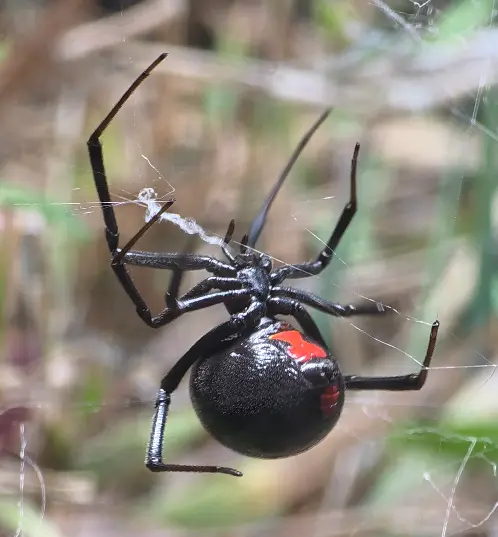
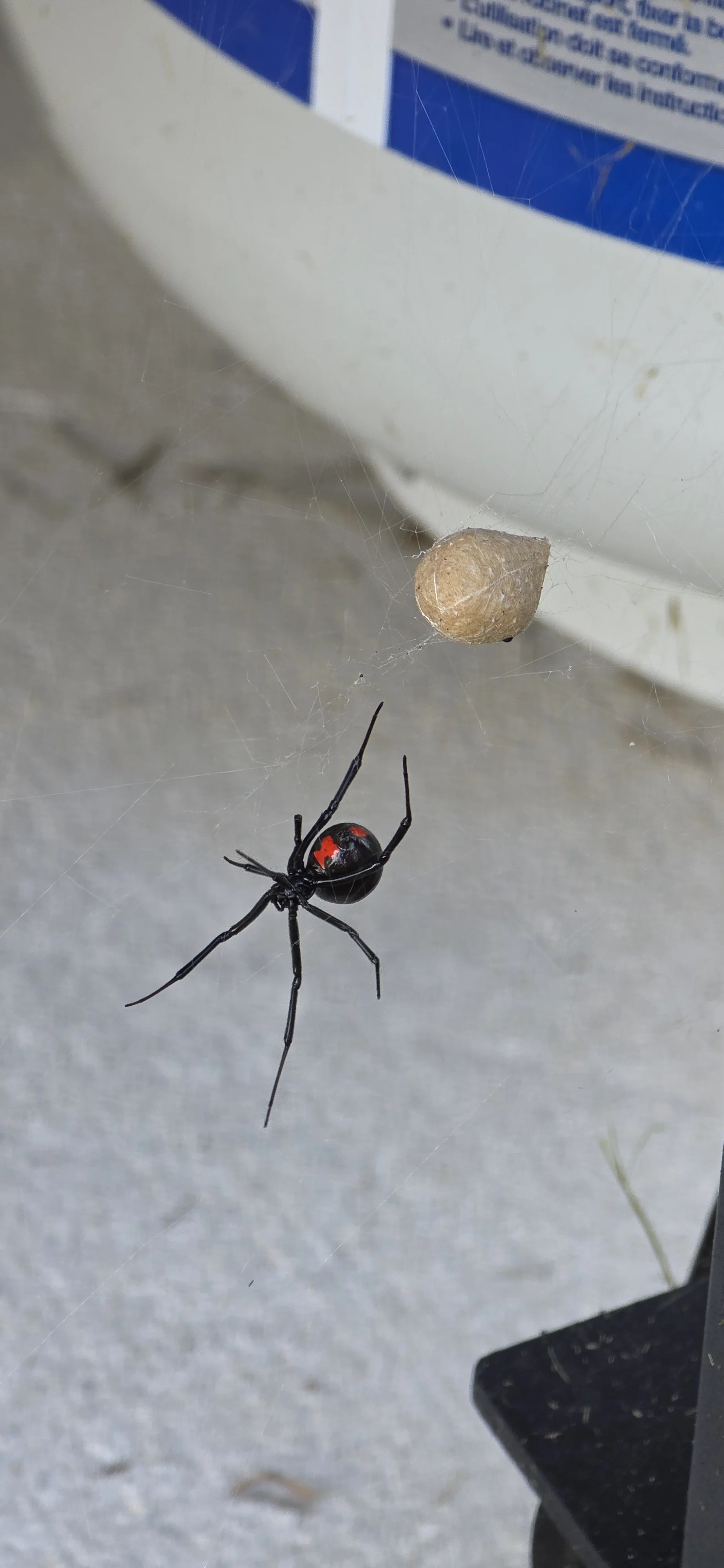
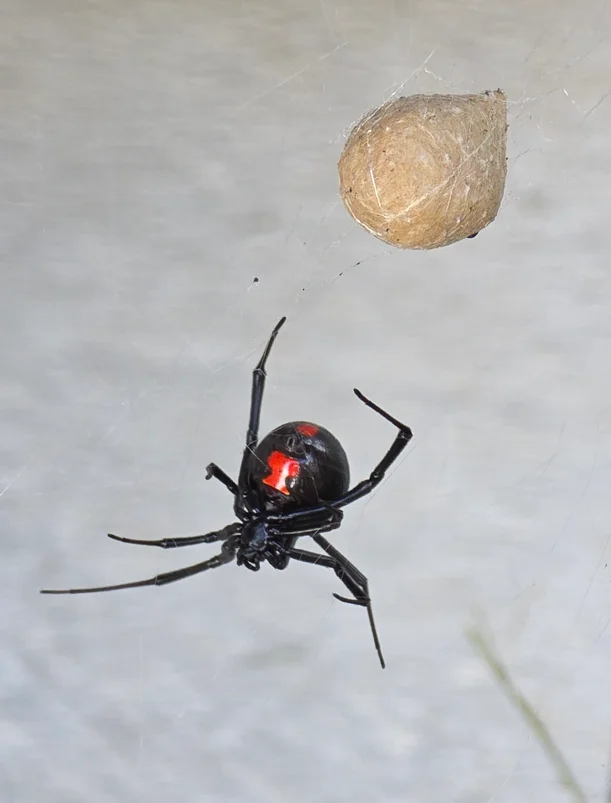
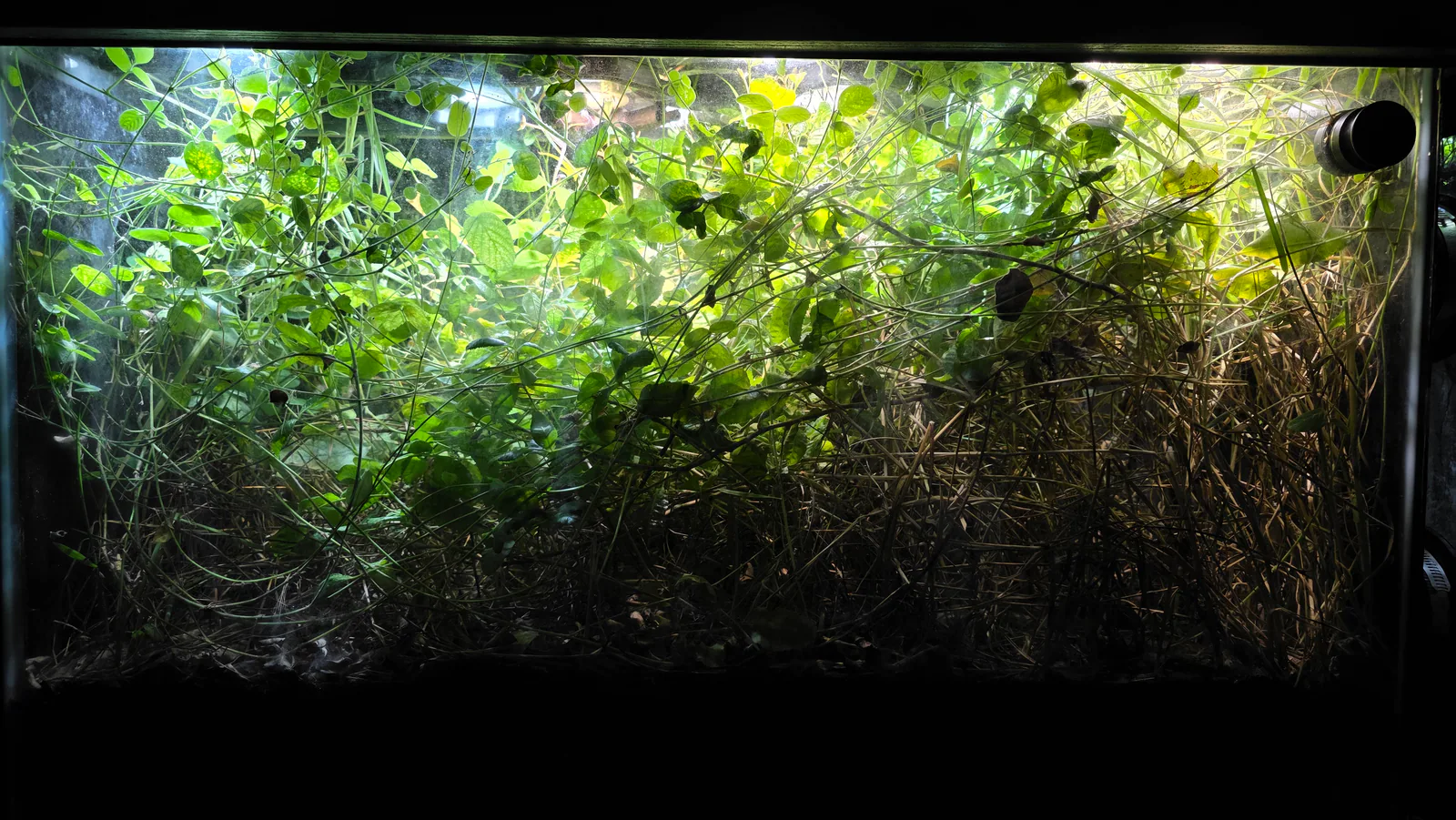
Latrodectus mactans is the Southern Black Widow, one of North America's most recognized spiders and one of the few with a medically significant bite. The female is a large, glossy black spider (8-13 mm body length, up to 38 mm with legs) with a distinctive red hourglass marking on the ventral surface of the abdomen. Males are much smaller (3-4 mm), lighter-colored, and short-lived; males die shortly after mating.
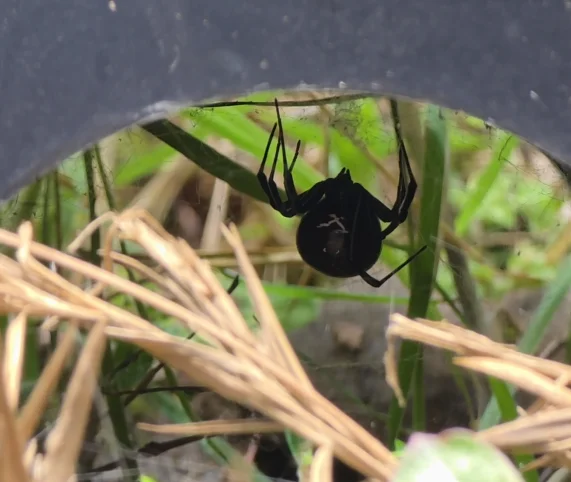
The Southern Black Widow builds irregular, tangled, low webs in sheltered, undisturbed spaces: under logs, in crevices, along ground edges, in corners, and inside tunnels or confined structures. The web is not a neat orb but a three-dimensional tangle of sticky lines; prey, primarily insects and other arthropods, becomes entangled and is quickly seized. The spider's venom contains alpha-latrotoxin, which causes latrodectism in humans: muscle cramps, sweating, hypertension, and pain. Bites are rarely fatal in healthy adults but are medically significant and require monitoring.
Females can produce multiple egg sacs per season, each containing 200 to 400 eggs. The eggs hatch within 2 to 4 weeks depending on temperature. The female can live 1 to 3 years; she may eat the male after mating, though this is less consistent than popular accounts suggest.