Range and Florida Relevance
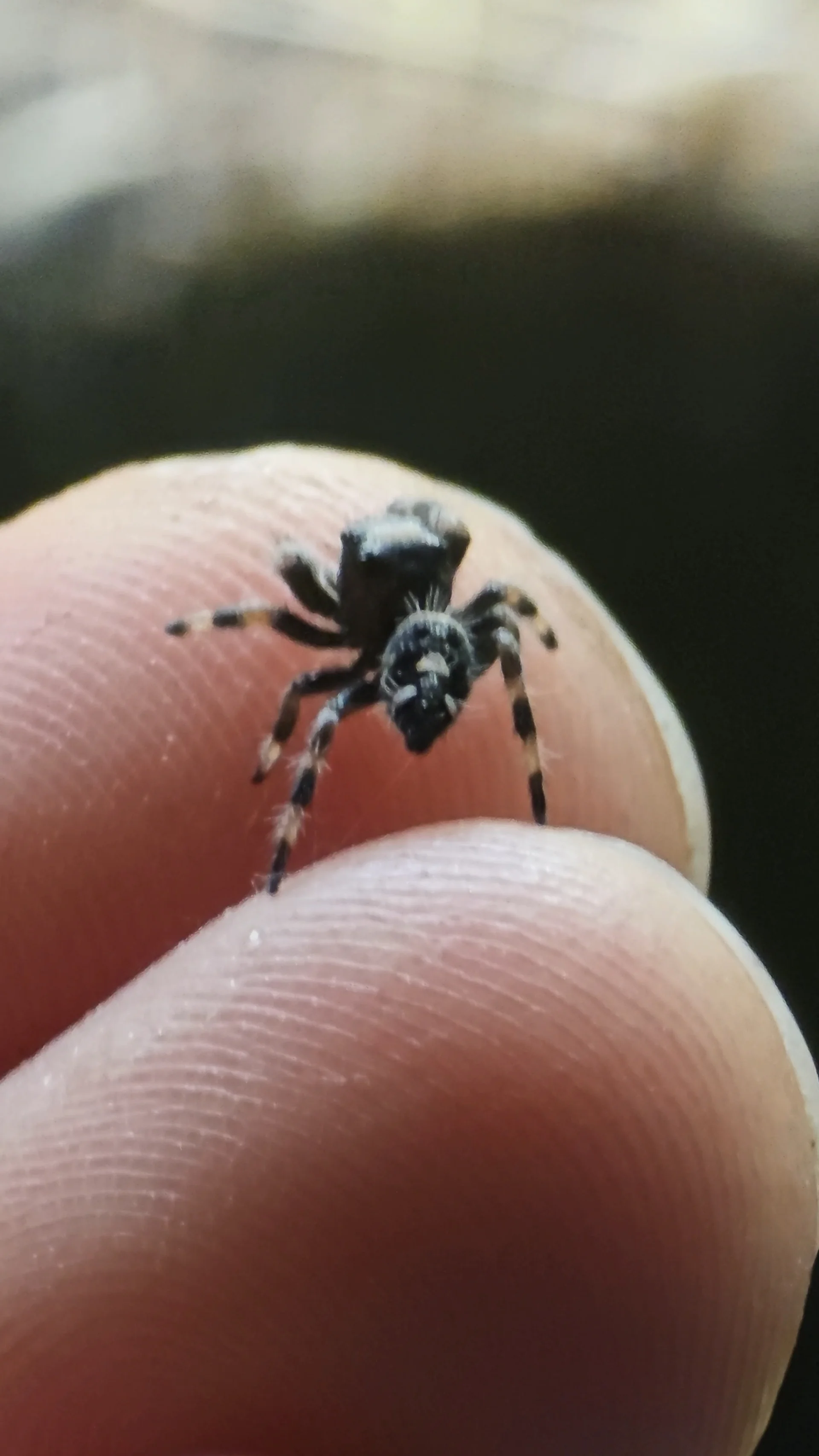
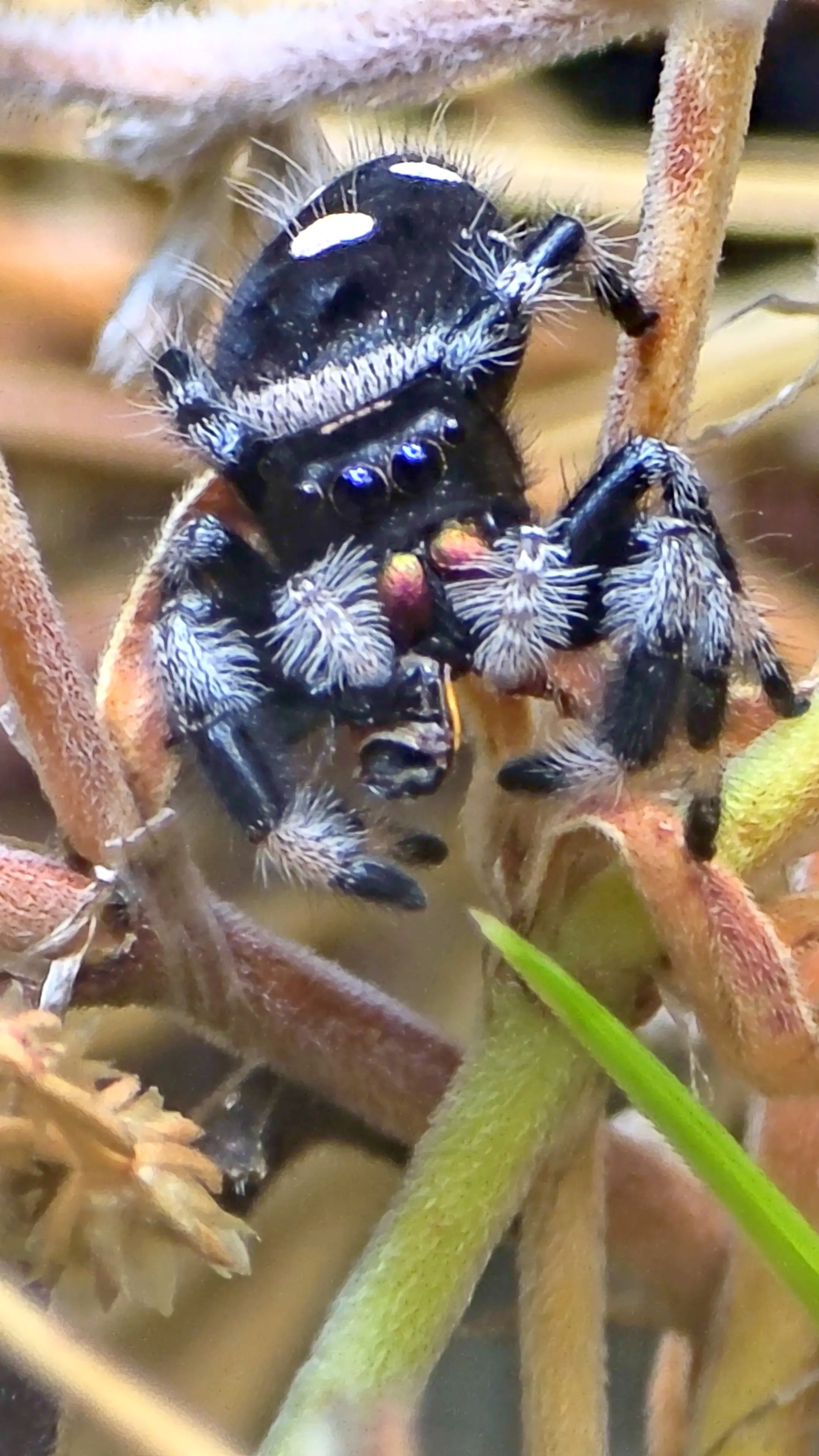
Phidippus regius is native to Florida and the southeastern United States and ranges throughout the Caribbean. Florida is a core part of its distribution, where the species occurs across subtropical scrub, open woodland, coastal vegetation, and urban environments. It is one of the most recognizable spiders in the state due to its large size and bold, curious behavior. The species is heavily represented in the pet trade, where individuals are commonly captive-bred or wild-caught in Florida.
Habitat
Regal Jumping Spiders are active daytime hunters that do not build webs for prey capture. They inhabit any environment with sufficient structural complexity: tall vegetation, fence lines, building exteriors, tree bark, and dense ground cover. The species relies entirely on vision and mobility to find prey, using two large forward-facing principal eyes that provide sharp binocular depth perception suited to leaping accuracy. A small silk retreat, a tubular silken cell, is constructed for molting, resting, and egg deposition, typically anchored in a sheltered crevice or plant stem junction.
Diet
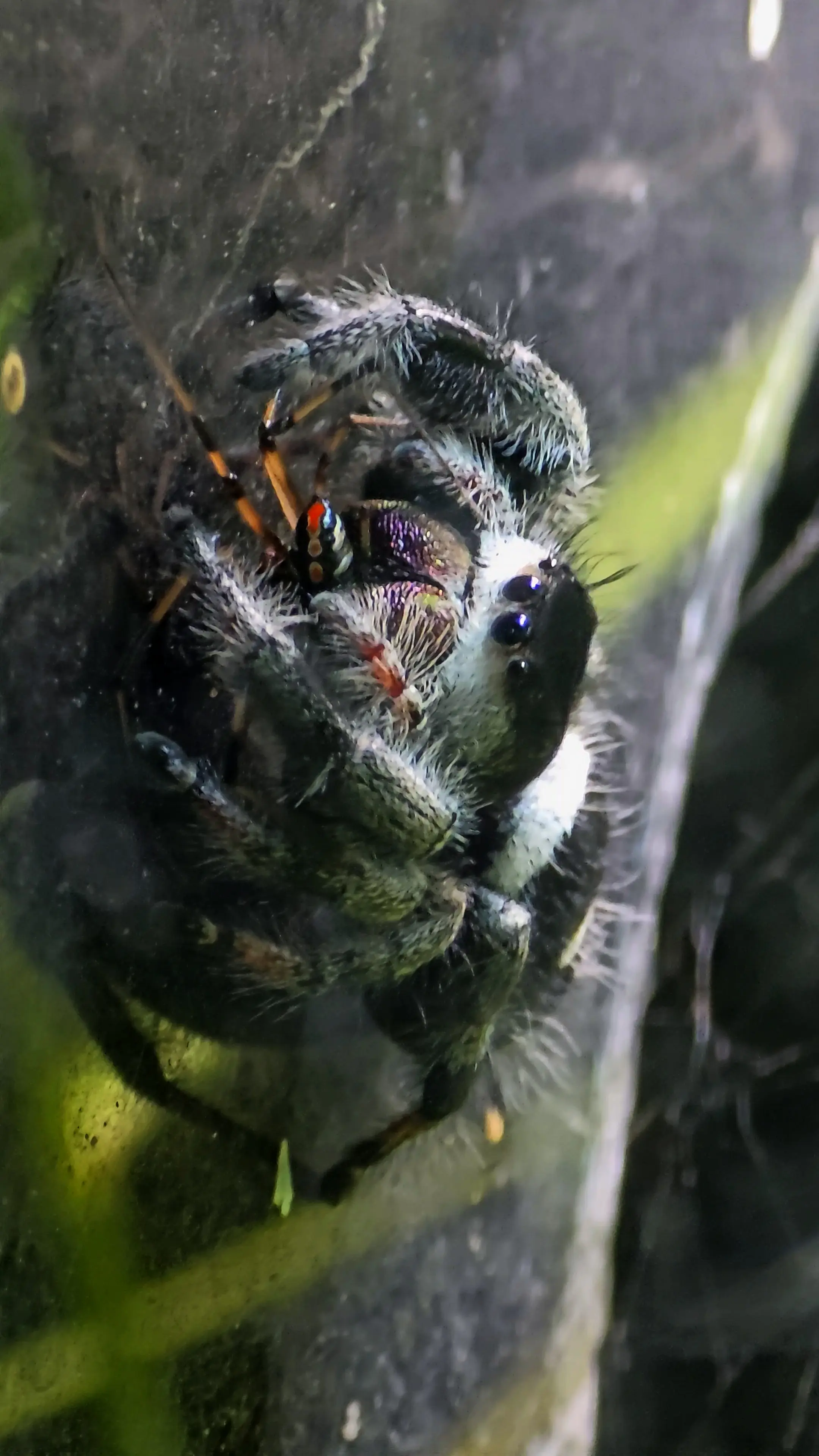
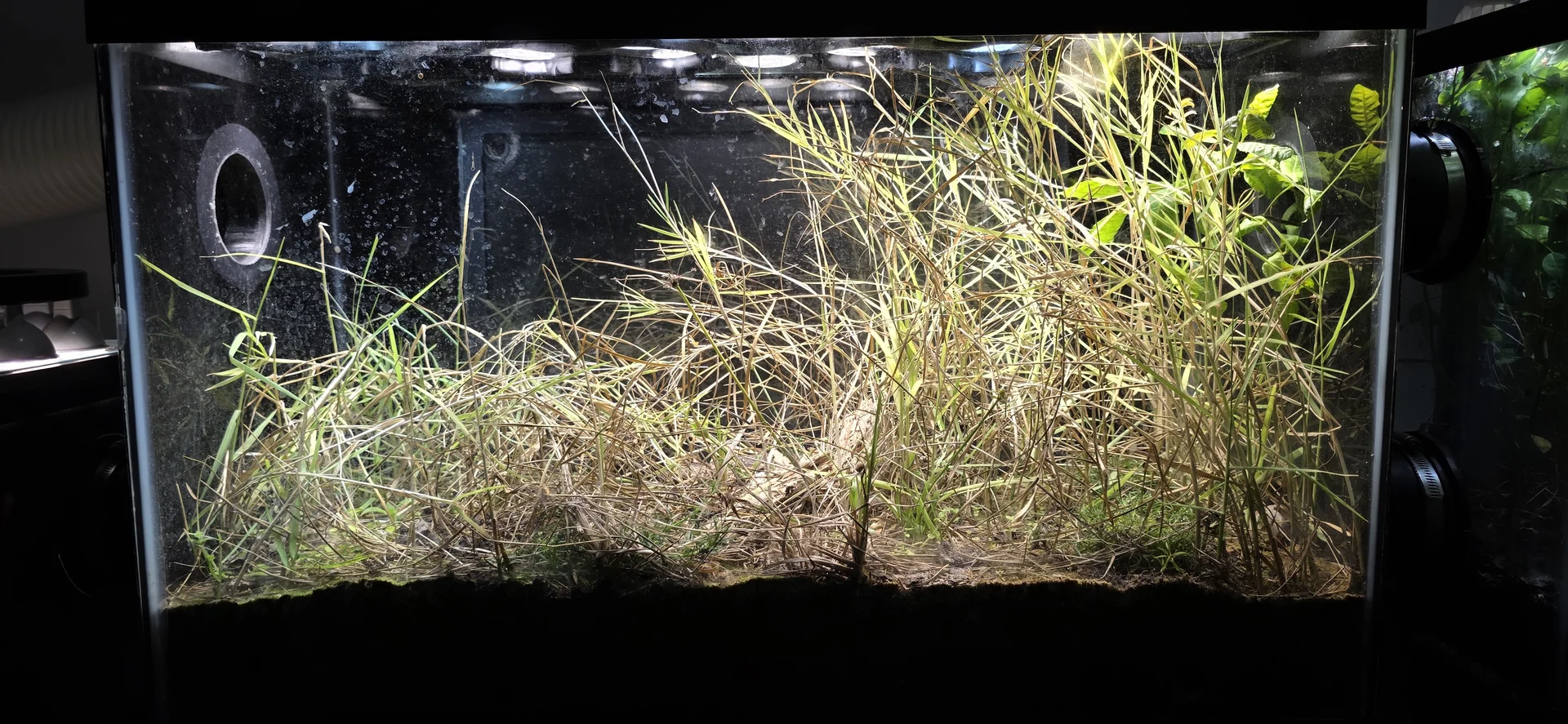
Phidippus regius is a generalist predator targeting any invertebrate it can overpower, including flies, moths, beetles, grasshoppers, other spiders, and occasionally small vertebrates in the wild. It hunts by stalking, pausing to align with prey, then leaping with precision. In miniBIOTA, confirmed prey included: soldier flies (direct capture observed August 19, 2025), Black Widow spiderlings (stalking and pouncing confirmed multiple times July through September 2025), Ebony Bugs (hunting confirmed July 31, 2025, coincident with the apparent collapse of a three-year-old Ebony Bug colony), and one Southern Two-Striped Walkingstick (killed October 13, 2025). Upon returning from its molt in August, the spider immediately resumed active hunting of abundant flies.
Reproduction
Females lay eggs in a silk-wrapped retreat and guard the egg sac until spiderlings emerge. Spiderlings are fully formed at hatching and disperse independently. The species matures through several molts; development rate depends on temperature and prey availability. Phidippus regius is well established in captive breeding for the pet trade. In miniBIOTA, the individual showed no signs of breeding throughout its four-month stay.
Tolerance Ranges
Florida-native species adapted to warm, humid subtropical conditions. Phidippus regius tolerates a broad range of temperatures consistent with Florida's year-round outdoor environment. No specific tolerance measurements were recorded for the miniBIOTA individual.