Atlanticus gibbosus

Robust Shieldback

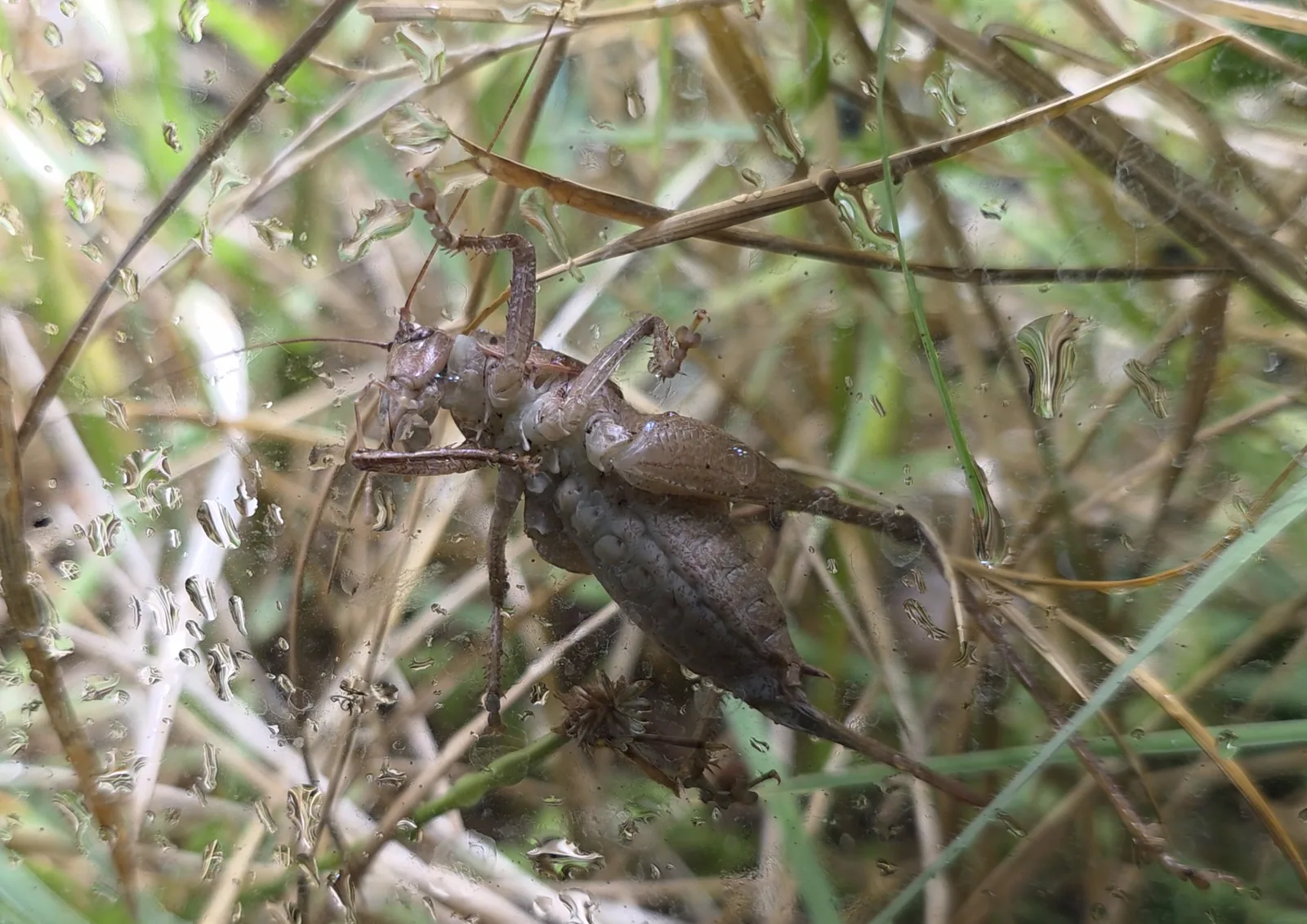
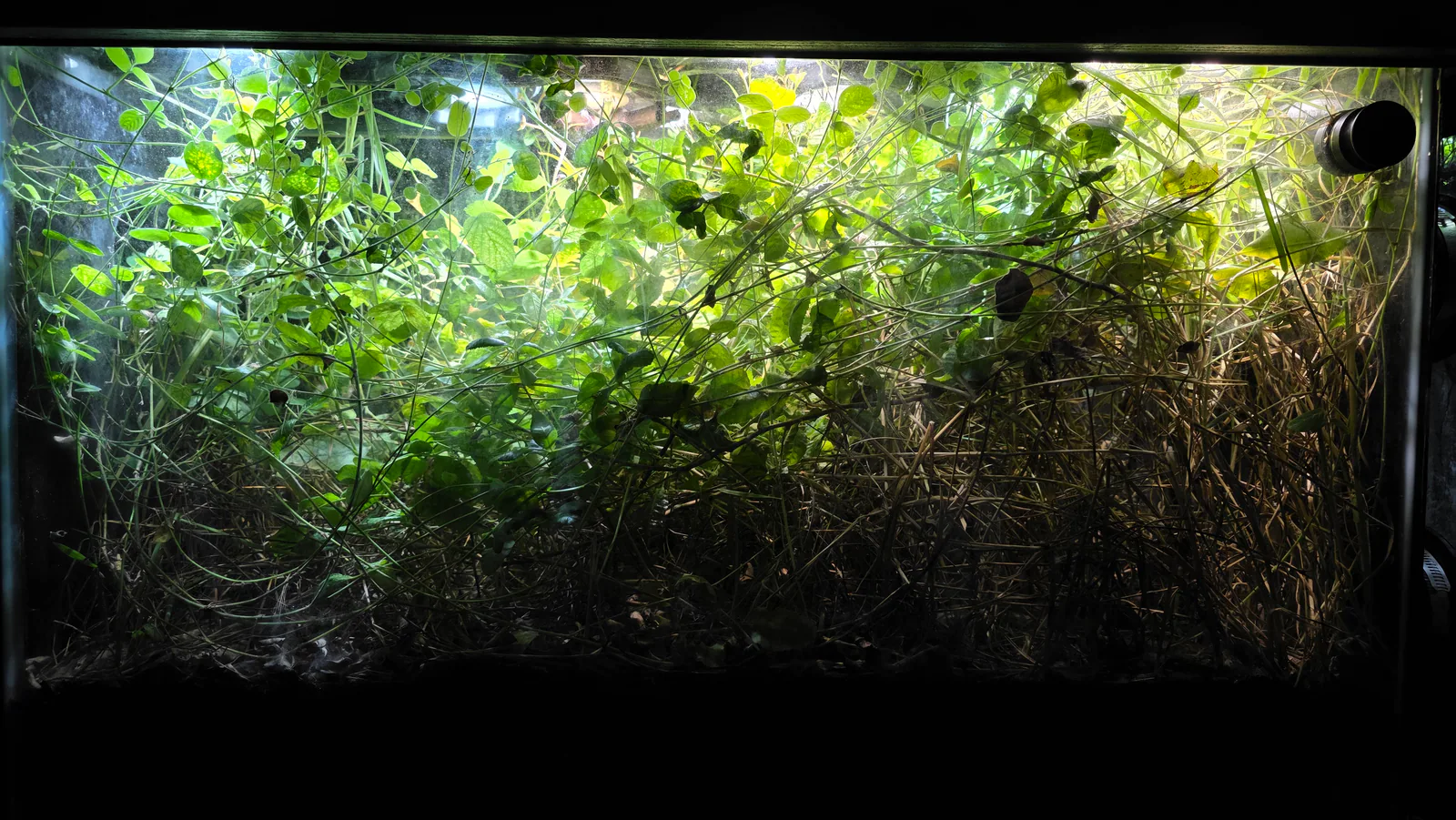
A stout, ground-dwelling shieldback katydid found among the grasses of the Lowland Meadow, blending into leaf litter and dry grass with its browns and salmon reds, and depending on morning dew and rainfall for hydration.
Overview

A stout, ground-dwelling shieldback katydid native to the sandy pine woods and shrubby meadows of the Southeast, introduced to the Lowland Meadow on July 1, 2025. The individual was observed drinking heavily after a rainstorm on July 20, 2025, with lack of morning dew flagged as a possible limiting factor for its survival. This record was originally documented under the species name Short-winged Meadow Katydid (Conocephalus brevipennis); that identification was incorrect, and the record has been corrected to Atlanticus gibbosus, the Robust Shieldback.

Identity

  • Common name: Robust Shieldback
  • Alternate names: robust shield-bearer, shieldback katydid, Short-winged Meadow Katydid (misidentified), meadow katydid (misidentified)
  • Scientific name: Atlanticus gibbosus
  • Identification confidence: Species-level, per direct identification by Josue. Atlanticus gibbosus is a shield-backed katydid found only in Florida, Georgia, South Carolina, and Alabama, distinguished from other Tettigoniidae by its stout body, domed pronotal shield, and coloring of rich browns and salmon reds with dark patches on the sides of the midsection. Similar-looking congeners (Atlanticus monticola, Atlanticus testaceus, Atlanticus pachymerus) exist within the same shieldback complex and are occasionally confused with A. gibbosus in field identification, but no alternative identification has been proposed for this record.
  • Uncertainty label: Observed

Taxonomy

  • Kingdom: Animalia
  • Phylum: Arthropoda
  • Class: Insecta
  • Order: Orthoptera
  • Suborder: Ensifera
  • Family: Tettigoniidae
  • Subfamily: Tettigoniinae
  • Tribe: Decticini
  • Genus: Atlanticus
  • Species: A. gibbosus (Bruner)

Natural History

Range and Florida Relevance

Atlanticus gibbosus is a shieldback katydid restricted to the Southeastern United States, found only in Florida, Georgia, South Carolina, and Alabama. It is fairly common in sandy pine woods, woodland edges, and shrubby meadows throughout its range, making it an ecologically appropriate species for the Lowland Meadow's grass- and shrub-dominated terrestrial habitat.

Habitat

Robust Shieldbacks are ground-associated katydids. Males typically sing from the ground or from low vegetation, and the species blends effectively into leaf litter, bark, and dry grass thanks to its brown and salmon-red coloring accented with dark lateral patches. They are nocturnal, spending daylight hours hidden in grasses and underbrush before becoming active at night.

Diet

Unlike the primarily herbivorous meadow katydids (Conocephalus spp.), shieldback katydids in the genus Atlanticus are largely predatory, feeding on other insects, including many species considered garden and crop pests, supplemented with some plant material. This makes A. gibbosus functionally an omnivore with a strong insectivorous lean, a different trophic role than the herbivore-leaning meadow katydid originally recorded for this species entry.

Reproduction

Like other Tettigoniidae, females use an elongated ovipositor to lay eggs in soil or leaf litter, and eggs typically overwinter with nymphs emerging in spring. Adults are active through summer, with males producing calling songs from the ground or low vegetation to attract mates.

Tolerance Ranges

As a species of sandy pine woods and shrubby meadow edges, A. gibbosus is adapted to warm, humid Southeastern summer conditions. The July 20, 2025 miniBIOTA observation, in which the individual was seen drinking heavily after a rainstorm, is consistent with reliance on rainfall and moisture for hydration, a trait shared broadly across Tettigoniidae regardless of the specific genus.

Ecological Role

In the Lowland Meadow, the Robust Shieldback occupies a ground-level niche, sheltering in grasses and leaf litter by day and becoming active at night. Because Atlanticus shieldbacks are predominantly insectivorous, this species most likely functions as a minor predator of other terrestrial invertebrates in the Lowland Meadow rather than as a primary grass herbivore, a revision from the original (incorrect) meadow-katydid framing of this record. No specific predation event was documented in miniBIOTA; the only substantive behavioral observation is the July 20, 2025 water-drinking event following a rainstorm, which points to moisture availability as a possible constraint on the species' survival in the Lowland Meadow.

miniBIOTA Evidence

Introduction and History

One individual, now identified as Atlanticus gibbosus, was introduced to the Lowland Meadow on July 1, 2025. No introduction method or source origin is documented. The individual was last recorded on July 25, 2025, with the most substantive observation coming on July 20, 2025, when it was observed drinking heavily following a rainstorm. At that time, lack of morning dew was identified as a potential limiting factor for katydid and grasshopper survival in the Lowland Meadow. Population status remains Uncertain; no subsequent observation has been recorded.

Observation Timeline

  • July 1, 2025: One individual, at the time recorded under the name Short-winged Meadow Katydid, introduced to Lowland Meadow. No media. Introduction record only.
  • July 20, 2025: Individual observed drinking heavily following a rainstorm. Lack of morning dew flagged as a likely limiting factor for grasshopper and katydid survival. A dew source was noted as the next management test. No media.
  • July 25, 2025: Last confirmed observation (date_last_observed on record; no dedicated observation file).
  • August 8, 2026: Species identity corrected from Short-winged Meadow Katydid (Conocephalus brevipennis) to Robust Shieldback (Atlanticus gibbosus), per direct identification by Josue. The original identification was in error; no such species as Short-winged Meadow Katydid was ever actually present in the system. The corrected identity does not change the underlying observation timeline, only the species attached to it.

What Is Confirmed

  • One Robust Shieldback introduced to Lowland Meadow on July 1, 2025.
  • Individual observed drinking heavily after a rainstorm on July 20, 2025.
  • Lack of morning dew identified as a potential survival constraint, July 20, 2025.
  • Last observed July 25, 2025.
  • The species is Atlanticus gibbosus, not Conocephalus brevipennis as originally recorded.

What Is Inferred

  • Water availability (morning dew, rainfall) may be a prerequisite for sustained presence in the Lowland Meadow based on the July 20 observation and known Tettigoniidae biology.
  • As an Atlanticus shieldback, the individual's diet likely leaned insectivorous rather than herbivorous; no feeding was directly documented in miniBIOTA.

What Remains Unknown

  • Whether the individual survived beyond July 25, 2025 or perished from desiccation, predation, or another cause.
  • Whether Atlanticus gibbosus can establish in miniBIOTA if a dew or misting source is provided.
  • Whether additional individuals were introduced at any time.
  • The source and introduction method for the July 2025 individual.