Timarete punctata

Spaghetti worm

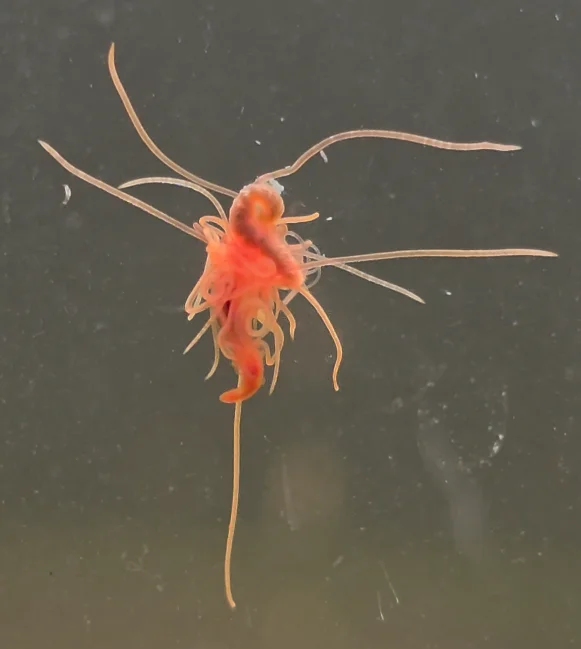
A sediment-dwelling polychaete that extends long pale tentacles outward from its burrow to gather fine organic particles from the sand surface, now established with more than 100 individuals across the Seagrass Meadow and Marine Shore.

Overview

The Spaghetti Worm (Timarete punctata, provisional) is a terebellid polychaete deposit feeder established in the miniBIOTA Seagrass Meadow and Marine Shore. It arrived as a hitchhiker on November 11, 2024, and expanded rapidly to an estimated 115 individuals now occupying much of the available substrate. Reproduction is confirmed from the population trajectory. The species is the most numerically abundant benthic invertebrate on record in the saltwater biomes and has been observed climbing the glass during a sediment stress event in May 2026. Scientific identity is assigned as T. punctata based on available observation records; no formal morphological confirmation has been performed.

Identity

  • Common name: Spaghetti Worm
  • Alternate names: polychaete worm, terebellid worm, sea worm, marine worm, timarete, hair worm (misidentified)
  • Scientific name: Timarete punctata (provisional)
  • Identification confidence: Provisional
  • Uncertainty label: Established, identity provisional

Taxonomy

  • Kingdom: Animalia
  • Phylum: Annelida
  • Class: Polychaeta
  • Order: Terebellida
  • Family: Terebellidae
  • Genus: Timarete
  • Species: punctata (provisional)

Natural History

Range and Florida Relevance

Timarete punctata and closely related terebellids are distributed across subtropical and tropical marine environments, including the Gulf of Mexico and Florida's coastal estuaries, bays, and intertidal zones. They are common constituents of soft-sediment marine communities and are frequently found in seagrass beds, sandy to silty substrate near oyster clusters, and in the fouling communities on marina structures. Their presence in miniBIOTA is consistent with normal Florida saltwater invertebrate diversity.

Habitat

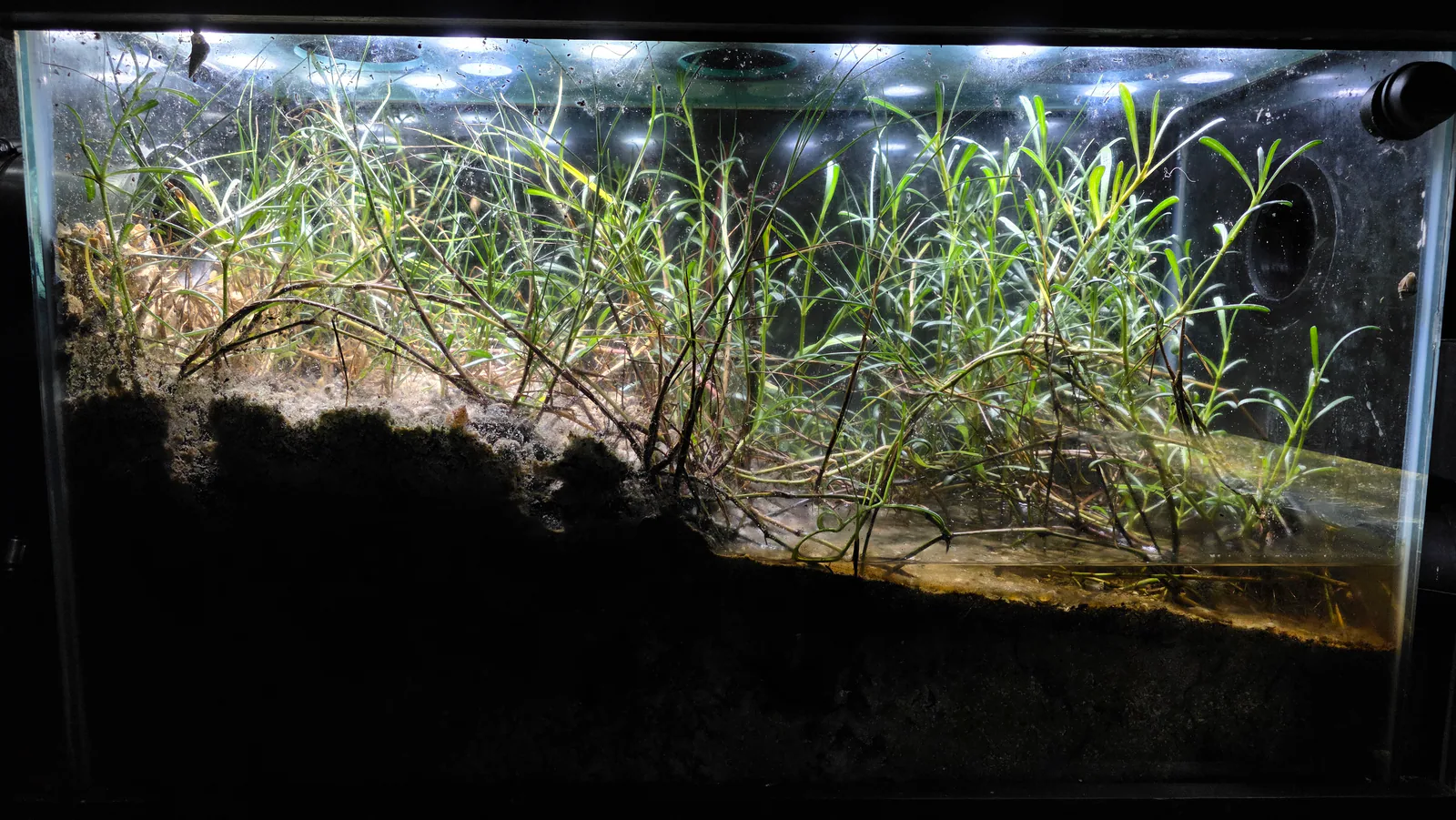
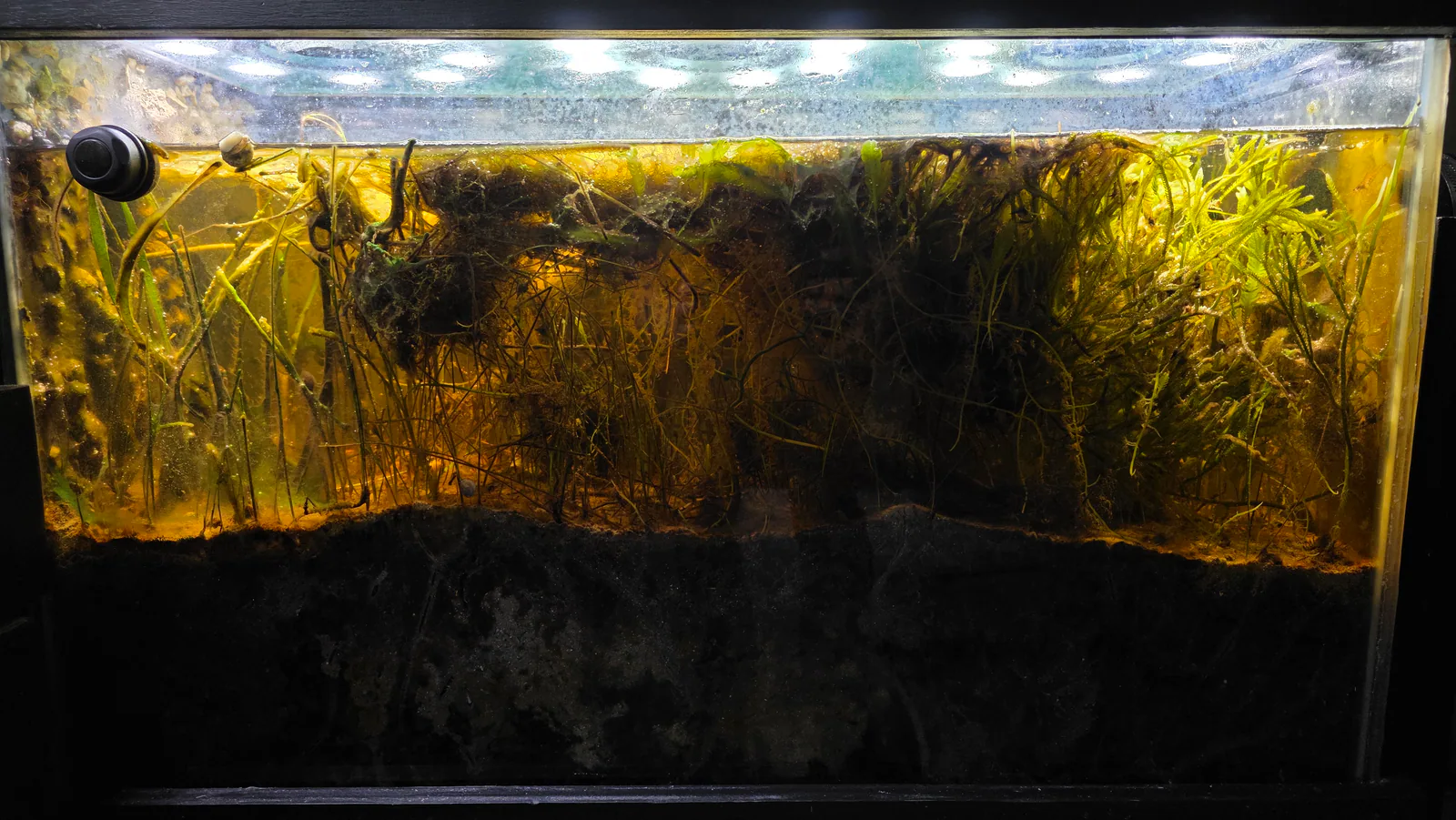
Terebellid polychaetes live buried in soft sediment, constructing mucus-lined tubes from which they extend their long feeding tentacles outward across the surface. In miniBIOTA, spaghetti worms occupy soft sediment in the Seagrass Meadow and Marine Shore. As of June 4, 2026, an observer noted that the large population occupies much of the substrate in the Seagrass Meadow. The worms live in fixed positions and are visible primarily as networks of pale, thin tentacles extending across the sand.

Diet

Timarete punctata is a deposit feeder. It extends long filamentous tentacles outward from its burrow tube across the sediment surface, gathering fine organic particles, bacteria, detritus, and diatoms. Material is transported via cilia along ciliated grooves on the tentacles toward the mouth. The worm does not filter open water; it harvests material already deposited on or settling near the substrate surface. In miniBIOTA, feeding behavior is inferred from species biology and deposit-feeder classification; no direct feeding observations have been recorded.

Reproduction

Terebellid polychaetes reproduce sexually with separate sexes. Females release eggs and males release sperm into the water column; fertilization is external and larvae are planktonic before settling as juveniles and metamorphosing into sediment-dwelling adults that construct mucus tubes. In miniBIOTA, reproduction is confirmed from the population trajectory: the species arrived as a small hitchhiker introduction in November 2024 and has grown to an estimated 115 individuals. The exact timing, frequency, and conditions of individual breeding events have not been documented.

Tolerance Ranges

Timarete punctata and related terebellids tolerate the range of temperatures, salinities, and water quality conditions typical of subtropical estuarine environments. In miniBIOTA, the population has established and grown without any documented tolerance-related failures. The May 16, 2026 observation of worms climbing the glass above a benthic cloud formation suggested possible sensitivity to reduced oxygen or sediment disturbance near the substrate; worms moved upward from the affected area, though no mortality was confirmed.

Ecological Role

Spaghetti worms are sediment recyclers in the Seagrass Meadow and Marine Shore. By gathering fine organic particles from the substrate surface and depositing processed material as feces back into the sediment, they contribute to benthic nutrient cycling and help turn over the upper sediment layer. With an estimated 115 individuals at carrying capacity, they represent the dominant benthic invertebrate by numerical abundance in the saltwater biomes, making their deposit-feeding activity a significant contributor to local sediment processing.

Their behavioral response to the May 2026 benthic cloud event (climbing the tank glass) provides a potential observational indicator of low-oxygen conditions or sediment disturbance at the substrate level. This warning-signal function was noted in the species database; it has been observed once and has not been systematically tested.

The June 4, 2026 mud crab introduction was motivated in part by the potential for mud crabs to influence the large spaghetti worm population through digging and substrate disturbance; no confirmed effect has been documented since.

miniBIOTA Evidence

Introduction Context

The Spaghetti Worm arrived as a hitchhiker on November 11, 2024, coming in with another introduction rather than being deliberately added to miniBIOTA. No specific source, vendor, or collection location has been documented for the original introduction, and no observation file for the founding event has been located. From that beginning, the population grew to an estimated 115 individuals, confirmed breeding, spread across the Seagrass Meadow and Marine Shore.

Observation Timeline

  • November 11, 2024: Database date of first introduction as a hitchhiker. No dedicated observation file on record for the founding event.
  • May 16, 2026: A white cloud-like formation was observed concentrated near the benthic layer on the left side of the Seagrass Meadow. Spaghetti worms were observed climbing up the glass above the affected region. The observer hypothesized a possible bacterial cloud related to nutrient release from a dead organism but found no visible deaths; the sea urchin was confirmed alive. Cause of the cloud remained unresolved. Video evidence.
  • June 4, 2026: During a mud crab introduction to the Seagrass Meadow, the observer noted that the spaghetti worm population "currently occupies much of the substrate" and that the mud crabs may influence this population through digging and foraging. The outcome of that interaction has not yet been observed. Video evidence.
  • June 14, 2026: Spaghetti worms observed in normal substrate position rather than climbing the glass, following wave system reprogramming to produce stronger water movement on June 13, 2026. Their absence from the glass confirmed improved dissolved oxygen availability in the Seagrass Meadow. The glass-climbing behavior had been a recurrent low-oxygen indicator before the wave settings were strengthened. No video.

What Is Confirmed

  • The species arrived as a hitchhiker on November 11, 2024.
  • The population has grown to an estimated 115 individuals, confirming successful establishment and reproduction.
  • The species is distributed across both the Seagrass Meadow and Marine Shore.
  • A large population occupies much of the available substrate in the Seagrass Meadow.
  • Worms were directly observed climbing the glass during a benthic disturbance event on May 16, 2026.

What Is Inferred

  • Reproduction has occurred in miniBIOTA, evidenced by the growth from a small hitchhiker to 115 individuals; the specific breeding events and timing have not been directly observed.
  • The glass-climbing behavior on May 16, 2026 may indicate a response to reduced oxygen or sediment disturbance; the cause of the benthic cloud event was not determined.
  • Mud crabs introduced June 4, 2026 may affect spaghetti worm population dynamics through substrate disturbance; no outcome has been confirmed.

What Remains Unknown

  • The exact founding population size and what the worms hitchhiked in on.
  • The precise locations within the Seagrass Meadow and Marine Shore where the worms are distributed.
  • Whether the May 2026 benthic cloud event caused any spaghetti worm mortality.
  • Whether the mud crab introduction has affected spaghetti worm abundance or behavior.
  • The current population count after the mud crab introduction.