Hadrobunus grandis
Harvestman
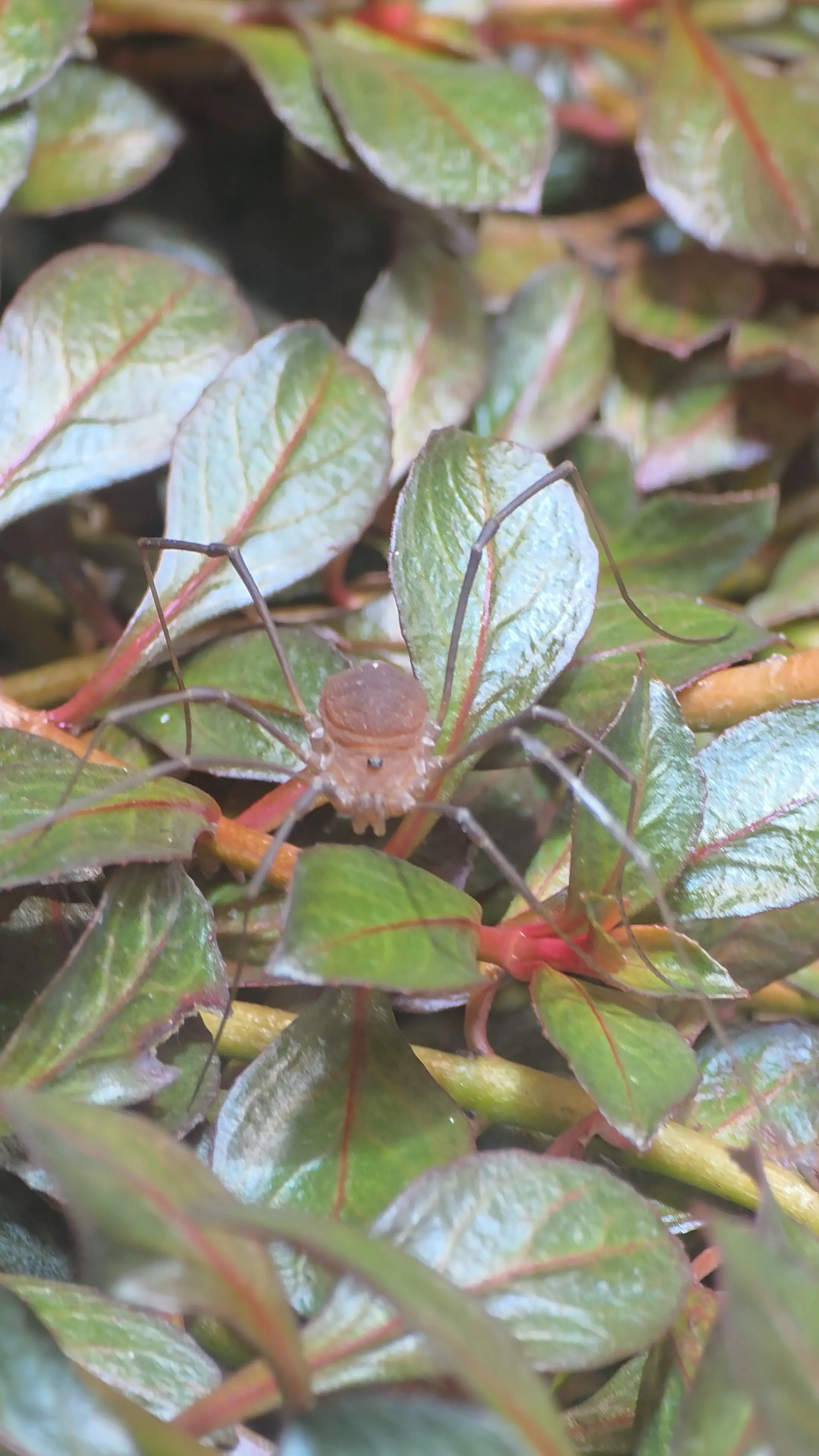
With extremely long legs and a compact oval body, the harvestman is a Florida arachnid that forages nocturnally across leaf litter, scavenging dead invertebrates, plant material, and fungi in the terrestrial realm.

Hadrobunus grandis
With extremely long legs and a compact oval body, the harvestman is a Florida arachnid that forages nocturnally across leaf litter, scavenging dead invertebrates, plant material, and fungi in the terrestrial realm.
The harvestman (Hadrobunus grandis) is a common arachnid of eastern North America and Florida, widely recognized by its extremely long legs and small, oval body. Despite its appearance, it is not a spider: it lacks venom glands, silk glands, and the distinct body-segment division of true spiders. One individual was introduced to miniBIOTA in October 2025 and was not observed after two days, with predation by the resident Southern Black Widow considered the most likely cause of disappearance. Population status is Extirpated.
Hadrobunus grandis is native to eastern North America, with a range extending from southern Canada through the eastern United States into Florida. In Florida, it is a familiar component of the terrestrial arthropod community in gardens, forest edges, lawns, and humid vegetated areas. It is not a structure-infesting species and poses no threat to humans. Florida's warm, humid climate supports harvestman populations year-round, though activity and abundance may vary seasonally.
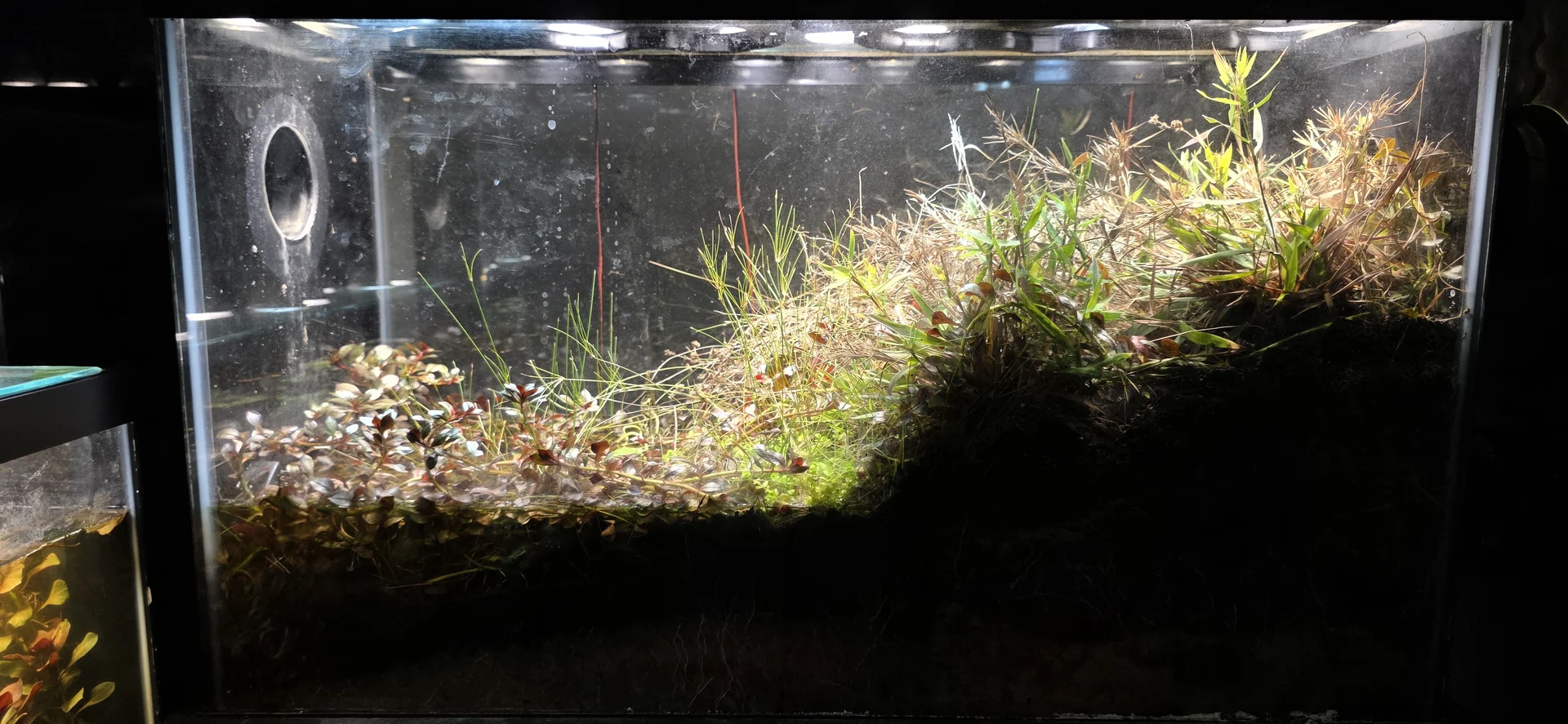
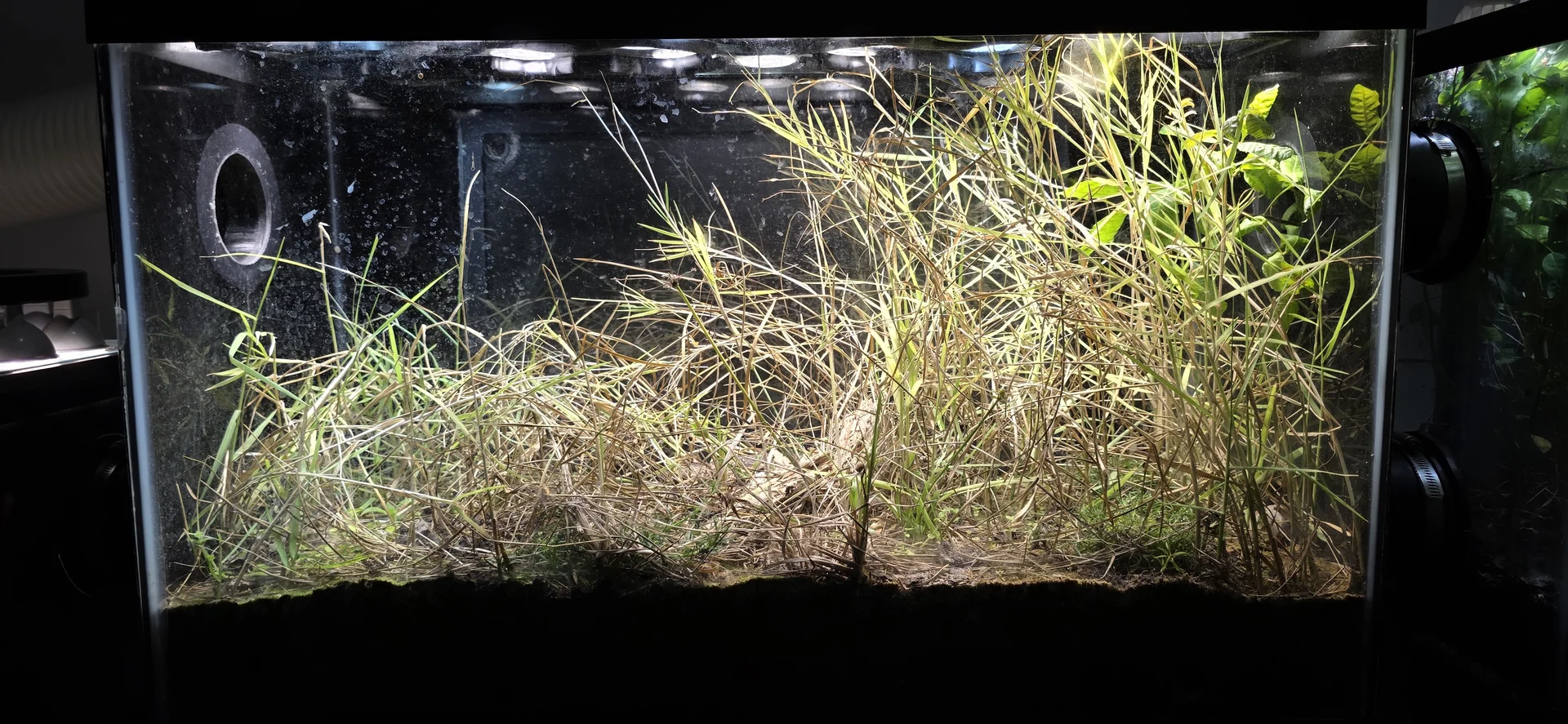
Harvestmen favor moist, sheltered microhabitats: leaf litter, low vegetation, bark surfaces, and the underside of logs or debris. They are strictly nocturnal in warm climates, spending the day in concealed resting spots and becoming active at night to forage. In a system like miniBIOTA, the Lowland Meadow's leaf litter, soil-surface organic matter, and plant bases, as well as the Lakeshore margin's vegetation and moist substrate edges, represent appropriate habitat types for this species.
Harvestmen are omnivorous scavengers. They feed on dead invertebrates, carrion, soft plant material, fungi, and occasionally small live prey. Unlike spiders, they cannot inject venom or use webs to capture prey; instead they forage actively across surfaces, using their front legs as sensory organs to detect food. Their chelicerae chew food directly. They are important consumers of small amounts of widely distributed organic matter in terrestrial systems.
Female harvestmen deposit eggs in soil or leaf litter using an elongated ovipositor. Eggs overwinter in temperate regions and hatch in spring, producing nymphs that develop through a series of molts into adults. Hadrobunus grandis is monovoltine in temperate climates, completing one generation per year. Adults typically die after the breeding season; the species persists through egg banks in the substrate.
Hadrobunus grandis is adapted to the humid, temperate to subtropical conditions of the eastern United States. It is sensitive to desiccation and requires moist refugia; it is most active during humid nights. No miniBIOTA-specific measurements were taken before the individual's disappearance.
In the terrestrial food web, harvestmen function as detritivores, scavengers, and opportunistic omnivores, consuming dead animal and plant material and moving energy through decomposition pathways. They also serve as prey for spiders, centipedes, and other terrestrial predators. Their role in miniBIOTA was purely inferred from published biology; the single introduced individual was present for too brief a period (two days) to produce any observed ecological interaction. Given the Southern Black Widow's presence in overlapping biomes during the same period, the harvestman's most likely role in miniBIOTA was as prey rather than as an active detritivore.
One harvestman was introduced to the Lowland Meadow and Lakeshore on October 2, 2025. It was last observed on October 4, 2025, two days after introduction. No dedicated observation file was created for the introduction. By October 12, 2025, the individual had not been seen again and was presumed Extirpated, with predation considered the most likely cause. The Southern Black Widow (Latrodectus mactans) was active in the Lowland Meadow during this period and is listed as the probable predator, though no predation event was directly observed. The source and introduction method are unrecorded.
Single individual introduced October 2, 2025. Last observed October 4, 2025, two days after introduction. As of October 12, 2025, not sighted again; presumed Extirpated, likely through predation. No direct predation event was observed; the Southern Black Widow was active in overlapping biomes at the time.
Hadrobunus grandis is a broad-spectrum scavenger and opportunistic omnivore; it feeds on dead invertebrates, soft plant material, fungi, and small live prey. It does not hunt by web or venom; it forages actively across the substrate. In miniBIOTA, this role would have overlapped with other terrestrial detritivores in the Lowland Meadow and Lakeshore, though no feeding behavior was observed.
Temperate to subtropical species; adapted to Florida's humidity and seasonal temperature range. Sensitive to desiccation and most active in humid conditions. No miniBIOTA-specific measurements were taken before the individual's disappearance.
Nymphs develop through a series of molts to adulthood; monovoltine cycle in temperate regions. No reproduction was possible in miniBIOTA; only one individual was present and it did not survive beyond two days.
The harvestman's detritivore and scavenger role in miniBIOTA is entirely inferred from published species biology; no ecological interaction was observed during its two-day presence. As a soft-bodied, non-venomous arachnid moving across the substrate surface at night, it represented prey for the resident Southern Black Widow and other terrestrial predators.
Follow this species across the habitats where it currently appears in the miniBIOTA biosphere.