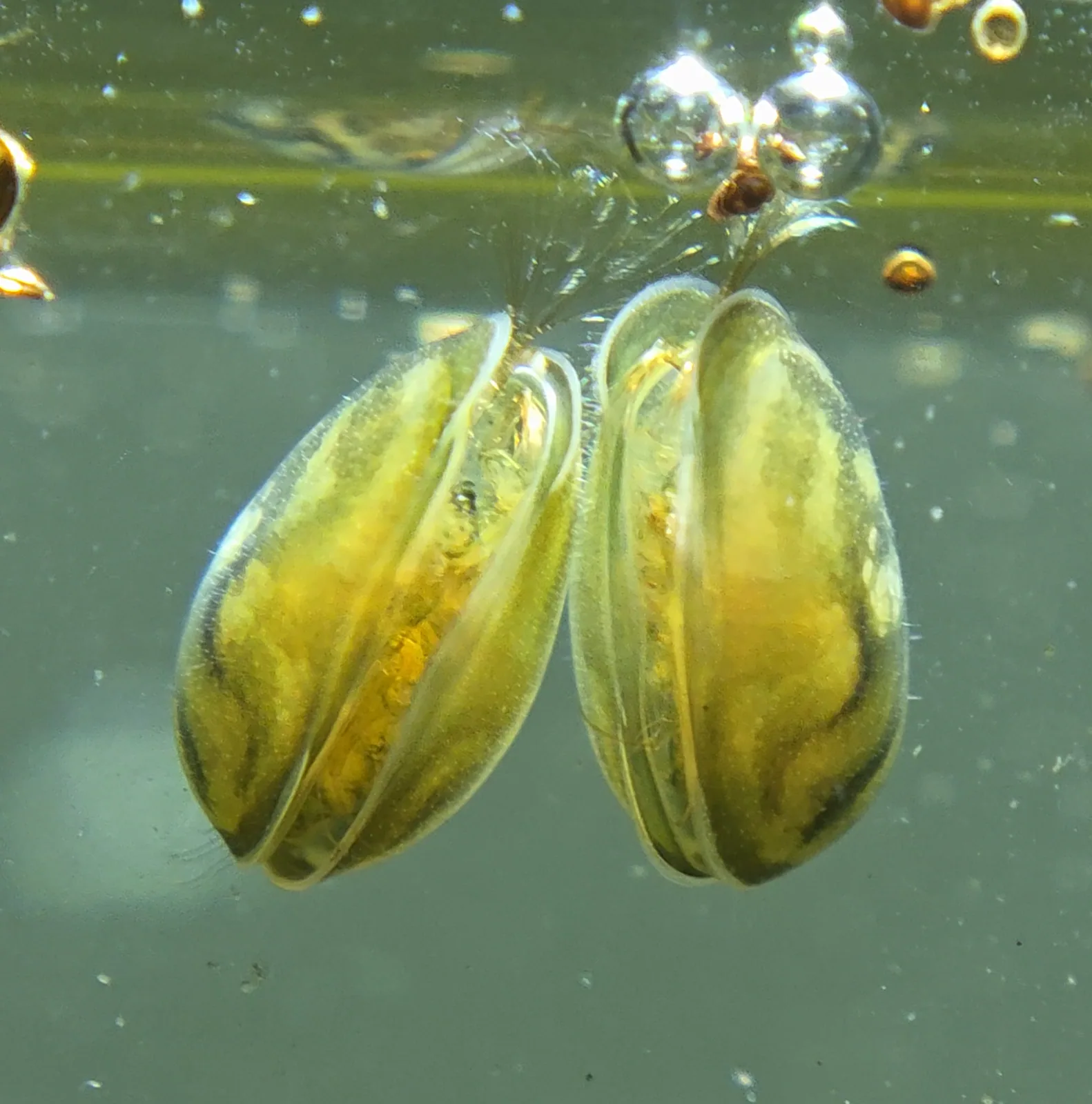
Ostracoda sp. (unidentified)

Freshwater Seed Shrimp

Enclosed in a hard bean-shaped shell, these tiny freshwater crustaceans flutter through the water column feeding on fine detritus and algae; visible numbers from two wild-collected introduction attempts in April 2026 dropped sharply within weeks, but a low-density population evidently persisted, reconfirmed by direct sighting in August 2026.
Realm
Freshwater Species
Population
Uncertain miniBIOTA population category
Introduced
April 2026 First introduction record
Primary Biome
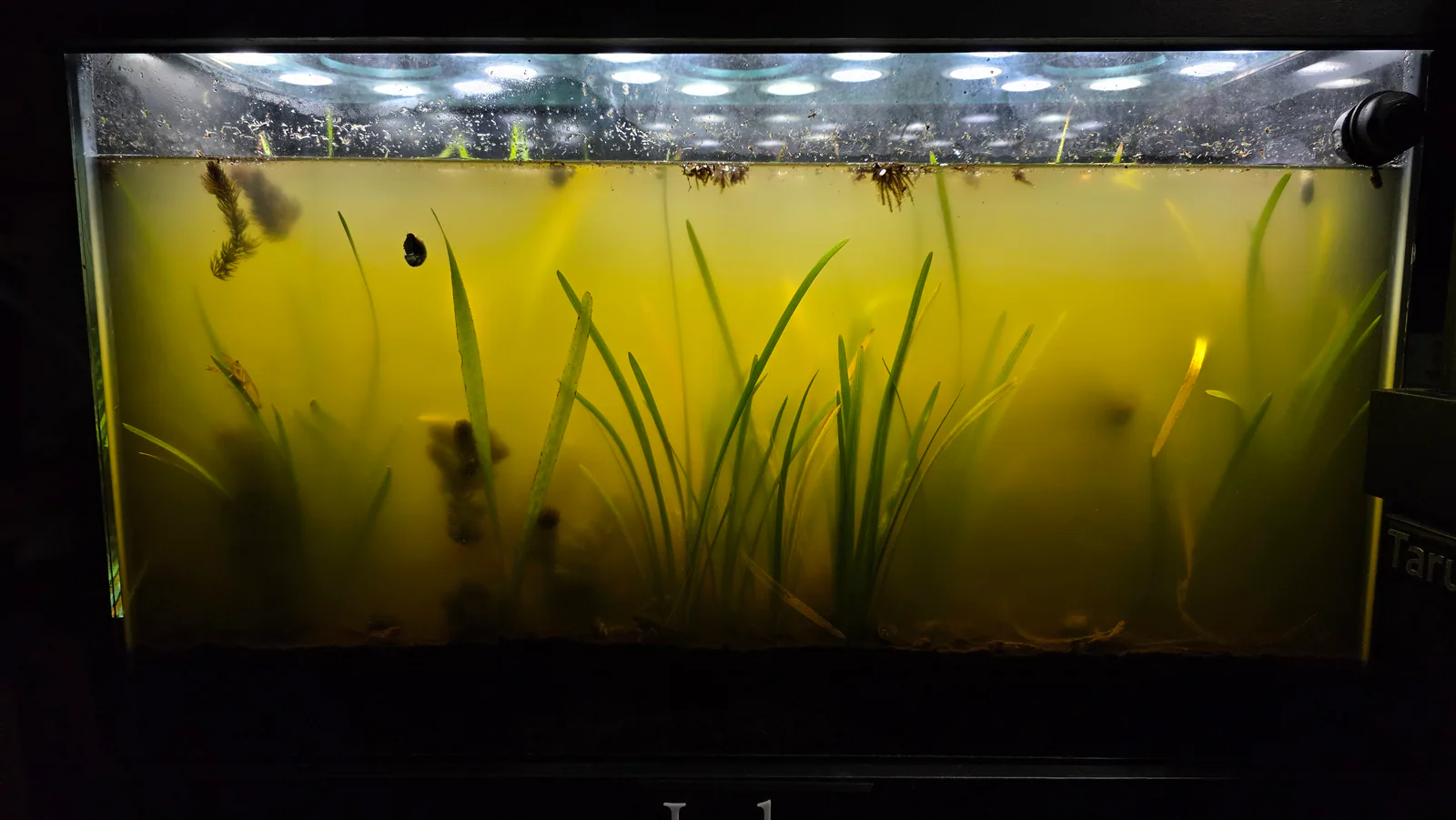
Freshwater Lake 1 habitat

Role & Shared Habitat

Documented role fields and shared-biome neighbors are shown as explicit record links, not inferred species interactions.

Focal species

Freshwater Seed Shrimp

Fine-particle nutrient cycling

Documented role

Trophic level
Detritivore
Feeding method
Filter feeder or detritivore
Ecological role
Fine-particle nutrient cycling

Linked biomes

Shared-habitat inhabitants

Overview

These tiny freshwater crustaceans were wild-collected from a Florida trail pool and introduced into the Freshwater Lake twice in April 2026. Neither introduction attempt maintained visible numbers: hundreds of individuals declined to absence within days to weeks, with predation by crayfish and shrimp cited as the most likely cause, and the species was recorded as extirpated after no sightings from May 2026 through mid-August 2026. On August 17, 2026, a seed shrimp was directly observed in the Freshwater Lake, reversing that status: the species is confirmed present, most likely reflecting a low-density population that persisted undetected rather than a new introduction.

Identity

  • Common name: Freshwater Seed Shrimp
  • Alternate names: Ostracod, seed shrimp, mussel shrimp, bean shrimp, freshwater ostracod
  • Scientific name: Ostracoda sp. (unidentified)
  • Identification confidence: Class-level only
  • Uncertainty label: Observed

Taxonomy

  • Kingdom: Animalia
  • Phylum: Arthropoda
  • Class: Ostracoda
  • Order: Unresolved
  • Family: Unresolved
  • Genus: Unresolved
  • Species: Unresolved

Natural History

Ostracods (Class Ostracoda) are a diverse group of small crustaceans found in marine, brackish, and freshwater environments worldwide. The common names "seed shrimp," "mussel shrimp," and "bean shrimp" all refer to the distinctive bivalved shell that encloses the soft body; the animal moves through the water by extending its antennae and appendages through the opening in a characteristic fluttering motion. Sizes range widely across species, but freshwater ostracods are typically 0.5 to 2 mm in length.

Freshwater ostracods are widespread in Florida and common in slow-moving or stagnant, organically rich water such as ponds, trail pools, marshes, and wetland margins. They feed on fine detritus, bacteria, algae, and suspended organic particles, processing material from the water column and sediment surface. Some species can reproduce parthenogenetically (without fertilization), which allows populations to grow rapidly from small founding groups under suitable conditions.

These animals are well-adapted to variable and temporary habitats but require food availability, water chemistry stability, and adequate refuge from predators. In systems with heavy predation from invertebrates such as crayfish, shrimp, and fish, ostracod populations can be rapidly depleted. Their small size and soft-bodied appendages make them vulnerable prey.

Ecological Role

In general freshwater ecosystems, ostracods contribute to fine-particle nutrient cycling by processing detritus, bacteria, and suspended organic matter. They can also serve as prey for larger invertebrates and fish, making them a link between microbial and detrital inputs and higher trophic levels. In systems where they establish, they can be present in high densities and represent a meaningful component of the water column invertebrate community.

In miniBIOTA, the Freshwater Seed Shrimp appeared not to establish following the two introduction attempts in April 2026, both of which showed rapid visible population decline, consistent with strong predation pressure from the Slough Crayfish and Daggerblade Grass Shrimp present in the Freshwater Lake at the time. However, a direct sighting on August 17, 2026, nearly four months after the species was declared extirpated, confirms the species is in fact present, most likely at a low density that made it difficult to detect rather than genuinely absent. There is no evidence that the population has contributed measurably to nutrient cycling or water clarity.

miniBIOTA Evidence

Introduction context: Wild-collected from a small stagnant trail pool on April 8, 2026, along with Daphnia and other organisms. First introduced directly into the Freshwater Lake the same day. After the first introduction crashed, a second collection was made from the same wetland, acclimated overnight in a separate bucket, and introduced on April 16, 2026.

Observation timeline:

  • April 8, 2026: Collected from a stagnant trail pool during a field search; described as "notably large ostracods." Introduced into the Freshwater Lake along with Daphnia ambigua and other organisms. Video evidence of collection and introduction.
  • April 10, 2026: Large ostracods (50 to 100 introduced) have not been observed since introduction; smaller ostracods still visible. Unclear if consumed or hidden in detritus.
  • April 13, 2026: Complete disappearance first noticed; nighttime check confirmed no individuals. Initial population presumed lost. Probable cause: acclimation shock from direct introduction without transition period.
  • April 14, 2026: Returned to wetland and collected several hundred individuals; held in aerated bucket overnight for acclimation.
  • April 15, 2026: New collection confirmed viable with hundreds of individuals surviving overnight. Gradual acclimation underway by exchanging small amounts of water between bucket and lake.
  • April 16, 2026: Full population transfer of hundreds of ostracods, Mesostoma ehrenbergii flatworms, and approximately a dozen water beetles into the Freshwater Lake; introduction timed before lights raised water temperature.
  • April 16, 2026: 100x magnification close-up video of ostracods and copepods swimming actively in the water column, displaying a "distinct fluttering motion". Video evidence.
  • April 17, 2026: Confirmed large ostracods survived through the night but numbers noticeably lower than introduced. Acclimation shock appears to have been reduced by the bucket protocol, but ongoing decline suggests predation through the sediment overnight.
  • April 23, 2026: At least one seed shrimp still visible in the water column, confirming some individuals persisted. Note observes that "hundreds introduced are largely gone by the following day, indicating strong predation pressure." Last confirmed individual.
  • May 3, 2026: No seed shrimp observed in Freshwater Lake or Lakeshore during multiple day and night checks. Not confirmed as complete loss at this point, but no longer visibly present.
  • May 21, 2026: Outcome note (primary subject: Mesostoma Flatworm) documents that seed shrimp from the wetland introductions "persisted somewhat longer, remaining visible for roughly a week," with numbers declining from hundreds to a few dozen by the following day and eventually to a handful before disappearing. Population recorded as Extirpated based on absence through this point. Best interpretation at the time: consumed by crayfish and shrimp.
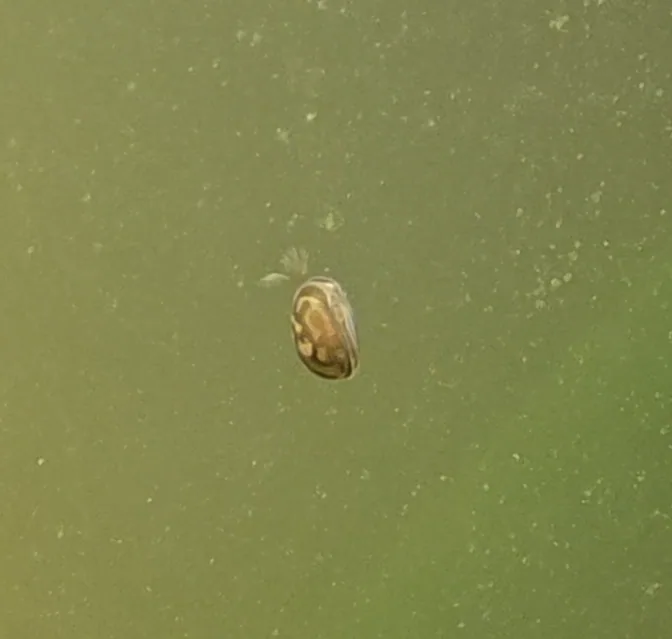
  • August 17, 2026: A seed shrimp directly observed in the Freshwater Lake, the first confirmed sighting since April 23, 2026. Reverses the Extirpated status: the species is confirmed present. Whether this reflects a low-density population that persisted undetected for nearly four months, or some other explanation, is unresolved; continuous low-density persistence is the more likely reading. Josue raises the August 12, 2026 hornwort addition as a possible, unconfirmed contributor to improved detectability. Observation record, August 17, 2026.

Confirmed:

  • Wild-collected from Florida wetland trail pool April 8, 2026
  • Two introduction attempts: April 8, 2026 (direct) and April 16, 2026 (acclimated)
  • Active swimming at 100x magnification documented April 16, 2026
  • Rapid visible population decline across both introduction attempts
  • Absent from multiple day and night checks by May 3, 2026, and recorded as Extirpated as of the May 21, 2026 outcome note
  • Reconfirmed present via direct observation, August 17, 2026, reversing the Extirpated status

Inferred:

  • Predation by Slough Crayfish and/or Daggerblade Grass Shrimp as a likely contributor to the sharp visible decline after both introductions, consistent with notes from
  • Second introduction (with acclimation) improved short-term survival slightly over the direct first introduction
  • The August 17, 2026 sighting most likely reflects a low-density population that persisted undetected since 2026, rather than a new, undocumented introduction

Unknown:

  • Species-level identity within Class Ostracoda
  • Whether acclimation shock contributed alongside predation to the first introduction's visible decline
  • Whether the population persisted continuously at low density between May 2026 and August 17, 2026, or whether some other explanation accounts for the August 2026 sighting
  • Whether the August 12, 2026 hornwort addition contributed to improved detectability
  • Current population size and distribution