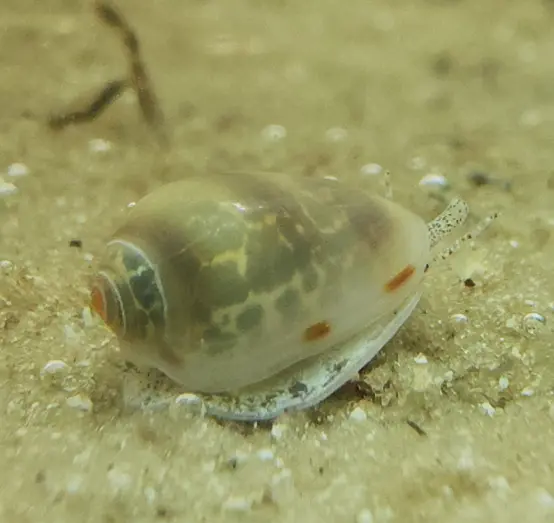
Prunum apicinum

Common Atlantic Marginella

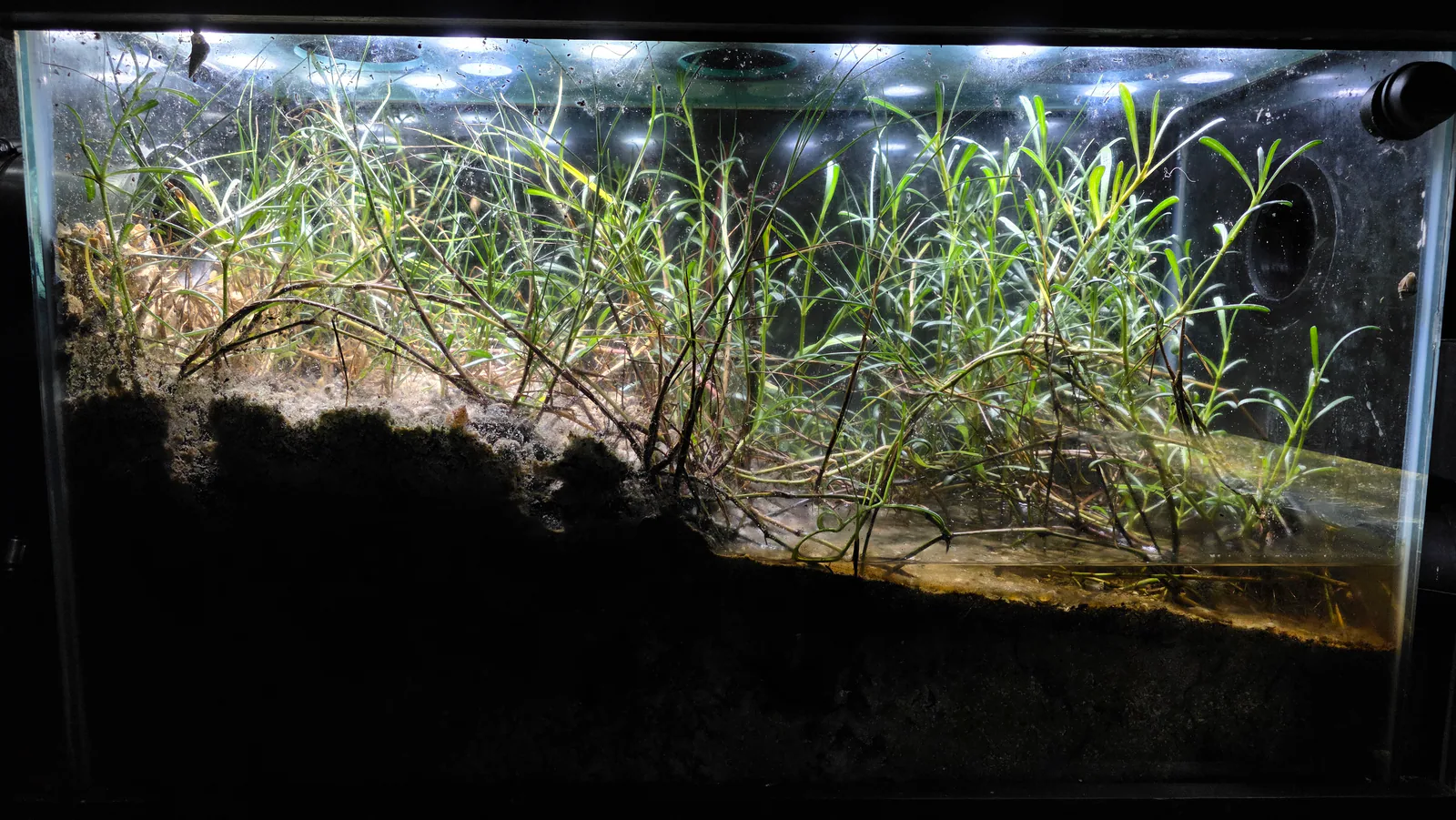
Removed from the Seagrass Meadow in October 2025 after confirmed predation on juvenile Cerith and Depressed Slippersnails, this tiny glossy snail may have also been suppressing cyanobacteria through constant sand-burrowing -- the observer sought specimens for reintroduction in June 2026.

Overview

Removed from the Seagrass Meadow in October 2025 after confirmed predation on juvenile Cerith and Depressed Slippersnails, this tiny glossy snail may have also been suppressing cyanobacteria through constant sand-burrowing, the observer sought specimens for reintroduction in June 2026.

Identity

  • Common name: Common Atlantic Marginella
  • Alternate names: marginella, marginella snail, rice snail, rice shell, marginella shell, common marginella
  • Scientific name: Prunum apicinum
  • Identification confidence: Species-level
  • Uncertainty label: Removed

Taxonomy

  • Kingdom: Animalia
  • Phylum: Mollusca
  • Class: Gastropoda
  • Order: Neogastropoda
  • Family: Marginellidae
  • Genus: Prunum
  • Species: P. apicinum

Natural History

Prunum apicinum is the Common Atlantic Marginella, a small predatory gastropod common in shallow sand and seagrass habitats along the Atlantic coast and Gulf of Mexico. It is found from the shallow coastal waters of Florida through the Caribbean in sandy and seagrass-vegetated substrates at depths typically from the intertidal zone to about 10 meters.

The species is a predator and opportunistic scavenger. It hunts primarily by burrowing through sediment and using a muscular, extendable proboscis to reach and consume other mollusks, particularly bivalves and small gastropods. Both prey items confirmed in miniBIOTA (Cerith Snails and Depressed Slippersnails) are gastropods; direct predation on juveniles was observed extending the proboscis to consume prey. The shell's glossy, smooth surface and lack of external ornamentation are consistent with a burrowing lifestyle.

The species is a productive breeder in the right conditions. Marginellas reproduce by laying small egg capsules attached to substrate. In miniBIOTA, the population expanded from an initial introduction to a count of at least 173 snails at removal, "highly successful breeder" per DB, and most removed individuals were sand-grain-sized juveniles, indicating ongoing reproduction.

Ecological Role

In the Seagrass Meadow, the Common Atlantic Marginella occupied two distinct ecological roles simultaneously, one of which was not recognized until after removal.

The first role, the one that drove removal, was as a predator of juvenile snails. By December 2024, the species was confirmed predating other snails on multiple occasions. The observer explicitly noted the risk: "if consuming newly hatched snails before they reach adulthood, nerite and cerith snail populations could collapse, both crucial for surface algae control." By April 2025, a marginella was directly observed extending its proboscis to consume several baby Depressed Slippersnails. The threat to juvenile mollusks was the proximate reason the species was removed beginning in October 2025.

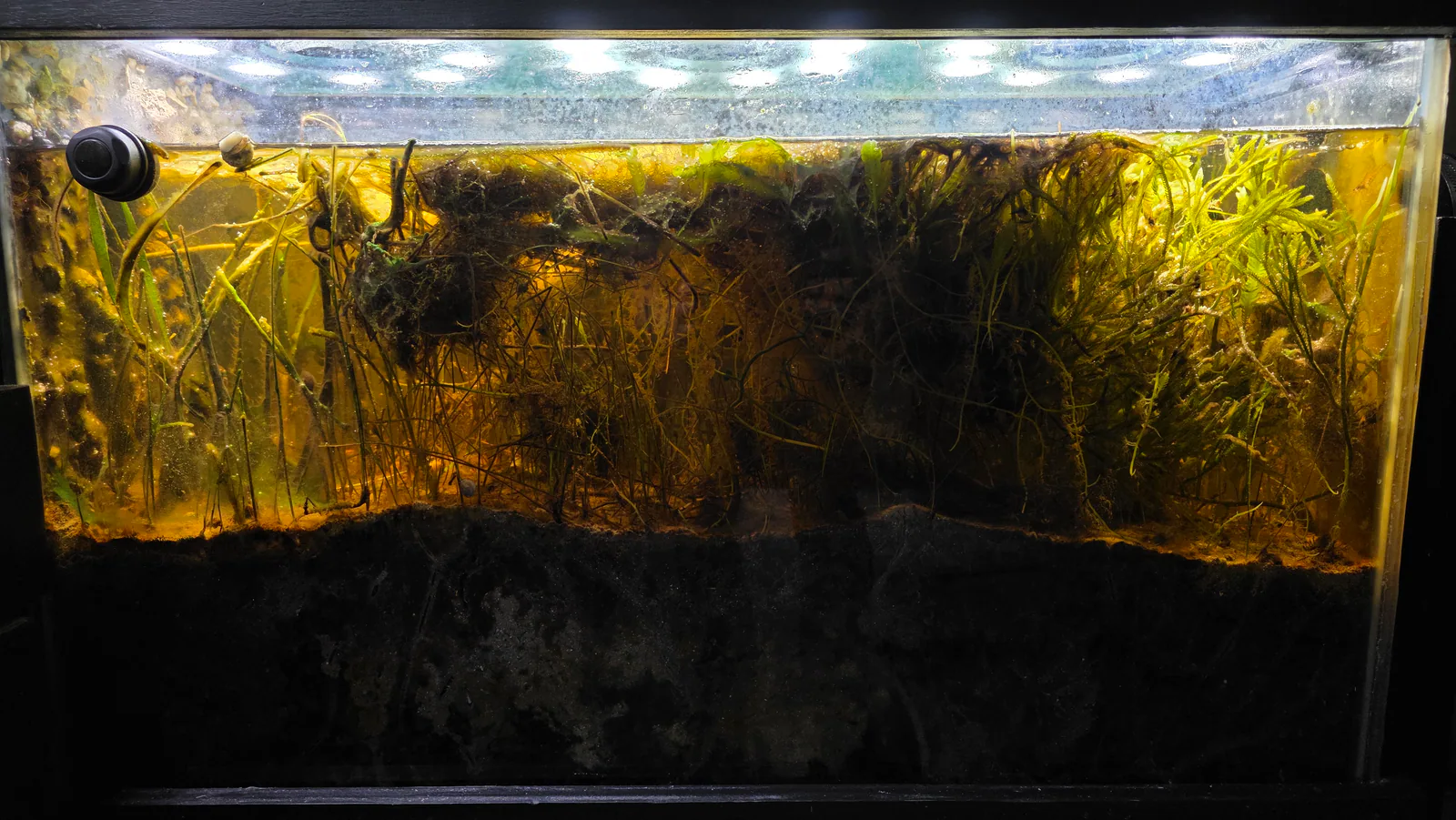
The second role, recognized only after the fact, was as a sand bioturbator. The observer noted in June 2026 that marginellas "functioned as detritivores and were constantly moving through and turning over the surface of the sand." After removal began in early October 2025, cyanobacteria began visibly establishing in the Seagrass Meadow approximately one month later. No visible cyanobacteria appeared in October photographs; by early November it was already spreading. The observer made the connection: the snails' continuous sand-turning had been disturbing the substrate in a way that may have suppressed cyanobacteria establishment. After recognition of this possible role, the observer searched for specimens to reintroduce, as of June 4, 2026, no specimens had been located.

miniBIOTA Evidence

Introduction context: The Common Atlantic Marginella was introduced to miniBIOTA on December 10, 2023, the same date the Daggerblade Grass Shrimp was introduced, among the earliest marine species in the system. Introduction method and source are null; local Florida coastal collection is probable. The species reproduced successfully and reached substantial numbers before removal.

Observation timeline:

  • December 10, 2023: date_first_introduced per DB. No dedicated Markdown observation file exists.
  • December 11, 2024: "Marginella snails observed eating other snails on multiple occasions. Risk: if consuming newly hatched snails before they reach adulthood, nerite and cerith snail populations could collapse, both crucial for surface algae control.". Predation on other snails confirmed; ecological risk identified.
  • April 9, 2025: "Marginella snail extended its tube-like mouth to reach and consume several baby Depressed Slippersnails (previously misidentified as limpets) just outside the waterline. Confirms Marginella as a predator of juvenile slippersnails.". Direct predation on Depressed Slippersnail juveniles confirmed.
  • October 5, 2025 (approx): Removal process began. No dedicated Markdown observation file for the start date.
  • October 12, 2025: 47 individuals removed after one week; most were sand-grain-sized; species moved from Least Concern to Removed. Removal ongoing.
  • October 30, 2025: date_last_observed per DB. Removal ongoing.
  • November 2, 2025: 110 individuals removed as of this date.
  • Early November 2025: Cyanobacteria begins establishing in the Seagrass Meadow; no visible cyanobacteria was present in October photographs.
  • January 15, 2026: 173 total individuals removed; all presumed removed.
  • June 4, 2026: Observer connects cyanobacteria expansion to marginella removal; identifies the snails' sand-bioturbation role; attempts to find specimens for reintroduction but cannot locate any..

Confirmed:

  • Introduced December 10, 2023
  • Predation on juvenile snails confirmed December 11, 2024
  • Predation on juvenile Depressed Slippersnails confirmed April 9, 2025, proboscis extension observed directly
  • Removal initiated October 2025; 173 individuals removed; all presumed removed by January 15, 2026
  • Population status: Removed; current_estimated_population: 0
  • Sand-burrowing bioturbation behavior documented (June 2026 )

Inferred:

  • The species reproduced continuously in miniBIOTA; the sand-grain-sized juveniles present at removal indicate ongoing reproduction through summer 2025
  • The approximately one-month lag between removal (October 2025) and cyanobacteria establishment (early November 2025) is consistent with the substrate-disturbance hypothesis; causal relationship is plausible but unconfirmed
  • Predation pressure on juvenile Cerith Snails, Nerite Snails, and Depressed Slippersnails was ongoing throughout the period 2023-2025

Unknown:

  • Whether cyanobacteria expansion was caused by marginella removal or by another concurrent factor
  • Whether a reintroduced marginella population would suppress cyanobacteria without also suppressing juvenile snail populations
  • Whether any individuals survived the removal process or are present in hidden substrate