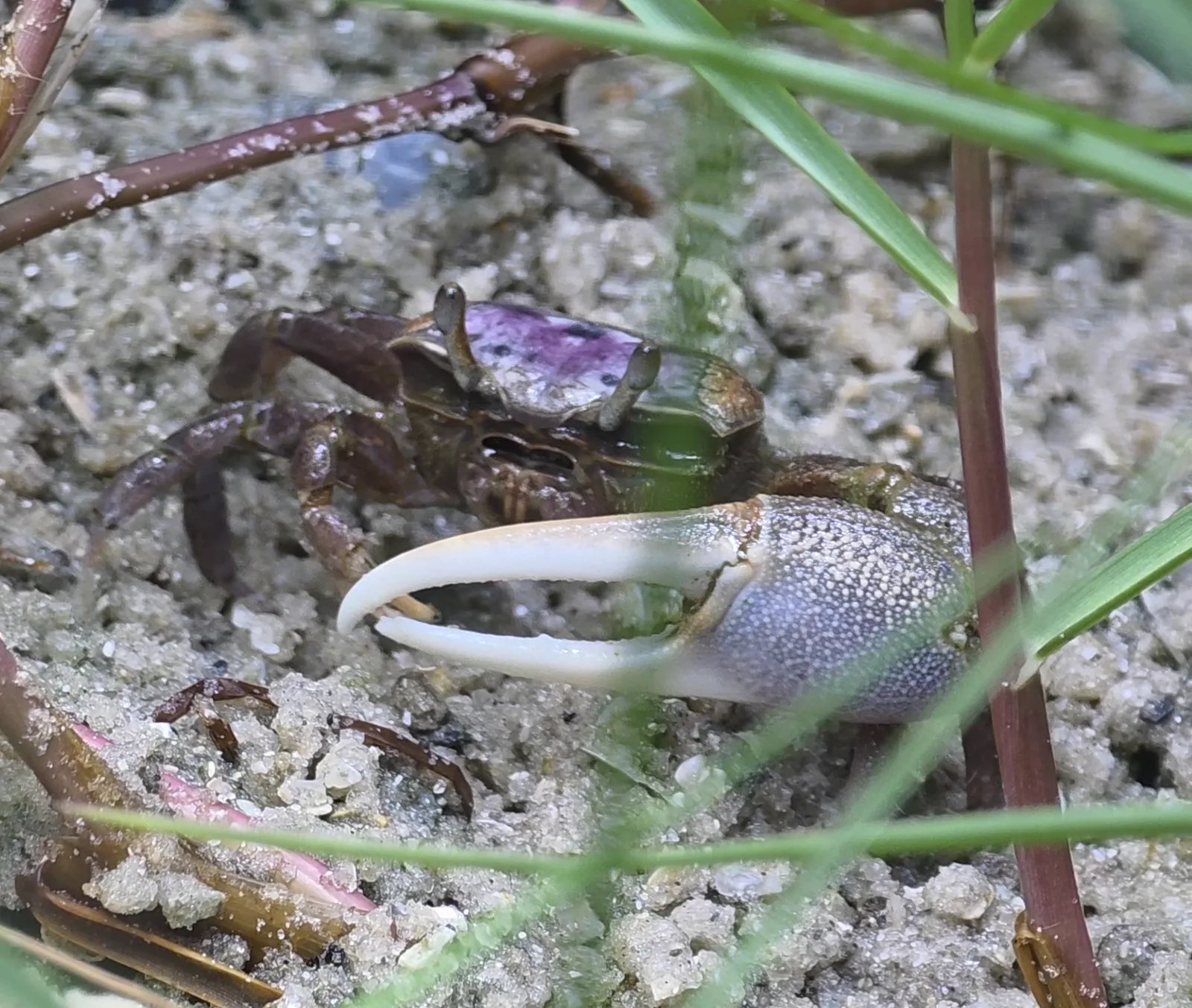
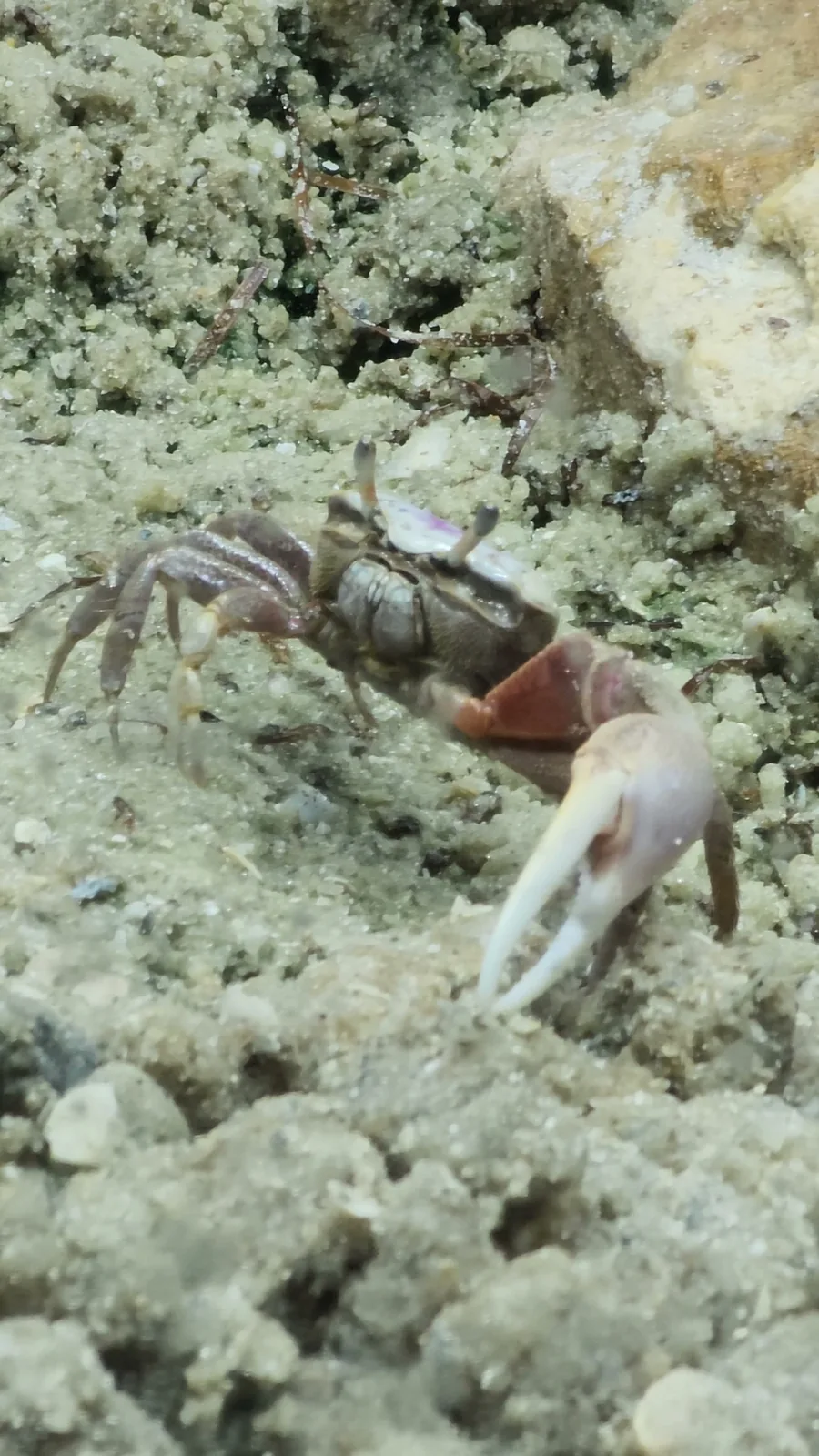
Atlantic Sand Fiddler Crabs arrived with the Marine Shore sand as a founding group of six, three males and three females. The date of introduction is not recorded in the observation records. By May 2026 the confirmed population was four: three females and one male.
December 20, 2024: A female fiddler crab was observed full of eggs, appearing near hatching. The exact hatching date was unknown at the time. Monitoring was flagged. No media.
July 20, 2025: A note documented breeding events from June 2025: eggs were first observed June 12, 2025 and spawning occurred June 13, 2025. Despite successful reproduction, zoea were not surviving to adolescence. Larval survival was identified as the critical bottleneck. No media.
May 22, 2026: Population confirmed directly: four living individuals, three females and one male. This is the most recent documented status.
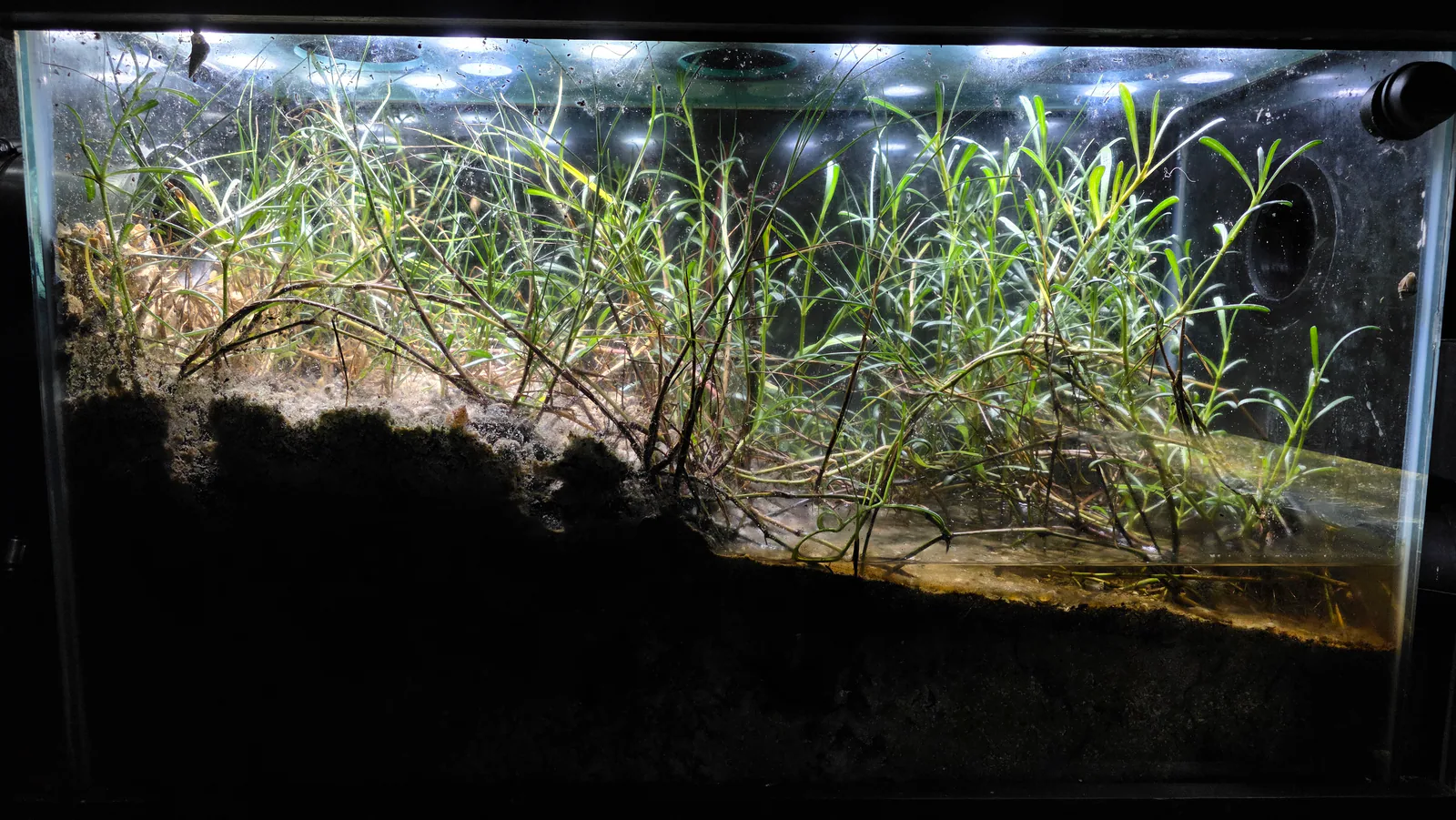
June 20, 2026: The large major claw of the male was found within the Seagrass Meadow biome. The male was not located. All three females confirmed present. Whether the claw represents a discarded molt or a mortality event is unresolved. The Seagrass Meadow is outside the species' primary Marine Shore habitat, indicating the male moved beyond the Marine Shore at some point. Additional observation needed to determine the male's status. No media. Observation record, June 20, 2026.
July 18, 2026: A fiddler crab, identified by Josue as Atlantic Sand Fiddler Crab, filmed sifting sand through its mouth, dropping cleaned sand pellets, and foraging for shell fragments in the Marine Shore, normal deposit-feeding behavior. First confirmed sighting of the species since June 20, 2026. Sex was not specified in the footage description, so this does not resolve whether the previously unlocated male is alive. Video documented. Observation record, July 18, 2026.
August 14, 2026: First confirmed sighting of a separate, incidentally-introduced fiddler crab cohort: a few extremely small (approximately pinhead-sized) fiddler crabs arrived unintentionally on washed-up seagrass material during a lawn shrimp collection, discovered only after returning home. Josue recalls, as an unverified recollection rather than a confirmed record, that this occurred the same day as the mangrove crab and mud crab collections (approximately June 4, 2026, per those species' introduction dates). One individual was observed today, the first sighting since that incidental introduction, and appears larger than at introduction, interpreted as evidence of survival and growth, though no molt was directly observed. This cohort is distinct from the originally tracked founding group of six that arrived with the Marine Shore sand. Observation record, August 14, 2026.