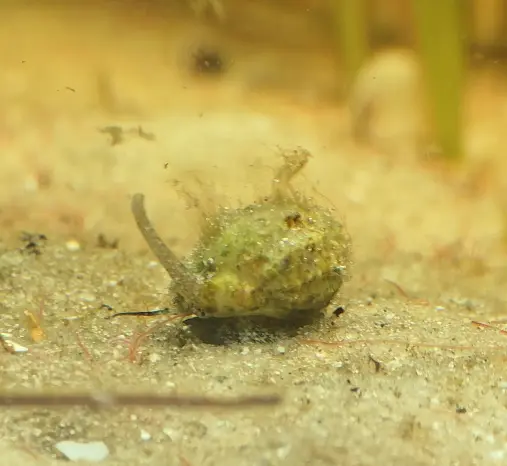
Nassarius vibex

Bruised Nassa

Introduced in December 2023 as part of miniBIOTA's early saltwater cleanup crew, this compact scavenger spent most of its time buried in the Seagrass Meadow substrate, emerging by chemoreception when dead animals or polychaete eggs were nearby -- one of the few species in the saltwater system whose primary ecological function was carrion processing.

Overview

Introduced in December 2023 as part of miniBIOTA's early saltwater cleanup crew, this compact scavenger spent most of its time buried in the Seagrass Meadow substrate, emerging by chemoreception when dead animals or polychaete eggs were nearby, one of the few species in the saltwater system whose primary ecological function was carrion processing.

Identity

  • Common name: Bruised Nassa
  • Alternate names: nassarius snail, nassarius mud snail, nassa snail, mud snail, nassarius, vibex nassarius
  • Scientific name: Nassarius vibex
  • Identification confidence: Species-level
  • Uncertainty label: Removed

Taxonomy

  • Kingdom: Animalia
  • Phylum: Mollusca
  • Class: Gastropoda
  • Order: Neogastropoda
  • Family: Nassariidae
  • Genus: Nassarius
  • Species: N. vibex

Natural History

Range and Florida Relevance

Nassarius vibex ranges along the western Atlantic coast from North Carolina south through Florida, the Gulf of Mexico, and the Caribbean to Brazil. It is abundant throughout Florida's coastal shallow-water habitats and one of the most frequently encountered small gastropods in seagrass beds, sandy intertidal flats, and estuarine margins. Florida is central to its range, and the species is commonly collected or purchased for reef and seagrass aquarium systems as a cleanup crew member.

Habitat

The Bruised Nassa inhabits sandy and muddy soft-sediment substrates in shallow marine and estuarine environments. It spends much of its time burrowed just below the sediment surface with only its siphon extended to sample the water column. When its chemosensory system detects carrion or organic signals, it surfaces rapidly and moves directly toward the source. In aquarium settings it is typically found in the sand bed during the day, becoming active when food is introduced or animals die.

Diet

Nassarius vibex is primarily a scavenger. It feeds on dead fish, dead invertebrates, and carrion of any kind, processing decaying organic material through its gut and returning nutrients to the system. It is also documented consuming polychaete egg masses, including ragworm (family Nereididae) and lugworm (family Arenicolidae) spawning events in seagrass and sandflat habitats, and ingests organic-rich sediment as a detritivore. The rapid chemoreception response to carrion is one of the most characteristic behaviors of the Nassariidae family and makes the species highly effective at cleanup in enclosed saltwater systems.

Reproduction

Nassarius vibex reproduces by broadcast spawning, releasing gametes into the water column where fertilization occurs. Larvae are planktonic, passing through a veliger stage before settling. Captive reproduction is uncommon and was not recorded in miniBIOTA; the species rarely completes its life cycle in closed marine systems without planktonic larval settlement conditions.

Tolerance Ranges

Marine species adapted to the full-salinity shallow coastal conditions of Florida. Nassarius vibex tolerates the stable marine salinity and temperature conditions of miniBIOTA's saltwater system. No specific tolerance measurements were recorded for the miniBIOTA population.

Ecological Role

In the Seagrass Meadow and Marine Shore, the Bruised Nassa served as the primary carrion-processing scavenger in the saltwater realm. Dead animals in the substrate or at the surface would have been detected and consumed by the snails before decomposers could dominate the breakdown process, accelerating nutrient recycling in the system. This cleanup role is the principal reason the species is popular as a marine aquarium addition.

The species was also documented as a possible consumer of Ragworm eggs. Nassarius snails are known to converge rapidly on polychaete spawning events in natural sandflat habitats, and the DB reference to ragworm egg consumption reflects this documented behavior pattern, though no direct miniBIOTA observation of this interaction was recorded.

miniBIOTA Evidence

Introduction context: The Bruised Nassa was introduced to miniBIOTA on December 10, 2023, in the same early batch as the Daggerblade Grass Shrimp and Common Atlantic Marginella, among the first saltwater species added to the system. Introduction method and source are null in the DB; the species is commonly available through the marine aquarium trade and from Florida coastal collection. The population was eventually removed; the removal method and reason are not recorded.

Observation timeline:

  • December 10, 2023: date_first_introduced per DB. No dedicated observation file exists for the introduction.
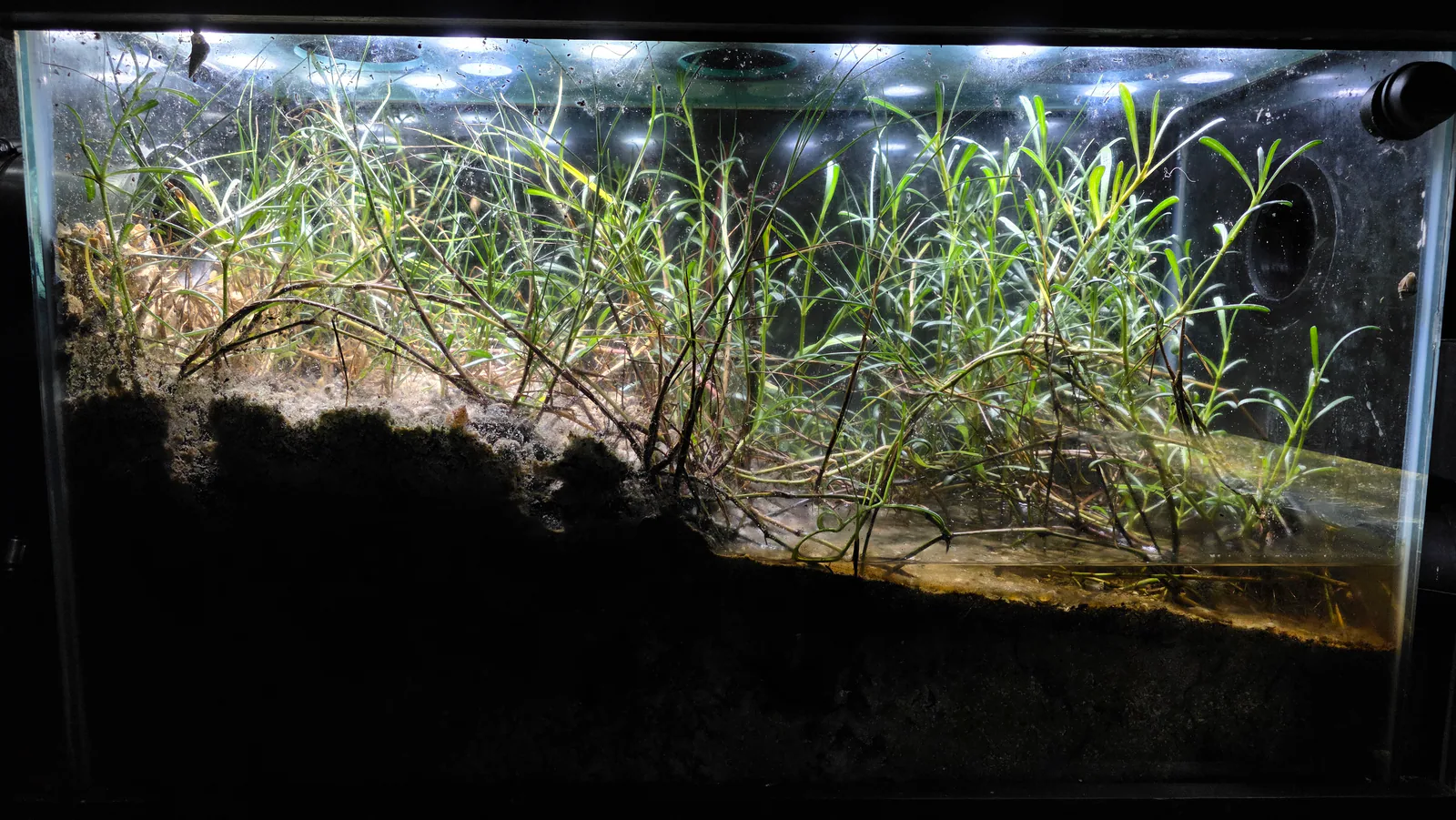
  • June 21, 2024: Bruised Nassa visible in a 15-second video clip showing multiple uncatalogued Seagrass Meadow species alongside the Unknown Sea Bunny, Daggerblade Grass Shrimp, Eelgrass Isopod, and McLaughlin's Hermit Crab (chronicle 332). Entry type: introduction; the clip was shared publicly with a question about species identification.
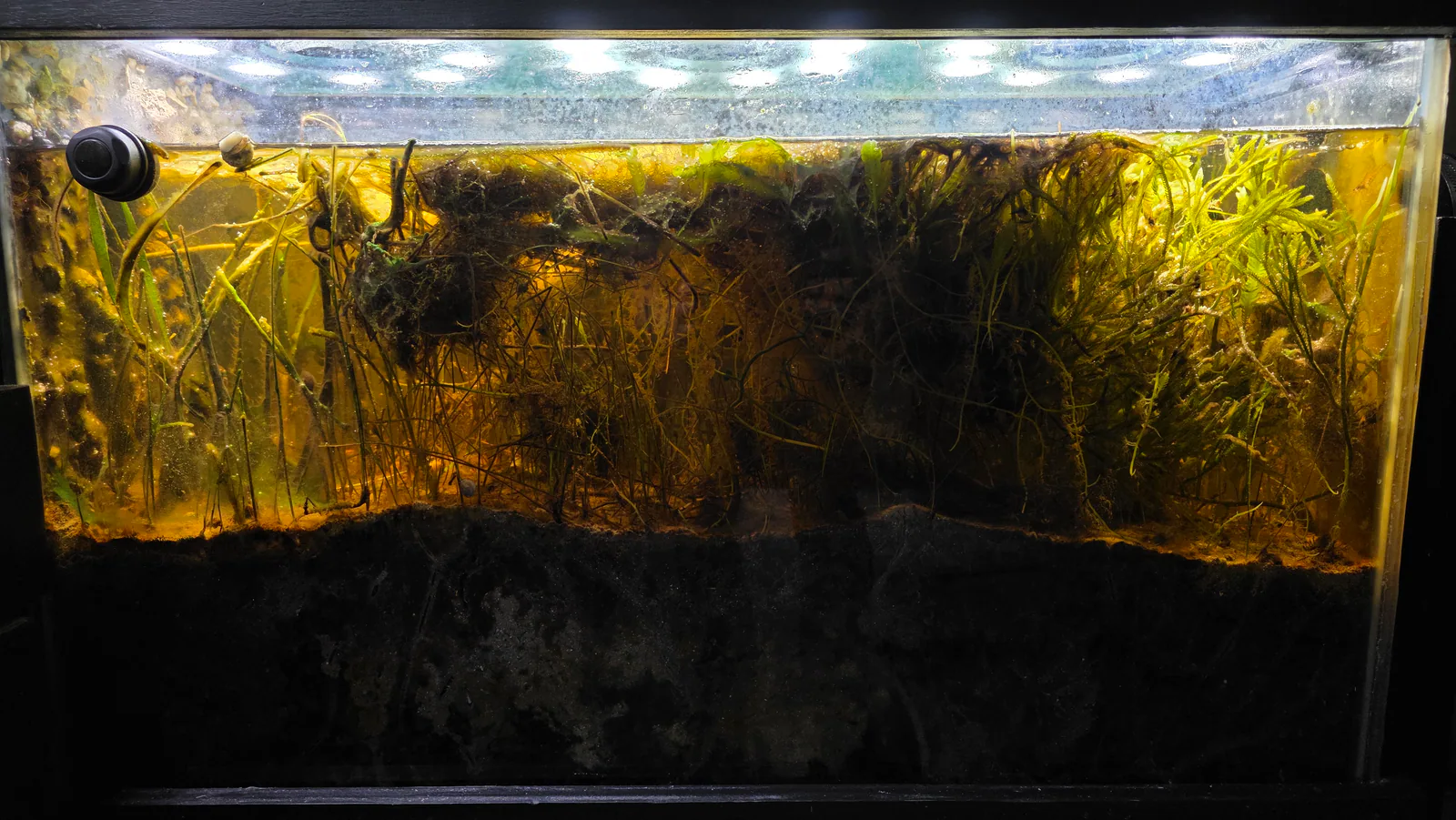
  • July 5, 2024: Bruised Nassa briefly visible on the Marine Shore alongside Fiddler Crabs during early beach habitat establishment (chronicle 329).
  • October 14, 2025: date_last_observed per DB. No dedicated observation file for this date.
  • Removed: population status Removed; current_estimated_population: 0. No removal chronicle found.

Confirmed:

  • Introduced December 10, 2023
  • Present in Seagrass Meadow June 21, 2024 (chronicle 332)
  • Present on Marine Shore July 5, 2024 (chronicle 329)
  • Population status: Removed; current_estimated_population: 0
  • No signs of breeding recorded

Inferred:

  • The species was buried in soft substrate between its documented appearances, consistent with the species' characteristic burrowing behavior
  • Carrion processing in the Seagrass Meadow substrate was the primary ecological function, based on the species' well-documented scavenging biology

Unknown:

  • Why and when the species was removed (no removal chronicle or observation)
  • Whether any Ragworm egg consumption occurred in miniBIOTA
  • Population size at any point during the stay
  • Whether any individuals reached the end of natural lifespan or were actively removed