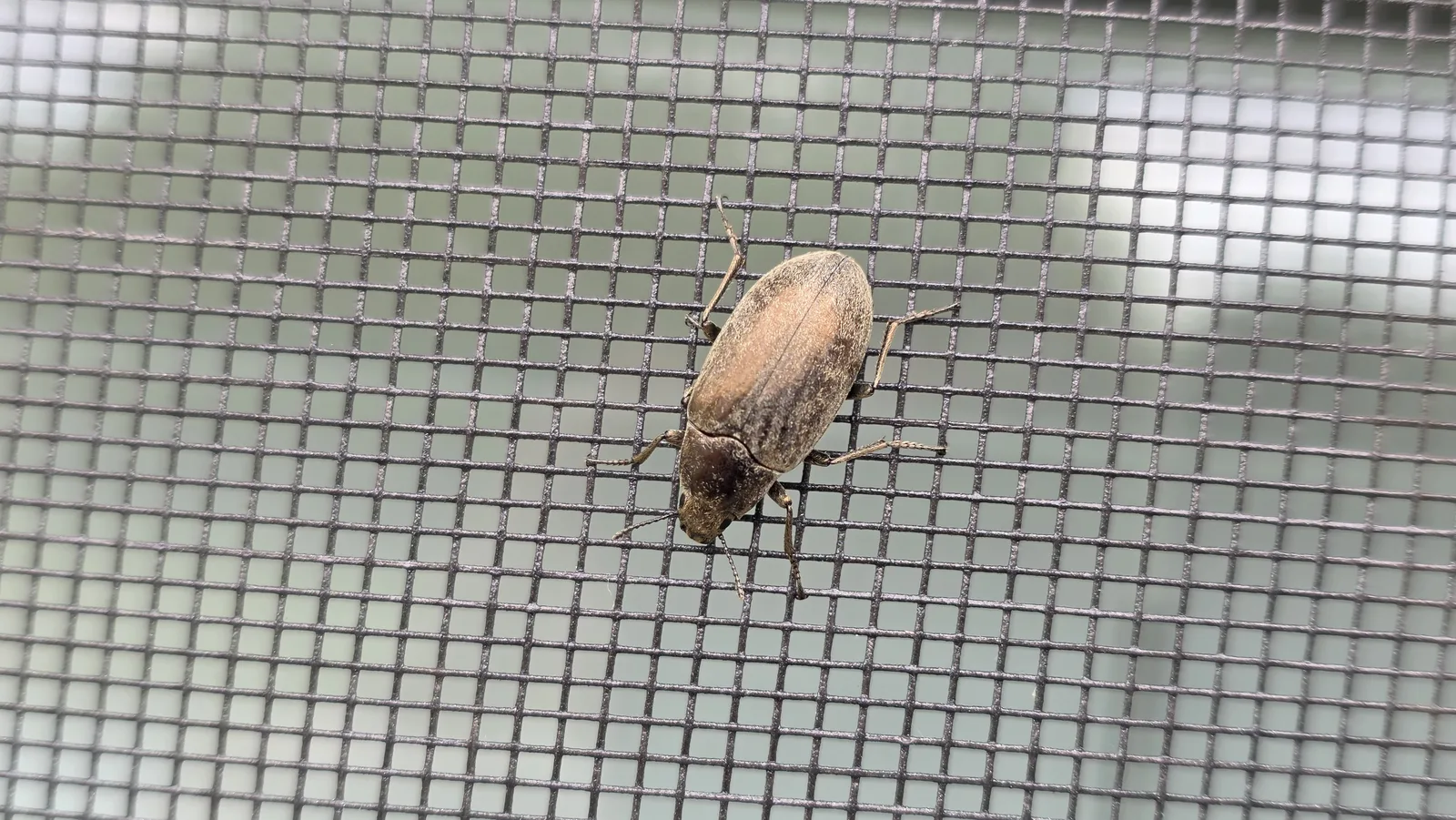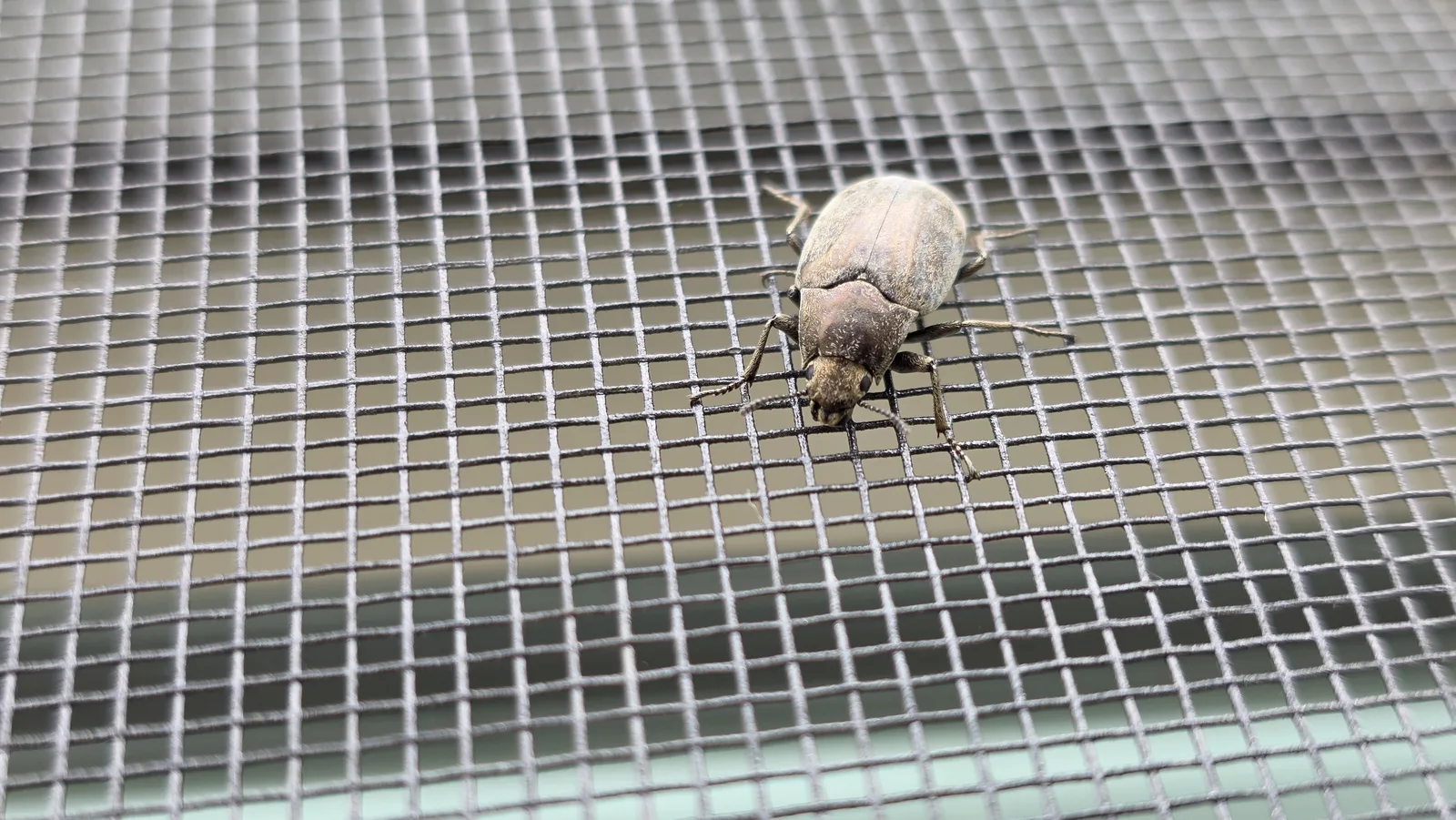
Bothrotes canaliculatus

Bothrotes Darkling Beetle

Two bronze, finely haired darkling beetles joined the Prairie on September 29, 2026, settling into the leaf litter where they may feed on both living and decaying plants, a role the coming months should reveal.

Realm
Terrestrial
Population
Uncertain
Primary biome
Prairie

Overview

An elongate, strongly domed darkling beetle with a bronze-brown sheen and fine pale hairs lying flat across its grooved wing covers. Two adults collected in a Florida yard were introduced to the Prairie on September 29, 2026. Their identification as Bothrotes canaliculatus is based on photographs, body form and locality, and is considered likely rather than confirmed.

Identity

  • Common name: Bothrotes Darkling Beetle
  • Alternate names: darkling beetle
  • Scientific name: Bothrotes canaliculatus
  • Identification confidence: Likely at species level; subspecies not assigned
  • Uncertainty label: Likely

Taxonomy

  • Kingdom: Animalia
  • Phylum: Arthropoda
  • Class: Insecta
  • Order: Coleoptera
  • Family: Tenebrionidae (darkling beetles)
  • Subfamily: Pimeliinae
  • Tribe: Epitragini
  • Genus: Bothrotes Casey, 1907
  • Species: Bothrotes canaliculatus (Say, 1824), originally described as Epitragus canaliculatus; it is the type species of the genus
  • Subspecies: Not assigned. Four subspecies are recognized: B. c. canaliculatus (central and southwestern United States and northern Mexico), B. c. arundinis (Atlantic states from New York to Georgia), B. c. acutus (Florida, Kansas, New Mexico, Oklahoma, Texas and Mexico), and B. c. mexicanus (Mexico). Florida beetles are expected to be B. c. acutus.

Natural History

Bothrotes canaliculatus belongs to the darkling beetles, one of the largest beetle families, with more than 20,000 described species worldwide. Darkling beetles are typically hard-bodied and dark, and as a group they feed widely on decaying leaves, rotting wood, fungi, fresh plant material and dead insects, though diets differ a great deal from one species to the next.

Within its genus, B. canaliculatus is the most widespread species north of Mexico, recorded across much of the central, southwestern and southeastern United States. In Florida it is represented by the subspecies B. c. acutus. The individuals in miniBIOTA measure roughly 11 to 12 mm long.

The diet, larval habitat and life cycle of this particular species are not well documented in the sources reviewed so far. Its feeding habits in the Prairie are one of the things miniBIOTA hopes to learn by watching it.

Ecological Role

The beetle's role in the Prairie is still an open question. One working interpretation is that it may act as an opportunistic plant consumer and scavenger, using both living and decaying plant material. If so, it could turn leaves, flowers or soft fruit into beetle biomass and later into waste and decomposition pathways, and it could also leave measurable feeding damage on living Prairie plants. None of this has been observed yet, and the beetle is not assumed to function only as a cleanup species.

miniBIOTA Evidence

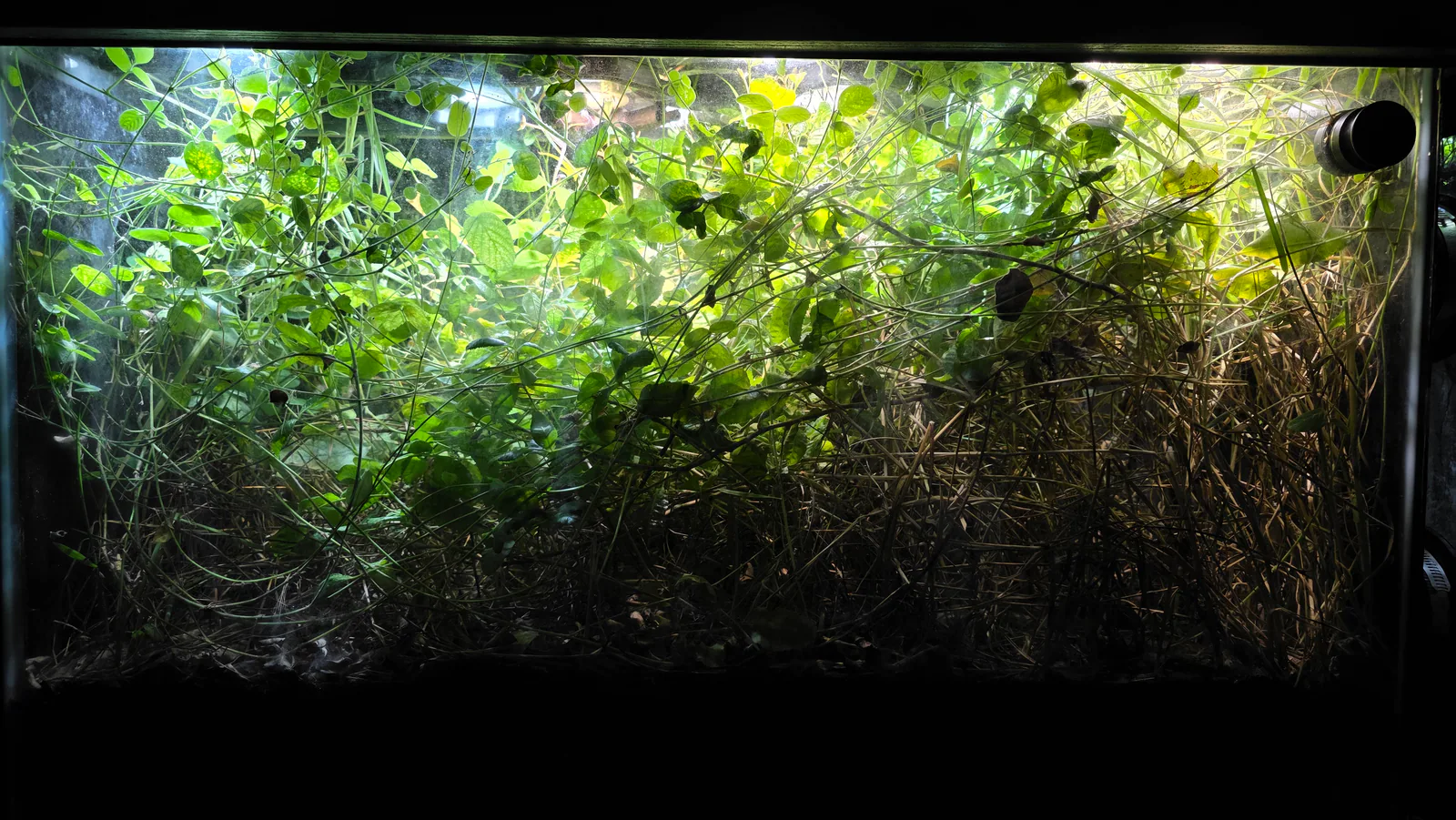
Introduction context: Two adults collected in a residential yard in Florida were introduced to the Prairie on September 29, 2026, at the boundary between living vegetation and leaf litter. The Prairie was chosen over the wetter Lakeshore for its relatively dry ground, leaf litter and dead plant material, shaded humid refuges under litter and plants, and soil that may suit egg laying and larval development. That suitability is the reason for the placement, not a demonstrated outcome.

Observation timeline:

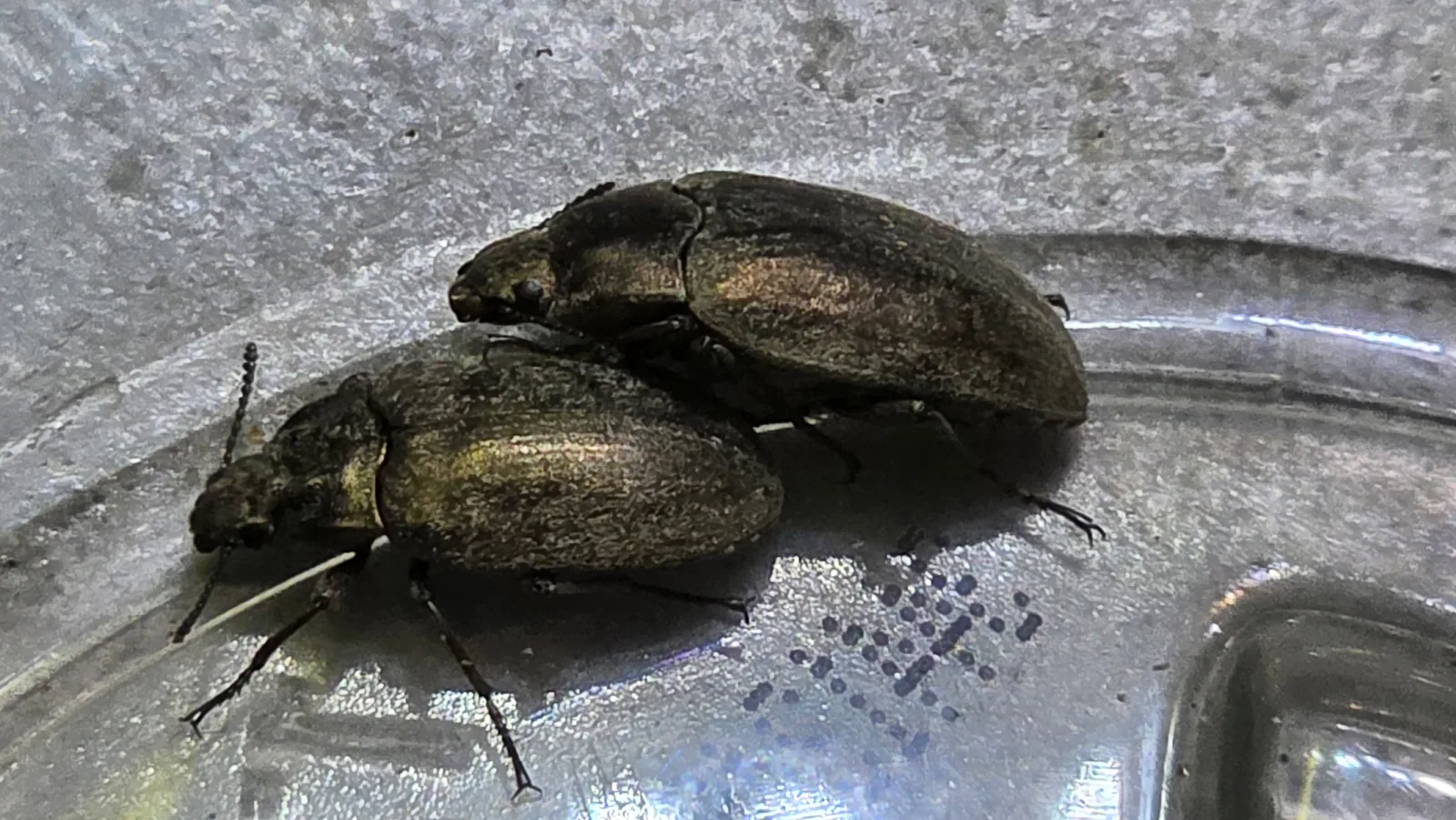
  • September 29, 2026: Two adults, each about 11 to 12 mm long, were photographed and then released into the Prairie. One individual has a noticeably smoother pronotum and the other a more strongly sculptured one, which is interpreted as a possible male and female pair. A photograph of one beetle crawling over the other looks like mating, but no mating took place.

Confirmed:

  • Two adult darkling beetles, collected in a Florida yard, were introduced to the Prairie on September 29, 2026

Inferred:

  • Bothrotes canaliculatus identity, from photographs, body form and the Florida locality (Likely)
  • A male and female pair, from differences in pronotum sculpturing (Possible)

Unknown:

  • Whether either adult has survived since release
  • What the beetles eat in the Prairie, and whether they feed on living plants
  • Whether the pair will mate, and whether eggs, larvae or a second generation will appear
  • The subspecies